
 Indra Kusuma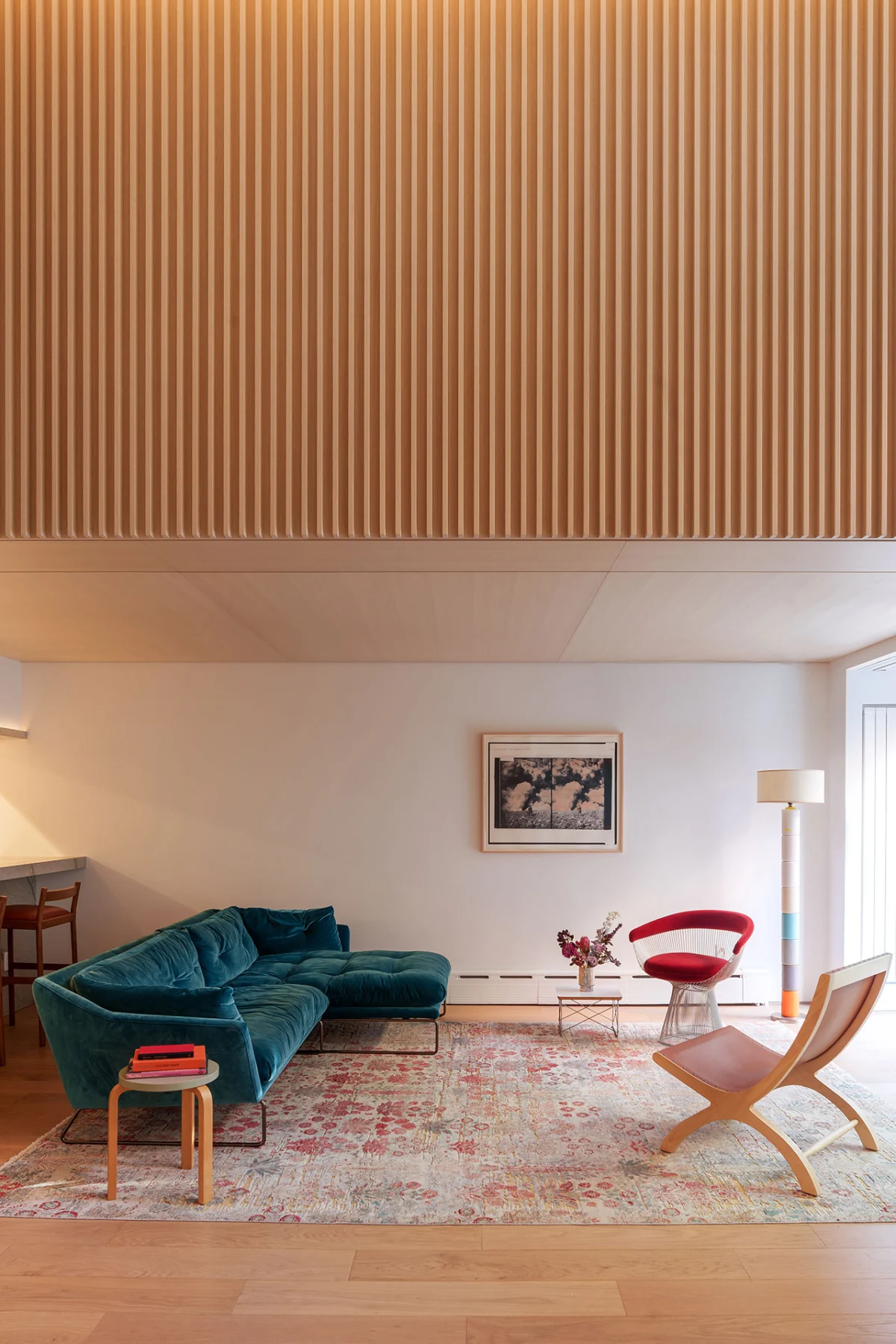
Architecture, when reframed, is fundamentally about the intelligent orchestration of space rather than the mere construction of walls; it does not enclose, but rather reveals, inviting inhabitants into a richer dialogue with their surroundings. This philosophy finds its profound embodiment in the Garden Apartment, a seminal project by the acclaimed firm Aranda/Lasch. Situated in New York City’s dynamic Lower East Side, this residential reimagining transcends conventional domestic interiors, presenting itself as a meticulously calibrated aperture—a sequence of frames, thresholds, and volumes designed to attune everyday life to the subtle shifts of light, the calming presence of landscape, and the inexorable rhythm of time. This innovative approach offers a compelling alternative to the often-constrictive realities of urban dwelling, elevating the apartment from a functional unit to a meditative instrument for experiencing the world.

A Rare Urban Oasis: The Conceptual Anchor
At the heart of this transformative Lower East Side (LES) project lies an almost mythical condition for New York City living: a double-wide private garden. In a city where square footage is meticulously measured and outdoor space is a luxury often reserved for the elite, such a verdant expanse is an extraordinary asset. Rather than treating this invaluable green space merely as an external amenity to be accessed, Aranda/Lasch strategically positions it as the project’s foundational conceptual and spatial anchor. The apartment home, in their discerning words, becomes "a frame for the oasis outside," effectively transforming the dwelling into a sophisticated device through which the ever-shifting atmosphere of the outdoor environment is continuously registered, influencing and enriching the interior experience. This integration challenges the traditional indoor-outdoor dichotomy, forging a seamless continuum that breathes life into the domestic realm.

The Lower East Side itself provides a compelling backdrop for such an architectural statement. Historically a dense immigrant neighborhood characterized by tenement housing and bustling street life, the LES has undergone significant transformation, evolving into a vibrant cultural hub with a diverse demographic. Despite its modernization, the neighborhood retains its inherent urban intensity, making the presence of a substantial private garden even more remarkable. The scarcity of such spaces in Manhattan, particularly a double-wide lot, underscores the unique opportunity presented to Aranda/Lasch and highlights the firm’s foresight in leveraging this rarity not just for aesthetic appeal, but as the very core of the apartment’s design ethos. Data from the New York City Department of City Planning consistently shows that private outdoor space in Manhattan commands a significant premium, often adding 25-50% to a property’s value, depending on its size and quality. The Garden Apartment capitalizes on this not just financially, but experientially.

The Architecture of Perception: Framing and Flow
This profound framing of the garden is far from a mere metaphor; it manifests through concrete architectural interventions that redefine spatial perception. A newly introduced double-height volume serves as the primary viewing device, ingeniously pulling abundant daylight deep into what was once a compact, perhaps even compartmentalized, traditional New York City apartment plan. This vertical expansion dramatically increases the perceived space, simultaneously reorganizing daily rituals and activities around the luminous void itself. Areas for dining, gathering, and rest now unfold within this tall, light-filled chamber, where the continuous presence of the garden is subtly but powerfully felt, even when not directly within the line of sight. This design decision is a direct response to the perennial challenge of maximizing natural light and air in dense urban settings, where adjacent buildings often obstruct views and sunlight.

Crucially, the concept of "aperture" in the Garden Apartment is not limited to a singular, expansive opening but is articulated through a sophisticated sequence of calibrated thresholds. The existing rear façade has been extensively opened to accommodate expansive glass, effectively dissolving the physical boundary between the interior living spaces and the exterior garden. However, the project deliberately resists the totalizing transparency often associated with much contemporary residential design, which can sometimes lead to a feeling of exposure rather than connection. Instead, Aranda/Lasch’s openings are meticulously composed as "dramatic frames," thoughtfully guiding the eye outward to the verdant expanse while simultaneously maintaining a vital sense of interior depth and comforting enclosure. This nuanced approach ensures privacy and intimacy are preserved, allowing residents to engage with the garden on their own terms, without feeling constantly exposed to the elements or the urban context. This contrasts sharply with many modern minimalist designs that prioritize sheer glass surfaces, sometimes at the expense of psychological comfort.

Materiality as a Spatial Language
The choice and application of materials become instrumental in reinforcing this layered permeability and visual dialogue between inside and out. Reeded white oak volumes elegantly flank the central double-height space. Their delicate vertical striations subtly echo the texture of the exterior fence beyond, creating a harmonious visual resonance. This careful dialogue between inside and out leans into a "visual resonance"—soft alignments of surfaces and textures that allow the two realms to gently bleed into one another without completely collapsing their distinct identities. The resulting effect is more atmospheric than literal, a quiet synchronization of planes and patterns that profoundly heightens spatial awareness and fosters a sense of calm continuity. This tactile and visual connection to nature, even through abstract material patterns, is a core tenet of biophilic design, known to improve well-being and reduce stress.

The restraint of the material palette further sharpens this perceptual clarity and design intent. Oak, with its inherent warmth and natural grain, defines the primary living zones, establishing a sense of continuity and inviting comfort. In contrast, durable and tactile materials like terrazzo and terracotta are strategically employed to ground the more functional spaces, such as bathrooms and entryways, providing robustness and a subtle textural contrast. The kitchen, a critical hub of daily activity, introduces a distinct counterpoint. Rendered entirely in brushed metal, it offers a cool, reflective surface that is nonetheless softened through its refined finish, preventing it from feeling sterile or industrial. There is a notable absence of material excess throughout the apartment; each material is chosen not just for its aesthetic quality but for its ability to function as both surface and signal, delineating specific uses and zones while meticulously maintaining a cohesive, unified design language. This minimalist yet rich approach speaks to a sophisticated understanding of how materials contribute to the overall sensory experience of a home.

The Stair as Sculptural Anchor and Tactile Interface
Even the apartment’s architectural plan actively participates in this overarching logic of aperture and experiential flow. The first floor is deliberately kept open and expansive, punctuated only by two sculptural anchors: a monolithic stair and the brushed metal kitchen. These elements meticulously organize movement and define pathways without ever constricting the fluid sense of space. The stair, in particular, transcends its utilitarian function, operating simultaneously as a striking object of art and a crucial interface within the home. Its handrail, notably described by the architects as the project’s "singular moment of extravagance," becomes a pivotal tactile point of contact, grounding the body’s experience within the architecture. In a home so profoundly defined by visual porosity and the seamless flow of light and views, this detail intentionally grounds the experience in the intimate sensation of touch, adding another layer of sensory richness to the architectural narrative.

Ben Aranda, co-founder and principal architect of Aranda/Lasch, articulates the essence of this design philosophy: "There is nothing extravagant here, and that is where the beauty lies. Life itself can be extravagant, but architecture can be the quiet, enduring backdrop that accommodates it." This statement encapsulates the project’s humble yet ambitious goal: to create a stage for life, where the architecture supports and enhances, rather than dominates, the human experience. This ethos positions the Garden Apartment not as a monument to architectural prowess, but as a finely tuned instrument for living.

Broader Implications for Urban Living
What ultimately emerges from the Garden Apartment is a domestic environment that profoundly privileges continuity over separation, yet never abandons the fundamental human need for gradation and distinct experiences. Apertures in this design evolve beyond merely being "seen through"; they become about "sensing across." This means experiencing the subtle filtering of light, the gentle alignment of textures, and the dynamic expansion and contraction of volumes—all meticulously orchestrated in response to the daily rhythms of life and the changing seasons. The design ensures that even from the deepest recesses of the apartment, the tranquil and restorative presence of the garden remains perceptibly woven into the fabric of the home.

This project offers a compelling alternative model for urban living, one that strategically leverages its unique advantages to maximize spatial experience in service of human well-being, rather than simply optimizing for square footage. It consciously resists the tendency of contemporary architecture to impose itself as an object to be admired or to function as an instrument designed solely to capture attention for social currency. Instead, the Garden Apartment continually directs the occupant’s awareness to personal moments of connection—outward to the natural world, inward to personal reflection, and everywhere in between, fostering a holistic sense of place and presence.

The implications of Aranda/Lasch’s Garden Apartment extend beyond its immediate site. As global urbanization accelerates, and cities become ever denser, the demand for residential solutions that prioritize human connection to nature and optimize the quality of interior space becomes increasingly critical. This project serves as a compelling case study for how thoughtful design can transform challenging urban conditions into opportunities for enhanced living. It advocates for an architecture that is responsive, sensitive, and deeply empathetic to its inhabitants’ needs, proving that even in the most constrained environments, it is possible to cultivate spaces that are both functional and profoundly enriching. Urban planners and architects across major metropolitan areas, grappling with issues of density, light deprivation, and the psychological impact of concrete jungles, can draw significant lessons from this project’s innovative integration of natural elements and its masterful manipulation of volume and light. The Garden Apartment stands as a testament to the power of architecture to not just house, but to truly nurture life in the city.

To see this and other works by the studio, please visit arandalasch.com.

Photography courtesy of ArandaLasch and RBM Lab.







