Michael Sholeh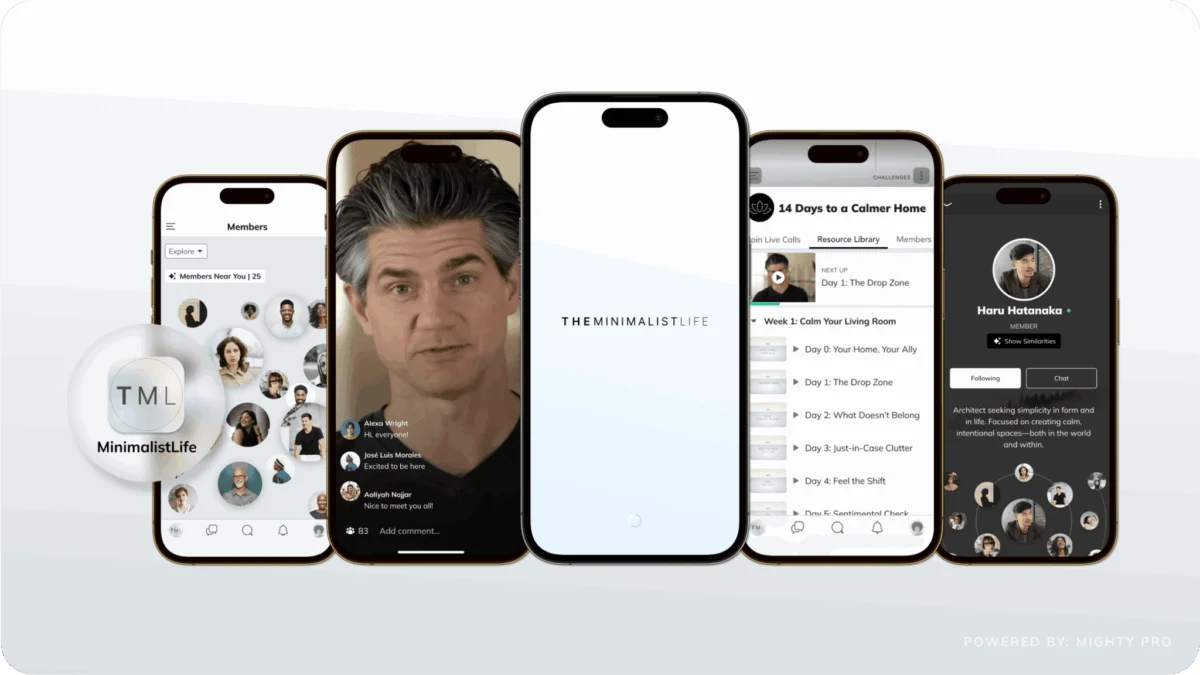
Joshua Becker, a prominent figure in the global minimalist movement and founder of the Becoming Minimalist platform, has announced the launch of a new membership-based community titled "The Minimalist Life." This initiative represents a strategic shift for the author and educator, moving from a primary focus on content creation and one-time instructional courses toward a model of ongoing, community-supported lifestyle maintenance. After 17 years of documenting his journey and providing resources to millions of readers, Becker’s latest venture seeks to address the "maintenance gap" frequently reported by individuals who struggle to sustain minimalist habits after an initial period of success.
The launch of The Minimalist Life comes at a time when the minimalist movement is evolving from a niche aesthetic trend into a broader psychological and lifestyle framework. Becker, who has authored over 1,700 articles and produced 400 videos, noted that the most consistent feedback from his audience involved the difficulty of long-term implementation. While his "Uncluttered" course has assisted over 90,000 individuals in the physical act of decluttering their homes, the new community is designed to integrate minimalist principles into more complex areas of life, including personal finance, digital habits, professional schedules, and interpersonal relationships.
A Seventeen-Year Chronology of the Minimalist Movement
The development of The Minimalist Life is the culmination of nearly two decades of growth within the voluntary simplicity movement. To understand the significance of this new community, it is essential to trace the timeline of Becker’s influence and the broader cultural shift toward intentional living.
In 2008, Joshua Becker founded the Becoming Minimalist blog after a conversation with a neighbor led him to realize that his possessions were distracting him from his family and personal values. This period marked the early days of the "modern minimalism" wave, which gained traction alongside the 2008 financial crisis as consumers began to re-evaluate their relationship with debt and physical goods.
Between 2010 and 2015, Becker transitioned from a blogger to a best-selling author. His works, such as The More of Less and The Minimalist Home, provided a roadmap for physical decluttering that resonated with a global audience. During this era, the "Uncluttered" course was launched, creating a structured environment for participants to tackle the physical accumulation in their homes. By 2020, the platform had expanded to include a massive YouTube presence, reaching a younger demographic and adapting to the visual-centric nature of social media.
The 2025 launch of The Minimalist Life marks the third major phase of Becker’s career. If the first phase was "Inspiration" and the second was "Instruction," this third phase is "Integration." The community aims to move beyond the "what" and "how" of minimalism to focus on the "always," providing a framework for those who have already cleared their closets but find themselves struggling with the mental and social pressures of a consumer-driven society.
Addressing the Sustainability Gap in Personal Development
The primary motivation for this new community is the recognized phenomenon of "minimalist burnout" or regression. Behavioral science suggests that while one-time interventions (like a weekend decluttering project) can provide immediate satisfaction, they often fail to alter long-term consumption habits. Without a supportive environment, individuals frequently revert to old patterns of acquisition.
Becker’s analysis of his 90,000-student database revealed a recurring theme: participants felt empowered during the course but isolated afterward. The Minimalist Life community is structured to combat this isolation. By offering monthly themes and a private forum for interaction, the program utilizes social proof and peer accountability—two critical components of habit formation—to ensure that minimalism becomes a permanent lifestyle rather than a temporary project.
The community is specifically designed for two demographics: those who have successfully decluttered their physical space but feel overwhelmed in other areas (such as digital or financial clutter), and those who find that their commitment to simplicity wavers in the face of societal expectations.
Structural Components and Economic Framework
The Minimalist Life is positioned as a private, subscription-based ecosystem. Members are offered a "founding member" rate of $18 per month or an annual subscription of $180, a pricing strategy that reflects the current trend in the "creator economy" toward recurring revenue models that prioritize high-value engagement over broad, low-impact reach. This pricing window is scheduled to remain open until June 30th, after which the standard rates may apply.
The community’s curriculum is divided into monthly focus areas. These modules extend the philosophy of "owning less" into intangible sectors of the human experience:

- Digital Life: Managing screen time, inbox overflow, and social media consumption.
- Finances: Shifting from consumerism to intentional spending and debt reduction.
- Schedule and Productivity: Applying minimalist filters to time management and professional commitments.
- Habits and Health: Streamlining daily routines to reduce decision fatigue.
- Relationships: Navigating social obligations and fostering deeper connections through presence.
By diversifying the application of minimalism, Becker is tapping into the growing demand for "essentialism"—the disciplined pursuit of less but better.
Supporting Data: The Psychological Impact of Clutter
The expansion of Becker’s platform is supported by a growing body of academic research linking physical and mental clutter to diminished well-being. A landmark study by the UCLA Center on Everyday Lives of Families (CELF) found a direct correlation between high "object density" in the home and elevated levels of cortisol, the stress hormone, particularly in women.
Furthermore, research published in the Journal of Environmental Psychology suggests that a cluttered environment can inhibit the brain’s ability to process information and focus, leading to increased procrastination and decreased productivity. By moving the conversation from "cleaning the house" to "managing the life," Becker’s community addresses these psychological stressors at their source.
In the digital realm, the need for minimalism is even more acute. Statistics show that the average adult spends over seven hours a day looking at screens, much of which is dedicated to "doomscrolling" or passive consumption. The Minimalist Life’s focus on digital intentionality responds to the rising rates of digital burnout and the "attention economy" that prioritizes engagement over user well-being.
Market Analysis and the Human-Centric Shift
The launch of The Minimalist Life also serves as a strategic response to the changing landscape of online content. With the proliferation of Artificial Intelligence (AI) and the saturation of automated lifestyle advice, there is a measurable shift in consumer preference toward authentic human interaction.
Becker has explicitly emphasized that his new community is built on human connection rather than algorithmic delivery. In an era where AI can generate a "top ten tips for decluttering" list in seconds, the value of a community lies in its empathy, shared struggle, and nuanced guidance. This "human-centric" approach is expected to become a key differentiator in the self-improvement market over the next five years.
Market analysts suggest that the "subscription for transformation" model is likely to outperform the "one-off digital product" model. Users are increasingly willing to pay for ongoing access to experts and like-minded peers who provide the motivation that static content cannot. Becker’s move to a community model aligns with these broader economic trends in the wellness and personal development sectors.
Implications for the Future of Minimalist Philosophy
The introduction of The Minimalist Life suggests that the minimalist movement is entering a period of maturation. It is no longer enough to simply advocate for empty counters and white walls. The focus has shifted toward the result of minimalism: a life of focus, purpose, and contribution.
For the broader minimalist community, Becker’s move validates the idea that simplicity is a lifelong discipline rather than a destination. It acknowledges that the pressures of modern society—aggressive advertising, the "always-on" work culture, and the social pressure to keep up with peers—are constant forces that require a constant counter-force.
The success of this community will likely be measured not just by its member count, but by the long-term behavioral changes of its participants. If Becker can successfully bridge the gap between "knowing" and "doing," The Minimalist Life may serve as a blueprint for other lifestyle movements seeking to move beyond content and into the realm of sustained personal transformation.
As the doors open to this new community, the message is clear: the most significant work of minimalism begins after the boxes have been donated. It is a daily, intentional choice to prioritize what truly matters, and for many, that choice is best made in the company of others. With a 17-year track record of reliability, Joshua Becker’s latest offering is poised to redefine how the modern world approaches the concept of "enough."