The competitive realm of social media demands robust tools for effective presence management, consistency, and growth. Businesses, creators, and marketers increasingly rely on specialized platforms to streamline content scheduling, audience engagement, and performance analytics across diverse networks. Among the prominent solutions vying for market leadership are Buffer and Later, each presenting a distinct philosophy and feature set designed to empower users in their digital endeavors. This comprehensive analysis delves into the core functionalities, pricing structures, and strategic implications of both platforms, providing a factual basis for informed decision-making in an ever-evolving digital ecosystem.
The Evolving Need for Social Media Management Tools
In an era where digital presence is paramount, social media management tools have transitioned from mere conveniences to indispensable strategic assets. The proliferation of platforms – from established giants like Facebook and Instagram to emerging networks like Threads, Bluesky, and Mastodon – has intensified the complexity of maintaining a consistent and impactful online voice. Brands must not only publish content regularly but also engage with audiences, analyze performance metrics, and adapt strategies in real-time. This dynamic environment underscores the critical role of platforms like Buffer and Later, which aim to consolidate these diverse tasks into a single, efficient dashboard. The global social media management market, valued at approximately $15.0 billion in 2022, is projected to reach $50.0 billion by 2032, reflecting the escalating demand for sophisticated solutions that address the multifaceted challenges of digital marketing.
Buffer vs. Later: A Feature and Cost Overview
At a glance, both Buffer and Later offer comprehensive toolsets for social media scheduling and analysis. However, a deeper examination reveals distinct approaches to feature accessibility, platform support, and pricing models that cater to different user needs and scales of operation.
| Feature / Aspect | Buffer | Later |
|---|---|---|
| Free Plan | Includes 3 social channels/accounts; 10 scheduled posts per channel; basic analytics; unlimited AI content generation. | No free plan. |
| Paid Plans Start At | $6/month (channel-based pricing). | $25/month (social set-based pricing). |
| Supported Channels | Instagram, Facebook, X/Twitter, LinkedIn, TikTok, Pinterest, Google Business, Mastodon, YouTube Shorts, Threads, Bluesky. Supports Facebook Pages and Groups, Instagram Creator, Business, and Personal profiles. | Instagram, Facebook, Threads, Pinterest, TikTok, LinkedIn, YouTube Shorts, Snapchat. Supports Facebook Pages only, Instagram Business and Creator profiles only. |
| Mobile Apps | iOS, Android. | iOS, Android (limited countries). |
| Planning Hub | Available on all plans, including free ("Create Space"). | Paid plans only. |
| Audience Engagement | Available on all plans, including free ("Community" with AI suggestions, saved replies, comment score). | Team plans only ("Social Inbox"). |
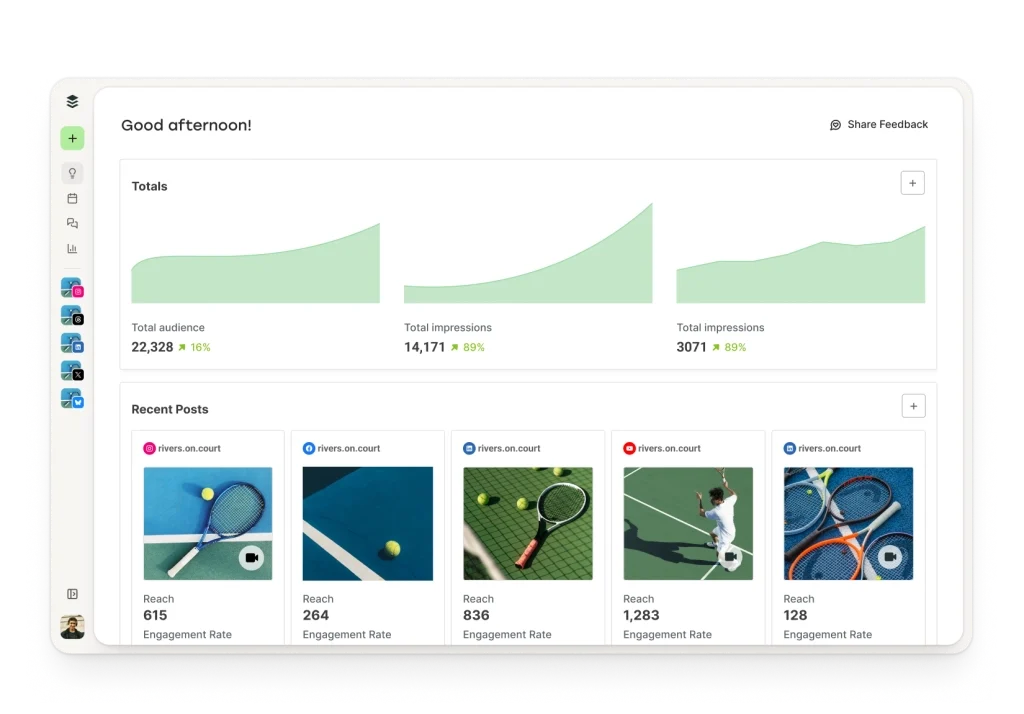
| Analytics/Reporting | Basic analytics on free plan; advanced analytics on paid plans (cross-channel overview, personalized "Answers," custom PDF reports). Supports Facebook, LinkedIn, Instagram, X/Twitter. | Paid plans only (link-in-bio analytics on all plans). Focus on Instagram, Facebook, TikTok, Threads, Pinterest. Audience demographics, optimal posting times. CSV data export, shareable Instagram performance reports. |
| Team Members | Paid plans only (unlimited users on Team plan). | Paid plans only (tiered limits, additional seats $5/user/month). |
| AI-Assisted Content | Available on all plans, unlimited use. | Paid plans only, credit-based, additional tokens purchasable. |
| Social Listening | Not available. | Available at an additional cost (Scale plan add-on). |
| Influencer Marketing | Not available. | Available at an additional cost (separate product). Creator Hub for influencers on all plans. |
| Website/Link-in-Bio Tool | All plans ("Start Page" with flexible, multiple content blocks). | All plans ("Link in Bio" with structured, single content blocks per type, Mavely integration). |
| Bulk Content Posting | Yes, via CSV upload (up to 100 posts on paid plans). | No. |
| API Access | Public API available on all plans. | Not specified. |
| Instagram Personal Profiles | Supported via notifications. | Not supported. |
| Instagram Story Auto-publish | Supported for Creator and Business profiles. | Supported for Business accounts only (Creator profiles require notification publishing). |
Pricing Models: A Critical Differentiator
Cost remains a paramount consideration for individuals and organizations when selecting a social media management solution. The pricing philosophies of Buffer and Later diverge significantly, impacting scalability and budget predictability.
Buffer employs a highly flexible, channel-based pricing model. Users select precisely which social media channels they need to connect, paying only for those actively utilized. This modular approach is particularly advantageous for brands with a focused social media presence or those experimenting with new platforms, ensuring cost efficiency by eliminating payments for unused features or channels. Paid plans commence at $6 per month.
In contrast, Later adopts a "social sets" model for its paid plans, starting at $25 per month. Each social set typically bundles one account from each supported platform (Instagram, Facebook, Threads, Pinterest, TikTok, LinkedIn, YouTube Shorts, and Snapchat). While this offers a convenient package for users managing a comprehensive presence across these specific networks, it introduces rigidity. A user requiring only a Facebook Page and a LinkedIn profile would still pay for the entire set, including platforms they may not use. Furthermore, managing multiple accounts on the same platform (e.g., two Instagram profiles) necessitates purchasing additional social sets, which can escalate costs rapidly.
User and Team Management: Scalability and Collaboration
The structure for managing users and teams presents another key distinction, particularly relevant for agencies and growing businesses.
Buffer’s Free and Essentials plans accommodate one user account, while its Team plan offers unlimited users. This design decision significantly benefits small and medium-sized businesses and agencies, as the cost does not increase with the addition of more team members. Permissions can be granularly assigned, allowing users to schedule posts, draft content, or manage specific social accounts. The recent introduction of a public API on all plans further enhances Buffer’s appeal for organizations seeking to integrate social media workflows with internal systems, automation tools, or custom AI solutions, offering unparalleled flexibility for enterprise-level customization.
Later’s Starter plan includes one user. The Growth plan supports two users, and the Scale plan includes four. Organizations requiring additional users beyond these tiers must purchase extra seats at an incremental cost of $5 per user per month (or $3.75 annually). This tiered model, while common in the SaaS industry, means that team growth directly impacts subscription costs. Later employs "access groups" to manage permissions, linking users to specific social profiles and media libraries. While useful for agencies managing distinct client accounts, the inflexibility of tying access groups to social sets (where each set only supports one profile per platform) can complicate workflows and potentially necessitate additional social set purchases for nuanced account management. For instance, if a team needs to manage two LinkedIn profiles, they would need two separate social sets, which then must be assigned to the same access group, potentially limiting access for other groups.
Hypothetical Cost Scenarios:
To illustrate the financial implications:
- Solo Creator (3 Platforms): Buffer offers a free plan for up to three channels. If paid, it’s $15/month annually ($5/channel). Later’s Starter plan, even with only three platforms needed, would be $18.75/month annually as it forces a full social set purchase.
- Small Agency (2 Platforms, 2 Users): Buffer’s Team plan would cost $20/month annually for two channels, accommodating unlimited users. Later’s Growth plan, offering two users and a social set, would be $37.50/month annually. If the agency needed a third channel or a third user, Later’s costs would increase through additional social sets or user seats, while Buffer’s channel-based pricing would only increase with the addition of another channel.
Content Creation and Scheduling: Nuances in Workflow
Both platforms facilitate efficient content drafting and scheduling across multiple accounts, offering customization for each network. However, their approaches to post limits, bulk operations, and visual planning differ.
Buffer allows scheduling 10 posts per channel on its free plan, with unlimited scheduling on all paid plans. This is a significant advantage for high-volume content creators and businesses. It also supports bulk scheduling of up to 100 posts at a time via CSV file on paid plans, a critical feature for large campaigns or content calendars managed in spreadsheets. Buffer’s dedicated hashtag manager and a free external Instagram hashtag generator streamline the discovery and organization of relevant hashtags.
Later imposes limits on scheduled posts even on paid plans: 30 posts per profile per month on Starter, 180 on Growth. Unlimited scheduling is reserved for the Scale plan. Later does not support bulk scheduling via CSV, requiring more manual effort for extensive campaigns. While it offers a feature to save captions and provides hashtag suggestions, its core strength in content creation lies in its visual planner, which allows users to preview their Instagram grid (and Pinterest) before publishing, using a drag-and-drop interface. This visual-first approach is highly valued by brands where aesthetic consistency is paramount.
Instagram-specific features highlight further distinctions. Buffer supports publishing to personal profiles via notifications and offers auto-publishing for both Creator and Business profiles, including Instagram Stories. Later does not support personal profiles for publishing, and Stories auto-publish only for Business accounts, requiring notification publishing for Creator profiles. The limited availability of Later’s Android app in some countries could also pose practical challenges for global creators.
The Rise of AI: Accessibility and Strategic Impact
The integration of artificial intelligence into social media management tools marks a pivotal shift in content creation efficiency. Both Buffer and Later offer AI capabilities, but their accessibility models present a stark contrast.
Buffer’s AI Assistant is available without limits on all plans, including the free tier. This strategic decision democratizes AI-powered content generation, allowing users to brainstorm ideas, draft captions, refine posts, and repurpose content across platforms without concerns about credit depletion or additional costs. This unlimited access can significantly accelerate content velocity and experimentation, particularly for smaller businesses and individual creators operating on tight budgets.
Later offers its AI-powered "Ideas" tool on paid plans, operating on a credit-based system. Users receive a limited number of credits per month, with one credit typically generating a caption or three content ideas. Once credits are exhausted, users must either wait for the next month or purchase additional credits. This model, while providing AI capabilities, introduces a potential bottleneck for high-volume content creators and can lead to unpredictable costs if AI usage exceeds initial allocations.
Idea Capture and Content Planning
Effective content strategy begins with robust idea management. Both platforms provide dedicated spaces for nurturing and organizing content concepts.
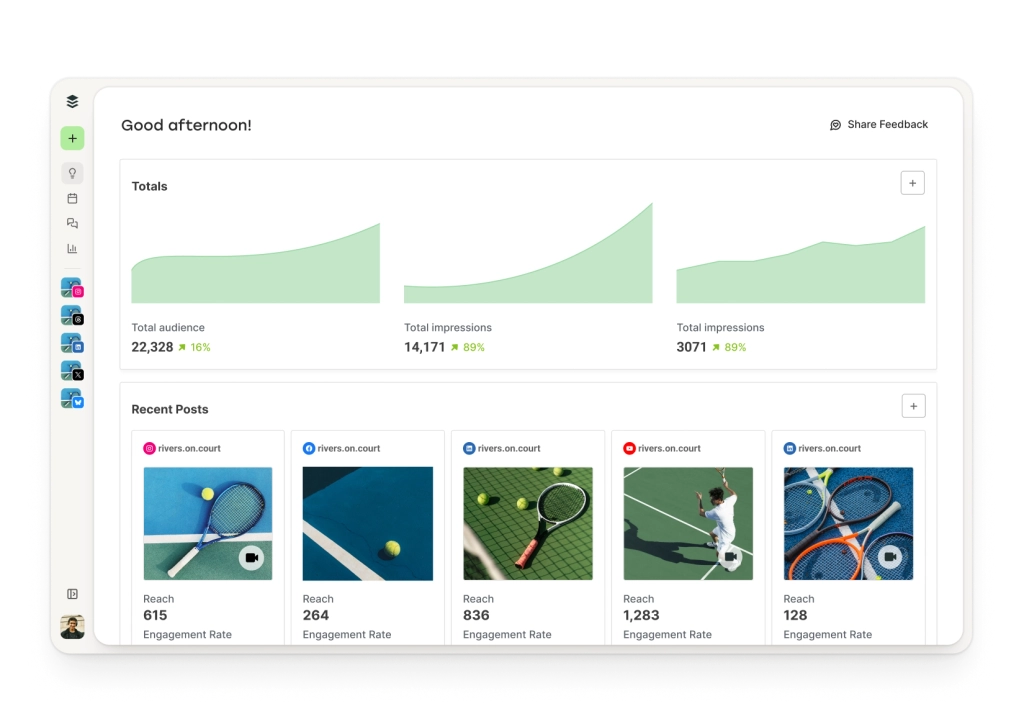
Buffer’s Create Space serves as a versatile ideas hub, allowing users to collect notes, text snippets, links, and media. A flexible Kanban-style board facilitates the progression of ideas from concept to publish-ready posts. Integrated templates and the unlimited AI Assistant provide a frictionless starting point. Furthermore, Buffer’s browser extension (Chrome, Safari, Opera, Firefox, Edge) enables seamless content curation from across the web, while its Feeds feature automatically pulls content from RSS feeds, blogs, and YouTube channels, making content curation and trend monitoring an integrated part of the workflow.
Later’s idea space is more heavily reliant on its AI capabilities. Users input a brand description, and the AI generates content pillars and initial post ideas. This structured, AI-first approach provides a clear starting point for content generation, though it is more narrowly focused on prompt-driven ideation rather than broad content curation from diverse external sources.
Audience Engagement: Fostering Community and Managing Interactions
Engaging with an audience is fundamental to building a loyal community. Buffer and Later approach engagement management with differing feature sets and accessibility.
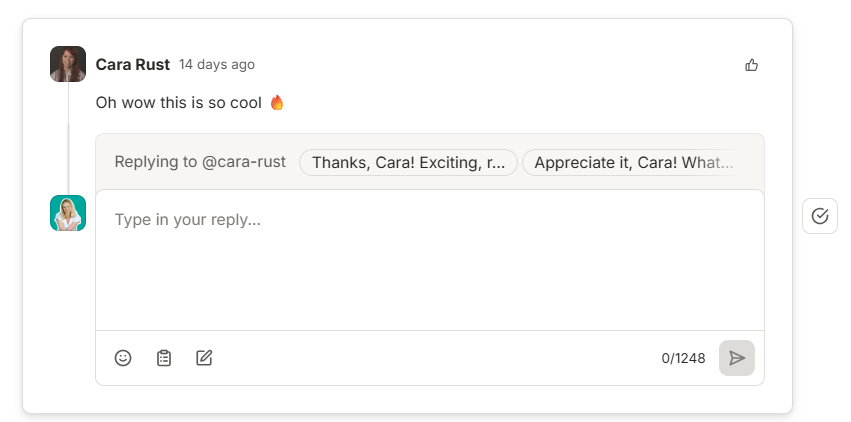
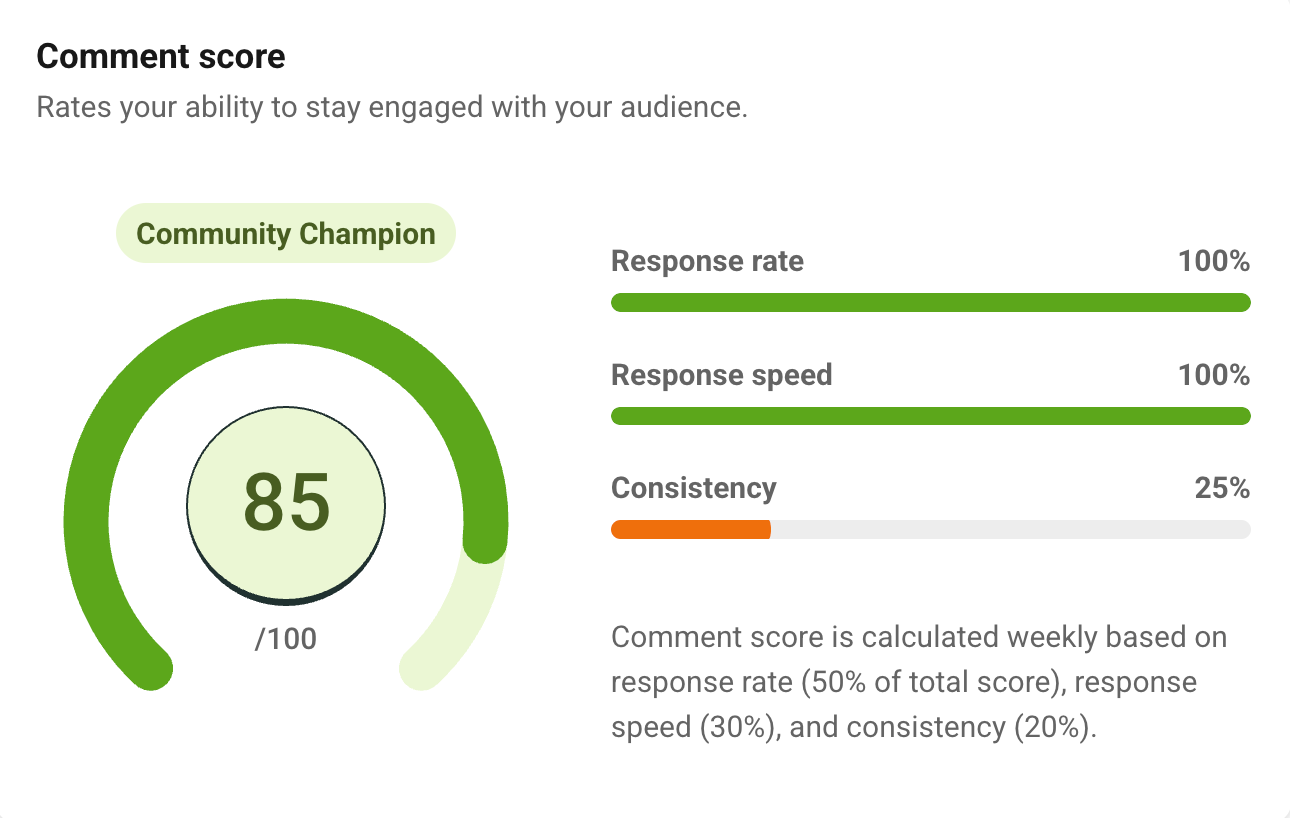
Buffer’s Community feature is available on all plans, including the free tier. This centralized inbox allows users to reply to comments across multiple accounts, with the AI Assistant offering response suggestions. A unique comment score tracks response speed and consistency, providing actionable insights into engagement performance. The ability to save common replies further streamlines interaction. This comprehensive, widely accessible engagement suite underscores Buffer’s commitment to enabling direct and proactive community building for all users.
Later’s Social Inbox, available on team plans, aggregates Instagram and Facebook DMs and comments, along with TikTok comments. A useful feature allows users to hide inappropriate comments directly from the inbox, removing them from public view. Later also offers a separate social listening tool, available as a paid add-on for Scale plan users, which monitors brand mentions, trending topics, and provides competitive benchmarking. While valuable, its additional cost and plan restrictions limit its broad accessibility compared to Buffer’s integrated engagement tools.
Analytics, Insights, and Reporting: Measuring Impact and Refining Strategy
Understanding content performance is crucial for optimizing social media strategy. Both platforms offer analytics, but they differ in platform coverage, depth of insight, and reporting capabilities.
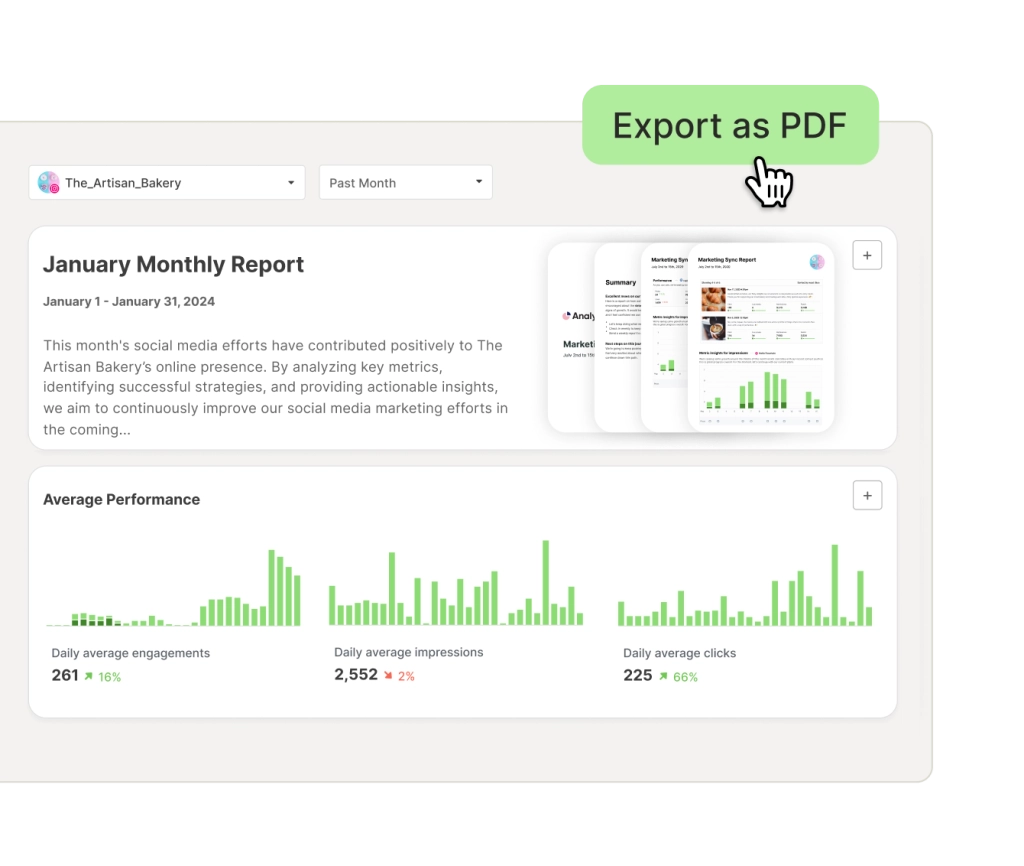
Buffer provides basic post analytics on all plans (including free) and advanced analytics on paid plans. It covers Facebook Pages, Instagram Business and Creator accounts, X/Twitter, and LinkedIn Pages and profiles. Its advanced analytics include a cross-channel overview, consolidating data into a single dashboard. A key differentiator is Buffer’s "Answers" tab, which provides personalized analysis and actionable recommendations on optimal posting times, content types, and engagement strategies. Users can also create customized PDF reports with logos and notes, facilitating professional communication of results.
Later’s analytics are primarily reserved for paid plans, though link-in-bio analytics are universally available. It offers deep performance insights for Instagram Business and Creator profiles, Facebook Pages, TikTok, Threads, and Pinterest. Later excels in providing granular audience demographics (gender, location, age) and pinpointing optimal posting times for Instagram and TikTok. While a cross-account analytics view is available, it is limited to the highest-tier plan. Reporting is primarily via CSV data export, though a shareable performance report link for Instagram (past 90 days) offers a convenient, in-depth analysis for that specific platform. Later does not support X/Twitter analytics, a significant omission for brands with a strong presence on that network.
Link-in-Bio Tools: Maximizing Profile Real Estate
Link-in-bio tools are essential for creators and businesses navigating platforms with single-link restrictions. Both Buffer and Later offer robust solutions for directing audience traffic.
Buffer’s Start Page is highly flexible, allowing users to create diverse landing pages with various content blocks, including multiple image grids or video carousels. This adaptability empowers users to showcase a wide range of content, products, or campaigns simultaneously, such as dedicated sections for latest products and brand collaborations.
Later’s Link in Bio page offers a structured approach, featuring an image banner carousel for multiple visuals. However, for most other content types, only one block can be used at a time (e.g., a YouTube video or a custom graphic, but not both simultaneously). A notable integration is with the affiliate marketing platform Mavely, enabling users to convert links into affiliate links directly within the tool for supported brands. While Buffer’s Start Page also supports affiliate links, they must be manually copied from the affiliate network.
Influencer Marketing: A Specialized Offering
Later distinguishes itself by offering a separate influencer marketing product designed for brands and agencies to manage campaigns, discover influencers, and measure results. This specialized suite includes features like Shopify integration for product seeding and optional creative support from Later’s team. Furthermore, creators using Later’s social media scheduling tools gain access to a Creator Hub, enabling them to build media kits, apply for campaigns, and manage collaborations within their existing plan.
Buffer, conversely, does not offer influencer marketing tools. Its strategic focus remains firmly on its core mission: providing accessible and sustainable social media publishing, engagement, and analytics for creators, small businesses, and solopreneurs. This concentrated approach ensures depth and refinement within its chosen domain.
Conclusion: Choosing the Right Platform
The choice between Buffer and Later ultimately hinges on specific organizational needs, budgetary considerations, and strategic priorities. Both are formidable tools in the social media management landscape, yet their inherent differences dictate their optimal use cases.
Buffer emerges as the stronger contender if you prioritize:
- Cost-effectiveness and flexibility: With a permanent free plan, channel-based pricing, and unlimited AI across all tiers, Buffer offers superior value for budget-conscious users or those with specific platform needs.
- Comprehensive platform support: Its wider array of supported social networks, including X/Twitter, Google Business, Mastodon, and Bluesky, caters to diverse digital strategies.
- Team scalability without rising costs: The unlimited user feature on its Team plan is invaluable for agencies and growing marketing departments.
- Efficient content operations: Features like bulk CSV scheduling, a dedicated hashtag manager, and a robust "Create Space" streamline content workflows.
- Proactive engagement and actionable insights: The "Community" feature with comment scores and the "Answers" tab in analytics provide unique value for improving audience interaction and strategic refinement.
- Open integration: The public API offers unparalleled customization potential for businesses with specific technical requirements.
Later might be the preferred choice if you are:
- Heavily invested in visual content and Instagram/TikTok: Its visual planner, Instagram-first workflows, and granular audience insights for these platforms are highly beneficial.
- Willing to pay for a bundled approach: The "social sets" model can be convenient for managing a comprehensive presence across its specific set of supported platforms.
- Seeking integrated influencer marketing capabilities: Its separate influencer marketing product and Creator Hub offer specialized tools for this niche.
- Comfortable with a credit-based AI model: If AI usage is sporadic or can be managed within credit limits, Later’s AI tools provide assistance.
In essence, Buffer champions accessibility, flexibility, and comprehensive core social media management with a strong emphasis on AI and team scalability. Later, while also robust, leans towards a more visually-oriented, Instagram-centric approach, with specialized add-ons for social listening and influencer marketing that cater to more advanced, specific needs. Both platforms offer 14-day free trials on their paid plans, allowing prospective users to test functionalities and determine the best fit for their brand’s unique journey in the dynamic world of social media.