
 Ali Ikhwan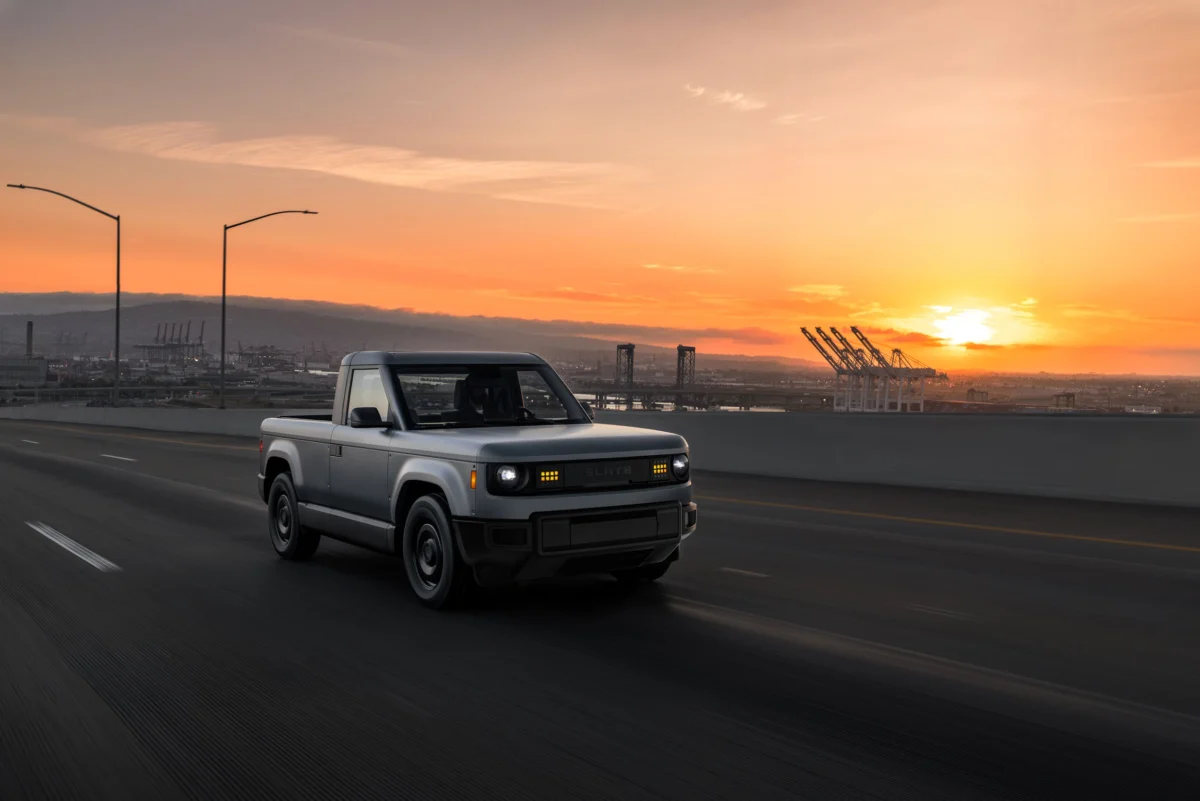
The American automotive landscape is undergoing a significant correction as the initial era of high-priced, oversized electric pickups gives way to a new focus on affordability and utilitarian design. This shift is punctuated by the emergence of Slate, a startup backed by Amazon founder Jeff Bezos, which has officially opened preorders for an electric truck priced at $24,950. This aggressive pricing strategy comes at a time when the average transaction price for a new vehicle in the United States has climbed above $50,000, and major legacy automakers like Ford are recalibrating their long-term electrification roadmaps.
The Evolution of the Electric Truck Market
The trajectory of the electric pickup segment has been volatile since its inception. In May 2021, Ford Motor Company captured global headlines with the announcement of the F-150 Lightning. At launch, the vehicle was framed as a revolutionary tool for both work and leisure, with a starting price for the entry-level "Pro" trim set at just under $40,000. However, as supply chain disruptions and battery material costs escalated, the pricing for the Lightning surged. By the time the fully-equipped Platinum trim reached consumers, the price tag often exceeded $90,000.
Despite initial enthusiasm and a massive backlog of reservations, the market for premium electric work trucks proved thinner than anticipated. By December 2025, Ford made the strategic decision to "pull the plug" on the F-150 Lightning in its current form, shifting its focus toward hybrid powertrains and a more compact, affordable electric truck platform developed by its internal "skunkworks" team.
This pivot by Ford reflects a broader industry realization: the mass market for electric vehicles (EVs) may not lie in electrified versions of traditional heavy-duty trucks, but in purpose-built, smaller vehicles that prioritize efficiency and cost-effectiveness. Slate’s entry into this market is a direct challenge to the status quo, offering a vehicle that costs less than half the price of the current industry average.
The Slate Proposition: Minimalism as a Feature
The Slate electric truck, often referred to by its base trim name "Blank Slate," achieves its $24,950 price point through a radical commitment to minimalism. Unlike contemporary EVs that compete on the size of their infotainment screens and the complexity of their driver-assistance systems, Slate has removed these features entirely.
The interior of the Slate truck lacks a traditional touchscreen. Instead, the dashboard features a universal clip designed to hold the driver’s smartphone, which serves as the primary interface for navigation and media. The windows are operated by manual winders, and the exterior body panels are made of a durable composite material with the color—a standard matte gray—molded directly into the substance. This eliminates the need for expensive paint shops and reduces the long-term maintenance costs associated with scratches and dents.
While the base model is austere, Slate has developed a modular ecosystem to allow for customization. The vehicle can be converted from a traditional pickup into one of two SUV body styles—the Squareback or the Fastback—starting at $29,950. Furthermore, the company plans to offer over 200 accessories, including roof racks and stereos, most of which are priced under $500. For consumers who wish to move beyond the standard gray, Slate offers full-vehicle color wraps for under $500, which can be applied in a matter of hours.
Technical Specifications and Performance
The Slate truck is powered by a 65-kWh lithium iron phosphate (LFP) battery pack. LFP chemistry is increasingly favored by manufacturers for budget-oriented vehicles because it is less expensive to produce than nickel-cobalt-based batteries and offers a longer cycle life. Slate claims the truck delivers a range of 205 miles on a single charge, a 37 percent improvement over the company’s initial estimates of 150 miles.
In terms of performance, the Slate is designed for utility rather than speed:
- Drivetrain: Rear-wheel drive, single-motor configuration.
- Acceleration: 0 to 60 mph in approximately 8 seconds.
- Top Speed: 90 mph.
- Towing Capacity: 2,000 pounds.
- Payload Capacity: 1,550 pounds.
The vehicle’s charging capabilities are tailored for both commercial and residential use. It supports DC fast charging at up to 120 kW, allowing the battery to go from 20 percent to 80 percent in roughly 30 minutes. Conversely, a full charge using a standard home outlet could take up to 17 hours, suggesting that the vehicle is best suited for owners with access to dedicated Level 2 charging infrastructure.

Comparative Dimensions and Packaging
One of the most notable aspects of the Slate is its footprint. At 175 inches long, 71 inches wide, and 69 inches tall, it is significantly smaller than the Ford Maverick, currently the most popular compact pickup in the U.S. market. However, due to the space-saving nature of its electric powertrain, Slate has managed to fit a 60-inch cargo bed into the frame, outperforming the Maverick’s 54-inch bed.
This focus on exterior compactness does come at a cost to interior volume. The cabin offers 41.5 inches of front legroom and 40.4 inches of headroom, which may feel constrained for larger occupants. The SUV variants, which add a second row of seating, provide only 30.8 inches of rear legroom, positioning them more as occasional-use seats rather than primary transport for four adults.
Manufacturing and Service Infrastructure
To support its ambitious production goals, Slate is investing nearly $400 million to reindustrialize a factory in Warsaw, Indiana. This facility is expected to handle the assembly of the vehicle’s composite body and the integration of its powertrain. The choice of Indiana, a state with a deep history in automotive manufacturing, provides Slate with access to a skilled labor pool and established logistics networks.
Maintenance is another area where Slate is attempting to disrupt the traditional dealership model. The vehicle is engineered with less than half the parts of a conventional internal combustion engine pickup, which theoretically reduces the frequency of mechanical failure. For repairs that do arise, Slate has introduced "Slate U," a comprehensive DIY repair guide for owners. For those who prefer professional service, the company has partnered with over 3,000 RepairPal-certified shops across the United States. The powertrain and battery are backed by a 10-year or 110,000-mile warranty, signaling the company’s confidence in the durability of the LFP technology.
Market Analysis and Economic Headwinds
Despite the strong interest indicated by 180,000 preorders, Slate faces a challenging economic environment. Data from Edmunds reveals a sharp decline in the availability of affordable vehicles. In 2019, approximately 21 percent of new vehicles sold in the U.S. were priced at or below $25,000. By 2025, that figure is projected to drop below 5 percent.
Ivan Drury, Edmunds’ director of insights, noted that Slate’s strategy is a significant gamble on consumer psychology. "Slate is making a $25,000 bet that drivers still want something simple," Drury stated. "Our data shows the market walked away from that price years ago, so this is a real test of how much affordability still matters."
The challenge for Slate will be converting reservations into actual sales. The Tesla Cybertruck, which initially garnered over a million reservations, has seen a fluctuating conversion rate as final pricing and specifications deviated from original promises. Slate’s ability to maintain its $24,950 price point through the start of mass production will be the primary determinant of its success.
The Broader Impact on the EV Industry
The emergence of Slate and the downsizing of electric trucks from companies like Telo—which is preparing to launch its MT1 mini-truck—suggests a fragmentation of the EV market. While the luxury segment remains dominated by Tesla, Rivian, and high-end offerings from General Motors and Ford, a new "utilitarian" segment is forming.
This segment prioritizes "total cost of ownership" over "0-60 times" or "autonomous driving features." If Slate succeeds, it could force legacy automakers to accelerate their own affordable EV programs. Ford’s aforementioned "skunkworks" project is already a response to this pressure, as the company seeks to defend its dominant position in the truck market against both domestic startups and the potential entry of low-cost electric vehicles from international markets.
As the first deliveries of the Slate are expected at the end of this year, the industry will be watching closely to see if a no-frills, back-to-basics approach can reignite the mass-market transition to electric mobility. If the "Blank Slate" can fulfill its promise, it may prove that the future of the electric truck is not just electric, but also attainable.







