 Ali Ikhwan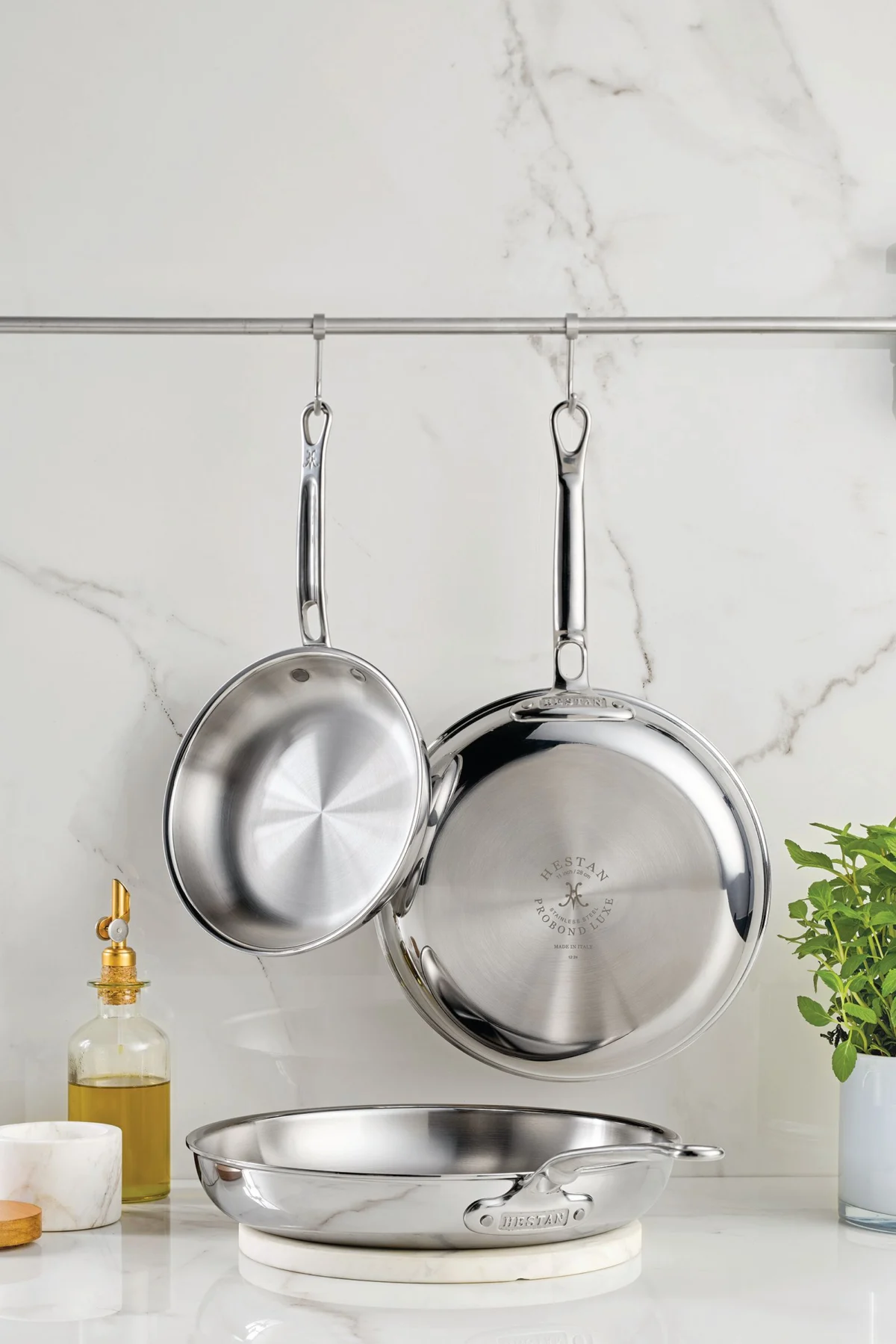
The landscape of professional and consumer cookware is currently undergoing a significant transition, driven by a growing disillusionment with short-lived non-stick technologies and a renewed focus on metallurgical durability. For decades, the culinary industry has cycled through various material fetishes, from the heavy-duty tradition of cast iron to the responsive but high-maintenance elegance of copper and carbon steel. However, recent market data and consumer sentiment indicate a decisive return to stainless steel as the primary workhorse of the modern kitchen. This shift is prompted not only by the material’s inherent longevity but also by the technical failures of the alternatives that preceded it.
The Historical Context of the Non-Stick Decline
The trajectory of skillet technology took a definitive turn in the 1980s, marked by the widespread commercialization of polytetrafluoroethylene (PTFE), commonly known by the brand name Teflon. These pans offered a revolutionary, effortless release for delicate foods like omelets and fish, fundamentally changing home cooking. However, the category faced a severe reckoning in the early 21st century. Research into the environmental and health impacts of perfluorooctanoic acid (PFOA), a chemical formerly used in the manufacturing of Teflon, led to a massive industry pivot.
While modern PTFE is PFOA-free, the category’s reputation suffered, and its propensity to release harmful fumes when overheated—a phenomenon known as polymer fume fever—remains a concern for many consumers. The subsequent rise of ceramic non-stick coatings, marketed as a safer and more "natural" alternative, initially filled the market void. However, longitudinal consumer data has revealed that ceramic coatings are significantly less durable than their predecessors, often losing their non-stick properties within six to twelve months of regular use. This "planned obsolescence" of non-stick cookware has paved the way for the resurgence of multi-clad stainless steel, a category marketed on the promise of "buy-it-for-life" (BIFL) durability.
Methodology and Technical Parameters of Comparative Testing
To evaluate the current state of the premium skillet market, a comprehensive technical analysis was conducted on several leading models: the industry-standard All-Clad D3, the Hestan ProBond Luxe, the Heritage Steel Titanium Series, and the Viking Pure Glide Pro. The testing sought to move beyond anecdotal kitchen experience, employing standardized metrics to assess thermal distribution, structural integrity, and ergonomic efficiency.
The testing environment utilized a high-output induction cooktop, which provides the most demanding environment for cookware due to its reliance on magnetic friction. Each pan was subjected to a standardized pre-heating cycle of 3.5 minutes on a medium-low setting. Thermal imaging and surface probes were utilized to measure temperature variance across the cooking surface. Furthermore, the structural flatness of each pan—a critical factor for induction efficiency—was measured using a precision feeler gauge set to determine the "Warp Gap," or the distance between the center of the pan and the cooking surface.
The All-Clad Baseline and Manufacturing Tolerances
For over three decades, the All-Clad D3 (Tri-Ply) has served as the benchmark for professional-grade cookware. Its design, featuring an aluminum core sandwiched between layers of stainless steel, provided the blueprint for the modern clad skillet. However, recent quality control assessments have raised questions regarding the brand’s current manufacturing tolerances.
In standardized testing, a factory-new All-Clad D3 10-inch fry pan exhibited noticeable "doming"—a convex curvature where the center of the pan is higher than the edges. While All-Clad representatives have stated that a certain degree of doming is within their established manufacturing tolerances to allow for metal expansion when heated, this physical trait can cause cooking fats to migrate to the perimeter of the pan, leading to uneven searing. Additionally, inconsistencies in rivet application were observed, suggesting that even established market leaders are facing challenges in maintaining historical quality standards amidst high-volume production.
Thermal Performance Data and Hot Spot Analysis
The most striking data point emerged from the thermal distribution tests. Most premium pans, including the Heritage Steel and Hestan models, showed remarkable uniformity. On an induction burner, these pans maintained an average surface temperature of 150 degrees Fahrenheit with a variance of only 14 to 21 degrees across the entire surface. This level of consistency ensures that proteins sear evenly without the need for constant repositioning.

In contrast, the Viking Pure Glide Pro demonstrated significant thermal management failures. Despite its innovative design—incorporating a titanium-textured surface over an aluminum core—the Viking pans reached surface temperatures exceeding 350 degrees Fahrenheit on the same burner setting that produced 150 degrees in the competition. These extreme hot spots suggest a failure in the cladding’s ability to distribute heat laterally, potentially leading to scorched food and permanent pan warping. The Viking model also exhibited the highest Warp Gap in the study, with oil forming a distinct "moat" around the center of the pan immediately upon heating.
Engineering Innovations: Heritage Steel and Hestan
The analysis identified two brands that are successfully challenging the established market hierarchy through superior engineering and material selection.
Heritage Steel Titanium Series
Heritage Steel, a family-owned American manufacturer, has focused on metallurgical enhancements. Their Titanium Series utilizes 316Ti stainless steel for the cooking surface. This alloy includes titanium and molybdenum, which increase the metal’s resistance to corrosion and "pitting," particularly when cooking with acidic foods or salt. In high-heat stir-fry tests, the 12-inch Heritage Steel skillet maintained absolute structural flatness, a rarity in the category. At a price point of approximately $150 for the 10.5-inch model, it matches the cost of the All-Clad D3 while offering a more robust material profile.
Hestan ProBond Luxe
Hestan has addressed the secondary frustrations of stainless steel ownership: ergonomics and maintenance. The ProBond Luxe series features several design innovations that distinguish it from traditional cladding:
- Countersunk Rivets: By making the interior rivets flush with the pan wall, Hestan eliminates the food traps common in traditional designs, significantly easing the cleaning process.
- Sealed Rims: Unlike many competitors whose aluminum cores are exposed at the rim, Hestan seals the edges with stainless steel. This protects the core from the corrosive chemicals found in commercial and residential dishwashers.
- Curved Sidewalls: The specific geometry of the ProBond Luxe walls is engineered to facilitate the "skillet toss," improving the efficiency of sautéing vegetables and delicate proteins.
Broader Industry Implications and the Induction Shift
The results of this analysis highlight a broader trend in the kitchenware industry: the "induction-readiness" of a pan is no longer just about magnetism; it is about precision engineering. As induction cooktops become more prevalent in both professional and residential kitchens due to their energy efficiency and safety, the demand for "wicked flat" pans will only increase.
Furthermore, the data suggests that price is not always a direct proxy for performance. While the Hestan ProBond Luxe commands a premium (approximately $200 for an 11-inch model), its dishwasher-safe construction and ergonomic advantages provide a tangible return on investment for the frequent cook. Conversely, the failures of the Viking Pure Glide Pro serve as a cautionary tale for the industry, proving that novel surface coatings cannot compensate for a lack of structural and thermal stability.
Conclusion: The Path Forward for Consumer Cookware
The cookware market is currently in a state of "re-professionalization." Consumers are increasingly willing to invest $150 to $250 in a single, high-quality skillet rather than purchasing a full set of lower-tier non-stick pans every few years. This shift toward the BIFL philosophy is both an economic and an environmental win, reducing the volume of disposable cookware entering landfills.
The technical analysis concludes that while the All-Clad D3 remains a viable option, it no longer holds a monopoly on quality. Brands like Heritage Steel and Hestan are pushing the boundaries of what stainless steel can achieve, offering better thermal consistency, superior flat-bottom stability, and enhanced ease of maintenance. For the modern consumer, the recommendation is clear: prioritize structural flatness and thermal uniformity over brand legacy. As the market continues to evolve, the "perfect skillet" will be defined not by its non-stick coating, but by the precision of its cladding and the durability of its metallurgy.