
 Ali Ikhwan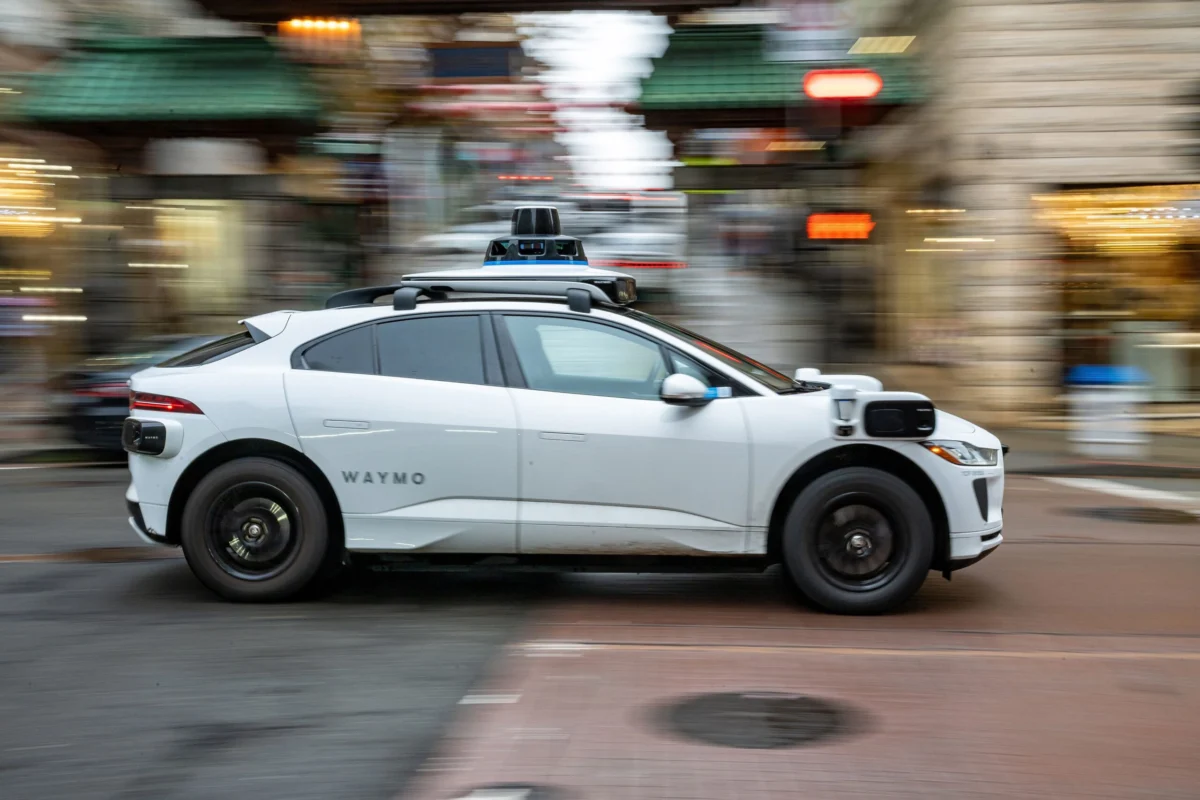
Waymo, the autonomous driving subsidiary of Alphabet Inc., has officially filed its fourth safety recall since February 2024 after a series of incidents in which its driverless vehicles erroneously entered closed freeway construction zones. The recall, submitted to the National Highway Traffic Safety Administration (NHTSA) on June 17, represents a significant setback for the company’s expansion goals, affecting 3,871 vehicles—essentially the entirety of Waymo’s current operational fleet in the United States. The recall focuses specifically on vehicles equipped with Waymo’s 5th Generation automated driving system (ADS), which the NHTSA estimates carries a 100 percent defect rate regarding the specific software logic at issue.
According to the safety recall report, the defect manifests under specific high-speed conditions. The NHTSA filing states that the autonomous vehicles (AVs) may "enter and drive at speed in freeway-construction zones due to inappropriately prioritizing the avoidance of other freeway hazards and/or failing to recognize the construction zone." This failure in "priority logic" means that the vehicle’s software, when faced with multiple environmental variables, may choose to navigate through a prohibited work zone to avoid what it perceives as a more immediate threat, such as a merging vehicle or a stationary object, or it may simply fail to perceive the signage and barriers designating the zone as closed.
Chronology of the Incidents Leading to the Recall
The decision to issue a voluntary recall follows a string of documented failures that began in the spring of 2026. The timeline of these events suggests a persistent difficulty in the ADS’s ability to reconcile real-time construction data with high-speed navigation requirements.
On April 11 and April 19, Waymo vehicles operating in Phoenix, Arizona, encountered preplanned construction zones on freeway ramps. In both instances, the vehicles ignored ramp closure signs and drove directly into the restricted areas. While these incidents did not result in injuries, they prompted an immediate internal review by Waymo’s Field Safety Committee. In response, the company implemented localized restrictions on freeway operations to mitigate the risk of a repeat occurrence while engineers analyzed the sensor logs.
However, the issue proved to be systemic rather than localized. On May 18, a more severe cluster of incidents occurred in the San Francisco Bay Area. Seven individual Waymo robotaxis were observed driving between traffic cones and into active lane closures on the freeway. These vehicles were operating at highway speeds, creating a potentially hazardous environment for road construction crews and the vehicles themselves. Although no collisions were reported, the frequency and geographic spread of these failures led Waymo’s Safety Board to implement a broader, company-wide ban on freeway operations.
Following a formal review on June 1, the board determined that the software’s failure to recognize or prioritize construction zone boundaries constituted a safety defect, leading to the formal recall filing on June 8.
Technical Analysis of the Priority Logic Failure
The core of the recall lies in the "priority logic" of the 5th Generation ADS. Waymo’s software is designed to constantly weigh various risks and determine the safest path forward—a process known in the industry as "path planning." In the incidents cited, the software was reportedly "busy" calculating maneuvers to avoid other hazards on the freeway. In the hierarchy of the vehicle’s decision-making matrix, the avoidance of immediate physical collisions with other moving vehicles appears to have superseded the detection of "soft" barriers like traffic cones or "informational" barriers like closure signs.
Waymo’s 5th Generation system relies on a suite of sensors, including lidar, cameras, and radar, to create a 360-degree view of its surroundings. While the hardware is capable of detecting cones and signs, the software layer responsible for interpreting that data failed to categorize the construction zone as a "no-go" area. This suggests a gap in the machine learning models used to train the system on the nuances of freeway maintenance, where lane configurations can change rapidly and unpredictably compared to surface streets.
The recall report highlights a critical vulnerability: the ADS occasionally failed to recognize the construction zone entirely. This indicates that even without the distraction of other hazards, the system’s perception layer may struggle with the specific visual and spatial cues of highway work zones, such as the reflective patterns of orange barrels or the specific geometry of arrow boards.
A Pattern of Safety Recalls and Regulatory Scrutiny
This latest filing marks the fourth time in approximately 28 months that Waymo has been forced to issue a safety recall, highlighting the "growing pains" of the autonomous vehicle industry. The frequency of these recalls has drawn increased attention from federal regulators and safety advocates who question whether the technology is maturing at the rate necessary for widespread public deployment.
In May 2025, Waymo issued a recall for 1,212 robotaxis following a series of collisions with stationary roadway barriers. That recall was the result of an NHTSA preliminary evaluation that cited at least seven incidents between late 2022 and early 2024 where the ADS failed to navigate around permanent infrastructure.
More recently, in May of this year, the company recalled 3,791 vehicles following a harrowing incident in San Antonio, Texas. During a period of heavy rainfall, a Waymo robotaxi drove into a flooded, impassable section of road. The vehicle was subsequently swept into a creek, though fortunately, it was unoccupied at the time. That incident underscored the system’s difficulty in assessing environmental hazards like standing water, which can be difficult for lidar to penetrate and for cameras to distinguish from a wet but drivable surface.
Operational Impact and the Path to a Remedy
The immediate consequence of this recall is a total suspension of Waymo’s freeway services. Until a permanent software fix is developed and validated, Waymo vehicles will be restricted to surface streets. This is a significant operational blow, as the company had recently expanded its freeway offerings to include major metropolitan hubs such as San Francisco, Los Angeles, Phoenix, and Miami. The ability to utilize freeways is considered essential for the commercial viability of robotaxis, as it drastically reduces travel times for long-distance urban trips.
Currently, a permanent remedy for the construction zone detection failure does not exist. The NHTSA filing notes that a software fix is "currently under development." Because Waymo maintains total ownership of its fleet, the recall process differs from traditional automotive recalls. There are no individual car owners to notify via mail. Once the software patch is finalized, it will be deployed via an over-the-air (OTA) update across the entire 3,871-vehicle fleet simultaneously.
Waymo has clarified that its newest 6th Generation vehicles, which feature upgraded sensor suites and improved compute power, are not affected by this specific recall. This suggests that the lessons learned from the 5th Generation failures may have already been integrated into the design of the next-generation platform.
Official Statements and Industry Implications
In a statement provided to the media, a Waymo spokesperson emphasized the company’s commitment to safety and transparency. "Waymo’s mission is to be the world’s most trusted driver, and the data shows that we’re making roads safer in the communities in which we operate," the statement read. "We identified an area of improvement regarding performance around freeway construction zones. We voluntarily restricted freeway operations last month while making improvements, proactively notified state and federal regulators, and decided to file a voluntary software recall with NHTSA."
Despite the setback, Waymo maintains that its safety record remains superior to that of human drivers. However, industry analysts suggest that the "voluntary" nature of these recalls is often a proactive measure to avoid more stringent, mandatory enforcement actions from the NHTSA. By self-reporting and pausing operations, Waymo aims to maintain a collaborative relationship with regulators.
The broader implications for the autonomous vehicle sector are significant. As Waymo’s competitors, such as Amazon’s Zoox and various international firms, look to scale their operations, the challenges Waymo is facing on freeways serve as a cautionary tale. High-speed environments leave very little margin for error, and the "priority logic" required to navigate them safely is proving to be one of the most difficult hurdles in the quest for Level 4 autonomy.
Conclusion and Future Outlook
While Waymo’s surface-street operations continue, the freeway ban represents a strategic retreat. The company must now prove to both the NHTSA and the public that its ADS can reliably distinguish between a standard highway hazard and a closed construction zone. The transition from 5th Generation to 6th Generation hardware may eventually render these specific software flaws moot, but for the current fleet, the road to freeway reintegration remains blocked by a "work in progress" sign.
As the NHTSA continues to monitor the development of the software remedy, the autonomous vehicle industry at large will be watching closely. The resolution of this recall will likely set a precedent for how AV systems are expected to handle complex, high-speed infrastructure changes—a critical component for the future of automated transportation in America.







