
 Ali Ikhwan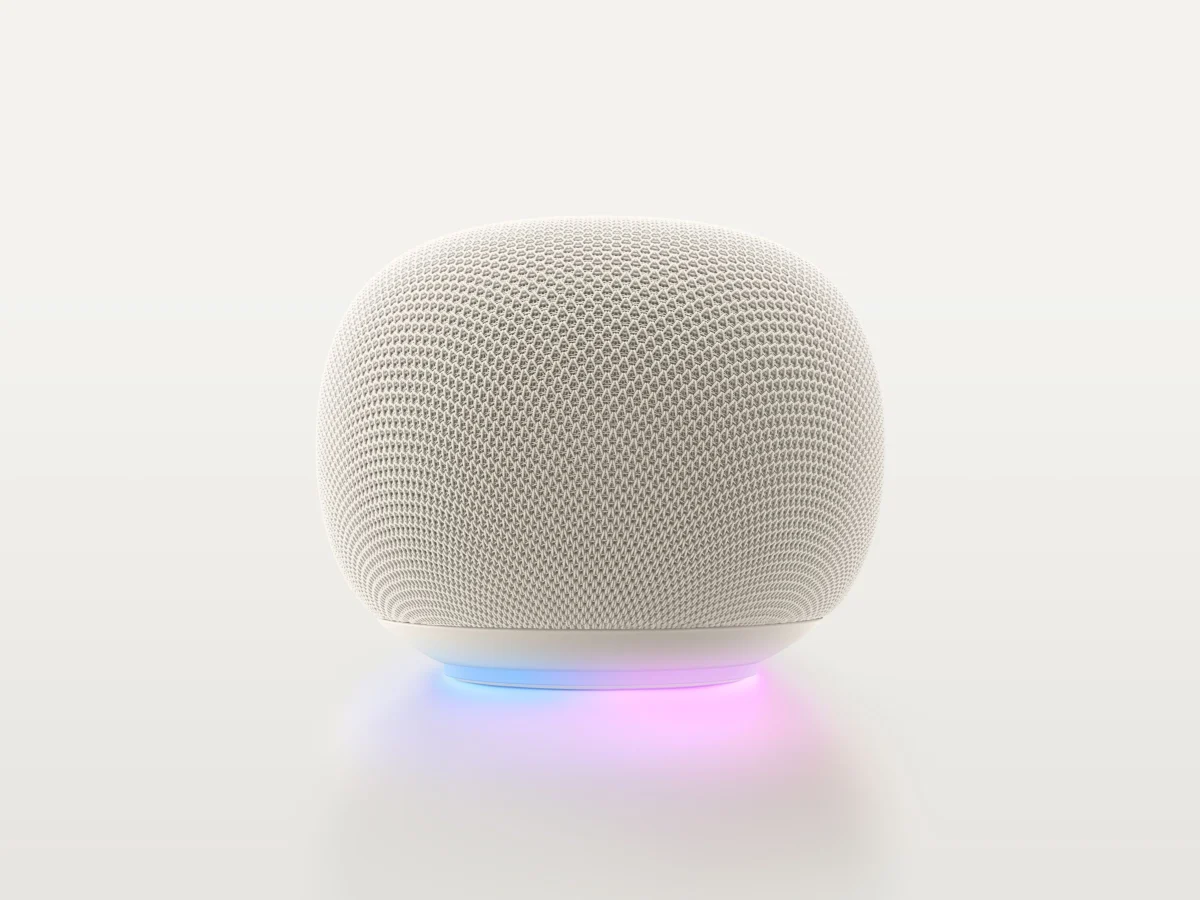
The landscape of the smart home market has undergone a significant transformation since Google last released a dedicated smart speaker during the height of the global pandemic. After a six-year hiatus from the dedicated speaker category, the technology giant has officially returned with the launch of the Google Home Speaker. This new hardware marks a pivotal shift in the company’s consumer AI strategy, serving as the primary vessel for the new Gemini assistant, which effectively replaces the legacy Google Assistant that has powered the company’s ecosystem for nearly a decade.
While Google initially teased the device during an event last autumn alongside refreshed Nest security cameras and video doorbells, the company has now confirmed the final rollout details. Preorders for the Google Home Speaker are scheduled to begin on June 17, with general retail availability starting June 25. The device is positioned at a competitive $100 price point and will be available in four distinct colorways: Berry, Jade, Hazel, and Porcelain. Notably, the Berry and Jade options are exclusive to the United States market at launch, reflecting a regional strategy for the company’s aesthetic branding.
The Transition from Google Assistant to Gemini AI
The most significant departure from previous iterations of Google’s home hardware is the internal architecture of the assistant. For years, Google Assistant relied on a more rigid, command-based structure that often required users to memorize specific phrasing to achieve desired results. The new Google Home Speaker is built from the ground up to showcase Gemini, Google’s sophisticated large language model (LLM).
The user experience, while retaining the familiar "Hey Google" wake word, is designed to feel substantially more fluid and human-centric. According to technical briefings, Gemini is capable of understanding natural, conversational speech patterns. This advancement allows users to issue complex queries without adhering to strict syntax. For instance, if a user makes an error or changes their mind mid-sentence, they can rephrase their request in real-time. Gemini is engineered to parse these corrections and understand the user’s ultimate intent, a task that frequently stymied the previous generation of smart speakers.

Furthermore, the speaker introduces enhanced multi-command processing. Users can now string together disparate requests in a single sentence, such as "Turn off the kitchen lights, set a timer for ten minutes, and play jazz in the living room," and the device will execute them sequentially. The "Continued Conversation" feature, which allows for follow-up questions without repeating the wake word, has also been expanded. Previously limited to English, this feature now supports all languages compatible with the Gemini platform, reflecting Google’s push for global parity in its AI offerings.
Advanced Integration with the Nest Ecosystem
The Google Home Speaker is designed to function as the central nervous system for the modern smart home, with a specific focus on deep integration with Nest security products. Through the Gemini interface, users can query the status of their home with unprecedented specificity. Because Gemini can analyze data from connected security cameras, users can ask questions such as, "Did a delivery arrive this afternoon?" or "Did the dog jump on the sofa while I was out?"
This level of semantic understanding of video feeds represents a significant leap in home monitoring. While some of these features have been rolled out to existing Google Home users who opted into the Gemini preview last year, the new speaker provides the dedicated hardware overhead to handle these requests more efficiently. The ability to cross-reference camera data with voice queries transforms the speaker from a simple media player into an active home auditor.
Hardware Specifications and the "Orb" Design Philosophy
From a design perspective, Google has moved away from the rectangular "pillow" shape of the 2020 Nest Audio in favor of a more compact, spherical "orb" design. This aesthetic choice aligns Google with contemporary industry trends established by Amazon’s Echo and Apple’s HomePod Mini. The orb shape is not merely a stylistic choice; it facilitates 360-degree "balanced" audio, allowing the device to deliver consistent sound quality regardless of its placement in a room.
Anish Kattukaran, Chief Product Officer at Google Nest and Google Home, noted that the company intentionally reduced the footprint of the device to make it more adaptable to various home environments. While the smaller size might suggest a compromise in audio fidelity, Google claims the Home Speaker offers a "massive upgrade" over the entry-level Nest Mini. The new model features a driver twice the size of its predecessor, delivering significantly more powerful bass and clearer mid-range tones.
%2520copy.jpg)
Technical specifications for the device include:
- Connectivity: Support for Wi-Fi 6 and Bluetooth 5.4.
- Smart Home Standards: Full integration with Matter and Thread, allowing the speaker to act as a hub for a wide range of third-party smart devices.
- Microphone Array: Three far-field microphones designed to isolate voice commands from background noise.
- Privacy: A dedicated physical hardware mute switch that electronically disconnects the microphones.
A new visual element is the inclusion of an LED "Glow Bar" or ring at the base of the speaker. This light ring illuminates the surface beneath the device, providing a clear visual cue when Gemini is listening or processing a request. This design language is expected to permeate Google’s upcoming hardware portfolio, including future laptops and mobile devices.
Gemini Live and the Subscription Model
To access the full suite of the speaker’s capabilities, Google is leaning into a subscription-based service model. While standard Gemini features are included with the purchase, the more advanced "Gemini Live" experience is tethered to a Google Home Premium subscription. Gemini Live allows for true back-and-forth verbal sparring with the AI, initiated by the command, "Hey Google, let’s talk." In this mode, the interaction feels less like a series of commands and more like a continuous conversation.
To incentivize adoption, Google is offering six months of Google Home Premium for free with every purchase of the new speaker. Beyond Gemini Live, the subscription provides:
- Natural Language Automations: The ability to create complex home routines using simple voice descriptions.
- Enhanced Video History: 30 days of event-based video storage for connected cameras.
- Intelligent Notifications: Smarter AI-driven alerts that can distinguish between people, animals, and vehicles with higher accuracy.
Market Context and Competitive Landscape
The release of the Google Home Speaker arrives at a critical juncture for the consumer electronics industry. The "Smart Speaker Wars," which saw rapid growth in the mid-2010s before plateauing, are entering a second phase driven by generative AI.

Google’s internal data suggests a strong appetite for this transition. Since opening early access to Gemini in Google Home last fall, over 3.5 million households across 20 countries have adopted the platform. Kattukaran reported that users are engaging with Gemini twice as much as they did with the legacy Google Assistant. This spike in engagement is likely due to the increased utility of LLMs compared to the older, more limited voice-recognition software.
However, Google is not alone in this pursuit. Amazon is currently in the process of rolling out "Alexa+," a revamped version of its long-standing assistant that also utilizes generative AI to improve conversational abilities. Similarly, Apple recently announced significant upgrades to Siri, leveraging "Apple Intelligence" to provide more personalized and context-aware responses.
Analysis of Implications
The launch of the Google Home Speaker signifies more than just a hardware refresh; it is a declaration of the end of the "command-and-control" era of smart homes. By shifting the burden of understanding from the user to the AI, Google is attempting to lower the friction of home automation.
The move toward local processing models is also a noteworthy trend. By running certain AI models locally on the device, Google can improve response times and enhance privacy by reducing the amount of data sent to the cloud for basic sound isolation and voice recognition tasks. This "edge computing" approach is becoming a standard for high-end smart home devices that prioritize both performance and user security.
As the June 25 release date approaches, the industry will be watching closely to see if the $100 price point and the promise of a more "human" assistant can reignite consumer interest in dedicated smart speakers. With the inclusion of Matter and Thread support, Google is also positioning the device as a future-proof anchor for the increasingly interoperable smart home ecosystem. Whether users are willing to embrace the subscription-heavy model of "Premium" AI remains the primary question for Google’s long-term hardware sustainability.







