 Ali Ikhwan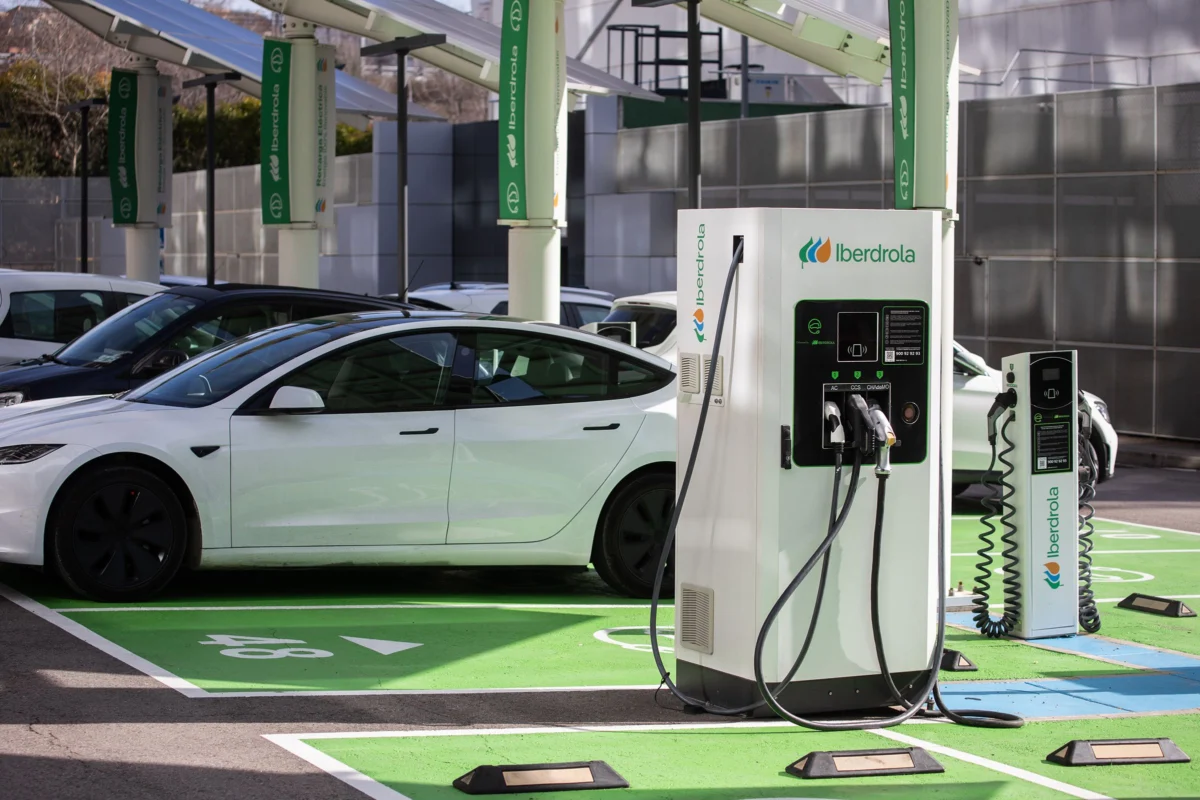
As the global automotive industry undergoes its most significant transformation in a century, the rapid proliferation of electric vehicles (EVs) has outpaced the development of robust cybersecurity frameworks designed to protect the underlying infrastructure. While the transition from internal combustion engines to electric powertrains is a cornerstone of international climate goals, it has introduced a complex, interconnected web of charging stations that represent a new and largely unprotected frontier for cyber warfare. In response to these emerging threats, researchers at the University of Malaga’s NICS Lab in Spain have unveiled a sophisticated security architecture that leverages decentralized artificial intelligence (AI) agents and blockchain technology to safeguard the global charging network.
The expansion of EV charging infrastructure is no longer a localized phenomenon but a critical component of national energy security. However, this expansion brings with it a host of cybersecurity risks that remain under-studied and under-addressed. According to Cristina Alcaraz, a leading infrastructure-security researcher at the University of Malaga and the lead author of the study, the inherent vulnerability of charging stations lies in their hybrid nature. These stations are not merely electrical outlets; they are sophisticated nodes that integrate multiple physical components, such as high-voltage power electronics and physical connectors, with digital layers including payment processing software, firmware, and network communication protocols. This "complex architecture," Alcaraz warns, provides a broad attack surface for malicious actors, ranging from individual fraudsters to state-sponsored entities seeking to destabilize national power grids.
The Evolution of EV Infrastructure Vulnerabilities
The history of electric vehicle charging is relatively brief, but the speed of its deployment has created a "security-by-design" deficit. In the early 2010s, charging stations were largely standalone units with minimal connectivity. However, the push for "smart charging"—the ability to manage electrical loads based on grid demand—necessitated the integration of the Open Charge Point Protocol (OCPP). While OCPP has become the global standard for communication between charging stations and central management systems, it was originally designed for functionality and interoperability rather than high-level security.
As the number of EVs on the road surpassed 10 million globally in 2020 and surged toward 40 million by 2024, the stakes for protecting this infrastructure have escalated. Current monitoring systems typically rely on centralized oversight, where a single server monitors thousands of chargers. The Malaga research team points out that this centralized model is fundamentally flawed for a modern, distributed grid. Centralized systems often suffer from "visibility gaps," where they can see that a network is underperforming but cannot pinpoint whether the issue is a localized hardware failure, a software glitch, or a sophisticated, multi-vector cyberattack spreading through the region.
A Decentralized Defense: AI Agents and Opinion Dynamics
The breakthrough proposed by the NICS Lab involves the deployment of autonomous AI agents directly into the charging infrastructure. Rather than relying on a distant central server to make decisions, each charging station or cluster of components is equipped with its own intelligent agent. These agents are tasked with continuously monitoring their immediate environment, analyzing electrical flows, communication packets, and user authentication patterns in real time.
The most innovative aspect of this proposal is the use of a mathematical framework known as "opinion dynamics." This approach is modeled after human social behavior, where individuals exchange information and adjust their perspectives to reach a collective consensus. In the context of EV security, if one AI agent detects an anomaly—such as an unusual surge in power demand or a suspicious login attempt—it does not act in isolation. Instead, it shares its findings with neighboring agents.
Through this collaborative process, the agents compare local data with regional trends. If multiple agents across a city detect similar patterns, the system can confirm a coordinated attack with high confidence. Conversely, if only one agent reports an issue that its neighbors do not see, the system can categorize it as a localized hardware fault. This consensus mechanism significantly reduces the rate of false positives, a common problem in automated security systems that can lead to unnecessary and costly service shutdowns.
The Role of Blockchain as an Immutable Ledger
To ensure that the AI agents themselves are not compromised, the researchers integrated blockchain technology into the architecture. In a traditional system, a hacker who gains access to the central server could alter logs to hide their tracks. In the Malaga model, every transaction, diagnostic report, and consensus decision made by the AI agents is recorded on a distributed ledger.
Because blockchain records are immutable—meaning they cannot be changed or deleted once they are verified—the system provides an audit trail that is resistant to tampering. This ensures the integrity of the data and allows grid operators to conduct forensic analyses with the certainty that the information has not been manipulated. This "trust layer" is essential for the future of the "Energy Internet," where millions of devices will be autonomously trading energy and data.
Experimental Results and Data Analysis
The research team, whose work was recently published in the International Journal of Critical Infrastructure Protection, validated their proposal through a series of rigorous stress tests in a simulated environment. The simulation mirrored a high-density urban charging network compliant with the latest OCPP standards.
During the testing phase, the researchers introduced several "anomaly scenarios," including:
- Component Failures: Simulating the physical breakdown of a charging connector.
- Communication Link Errors: Mimicking a "Man-in-the-Middle" attack where data between the charger and the grid is intercepted.
- Coordinated Load Attacks: Simulating a scenario where a hacker attempts to turn thousands of chargers on and off simultaneously to create a frequency imbalance in the electrical grid.
The data from these experiments showed that the multi-agent system could identify and isolate threats significantly faster than traditional centralized monitors. Furthermore, the accuracy of the diagnoses improved as the number of participating agents increased, demonstrating the scalability of the solution. The integration of blockchain added a negligible amount of latency to the system, proving that high security does not necessarily have to come at the cost of operational efficiency.
Industry Implications and Global Grid Stability
The implications of this research extend far beyond the automotive sector. The stability of the modern electrical grid is increasingly dependent on the predictable behavior of large-scale loads, and EV charging represents one of the largest controllable loads in history. A successful cyberattack that gains control over a regional charging network could, in theory, be used to trigger a blackout by manipulating the demand for electricity in a way that overwhelms grid protections.
Industry reactions to the University of Malaga’s findings have been cautiously optimistic. Cybersecurity analysts note that while the technology is promising, its adoption will require a concerted effort from both hardware manufacturers and utility providers. "The challenge is not just the software, but the willingness of the industry to move away from proprietary, closed systems toward a more collaborative, decentralized security model," says one industry consultant familiar with the study.
From a policy perspective, the research arrives at a critical time. Governments in the United States, the European Union, and China are currently drafting new regulations for EV infrastructure. The Malaga study provides a technical blueprint for what "resilient infrastructure" should look like, suggesting that future mandates may require charging networks to possess autonomous detection and collaborative defense capabilities.
Chronology of EV Cybersecurity Milestones
- 2012: The first version of the Open Charge Point Protocol (OCPP 1.5) is released, focusing on basic interoperability.
- 2017: Security researchers demonstrate the ability to "brick" home charging stations via Wi-Fi vulnerabilities.
- 2020: The International Energy Agency (IEA) warns that the rapid growth of EVs poses new risks to grid stability if not managed securely.
- 2022: A series of high-profile hacks on public charging stations in Europe results in chargers displaying unauthorized messages on their screens, highlighting the vulnerability of the user interface layer.
- 2024: The University of Malaga publishes its breakthrough on AI-agent and blockchain-based security, offering a comprehensive solution for distributed network protection.
Conclusion: Toward a Self-Healing Grid
The work of the NICS lab represents a paradigm shift in how we conceive of infrastructure protection. By moving away from a "fortress" mentality—where a single wall protects a central core—and toward a "biological" model—where every cell in the body contributes to its overall immunity—the researchers have created a system that is inherently more resilient.
As the world continues its march toward a zero-emission future, the security of the EV charging network will remain a top priority. The integration of AI agents that can "talk" to one another and blockchain ledgers that cannot be lied to provides a formidable defense against the cyber threats of the 21st century. The University of Malaga’s proposal offers more than just a technical fix; it offers a vision for a smarter, safer, and more reliable global energy ecosystem.