
 Ali Ikhwan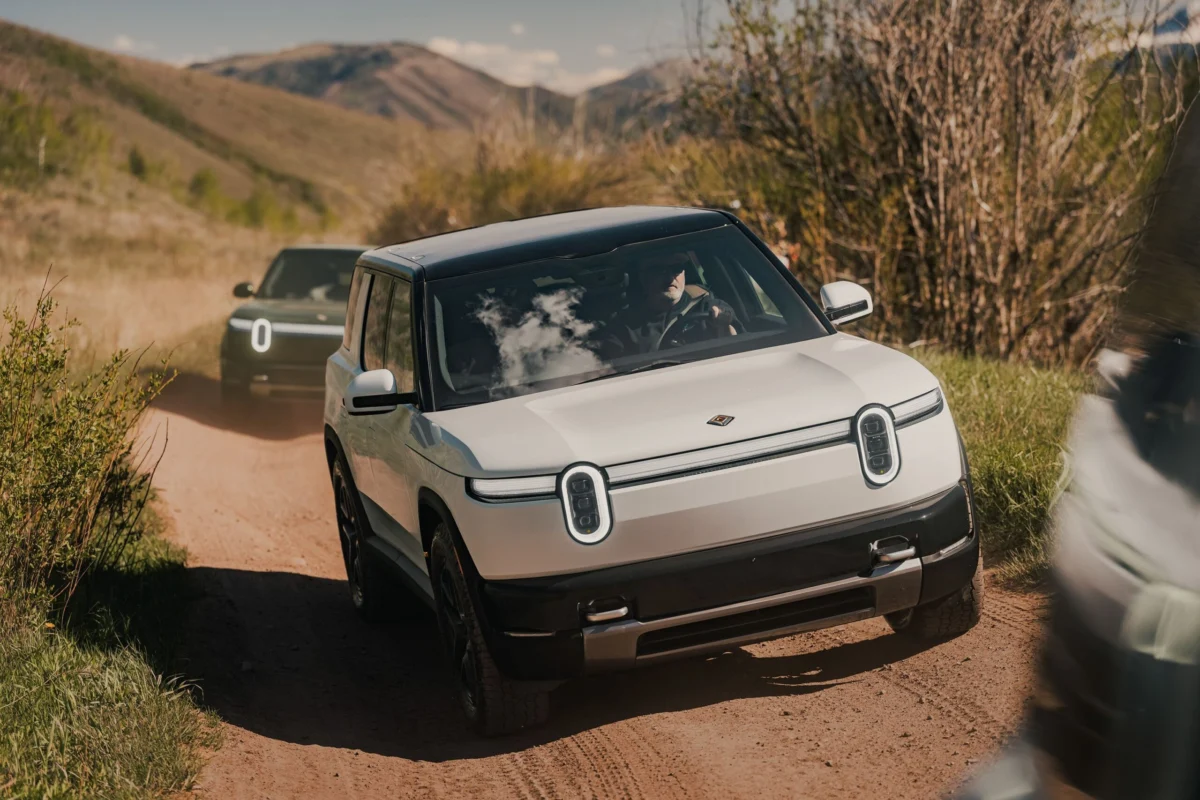
The trajectory of Rivian Automotive has often been described as a microcosm of the modern electric vehicle (EV) industry: a mixture of audacious engineering, astronomical capital requirements, and the relentless pressure of scaling in a market dominated by a single incumbent. RJ Scaringe, who founded the company in 2009 shortly after completing a PhD at MIT focused on internal combustion engines, now finds himself at a critical juncture. Having spent nearly a decade in "stealth mode" before a blockbuster debut at the 2018 LA Auto Show, Rivian has transitioned from a darling of Wall Street to a company fighting to prove its long-term viability through its upcoming mass-market platform, the R2.
As the company prepares for its next chapter, the financial and operational stakes could not be higher. Rivian reported a loss of $3.6 billion in 2025, contributing to a total cash burn of approximately $25 billion over the last eight years. Despite a record-breaking IPO in 2021 that briefly valued the company at over $100 billion—surpassing the market caps of legacy giants like Ford and General Motors—its stock has faced a precipitous decline, falling from a high of $130 to roughly $16. While Rivian has successfully delivered 175,000 vehicles since the R1 series went on sale in 2021, it remains a niche player compared to Tesla, which moved 8 million units in the same timeframe.
The Strategic Importance of the R2 Platform
For Scaringe and his leadership team, the R2 SUV is not merely a new product; it is the cornerstone of the company’s survival strategy. The R1T pickup and R1S SUV established Rivian as a premium brand, but their high price points limited their reach. The R2 is designed to compete in the high-volume mid-size SUV segment, directly challenging the Tesla Model Y.
1.jpg)
Scaringe has been candid about the consequences of the R2’s potential failure. The company’s entire infrastructure—from its 6,000-person engineering team to its proprietary silicon development and nationwide service network—was built with the expectation of high-volume sales. "To have a 6,000-person engineering team to sell 50,000 vehicles just wouldn’t make sense," Scaringe noted in a recent discussion regarding the company’s vertical integration. "If R2 were to be a flop, we would have to really take a step back and really reconfigure the business."
To support this expansion, Rivian is maximizing its current facility in Normal, Illinois, which has a capacity of 155,000 units. Simultaneously, the company is progressing on a massive new manufacturing complex in Georgia. Phase one of the Georgia plant has been upscaled to a 300,000-unit annual capacity to accommodate the R2, the subsequent R3, and future European exports.
Financial Lifelines and the Volkswagen Partnership
Despite its internal challenges, Rivian has secured significant external validation through strategic partnerships. In 2024, the Volkswagen Group committed up to $5.8 billion to a joint venture aimed at co-developing software and electrical architecture. This deal is transformative for both parties: it provides Rivian with much-needed capital and scale, while giving Volkswagen access to a modern tech stack that has eluded the German giant’s internal software division, Cariad.
Furthermore, Uber announced an investment of up to $1.25 billion in Rivian to develop and deploy a fleet of 50,000 fully autonomous robotaxis. These partnerships suggest that while Rivian’s balance sheet remains under pressure, its intellectual property—specifically its "zonal" electrical architecture and autonomous driving software—is viewed as world-class by industry peers.

The Autonomy Evolution: From Dead Ends to Data Flywheels
One of the more controversial aspects of Rivian’s journey has been the evolution of its autonomous driving technology. Early adopters of the R1 series, who paid upwards of $80,000 for their vehicles, recently discovered that their "Gen 1" autonomy systems are essentially a technical dead end. These systems were built on a Mobileye-based architecture that Rivian later realized would not scale to meet the demands of modern artificial intelligence.
Scaringe explained that the company shifted its strategy toward a "data flywheel" approach, utilizing Large Driving Models (LDM) and transformer-based encoding—the same technology underpinning Large Language Models (LLMs) like GPT-4. This shift led to the "Gen 2" architecture launched in late 2024.
The upcoming R2 will feature what Scaringe calls "Gen 2.5," an intermediary step that utilizes improved cameras and lidar. However, the true leap will occur with "Gen 3," which will feature in-house designed silicon capable of 1,600 trillion operations per second—a fourfold increase over the current Nvidia-based solutions. Scaringe has been careful to manage expectations, noting that while these vehicles will handle point-to-point supervised driving, "eyes-off" Level 4 autonomy is still a future milestone that the launch-version R2 will not support.
Navigating the Competitive Landscape: China and the "Luce" Influence
The global EV market is no longer a two-way race between startups and legacy OEMs; the emergence of Chinese tech giants like Xiaomi and BYD has rewritten the rules of speed and cost. Xiaomi, for instance, moved from its initial automotive announcement to vehicle production in just two years.
%252030.jpg)
Scaringe acknowledges that the West currently struggles to compete with China on manufacturing costs. Rivian’s strategy to counter this involves leveraging its technology through the Volkswagen partnership. The first product of this joint venture will be the Volkswagen ID.1, a $20,000 EV designed to compete directly with low-cost Chinese imports in Europe. By embedding Rivian’s tech stack into high-volume, low-cost vehicles, the company aims to prove its software can win on efficiency and user experience even when it cannot win on pure labor costs.
The conversation around user experience has also moved toward the physical cabin. In an era where many EVs are removing buttons in favor of touchscreens, Scaringe remains observant of design trends. He pointed to Ferrari’s "Luce"—an EV designed in collaboration with Jony Ive and Marc Newson—as a benchmark for intentional haptics and switchgear. Rivian’s response to this is the "Halo Wheel" on the R2 steering wheel, which uses software-defined haptic clicks to provide the tactile feel of a physical button while maintaining the flexibility of a digital interface.
Reliability vs. Brand Evangelicalism
A recurring paradox in Rivian’s market performance is its high customer satisfaction scores contrasted against low reliability ratings from organizations like Consumer Reports. Scaringe attributes this to the "lagging indicator" nature of reliability data, which often reflects the growing pains of the early 2021-2023 R1 production runs.
"We’d rather have a super-connected customer base," Scaringe said, emphasizing that brand loyalty provides the runway necessary to iron out manufacturing defects. He believes the R2 will represent a "significant step up" in reliability, benefiting from the lessons learned during the R1’s difficult birth.
%252031.jpg)
Chronology of Rivian’s Key Milestones
- 2009: RJ Scaringe founds Mainstream Motors (later Rivian) in Florida.
- 2018: Rivian debuts the R1T and R1S at the LA Auto Show after years of secrecy.
- 2021 (September): R1T production begins; Rivian becomes the first to market with a modern electric pickup.
- 2021 (November): Rivian goes public in one of the largest IPOs in US history.
- 2024: Volkswagen announces a $5.8 billion joint venture; Rivian launches Gen 2 architecture.
- 2025: Uber commits $1.25 billion for autonomous robotaxis; Rivian reports $3.6 billion annual loss.
- 2026 (Projected): Increased competition from luxury EV entrants like the Ferrari Luce.
- 2028 (Projected): Production begins at the Georgia manufacturing facility.
Broad Impact and Future Implications
The success or failure of Rivian serves as a litmus test for the "vertically integrated" startup model. Unlike traditional automakers that rely on a vast web of Tier-1 suppliers for software and electronics, Rivian’s decision to design its own silicon, motors, and gearboxes is a high-risk, high-reward gamble. If the R2 achieves the necessary scale, Rivian could achieve margins that rival Tesla’s. If it fails, the company may be forced to pivot into a pure technology provider for larger firms like Volkswagen.
As the industry moves toward 2030, the "underserved market" Scaringe describes—one currently dominated by a handful of Tesla models—will likely see a flood of new options. Rivian’s survival depends on whether it can maintain its "evangelical" customer base while transitioning from a boutique manufacturer of $80,000 adventure vehicles to a mass-market powerhouse. For now, Scaringe remains focused on the "data flywheel" and the looming production lines in Georgia, betting that the R2 will be the vehicle that finally moves the company from a visionary startup to a sustainable titan of the electric age.







