Muhammad Hendra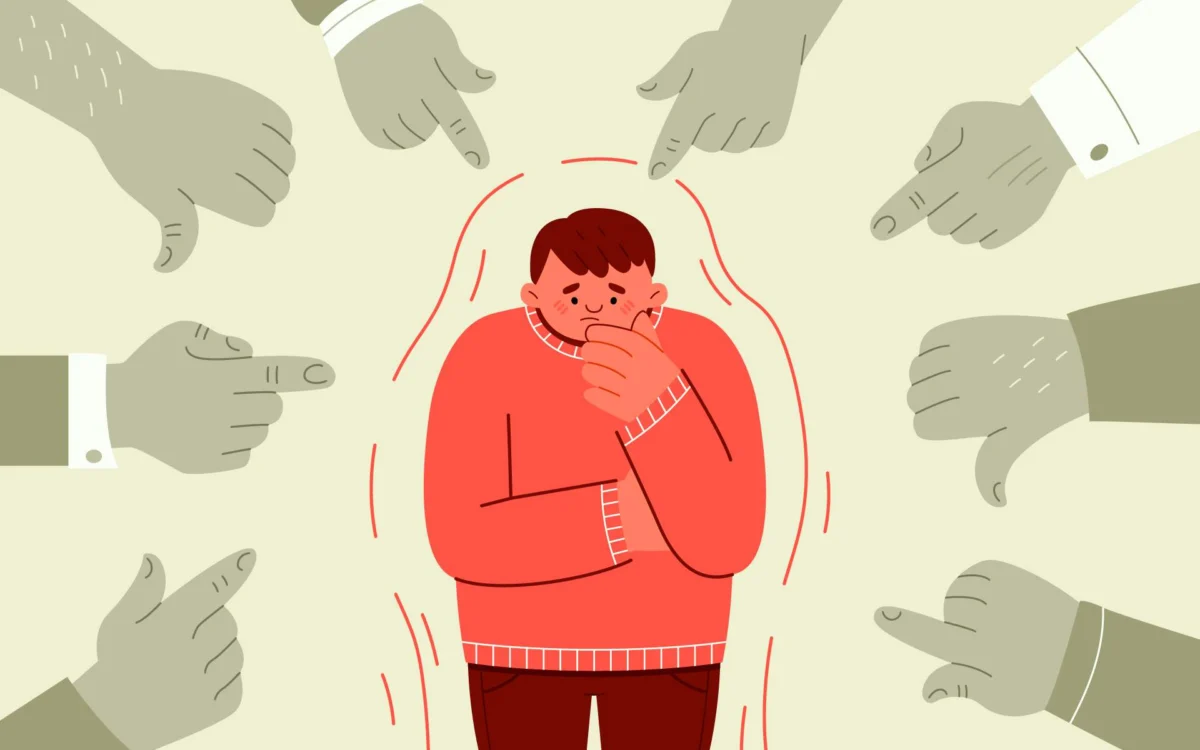
The series dramatically illustrates the crushing weight of these feelings through a pivotal scene where Shyanne experiences a profound breakdown. In a parking lot outside the chain restaurant where Margo works, Shyanne, after a failed attempt at babysitting her grandchild, hands the infant back to Margo. In a raw outburst, she declares herself a "horrible grandmother" and "horrible mother," asserting, "I wish I could be a better person, but I’m not!…and I will not be judged, by him or anyone else." This emotional collapse is a classic representation of a "shame spiral," a psychological phenomenon where individuals, feeling inadequate or having made a mistake, swiftly internalize these feelings, believing their entire self to be flawed. Such a spiral often leads to withdrawal and a profound sense of unworthiness, making it exceedingly difficult to engage in corrective behaviors or seek support. The narrative arc of Margo Has Money Problems thus offers a timely and relatable entry point into a broader societal discussion about how individuals and communities navigate these potent emotional states.
Unpacking the Dynamics of Shame and Guilt
While often used interchangeably in colloquial speech, psychological research meticulously differentiates between shame and guilt, highlighting their distinct impacts on human behavior and well-being. Guilt, as succinctly articulated by meditation teacher Caverly Morgan in her book The Heart of Who We Are, arises from the judgment that "something you’ve done is wrong." It is typically linked to a specific action or inaction, fostering a sense of remorse and a desire to make amends. Shame, by contrast, is a far more pervasive and debilitating emotion. Morgan defines it as the belief that "your whole self is wrong," implying a fundamental flaw in one’s identity rather than merely a mistake in behavior.
Brené Brown, a research professor and author widely recognized for her groundbreaking work on vulnerability, courage, shame, and empathy, further elaborates on this distinction. In her influential book Daring Greatly and extensive research, Brown describes guilt as "adaptive and helpful," often spurring accountability and constructive action. It allows individuals to acknowledge their wrongdoing, apologize, and take steps toward repair. Shame, however, is characterized by Brown as "the intensely painful feeling or experience of believing that we are flawed and therefore unworthy of love and belonging." She asserts that shame is neither helpful nor productive, often leading to isolation, defensiveness, and a resistance to change. Brown has consistently advocated for "an end to shame as a tool for change," arguing that its destructive power undermines personal growth and healthy relationships. Her research, often involving thousands of interviews, consistently reveals shame to be a core driver of addiction, aggression, depression, eating disorders, and bullying. Studies suggest that individuals prone to shame are more likely to experience chronic anxiety and low self-esteem, contributing significantly to the global burden of mental health issues.
Historical and Evolutionary Perspectives on Self-Conscious Emotions
The psychological understanding of shame and guilt has evolved significantly over centuries, moving from purely moral or religious interpretations to complex neurobiological and socio-evolutionary frameworks. Historically, many spiritual traditions viewed these emotions primarily through the lens of sin and moral transgression, with atonement practices designed to restore an individual’s standing within their community and with a divine power. The Enlightenment period brought a more secular philosophical inquiry into human morality, but it wasn’t until the advent of modern psychology in the late 19th and 20th centuries that shame and guilt began to be systematically studied as distinct emotional phenomena. Early psychoanalytic theories, particularly those of Sigmund Freud, explored guilt as a product of the superego, an internalized moral compass, while later humanistic psychologists like Carl Rogers emphasized the role of conditional positive regard in fostering feelings of unworthiness, akin to shame.
More contemporary research, particularly in evolutionary psychology, posits that emotions like shame and guilt are deeply embedded in human social functioning. Developmental psychologist Chris Moore, in his book The Power of Guilt, argues that guilt serves an essential purpose: to motivate individuals to repair harms and heal relationships. It acts as an internal alarm system, signaling that a social norm has been violated or a bond has been damaged, thereby prompting corrective action. Shame, in contrast, tends to have the opposite effect, causing individuals to withdraw from social interaction, potentially leaving relationships permanently fractured. Moore characterizes this tendency to retreat into a "deep dark place" as making shame a "dangerous drug," detrimental to personal and relational well-being.
Echoing this perspective, evolutionary psychologists like Dacher Keltner view shame as part of a family of "self-conscious emotions" – which also includes guilt, pride, and embarrassment – that play crucial roles in regulating social behavior. According to research in this field, shame serves the important function of appeasing observers of social transgressions, thereby helping to reestablish social harmony. A visible display of shame, such as blushing or averting one’s gaze, signals to others that an individual acknowledges their mistake and cares about the social consequences of their actions. This non-verbal communication can be vital in repairing trust and maintaining group cohesion. The common idiom "having no shame" is often used to describe individuals who appear indifferent to the social or moral implications of their behavior, indicating a disregard for communal norms and the feelings of others. This is frequently observed in public figures whose actions might be widely condemned, yet they show no outward sign of remorse or concern for public opinion.
However, even proponents of shame’s evolutionary utility caution against its excess. Psychologist June Tangney, co-author of Shame and Guilt, admits to being shame-prone herself but counsels that resilience in the face of shame is possible, allowing individuals to divert from spiraling into destructive self-condemnation. This perspective suggests that rather than seeking to eliminate shame entirely, a more realistic and effective approach might be to accept its emergence and learn to work with it more constructively. The prevailing consensus among many researchers is that the problem with shame is not its inherent existence as a human emotion, but rather a collective "bad habit of taking it way too far." A minimal amount of shame can serve as a social signal, but even a slight excess can become profoundly destructive. The critical lesson, therefore, appears to be: acknowledge that shame will likely be a part of life, respond to it appropriately and proportionally, and pivot focus entirely toward future actions and repair. The goal is to "meet the feeling, but don’t build a home there."
The Intergenerational Impact and Societal Costs
The narrative of Margo Has Money Problems powerfully illustrates how shame can ripple across generations, creating cycles of similar experiences and emotional distress. Shyanne’s breakdown is not just about her failures as a mother and grandmother; it is also an echo of her own past, a reflection of the societal judgments she faced and internalized. This intergenerational transmission of shame is a well-documented phenomenon in psychology, often observed in families where unresolved trauma, societal stigma, or unaddressed emotional wounds are passed down. Children of parents who experienced significant shame or trauma may develop similar coping mechanisms, self-beliefs, and relational patterns, perpetuating the cycle.
The societal costs of unaddressed shame are considerable. Research indicates strong correlations between chronic shame and various mental health challenges, including depression, anxiety disorders, eating disorders, and substance abuse. A 2022 study by the Substance Abuse and Mental Health Services Administration (SAMHSA) reported that a significant percentage of individuals seeking treatment for addiction cited feelings of shame and guilt as contributing factors to their substance use. The economic burden of these conditions, including healthcare costs, lost productivity, and social welfare expenditures, runs into billions annually. Furthermore, shame can inhibit individuals from seeking help, due to fear of further judgment, thus exacerbating mental health crises. At a broader societal level, the inability to healthily process wrongdoing and the accompanying emotions of guilt and shame can contribute to conflict, vengeance, and a breakdown of trust, even fueling international disputes and wars.
Pathways to Resolution: Therapeutic and Spiritual Approaches
Recognizing the destructive potential of shame and guilt, various traditions and therapeutic modalities have developed strategies to navigate these complex emotions and foster healing and repair.
Spiritual and Religious Atonement
Throughout history, spiritual traditions have provided structured pathways for acknowledging harm, seeking forgiveness, and making amends.
- Christianity: The Catholic confessional offers a private space for confessing sins and receiving absolution, often accompanied by penance to demonstrate remorse and commitment to change. The season of Lent is a period of reflection, fasting, and repentance.
- Judaism: Yom Kippur, the Day of Atonement, is the holiest day of the Jewish year, dedicated to prayer, fasting, and sincere repentance for sins committed against God and others.
- Islam: Tawba, or repentance, is a continuous practice in Islam, emphasizing sincere regret, seeking God’s forgiveness, and making amends where possible, particularly emphasized during the last ten days of Ramadan.
- Buddhism: While less publicly known for confession, ancient Buddhist monastic codes call for regular acknowledgment of wrongdoing, both individual and collective, aiming to purify the mind and reestablish ethical conduct.
- Twelve-Step Programs: Programs like Alcoholics Anonymous and Narcotics Anonymous dedicate several steps to a rigorous process of self-inventory, confession, making amends to those harmed, and continuous spiritual growth, providing a structured framework for atonement and recovery.
These traditions, though diverse, share common threads: honest acknowledgment of harm, a commitment to repair (if possible), and a vow not to repeat the wrongdoing. Psychologically, these practices can provide a sense of closure, reduce the burden of guilt, and facilitate re-integration into community, counteracting the isolating effects of shame.
Modern Therapeutic Modalities
In contemporary psychology, several evidence-based therapeutic approaches help individuals process and move beyond debilitating shame and guilt.
- Mindfulness-Based Interventions: As highlighted in the original article, mindfulness practice is a powerful tool. By cultivating present-moment awareness without judgment, individuals can observe feelings of shame and guilt as transient mental states rather than definitive aspects of their identity. This detachment can interrupt the shame spiral, foster self-compassion, and redirect energy toward constructive action. Practices like mindful breathing, body scans, and loving-kindness meditation can build resilience and promote emotional regulation.
- Self-Compassion: Pioneered by researchers like Kristin Neff, self-compassion involves treating oneself with the same kindness, care, and understanding one would offer a good friend. It comprises three core components: self-kindness (rather than self-judgment), common humanity (recognizing that suffering and imperfection are part of the shared human experience), and mindfulness (observing painful thoughts and feelings without over-identifying with them). Self-compassion is a potent antidote to shame, directly challenging the belief that "your whole self is wrong." Studies indicate that higher levels of self-compassion are associated with lower levels of anxiety, depression, and shame, and greater emotional resilience.
- Cognitive Behavioral Therapy (CBT): CBT helps individuals identify and challenge distorted thoughts and beliefs that contribute to shame and guilt. By restructuring negative cognitive patterns (e.g., "I am a failure" to "I made a mistake, and I can learn from it"), CBT empowers individuals to develop more adaptive responses to their emotions.
- Dialectical Behavior Therapy (DBT): Often used for individuals with intense emotional dysregulation, DBT incorporates mindfulness, distress tolerance, emotion regulation, and interpersonal effectiveness skills to help manage overwhelming feelings, including shame, and improve relationships.
- Compassion-Focused Therapy (CFT): Developed by Paul Gilbert, CFT specifically targets shame and self-criticism by helping individuals cultivate feelings of warmth, safeness, and acceptance toward themselves and others. It draws on evolutionary psychology to understand how our "threat system" (which triggers shame) can be soothed by developing our "safeness system" through self-compassion.
Broader Implications and the Path Forward
The cultural resonance of a series like Margo Has Money Problems underscores the universal struggle with shame and guilt. Media portrayals of these complex emotions can significantly influence public understanding and discourse, potentially destigmatizing the experience and encouraging open conversations. As society increasingly recognizes the profound impact of mental health on overall well-being, there is a growing imperative to move away from punitive, shame-based approaches towards more empathetic, restorative, and evidence-informed strategies.
This shift is visible in various sectors, from educational programs fostering emotional intelligence in children to restorative justice initiatives in legal systems that prioritize healing and reintegration over mere punishment. Education about the nature of emotions, particularly the distinction between guilt and shame, is crucial. Teaching individuals, especially younger generations, how to acknowledge mistakes without internalizing them as personal failures, how to express remorse constructively, and how to practice self-compassion can build a more resilient and compassionate society.
While the "dirty words" of guilt and shame may never be entirely removed from the human emotional lexicon, the collective challenge lies in transforming how we perceive and interact with them. By embracing practices that foster self-awareness, self-compassion, and a commitment to repair, individuals can learn to navigate these powerful emotions without allowing them to dictate their self-worth or future actions. The journey depicted in Margo Has Money Problems serves as a poignant reminder that while things may go wrong, the opportunity for understanding, growth, and ultimately, healing, always remains.