rifanmuazin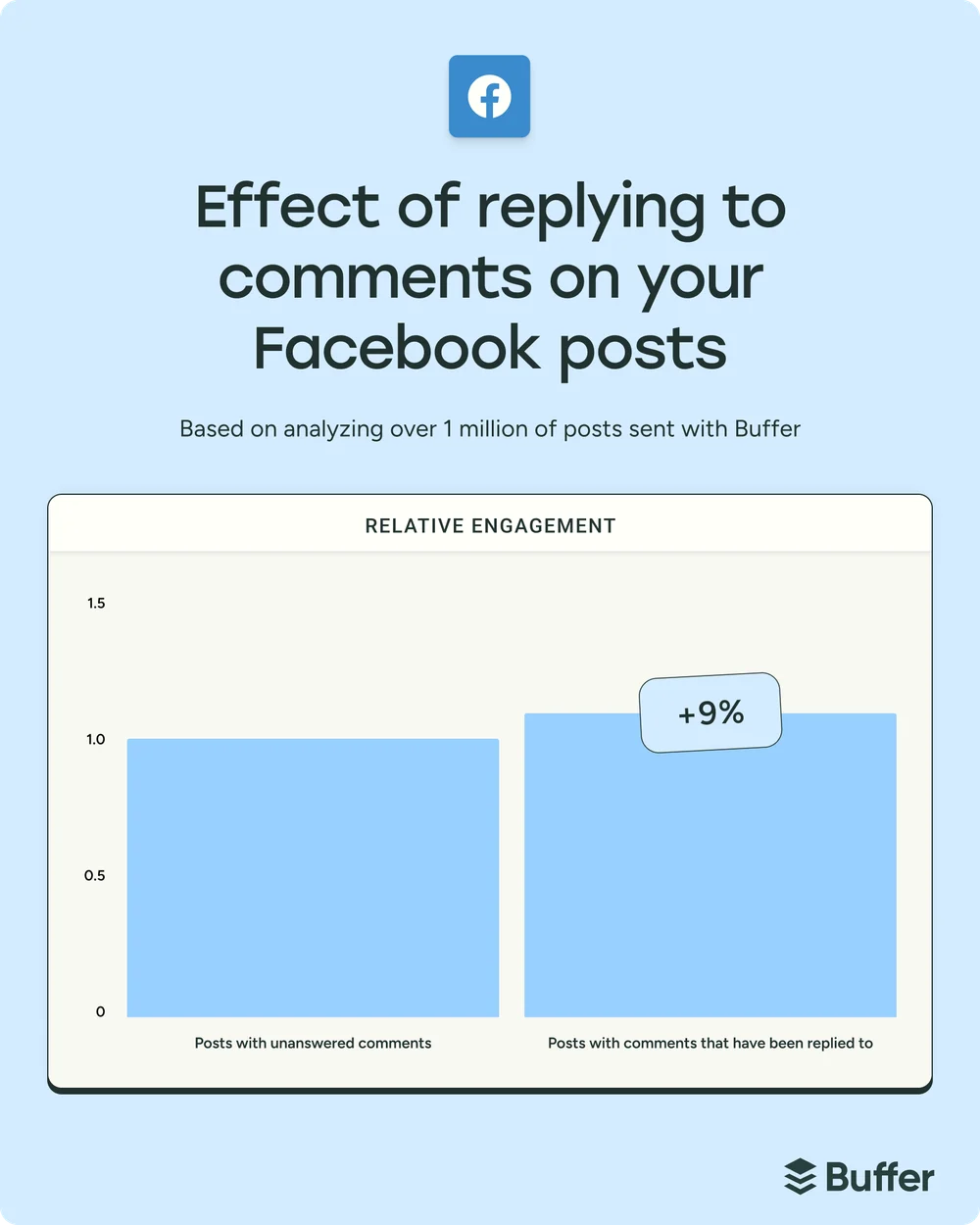
A groundbreaking study conducted by Buffer, a leading social media management platform, has unveiled compelling evidence that actively responding to comments on Facebook posts can lead to a measurable increase in engagement. The comprehensive analysis, which delved into over one million Facebook posts, found that posts where creators engaged with commenters received approximately 9.5% more reactions on average compared to those where replies were absent. This finding offers crucial insights for content creators, small business owners, and marketers striving to optimize their presence on one of the world’s largest and most mature social media platforms.
The Evolving Landscape of Facebook Engagement
Facebook, with its colossal user base exceeding three billion monthly active users, remains an undeniable force in the digital landscape. However, for many creators and businesses, navigating its algorithms to achieve consistent organic reach has become an increasingly complex challenge. Over the years, Facebook’s algorithm has evolved, prioritizing "meaningful interactions" and authentic engagement over passive consumption. This shift has necessitated a re-evaluation of content strategies, pushing creators to move beyond mere broadcasting towards fostering genuine community and conversation.
The impetus for Buffer’s research stemmed from this very challenge. While Facebook continually introduces new features aimed at wooing creators, the practical application of these tools and their impact on performance often remains anecdotal. The study, spearheaded by Buffer’s Senior Data Scientist Julian Winternheimer, sought to provide data-backed answers to a fundamental question: Can consistent interaction, specifically replying to comments, translate into tangible engagement benefits? The initial curiosity was whether a simple, actionable tactic could cut through the noise and improve content performance, which for many creators, has been a mixed bag of hits and misses.
Methodology: A Deep Dive into Engagement Metrics
To accurately assess the impact of comment replies, Winternheimer employed a sophisticated statistical methodology. His team pulled data from approximately one million Facebook posts that had received at least one comment, encompassing a diverse array of accounts across various sizes and niches. Crucially, the analysis moved beyond simple comparisons between different Facebook Pages, which could be skewed by inherent differences in audience size, content quality, or posting frequency.
Instead, the study utilized a fixed-effects regression model. This advanced statistical technique allowed researchers to compare each account’s performance against its own historical data. By holding constant factors such as audience demographics, niche, geographical location, and posting regularity, the model isolated the variable of interest: the presence or absence of creator replies to comments. In essence, the question shifted from "Do Facebook Pages that reply get more engagement than pages that don’t?" to a more precise query: "Does this specific Facebook Page perform better when it replies versus when it doesn’t?" This rigorous approach ensured that the observed effects could be more confidently attributed to the act of replying.
As a secondary validation, a Z-score analysis was performed. This method measured how far above or below an account’s "normal" performance level each post landed. The congruence of results from both the fixed-effects model and the Z-score analysis significantly bolstered confidence in the study’s conclusions, indicating a robust and consistent pattern. The full methodological details, including additional charts and data visualizations, are available on Winternheimer’s blog, providing transparency for those interested in the statistical underpinnings.
It is important to note a key distinction in the data measurement: the study focused specifically on "reactions" (likes, loves, hahas, etc.) rather than total engagement. This deliberate choice aimed to prevent circularity; including comments in an engagement metric designed to test the effect of comments would have skewed the results. While the study established a strong correlation, it acknowledges the challenge of definitively proving causation. It is plausible that posts that naturally perform well and attract significant activity might also motivate creators to reply more frequently. However, the consistency of this pattern across six different social media platforms analyzed in Buffer’s broader cross-platform study (with lifts ranging from 5% to 42%) lends significant credibility to the idea that replying plays an active role in boosting engagement.
Key Findings: A Modest Yet Meaningful Lift
The core finding from the analysis of over 1 million posts across 97,427 Facebook profiles was a statistically significant 9.5% increase in reactions for posts where creators engaged with comments. For statistical enthusiasts, the p-value was less than 0.001, indicating a very low probability that this observed effect was due to random chance.
While this 9.5% lift might appear modest when compared to the more dramatic increases observed on newer platforms – Julian Winternheimer’s broader study revealed a 42% lift on Threads and a 30% increase on LinkedIn – its significance on Facebook cannot be overstated. Facebook is a mature platform with established engagement patterns, making even a single-digit percentage increase, when applied across billions of interactions, a substantial gain.
The Z-score analysis further supported this, showing that approximately 53.8% of Facebook Pages performed better when they replied to comments. This means posts with creator replies tended to perform slightly above an account’s usual level, while those without replies hovered around the baseline. The 53.8% figure, though a slim majority, contrasts with higher percentages seen on platforms like Instagram (63%) or LinkedIn (83%), reinforcing the notion that while the effect is significant, it’s integrated within Facebook’s broader, more varied engagement ecosystem.
Interestingly, a superficial glance at raw median numbers initially suggested the opposite, with posts without replies showing slightly higher median reactions (22) than those with replies (16). However, as Winternheimer’s sophisticated analysis demonstrated, this raw comparison was misleading. It failed to account for the vast differences in page sizes and activity levels. Once these confounding variables were controlled for through the fixed-effects model, the true, positive impact of replying to comments became clear.
Why Engagement Matters on Facebook: The Algorithmic Imperative
The observed 9.5% lift isn’t merely a statistical anomaly; it aligns perfectly with Facebook’s declared algorithmic priorities. The platform’s algorithm actively seeks out and promotes "meaningful interactions." Comments, particularly those that spark back-and-forth exchanges, serve as potent signals to the algorithm that a post is generating genuine discussion and community, not just passive scrolling.
Several factors contribute to why creator replies likely translate into higher reactions:
- Extended Visibility: Each reply effectively breathes new life into a post. By extending the comment thread, creators keep their content active in the feed for longer periods. This sustained activity signals to the algorithm that the post is relevant and engaging, potentially resurfacing it for the original commenter’s connections or other users who have previously interacted with the page.
- Relationship Signals: Facebook’s algorithm meticulously tracks interaction history between accounts. When a creator consistently replies to a user’s comments, the platform registers this as a strong relationship signal. Over time, these consistent micro-interactions build a stronger connection, increasing the likelihood that the creator’s future content will be shown to that user, fostering a loyal audience.
- Social Proof and Authenticity: An active comment section, especially one where the creator or brand is visibly participating, projects an image of authenticity and responsiveness. Users are more inclined to stop scrolling and engage with content when they perceive a real person behind the Page, willing to connect and converse. This human element can significantly boost trust and willingness to interact.
Strategic Implications for Creators and Businesses
The implications of this study are profound for anyone managing a Facebook Page. In an environment where organic reach is a constant battle, a simple, cost-free tactic like replying to comments offers a tangible competitive advantage. While a 9.5% lift may not be as dramatic as on newer platforms, on Facebook’s immense scale, it translates into significantly more eyeballs, interactions, and potential conversions over time.
For creators and businesses often stretched thin across multiple social platforms, managing comments can feel like an additional full-time job. However, the study’s findings underscore that this investment of time is worthwhile. Here are several actionable strategies derived from these insights:
- Time Block Your Replies: Instead of attempting to respond to every comment as it arrives, which can quickly become overwhelming, dedicate specific time blocks for engagement. Two 10-to-15-minute windows daily – perhaps mid-morning and early evening – can effectively capture comments from various time zones and user activity peaks.
- Prioritize Meaningful Conversations: A simple "thanks" is polite but rarely drives further engagement. Focus on replies that encourage continued dialogue. Ask follow-up questions, offer additional insights, or acknowledge specific points made by the commenter. Phrases like "Great question – have you considered…?" or "That’s an interesting perspective; we also found that…" are effective conversation starters.
- Reply While the Post is Fresh: Facebook’s algorithm, like most others, gives significant weight to early engagement. If possible, aim to respond to comments within the first few hours of a post going live. This early interaction can signal to the algorithm that the content is resonating, potentially boosting its initial distribution and leading to further reactions. Strategic posting times, when creators are available to engage, become a critical advantage.
- Leverage Social Media Management Tools: For those managing multiple platforms, bouncing between apps to handle comments can be inefficient. Tools like Buffer’s "Community" tab consolidate all comments from various platforms into a single dashboard, allowing for direct replies without the distraction of the main feed. Features such as a "Comment Score" can help track reply consistency, transforming sporadic engagement into a consistent habit.
Broader Impact and Future Outlook
The Buffer study provides concrete data supporting what many social media experts have intuitively believed: authentic interaction is key. It reinforces the idea that algorithms, despite their complexity, ultimately reward human connection. In an era increasingly dominated by AI-generated content and automated responses, the human touch of a creator personally engaging with their audience stands out.
This research serves as a timely reminder that while content quality, visual appeal, and strategic timing are vital, the often-overlooked aspect of community management holds significant power. For brands and individuals looking to cultivate loyalty, increase brand visibility, and drive meaningful conversions on Facebook, prioritizing active engagement in the comments section is no longer merely a best practice; it is a data-backed imperative.
While the 9.5% lift on Facebook may be at the lower end of the spectrum compared to more conversation-centric platforms, its impact on a platform of Facebook’s magnitude is substantial. It underscores a fundamental principle of social media success: showing up for your audience when they show up for you. The odds, as the study indicates, significantly tilt in favor of those willing to invest the time in fostering genuine dialogue. As the digital landscape continues to evolve, consistent, empathetic engagement will likely remain a cornerstone of effective social media strategy. For a comprehensive overview of Julian Winternheimer’s findings across all six platforms, the full cross-platform engagement study is available on Buffer’s resources page.