
 Ali Ikhwan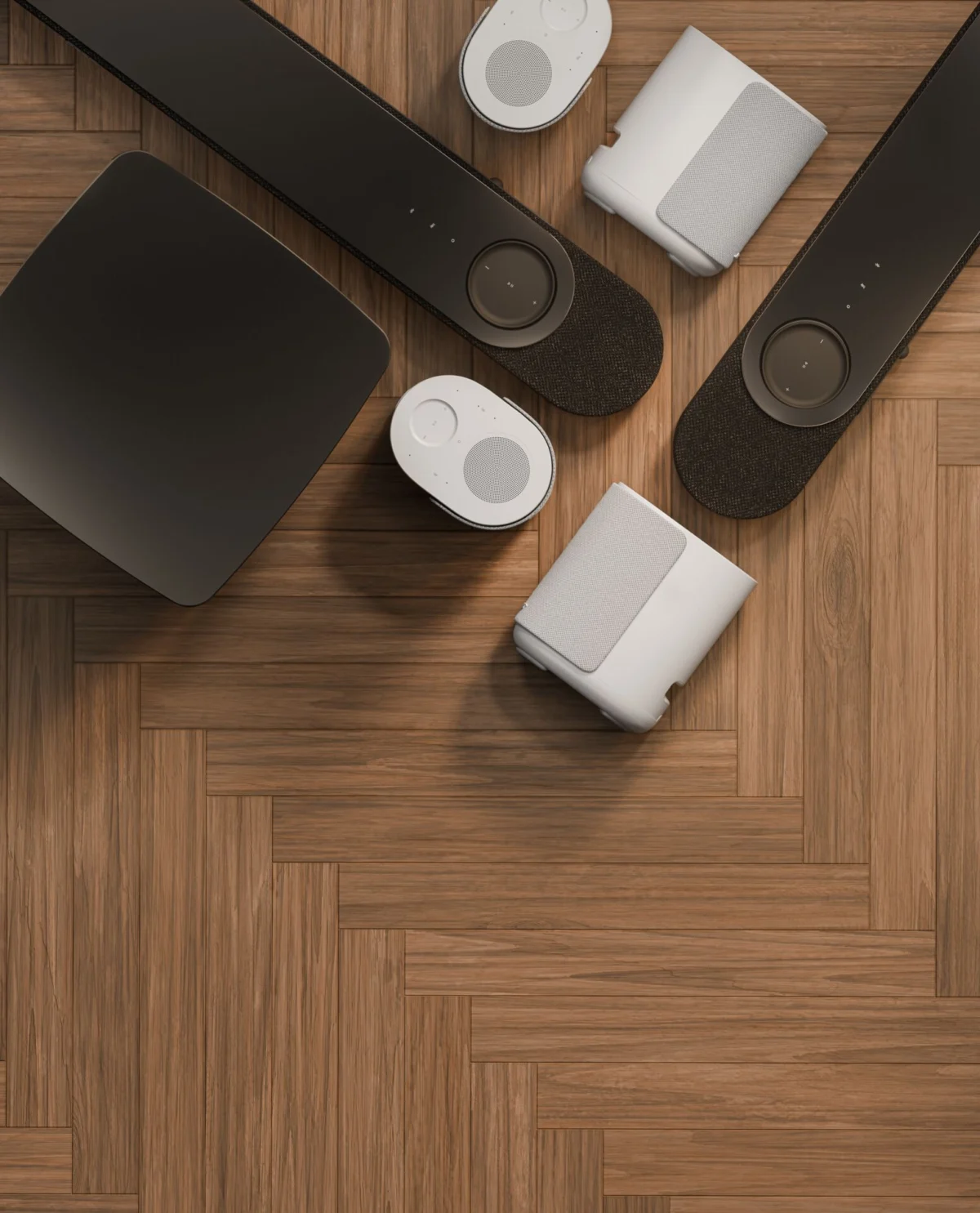
Bose has officially announced a significant return to the premium home audio market with the unveiling of its new Lifestyle Collection, a trio of high-performance speakers designed to integrate modern connectivity with the brand’s legacy of minimalist design. The new lineup includes the Lifestyle Ultra Speaker, the Lifestyle Ultra Soundbar, and the Lifestyle Ultra Subwoofer, marking the first time the "Lifestyle" branding has been utilized since the previous iteration of the series was discontinued in 2022. This launch represents a strategic "reentering" for the Framingham-based company, which has spent the last several years focusing heavily on its portable Bluetooth speakers and noise-canceling headphones.
The Lifestyle Ultra Collection distinguishes itself through a refined aesthetic characterized by fabric-wrapped grilles and soft, curved silhouettes, moving away from the industrial aesthetic of some of its competitors. The collection is scheduled to go on sale on May 15, with preorders currently open through Bose and authorized retailers. The entry point for the series is the Lifestyle Ultra Speaker, priced at $299 for the standard model and $349 for a limited-edition "Driftwood Sand" finish. The Lifestyle Ultra Soundbar is positioned as the flagship of the home theater experience at $1,099, while the Lifestyle Ultra Subwoofer is priced at $899.
Technical Specifications and Engineering Innovations
At the core of the new collection is a focus on "spatial audio," a term that has become increasingly prevalent in the high-end audio industry. The Lifestyle Ultra Speaker is engineered with an upward-firing driver specifically designed to simulate the height channels found in Dolby Atmos setups, despite the company noting that it does not currently support Dolby Atmos Music natively. This upward-firing driver is complemented by two front-facing drivers, creating a wider soundstage than typical compact wireless speakers.
Bose has also introduced its proprietary "CleanBass" technology across the lineup. This engineering feat pairs the company’s "QuietPort" acoustic opening—a design used to reduce turbulence and distortion in low-frequency playback—with a high-excursion woofer. The goal, according to Bose engineers, is to provide a level of bass response that typically requires a much larger enclosure. In the Lifestyle Ultra Soundbar, this is augmented by "SpeechClarity" technology, which utilizes artificial intelligence to analyze audio in real-time, isolating and enhancing dialogue frequencies to ensure that spoken words are not drowned out by background music or sound effects.

The soundbar itself features a complex array of nine total transducers: two upward-firing drivers for overhead effects, four front-facing drivers for mid-range and treble, a dedicated center tweeter, and two "PhaseGuide" drivers. The PhaseGuide technology is a hallmark of Bose engineering, designed to beam sound to the sides of the room, reflecting it off walls to create a sense of surround sound without the immediate need for physical rear speakers.
Connectivity and the Integration of Alexa+
One of the most notable features of the Lifestyle Ultra series is its software integration. These are the first speakers on the market to integrate with Alexa+, Amazon’s next-generation voice assistant. Currently available only in the United States, Alexa+ utilizes a large language model (LLM) to provide more natural, conversational interactions. Users can issue complex voice commands to control their music library, manage multi-room audio, or adjust system settings without the rigid syntax required by older voice assistants.
Beyond voice control, the speakers offer a robust suite of wireless connectivity options. They support Apple AirPlay 2 and Google Cast, allowing for seamless integration into existing multi-room ecosystems. For users who prefer direct streaming, Spotify Connect is built-in. Recognizing the resurgence of analog media, Bose has also included an auxiliary input on the Lifestyle Ultra Speaker, specifically marketed as a solution for connecting turntables.
In a departure from previous Bose home theater systems, which required the use of a proprietary ADAPTiQ headset to calibrate the speakers to a room’s unique acoustics, the new collection leverages the microphones found in iOS and Android devices. Through the Bose app, the system uses the smartphone’s microphone as a reference point to analyze the room’s reflections and automatically adjust the EQ settings. This shift simplifies the setup process and removes the need for specialized hardware that users often misplaced.
A Historical Context: The Return of the Lifestyle Brand
The "Lifestyle" name holds significant weight in the history of Bose. Originally debuting in 1990, the Lifestyle series was revolutionary for its time, moving away from the "black box" aesthetic of 1980s hi-fi systems toward a more integrated, user-friendly approach. The original systems were famous for their tiny "Jewel Cube" speakers and dedicated media centers that hid away the complexities of home theater wiring.

For over three decades, the Lifestyle brand represented the pinnacle of Bose’s home audio offerings. However, as the market shifted toward smart speakers and soundbars, the traditional multi-speaker wired systems began to lose favor. Bose discontinued the line in 2022 to reassess its strategy in the home. The 2024 revival of the name suggests that the company believes there is renewed demand for premium, aesthetically pleasing home audio that prioritizes ease of use over technical complexity.
"We’ve been working on this for about three years," Gregory Haungs, Bose’s senior product manager, stated regarding the development cycle of the Ultra series. "This has been a plan of Bose for quite some time to enter back into this space and make sure we’re doing it right."
Market Positioning and Competitive Analysis
The timing of the Bose Lifestyle Ultra launch is particularly noteworthy within the context of the broader audio industry. In early 2024, Bose’s primary competitor, Sonos, faced significant backlash following a major update to its mobile app. The update, which was intended to modernize the user interface, resulted in numerous bugs, the removal of legacy features, and connectivity issues for thousands of customers. This controversy left a segment of the premium audio market looking for alternatives.
While Bose executives maintain that the development of the Lifestyle Ultra collection predates the Sonos controversy, industry analysts suggest that Bose is well-positioned to capture "switchers." By utilizing established protocols like Google Cast and AirPlay for multi-room grouping—rather than relying solely on a proprietary ecosystem—Bose is offering a level of flexibility that may appeal to users wary of ecosystem lock-in.
However, the collection does have some limitations in backward compatibility. Bose has confirmed that the new Lifestyle Ultra speakers cannot be used as wireless surrounds for existing Bose soundbars, with the exception of the Bass Module 700. Furthermore, when used with the new Lifestyle Ultra Soundbar, the system requires a wired connection for certain configurations, a move that may frustrate users seeking a completely wireless home theater setup.

Broader Implications for the Home Audio Industry
The launch of the Lifestyle Ultra Collection reflects a broader trend in consumer electronics where "lifestyle" design is becoming as important as raw performance. As living spaces become more integrated, consumers are increasingly seeking audio solutions that blend into their home decor rather than standing out as pieces of technology. The use of premium fabrics and organic shapes in the Ultra series is a direct response to this demand.
Furthermore, the integration of AI-driven features like SpeechClarity and Alexa+ highlights the shift from hardware-centric audio to software-defined sound. The ability of a speaker to "understand" its environment and the content it is playing allows for a level of optimization that was previously impossible.
As Bose prepares for the May 15 retail launch, the success of the Lifestyle Ultra Collection will likely depend on whether the company can deliver on its "best ever" sound claims. With a total system price—soundbar, subwoofer, and two rear speakers—approaching $3,000, Bose is firmly targeting the luxury segment of the market. In an era where budget soundbars can be had for under $200, the Lifestyle Ultra series is a bet that premium build quality, iconic branding, and sophisticated AI integration still command a significant premium in the modern home.







