
 Indra Kusuma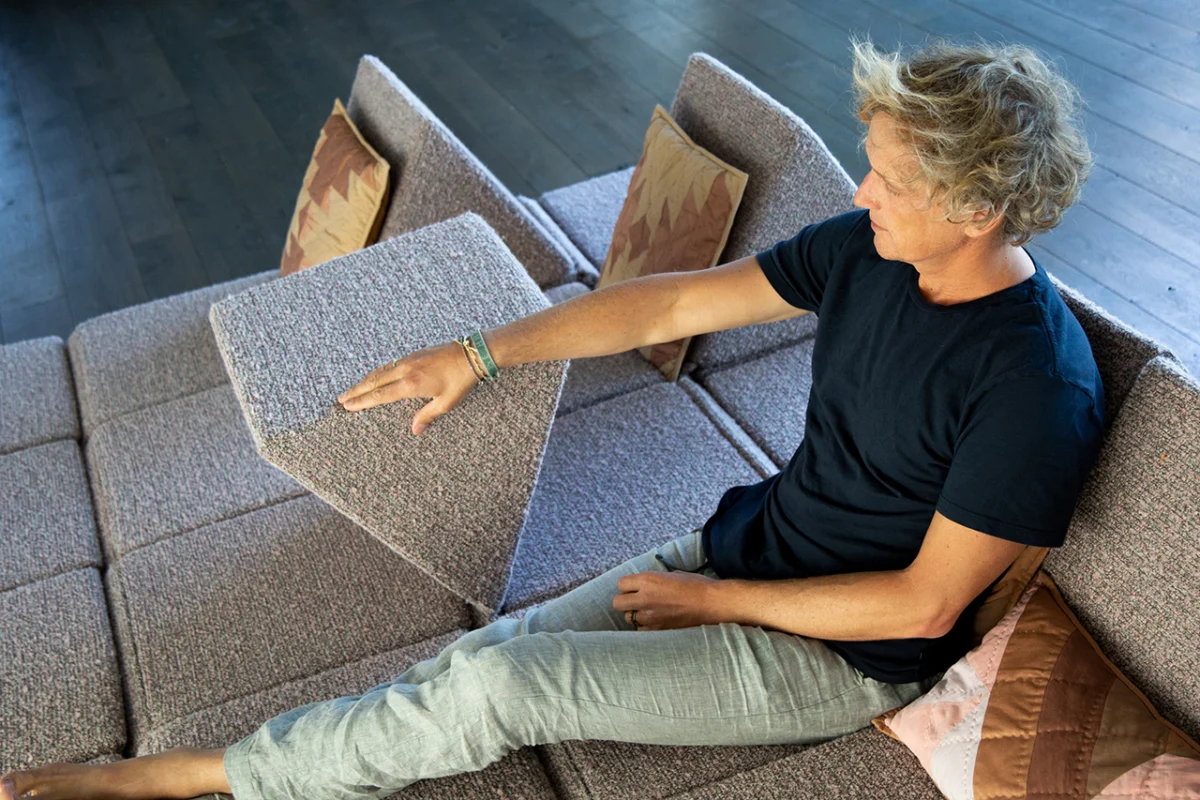
Milan, Italy’s dynamic commercial and fashion capital, situated dramatically at the foot of the majestic Alps, recently served as the prestigious backdrop for a significant unveiling in the world of contemporary furniture design. The soaring peaks and profound valleys of the Alpine range, which have captivated the European imagination for millennia—from the Roman Empire viewing them as formidable barriers to Gustav Mahler seeing them as metaphors for creative highs and lows, and Friedrich Nietzsche finding wisdom in their vastness—have once again inspired a groundbreaking creation. This time, the inspiration translates into a tangible, interactive living solution by Swiss-born designer Yves Béhar, founder of the acclaimed San Francisco and Lisbon-based design practice Fuseproject, who presented his "Peaks" modular seating system for the innovative Dutch brand Moooi during Milan Design Week 2026.
The Alpine Muse: A Deep-Rooted Inspiration
The connection between Milan and the Alps is not merely geographical; it is cultural, historical, and deeply symbolic. For centuries, these mountains have represented both a challenge and a sanctuary, a frontier and a source of profound contemplation. The Roman legions, in their relentless pursuit of continental dominance, had to master these formidable snow-capped passes. Later, figures like the Austrian composer Gustav Mahler found in the dramatic shifts of the Alpine landscape—its towering peaks and abyssal valleys—a powerful reflection of the extreme emotional and intellectual spectrum inherent in the creative process. German philosopher Friedrich Nietzsche, too, frequently sought the solitude and grandeur of these settings, believing that true wisdom was often forged amidst such awe-inspiring natural environments.
For Yves Béhar, the Alps are more than just a historical or philosophical backdrop; they are woven into the fabric of his childhood memories, a constant presence that shaped his understanding of form, scale, and the interplay between structure and environment. This deeply personal connection to the Alpine context forms the bedrock of the "Peaks" system, transforming abstract natural geometry into a functional, adaptable piece of interior architecture. It is this synthesis of personal experience, historical resonance, and a profound appreciation for natural forms that distinguishes "Peaks" from conventional furniture design.
Reimagining the Living Landscape: Design Philosophy and Precedent
Béhar’s "Peaks" system fundamentally rethinks the concept of a "living landscape" within the domestic sphere, drawing a clear lineage from pioneering designers of the late 20th century such as Verner Panton and Pierre Paulin. These luminaries challenged traditional notions of seating, creating fluid, organic, and often modular environments that encouraged new modes of interaction and relaxation. Panton’s iconic stacking chairs and modular systems, and Paulin’s sculptural, often low-slung, pieces exemplified a shift towards more immersive and less rigid domestic arrangements. Béhar’s work extends this legacy by distilling the formal resolution of Alpine peaks and valleys into a highly versatile, user-centric system.
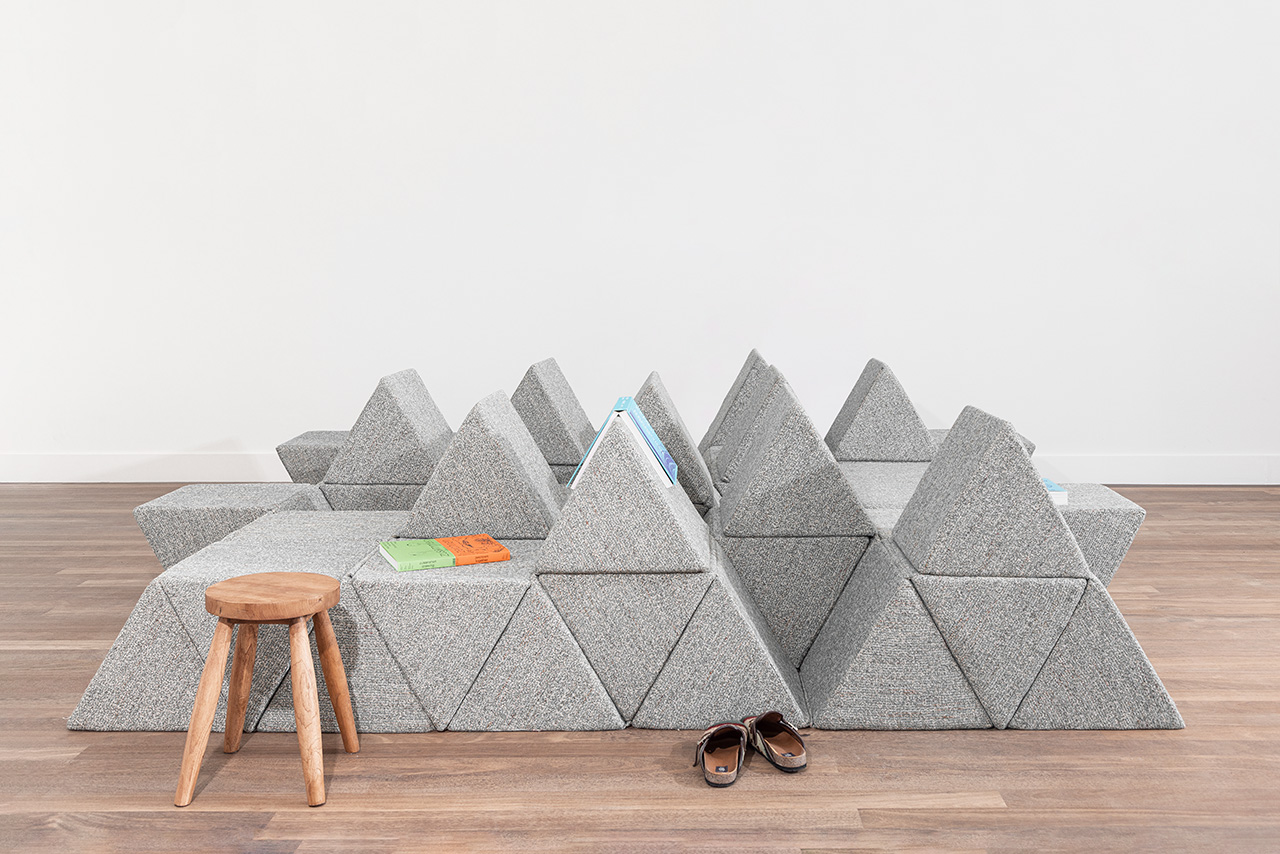
The "Peaks" system is composed of interchangeable, kit-of-parts extruded equilateral triangles. This simple yet ingenious geometric module allows for an almost infinite array of configurations. The sloped shape of each individual component is not merely an aesthetic choice; it is deeply rooted in ergonomic principles, lending itself perfectly to the comfort of leaning back. However, when multiple modules are combined, they can seamlessly transform into a solid, flat plane, providing a stable surface for various activities. This dual functionality — supportive recline and stable surface — speaks to the adaptability that is central to Béhar’s design ethos. The system’s flexibility means it can serve as a sprawling lounge, a series of individual seats, a play area, or even a temporary work surface, making it exceptionally responsive to the fluid demands of contemporary living.

A Personal Experiment: Fostering Connection in an Age of Disconnect
Béhar’s motivation for "Peaks" stems from a candid observation about the limitations of traditional living room furniture. "I feel that living room furniture is forcing us into very specific formal interactions and misses adaptability and wonder," Béhar articulates. This sentiment resonates deeply in an era where digital interfaces often mediate human connection, leading to a pervasive sense of "virtual burnout." Béhar sought to counteract this trend by designing a central piece of furniture that would instinctively induce a sense of "play" and foster genuine human connection, bridging the generational gap between adults and children.
The genesis of "Peaks" was, in fact, a personal experiment within Béhar’s own home. He describes how, "Soon after Peaks was installed, laughter and closeness made my living room the center of the house again and again." This anecdote powerfully illustrates the design’s success in achieving its core objective: to transform the living room from a static, often passively used space into a vibrant, interactive hub of family life. The design moves beyond mere utility, aiming to enrich the social fabric of the home, promoting engagement, comfort, and shared experiences. This focus on human interaction and well-being positions "Peaks" as a timely response to contemporary lifestyle challenges, offering a tangible antidote to digital isolation.
Technical Ingenuity and Adaptability: The Core of "Peaks"

The functional brilliance of the "Peaks" system lies in its meticulous construction and material selection. Each component is produced using dual-density foam, a sophisticated engineering choice that ensures both exceptional comfort and robust structural integrity. The denser foam provides foundational support, preventing sagging and maintaining the module’s shape over time, while a softer layer on top offers plush comfort for relaxation. This combination ensures durability without compromising on the tactile experience.
Furthermore, the system’s modularity is enhanced by thoughtful design details. Concealed zippers and fabric hinges are integrated seamlessly, allowing for effortless reconfiguration by an individual. This discreet engineering ensures that the aesthetic purity of the design is maintained, while empowering users to adapt their living space with ease. The absence of visible hardware contributes to the minimalist elegance of the system, underscoring its sophisticated simplicity. This proposition transitions living room furniture from its historically static, interactively limited state into one that can more fluidly facilitate both solitary contemplation and vibrant communal use, aligning perfectly with the dynamic needs of modern households.
Milan Design Week 2026: A Global Stage for Innovation
The launch of "Peaks" took place during Moooi’s 25th-anniversary showcase at Milan Design Week, held from April 20 to 26, 2026. Milan Design Week, encompassing Salone del Mobile and the sprawling Fuorisalone events across the city, is unequivocally the most significant annual event in the global design calendar. It serves as a vital platform where leading brands, emerging talents, and design enthusiasts converge to witness the unveiling of cutting-edge innovations, explore new trends, and engage in critical discourse about the future of design. For Moooi, a brand synonymous with inventive and often avant-garde design, celebrating its quarter-century milestone at such a prominent event provided the perfect context to introduce a product as transformative as "Peaks."

Industry experts and attendees at Milan Design Week expressed considerable enthusiasm for "Peaks." Critics lauded Béhar’s ability to fuse artistic vision with practical functionality, noting its potential to redefine domestic comfort. "Béhar has once again demonstrated his unparalleled ability to anticipate evolving lifestyle needs," remarked a prominent design journalist, "delivering a solution that is both visually striking and profoundly user-centric." Representatives from Moooi, reflecting on their 25 years of pushing design boundaries, affirmed "Peaks" as a testament to their enduring commitment to innovation and collaboration with world-class designers. They highlighted the product’s alignment with Moooi’s ethos of creating inspiring and unconventional pieces that elevate everyday living.
Moooi’s Legacy of Inventiveness and Collaborative Spirit
Moooi, founded in 2001 by Marcel Wanders and Casper Vissers, has cultivated a reputation as an "ever inventive brand" that consistently challenges conventions in the furniture and lighting industry. Known for its eclectic collection of whimsical, elegant, and often technologically advanced designs, Moooi has become a global leader in showcasing the extraordinary. Its collaborations with a diverse roster of international designers, including Bertjan Pot, Maarten Baas, and now Yves Béhar, underscore its commitment to fostering creative freedom and bringing visionary ideas to fruition.
The "Peaks" system fits seamlessly into Moooi’s portfolio, reinforcing the brand’s identity as a purveyor of distinctive, high-quality design that goes beyond mere utility to evoke emotion and inspire imagination. The product embodies Moooi’s philosophy of offering designs that are "more than just furniture; they are statements, characters, and pieces of art." By embracing the modularity and adaptability of "Peaks," Moooi further cements its position at the forefront of contemporary design, demonstrating an acute understanding of the evolving demands of modern consumers for flexible, meaningful, and engaging home environments.

Broader Impact and Market Implications
The introduction of "Peaks" holds significant implications for the broader furniture market and interior design trends. In an increasingly dynamic world, consumers are prioritizing versatility, longevity, and sustainability in their purchases. Modular systems like "Peaks" respond directly to these demands by offering unparalleled adaptability, allowing users to reconfigure their furniture to suit changing needs, room layouts, or social occasions without requiring new purchases. This inherent flexibility contributes to a more sustainable consumption model, extending the lifespan of the furniture and reducing waste.
Moreover, the renewed focus on creating physically and socially engaging "conversation pit" typologies, spurred by a desire to mitigate "virtual burnout," represents a substantial shift in consumer preferences. Market data indicates a growing demand for multi-functional living spaces and furniture that supports various activities, from work and relaxation to social gatherings and family play. A 2023 industry report on home furnishings highlighted a 15% increase in consumer interest for modular and adaptable seating solutions over the past two years, underscoring the market’s readiness for products like "Peaks." Béhar’s design not only taps into this trend but also elevates it, providing a sophisticated and aesthetically refined solution that caters to the contemporary yearning for authentic connection and versatile living. The long-term impact could see a wider adoption of adaptive furniture systems, prompting other manufacturers to explore similar approaches to design and functionality, thus shaping the future trajectory of domestic interiors towards greater fluidity and user empowerment.
The Visionary Behind Fuseproject: Yves Béhar’s Enduring Legacy

Yves Béhar’s illustrious career is marked by a consistent commitment to design innovation that is both human-centered and forward-thinking. As the founder of Fuseproject, an award-winning industrial design and branding firm with offices in San Francisco and Lisbon, Béhar has been at the helm of numerous projects that have redefined categories across various industries. His portfolio includes iconic collaborations with companies like Herman Miller (the Sayl chair), August Smart Lock, SodaStream, and a range of technology and consumer electronics brands. Béhar is renowned for his holistic approach, integrating product design, brand strategy, and user experience to create meaningful and impactful solutions.
His design philosophy often emphasizes sustainability, accessibility, and the creation of products that foster emotional connections with users. "Peaks" is a quintessential example of Béhar’s ethos: it is not just a piece of furniture, but a catalyst for interaction, a tool for spatial transformation, and a reflection of a deeper understanding of human needs. His work consistently demonstrates a rare ability to combine rigorous technical execution with a poetic sensibility, making complex ideas approachable and beautiful.
Conclusion: Redefining the Heart of the Home
In a world increasingly characterized by rapid change and digital immersion, Yves Béhar’s "Peaks" modular seating system emerges as a thoughtful and timely response. Drawing inspiration from the timeless grandeur of the Alps and a deeply personal quest for domestic harmony, Béhar, in collaboration with Moooi, has crafted a solution that transcends mere functionality. "Peaks" is a testament to the power of design to enrich lives, foster connection, and adapt to the ever-evolving rhythms of modern living. Launched amidst the vibrant energy of Milan Design Week, it stands as a significant statement on the future of home furnishings – a future where spaces are not static but dynamic, where furniture encourages interaction, and where the heart of the home beats with adaptability, wonder, and shared joy. It offers a compelling vision for how design can elevate the everyday, transforming living rooms into truly responsive and engaging landscapes for all who inhabit them.

To learn more and shop the release, visit moooi.com.
Photography courtesy of Moooi.