Michael Sholeh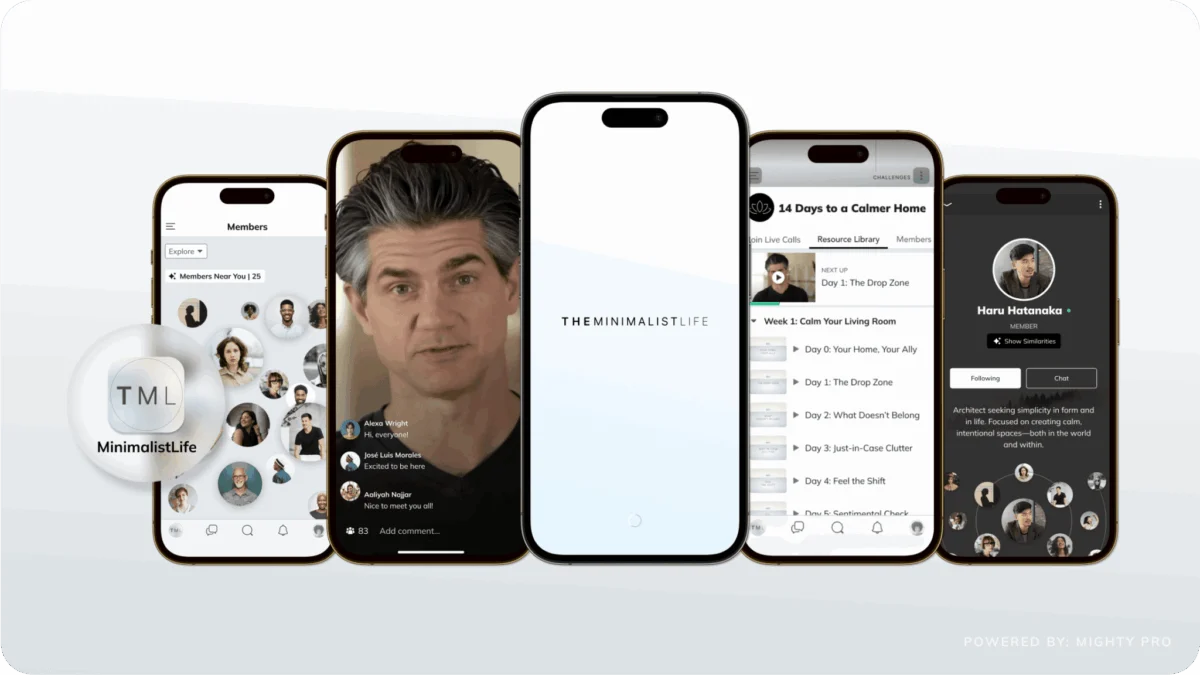
The Evolution of a Movement: From Blog to Global Platform
Joshua Becker’s journey began in 2008, a period coinciding with the global financial crisis, which prompted many families to re-evaluate their relationship with consumerism. Over the ensuing 17 years, Becker has authored more than 1,700 articles, produced 400 educational videos for YouTube, and published several bestselling books, including The More of Less and The Minimalist Home. His work has been instrumental in defining "rational minimalism," a philosophy that does not necessarily advocate for extreme asceticism but rather for the intentional promotion of the things we most value and the removal of everything that distracts us from them.
To date, Becker’s "Uncluttered" course has served over 90,000 participants, providing a structured, room-by-room methodology for home organization. However, internal data and feedback from these participants have consistently highlighted a recurring challenge: the "sustainability gap." While many individuals successfully complete initial decluttering projects, maintaining those gains against the persistent pressures of modern consumer culture remains a significant obstacle. "The Minimalist Life" is designed specifically to address this long-term maintenance phase, shifting the focus from a one-time project to a permanent behavioral rhythm.
Addressing the Sustainability Gap in Behavioral Change
The core motivation behind the new community is the recognition that education alone is often insufficient for lasting lifestyle changes. Psychological studies on habit formation suggest that while an "aha moment" or a structured course can initiate change, the long-term adoption of new behaviors requires social reinforcement and ongoing accountability.
"I start strong, but I struggle to keep minimalism going over time," is the sentiment Becker identifies as the primary driver for this new offering. This phenomenon is well-documented in behavioral science as "hedonic adaptation" and the "rebound effect," where individuals slowly revert to old spending and accumulation habits once the novelty of a new lifestyle wears off. By creating a subscription-based community, Becker is moving into the "Community-as-a-Service" (CaaS) model, which emphasizes peer-to-peer interaction and expert-led monthly focuses to keep participants engaged.
Features and Methodology of The Minimalist Life
The Minimalist Life community is structured to address minimalism as a holistic system rather than a mere home-organization tactic. The program is designed to guide members through various "pillars" of intentional living on a month-by-month basis. These areas include:
- Physical Environment: Advanced strategies for maintaining clutter-free homes and resisting new acquisitions.
- Financial Health: Aligning spending habits with personal values and reducing debt.
- Schedule and Time Management: Applying minimalist principles to professional and personal calendars to reduce burnout.
- Digital Wellness: Curating digital environments, social media use, and information consumption.
- Relational Intentionality: Focusing energy on high-value personal connections.
- Habit Formation: Utilizing behavioral science to make intentional choices instinctive.
The community emphasizes human interaction as a counter-narrative to the rise of AI-generated lifestyle advice. Members will have direct access to Becker and other experts, participating in live sessions and moderated forums. This focus on "legitimate personal development" is intended to differentiate the platform from the fragmented advice found on general social media platforms.
Economic and Cultural Context: The Business of Owning Less
The launch of The Minimalist Life occurs against a backdrop of significant shifts in the "creator economy." As traditional ad-revenue models become less predictable, many creators are moving toward membership models that offer deeper value to a smaller, more dedicated "super-fan" base.
Market data underscores the demand for such services. According to a report by the Self-Storage Association, the U.S. self-storage industry—often cited as a barometer for consumer over-accumulation—is valued at approximately $38 billion, with nearly 1 in 10 households renting a unit. Simultaneously, the global "minimalist" aesthetic and lifestyle trend have influenced sectors from interior design to software development. Becker’s pivot suggests that the market is maturing from a "how-to-start" phase into a "how-to-stay" phase.

Furthermore, the psychological toll of clutter has been scientifically validated. Research from the UCLA Center on Everyday Lives of Families (CELF) found a direct correlation between high "object density" in the home and elevated levels of cortisol, the primary stress hormone, particularly in women. By framing minimalism as a mental health and wellness strategy, Becker is tapping into a broader cultural shift toward "essentialism" as a remedy for modern anxiety.
Pricing and Membership Structure
The Minimalist Life is launching with a "Founding Member" rate of $18 per month or $180 per year. This pricing strategy is positioned to be accessible while ensuring a committed membership base. The promotional rate is available until June 30, after which the pricing structure may adjust to reflect the community’s ongoing expansion.
Unlike traditional online courses that have a defined start and end date, this community is built on a recurring model. This reflects a broader trend in the education technology (EdTech) sector where "continuous learning" and "ongoing support" are replacing the one-and-done course format. For Becker, this represents a transition from being a teacher of a specific method to a facilitator of a lifelong practice.
Broader Implications and Future Outlook
The introduction of The Minimalist Life may signal a broader trend among lifestyle influencers to reclaim "human" spaces in an increasingly automated digital landscape. Becker explicitly mentions that the community is a response to an online world "increasingly populated by AI-generated content." This suggests that "human-centric" coaching and community moderation may become a premium commodity in the personal development space.
Industry analysts suggest that the success of such communities depends on the "stickiness" of the social interactions. If members find genuine value in the peer-to-peer support, the platform could become a significant stable revenue stream for the Becoming Minimalist brand, allowing for further expansion into specialized areas of intentional living.
As minimalism continues to evolve from a niche internet subculture into a mainstream lifestyle choice, the focus is shifting toward systemic change. It is no longer just about the number of items in a closet, but about the quality of one’s attention in an economy designed to capture it. Becker’s new community is a bet on the idea that the future of minimalism is not just found in "owning less," but in "living more" through the support of a collective.
Conclusion and Call to Action
The doors to The Minimalist Life opened today, marking a new chapter for Joshua Becker and his followers. The initiative represents a comprehensive effort to solve the problem of lifestyle drift, providing the tools and social framework necessary for long-term adherence to minimalist principles. For those who have found success in initial decluttering but struggle with the daily pressures of a consumerist society, the community offers a structured path forward.
With the founding member rate set to expire at the end of June, the initial intake of members will likely set the tone for the community’s culture. As Becker moves from author to community leader, the "Becoming Minimalist" journey enters its most interactive phase yet, promising a shift from the theory of intentionality to the practice of a calm, focused, and purposeful life.