
 Ali Ikhwan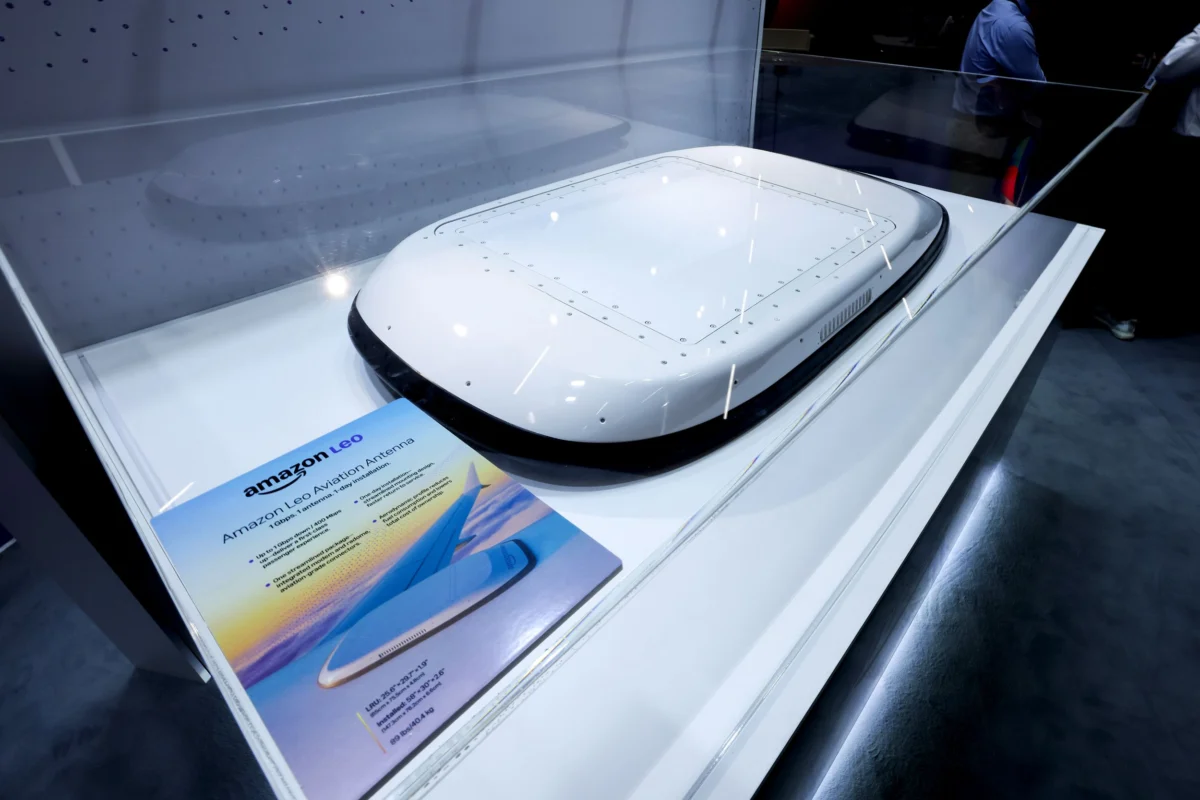
Amazon has formally announced a definitive agreement to acquire Globalstar, a prominent player in the low-Earth-orbit (LEO) satellite sector, in a transaction valued at approximately $11.57 billion. This strategic move is designed to bolster Amazon’s burgeoning space division, now rebranded as Project Leo, and includes a high-profile partnership with Apple Inc. to maintain and expand satellite-based emergency services for consumer devices. By securing Globalstar’s assets, Amazon gains immediate access to critical licensed wireless spectrum and an established satellite constellation, positioning itself as the primary domestic challenger to Elon Musk’s Starlink.
The acquisition marks a significant pivot in the "New Space" race, where tech giants are increasingly seeking to bypass traditional terrestrial infrastructure to provide ubiquitous connectivity. Globalstar, which currently operates a constellation of 24 satellites, possesses the specialized spectrum rights required for direct-to-device communication. This capability allows satellites to transmit data directly to standard smartphones and wearable devices without the need for specialized hardware or bulky ground terminals. For Amazon, the deal represents an opportunity to accelerate its timeline for global connectivity, integrating satellite technology into its vast logistics network and consumer electronics ecosystem.
Strategic Objectives and the Shift to Project Leo
Amazon’s entry into the satellite internet market began with Project Kuiper, an ambitious plan to deploy a constellation of 3,236 satellites to provide high-speed broadband to underserved regions. However, the acquisition of Globalstar signals a broader mission under the new "Project Leo" moniker. While Project Kuiper focused largely on residential and enterprise broadband, Project Leo appears aimed at mobile connectivity and asset tracking.
The integration of Globalstar’s L-band and S-band spectrum is a centerpiece of this transaction. These frequencies are highly prized because they can penetrate weather and atmospheric interference more effectively than the higher-frequency bands typically used for high-speed internet. By controlling this spectrum, Amazon can offer "always-on" connectivity for its fleet of delivery vehicles, drones, and autonomous systems. Furthermore, the deal allows Amazon to inherit Globalstar’s existing regulatory approvals in dozens of countries, circumventing years of bureaucratic hurdles that typically accompany the launch of a new global satellite service.
Aparna Venkatesan, a professor of astronomy at the University of San Francisco, noted that the business synergy between Amazon’s logistics power and Apple’s consumer reach creates a formidable market presence. According to Venkatesan, the acquisition is a "compelling business package" that leverages preapproved global spectrum rights to feed into the massive iPhone market, effectively bridging the gap between space-based infrastructure and daily consumer habits.
The Apple Partnership and Consumer Impact
Central to the deal is a tripartite agreement between Amazon, Globalstar, and Apple. Since the launch of the iPhone 14, Apple has relied on Globalstar’s network to power its "Emergency SOS via Satellite" feature. This service allows users in remote areas without cellular coverage to send text messages to emergency responders. With Amazon now taking ownership of Globalstar, Apple has secured a long-term agreement to ensure these features remain available and are expanded for future iterations of the iPhone and Apple Watch Ultra.
For current users of the iPhone 14, 15, and 16 series, as well as Apple Watch Ultra owners, the acquisition is expected to result in a seamless transition. Amazon has stated that the agreement covers both "current and future" features, suggesting that the partnership may eventually move beyond emergency messaging into more robust data services, such as satellite-based SMS or even low-bandwidth internet browsing.
However, the partnership raises questions regarding data privacy and security. Apple has long marketed itself on a platform of user privacy, whereas Amazon has faced scrutiny over its data-handling practices across its Echo and Ring product lines. Analysts suggest that reconciling Apple’s privacy-centric approach with Amazon’s data-driven ecosystem will be a critical challenge as the two companies integrate their services over the coming years.
A Chronology of the Satellite Connectivity Race
The path to this $11.57 billion deal is rooted in a decade of rapid technological advancement and regulatory shifts. To understand the significance of Amazon’s acquisition, it is necessary to examine the timeline of the commercial space industry:
- 1991–2000: Globalstar is founded and begins launching its first-generation constellation. Despite early financial struggles and a bankruptcy filing in 2002, the company establishes itself as a leader in mobile satellite services (MSS).
- 2019: Amazon announces Project Kuiper, committing $10 billion to build a satellite internet constellation.
- 2022: Apple announces a partnership with Globalstar to launch Emergency SOS via Satellite, bringing satellite connectivity to the mainstream consumer market for the first time.
- 2023: Amazon successfully launches its first two prototype satellites for Project Kuiper, proving the viability of its hardware design.
- January 2024: SpaceX launches its first set of "Direct to Cell" Starlink satellites, beginning tests with T-Mobile to provide cellular coverage from space.
- Tuesday (Current Announcement): Amazon announces the acquisition of Globalstar and the formalization of its partnership with Apple.
- 2027: The anticipated closing date for the Amazon-Globalstar transaction, pending regulatory approvals from the FCC and international bodies.
Competitive Landscape: Amazon vs. Starlink
While Amazon’s move is substantial, it enters a market currently dominated by SpaceX’s Starlink. As of early 2024, Starlink has nearly 10,000 satellites in orbit and serves millions of customers globally. Elon Musk has recently signaled even greater ambitions, filing with the Federal Communications Commission (FCC) for permission to launch up to 1 million satellites to support space-based data centers.
Starlink’s valuation is estimated at $1 trillion, a figure that reflects its head start in the industry. By contrast, Amazon’s Project Leo is in its relative infancy, with 241 satellites currently in orbit. However, Amazon’s acquisition of Globalstar provides it with a "shortcut" in the form of licensed spectrum that Starlink has had to fight for on a country-by-country basis.
The competition is not merely about the number of satellites but about the "direct-to-device" (D2D) capability. Most current satellite internet requires a dish or a terminal to act as a go-between. D2D technology eliminates this requirement, allowing the satellite to function as a "cell tower in the sky." By acquiring Globalstar, Amazon positions itself to compete directly with the Starlink/T-Mobile alliance, potentially offering satellite roaming services to a wide array of mobile carriers.
Technical Challenges and Environmental Concerns
The rapid expansion of LEO constellations has sparked concern among the scientific and environmental communities. As Amazon and SpaceX race to fill the sky with thousands of satellites, the risk of orbital collisions—known as the Kessler Syndrome—increases. A single collision could create a cloud of debris that renders certain orbits unusable for generations.
Furthermore, astronomers have raised alarms about "light pollution" from satellite trains, which can interfere with ground-based telescopes and deep-space observations. Amazon has stated that it is working on "darkening" technologies to reduce the reflectivity of its satellites, but the sheer volume of planned launches remains a point of contention.
From a technical standpoint, maintaining a constellation of thousands of satellites requires constant replacement. LEO satellites typically have a lifespan of five to seven years before they deorbit and burn up in the atmosphere. This creates a continuous cycle of launches and potential atmospheric pollution from vaporized metals, a phenomenon that the environmental advocacy group PIRG has urged the FCC to investigate more thoroughly.
Economic and Industrial Implications
The $11.57 billion investment by Amazon underscores the belief that satellite connectivity is the next frontier for Artificial Intelligence (AI) and the Internet of Things (IoT). Low-latency satellite links are essential for the next generation of AI-driven devices that require constant cloud connectivity to process complex tasks. By owning the "pipe" through which this data flows, Amazon secures its position in the AI value chain.
The deal also has significant implications for the telecommunications industry. If Amazon can provide reliable satellite-to-phone connectivity, it may eventually challenge traditional mobile network operators. While Amazon currently positions itself as a partner to these companies, the long-term potential for Amazon to become a global "meta-carrier" is a possibility that industry analysts are watching closely.
Official Responses and Regulatory Outlook
In an email statement, Paul Flaningan, a representative for Amazon’s business and corporate development, emphasized that the acquisition is in its early stages. "Nothing is changing today; both companies will continue independent operations in the meantime," Flaningan stated. The deal is expected to undergo rigorous review by the FCC and the Department of Justice to ensure it does not violate antitrust laws or compromise national security, given the critical nature of satellite communications.
Globalstar’s leadership has expressed optimism about the merger, citing Amazon’s vast resources as a catalyst for the next generation of satellite technology. The infusion of capital is expected to fund the development of Globalstar’s second-generation constellation, which will feature higher throughput and better integration with 5G standards.
As the transaction moves toward a 2027 closing date, the industry will be focused on how Amazon integrates these new assets. The success of Project Leo will depend on Amazon’s ability to execute a rapid launch schedule while navigating the complex geopolitical landscape of international spectrum rights. For now, the deal serves as a definitive signal that the era of space-based consumer internet is no longer a distant prospect, but a multi-billion dollar reality.







