Cintya Tara Annisa
Researchers from South Korea’s Jeonbuk National University have successfully developed a high-performance thermal insulation material derived from spent coffee grounds, marking a significant advancement in the pursuit of sustainable construction materials. The study, published in the peer-reviewed journal Biochar, details a process that transforms organic waste into a carbon-rich biochar capable of matching the thermal efficiency of traditional petroleum-based insulators such as expanded polystyrene (EPS). By addressing the inherent structural limitations of raw coffee grounds through a specialized "pore restoration" strategy, the research team has created a viable, eco-friendly alternative to the synthetic foams that currently dominate the global insulation market.
The Global Crisis of Coffee Waste and Landfill Management
The scale of the global coffee industry has created an environmental challenge of immense proportions. Estimates regarding the volume of spent coffee grounds (SCG) generated annually vary, but conservative figures place the total between 8 million and 60 million tons. For every kilogram of instant coffee produced, approximately two kilograms of wet grounds are discarded. In traditional cafe settings, only about 0.2% of the coffee bean’s biomass ends up in the cup, leaving 99.8% to be disposed of as waste.
Historically, the vast majority of this material has been relegated to landfills. When organic waste like coffee grounds decomposes in the anaerobic environment of a landfill, it releases methane, a greenhouse gas significantly more potent than carbon dioxide in its heat-trapping capabilities over a 20-year period. Furthermore, coffee grounds contain residual caffeine, tannins, and polyphenols, which can leach into soil and water systems, potentially disrupting local ecosystems if not managed correctly. This environmental burden has spurred a global scientific effort to find higher-value applications for coffee waste, moving beyond simple composting toward advanced material science.
From Grounds to Biochar: The Technical Evolution of Insulation
The use of coffee grounds as insulation is not a novel concept, but previous attempts were largely unsuccessful due to the material’s natural physical properties. Raw coffee grounds possess low porosity, meaning they lack the microscopic air pockets required to effectively impede thermal transfer. In the field of thermodynamics, the effectiveness of an insulator is largely determined by its ability to trap air, which is a poor conductor of heat.
To overcome this, the Jeonbuk National University team utilized a process known as pyrolysis. This involves subjecting the spent coffee grounds to extremely high temperatures in an oxygen-free environment. This thermal decomposition transforms the organic matter into biochar—a stable, carbon-rich solid. The pyrolysis process significantly increases the surface area and porosity of the material, creating a complex network of internal voids.
However, biochar alone is often too brittle for structural applications. To create a functional insulation board, researchers added ethyl cellulose, a natural polymer derived from wood pulp or cotton. The primary challenge in this phase was preventing the liquid polymer from filling the newly created pores in the biochar, which would have neutralized its insulative properties. The researchers implemented a "pore restoration" strategy, utilizing specific chemical interactions and drying techniques to ensure the polymer acted as a binder between the biochar particles without infiltrating the microscopic air gaps.
Performance Metrics and Comparative Analysis
The efficacy of an insulation material is measured by its thermal conductivity, expressed in Watts per meter per Kelvin (W/mK). A lower value indicates a more effective insulator. According to the study, the coffee-based biochar insulation achieved a thermal conductivity of 0.04 W/mK.
To put this into perspective, commercial expanded polystyrene—commonly known as Styrofoam—typically ranges between 0.030 and 0.040 W/mK. Materials with a thermal conductivity below 0.07 W/mK are generally classified as high-performing insulators. By reaching the 0.04 W/mK threshold, the biochar material has proven itself to be a legitimate competitor to synthetic products.
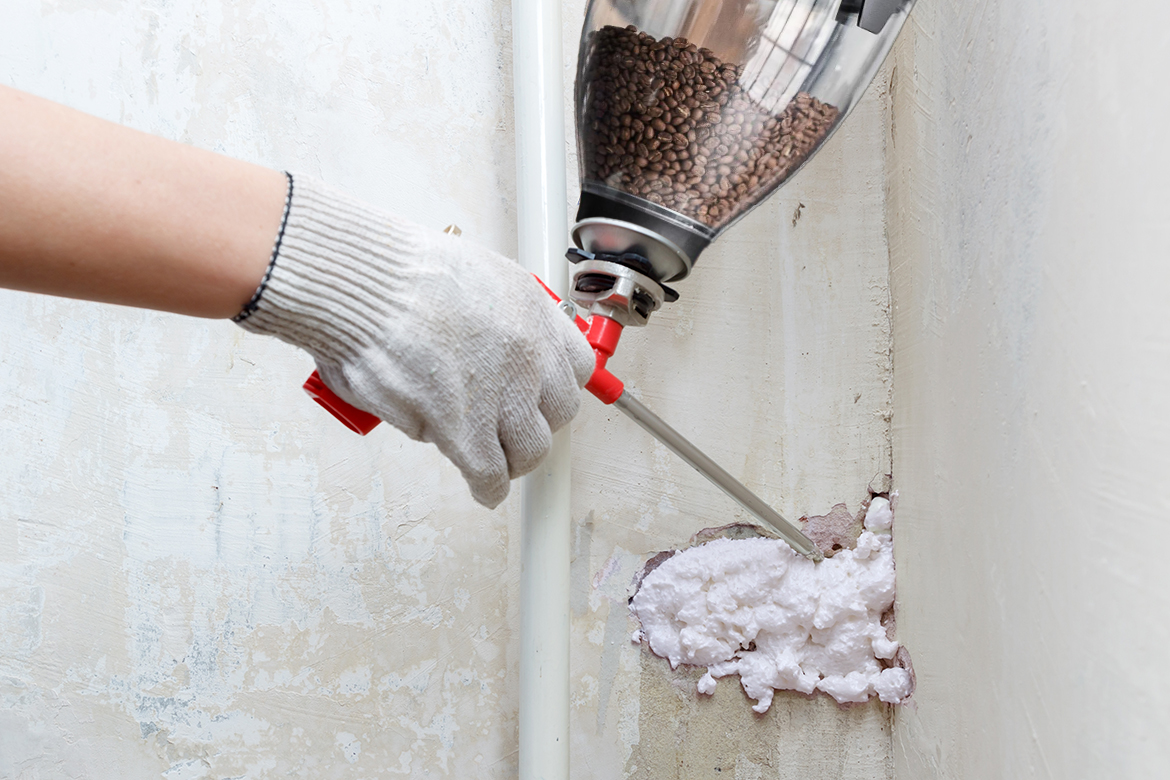
Unlike petroleum-based foams, which are derived from crude oil and involve energy-intensive manufacturing processes that often require toxic blowing agents (such as hydrofluorocarbons), the biochar insulation is largely carbon-neutral. It sequesters the carbon originally absorbed by the coffee plant during its growth, preventing it from returning to the atmosphere as methane or CO2.
A Chronology of Coffee Upcycling Innovations
The development of biochar insulation is the latest milestone in a multi-decade timeline of coffee-based material science. As the global community shifts toward a circular economy, researchers have progressively found ways to integrate coffee waste into various industrial sectors:
- 2010–2015: Early Biofuels and Fertilizers: Initial efforts focused on the high oil content of coffee grounds (roughly 15%), leading to the development of coffee-derived biodiesel and the widespread use of grounds in industrial-scale composting.
- 2016–2018: Consumer Goods and Textiles: Brands began experimenting with coffee-infused fibers for apparel, utilizing the material’s natural odor-absorbing properties. This era also saw the emergence of coffee-based biodegradable plastics for cups and cutlery.
- 2019–2021: Structural Materials: Civil engineers demonstrated that replacing a portion of sand in concrete with charred coffee grounds could increase the strength of the concrete by up to 30%. Concurrently, coffee-based "bricks" were developed for non-load-bearing architectural features.
- 2022–Present: Advanced Electronics and Insulation: The focus has shifted to the microscopic level, utilizing the carbon structure of coffee for next-generation battery anodes, supercapacitors, and now, high-performance thermal biochar.
Industry Implications and Market Potential
The construction industry is under increasing pressure to reduce its carbon footprint, as building materials and construction activities are responsible for nearly 40% of global energy-related carbon emissions. The introduction of a high-performance, bio-based insulation provides a pathway for developers to meet stringent ESG (Environmental, Social, and Governance) criteria and green building certifications like LEED or BREEAM.
Industry analysts suggest that the scalability of coffee biochar insulation depends on the establishment of robust collection networks. While large-scale instant coffee manufacturers provide a centralized source of waste, the "last mile" collection of grounds from urban cafes remains a logistical challenge. However, in countries with high coffee consumption and advanced waste-sorting infrastructure, such as South Korea, the United States, and parts of Western Europe, the raw material supply is effectively inexhaustible.
Architects and sustainability consultants have expressed optimism regarding the findings. If the material can be mass-produced at a cost comparable to polystyrene, it could see rapid adoption in the residential sector, where "eco-conscious" building materials are in high demand.
Addressing Toxicity and Safety Standards
One of the significant advantages of the biochar-ethyl cellulose compound is its relative safety compared to traditional products. Many conventional spray foams and rigid foam boards release volatile organic compounds (VOCs) during and after installation, which can impact indoor air quality. Furthermore, the manufacturing of polystyrene involves styrene, a chemical categorized by the International Agency for Research on Cancer (IARC) as a probable carcinogen.
The coffee-based alternative relies on organic waste and natural polymers, significantly reducing the toxicological profile of the production line. While further testing is required to determine the fire-retardant properties of the biochar boards—a critical metric for any building material—the carbon-dense nature of biochar naturally lends itself to higher fire resistance than many untreated synthetic polymers.
Conclusion: The Path Toward Circular Construction
The research from Jeonbuk National University represents more than just a clever use of food waste; it is a proof of concept for the future of the "circular city." By viewing spent coffee grounds as a feedstock rather than a burden, the scientific community is closing the loop on one of the world’s most consumed commodities.
The transformation of coffee grounds into insulation, roads, batteries, and concrete suggests a future where the built environment is inextricably linked to the waste streams of urban life. As the global population continues to urbanize and the demand for energy-efficient housing grows, the ability to harvest building materials from the local cafe rather than the oil well may become a cornerstone of sustainable development. The success of the "pore restoration" strategy in this study provides a technical blueprint that may soon be applied to other organic waste streams, further diversifying the portfolio of green materials available to the modern engineer.