
 Indra Kusuma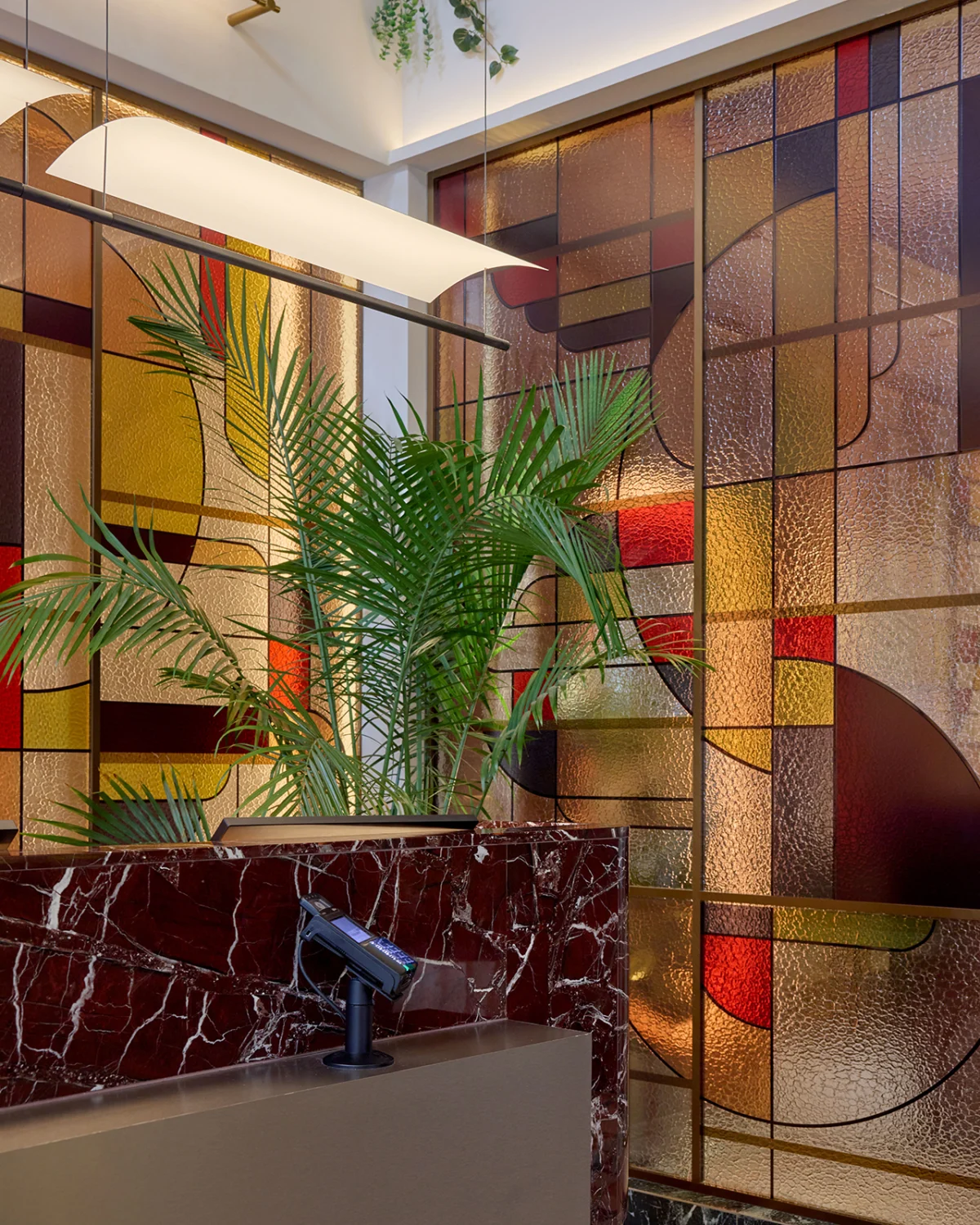
The contemporary hospitality landscape is undergoing a profound transformation, moving far beyond its traditional role as merely a place for travelers to rest. Hotels, particularly in vibrant urban centers, are evolving into dynamic, multifunctional environments, meticulously designed to serve an expansive clientele that includes not only transient visitors but also local residents seeking new social and professional spaces. This paradigm shift reflects a broader understanding of urban living and the increasing demand for integrated experiences, where convenience, community, and curated aesthetics converge. The trend sees properties incorporating an ever-expanding suite of services, from sophisticated food and beverage options to extensive coworking facilities, state-of-the-art fitness centers, recreational playrooms, and increasingly, inviting lobby "living rooms." These reimagined public spaces function as porous buffers, expertly softening the transition between the bustling street outside and the private accommodations above, thereby fostering a sense of connection and accessibility within the urban fabric.
The Evolution of Hospitality: Beyond Bed and Board
For decades, the primary function of a hotel was straightforward: to provide lodging. While amenities like restaurants and meeting rooms were common, the core identity remained largely singular. However, driven by shifts in consumer behavior, technological advancements, and a growing desire for authentic, localized experiences, the hospitality sector began its metamorphosis. Modern travelers, particularly millennials and Gen Z, often prioritize immersive cultural engagement and seek out accommodations that reflect the character of their destination. Business travelers, too, now demand more than just a desk; they require flexible workspaces, seamless connectivity, and opportunities for both focused work and informal networking. Simultaneously, urban dwellers are increasingly looking for "third places"—spaces outside of home and work where they can relax, socialize, or engage in creative pursuits, much like the concept coined by sociologist Ray Oldenburg.
This confluence of demands has propelled hotels to become comprehensive lifestyle destinations. Data from industry reports consistently indicates a rising trend in "lifestyle hotels," which emphasize design, social spaces, and curated experiences over purely functional offerings. For instance, according to a recent hospitality industry survey, properties that have invested in enhanced communal areas and diverse F&B options often report higher guest satisfaction scores and increased non-room revenue, sometimes accounting for 40-50% of total earnings. The incorporation of extensive food and beverage programs, ranging from gourmet dining to casual cafes and vibrant cocktail lounges, not only caters to guests but also draws in local patrons, embedding the hotel more deeply into its neighborhood’s social ecosystem. Similarly, the rise of coworking spaces within hotel lobbies or dedicated zones addresses the growing demographic of remote workers and entrepreneurs, providing flexible, professional environments equipped with high-speed internet and ergonomic furnishings.
Adaptive Reuse: A Sustainable Approach to Urban Development

A significant driver behind this transformation, especially in mature urban markets, is the principle of adaptive reuse. This sustainable practice involves repurposing existing structures for new functions, offering numerous benefits over new construction. It reduces waste, preserves architectural heritage, and often allows for a faster development timeline. In cities like New York, where prime real estate is scarce and historical buildings abound, adaptive reuse presents an economically viable and environmentally responsible solution for urban renewal.
The Hyatt Union Square, a long-established fixture in Lower Manhattan, stands as a prime example of this adaptive reuse philosophy in action. Rather than demolishing or simply cosmetically updating the property, its owners opted for a comprehensive retooling of its public spaces. This strategic decision aligns with broader urban planning goals that seek to revitalize existing infrastructure and foster community engagement. The selection of LEGEARD STUDIO, a multi-city interiors firm renowned for its innovative approach to blending historical context with contemporary design, underscores the commitment to a thoughtful and impactful transformation. Their recent revamp of the Hyatt Union Square’s expansive, Fourth Avenue-facing lobby transformed it from a conventional hotel entrance into a dynamic, public-facing neighborhood salon, a testament to the power of design in re-envisioning urban spaces.
LEGEARD STUDIO’s Vision for Hyatt Union Square: A Dialogue Between Eras
LEGEARD STUDIO’s mandate was clear: to create an environment that fulfilled the multifaceted requirements of a modern hospitality hub while honoring the site’s rich history. The resulting design is a masterclass in marrying past and present, crafting a space that feels both deeply rooted and forward-looking. The extensive two-story interior underwent a complete gut renovation, allowing the firm to meticulously reintroduce familiar elements alongside innovative new ones.
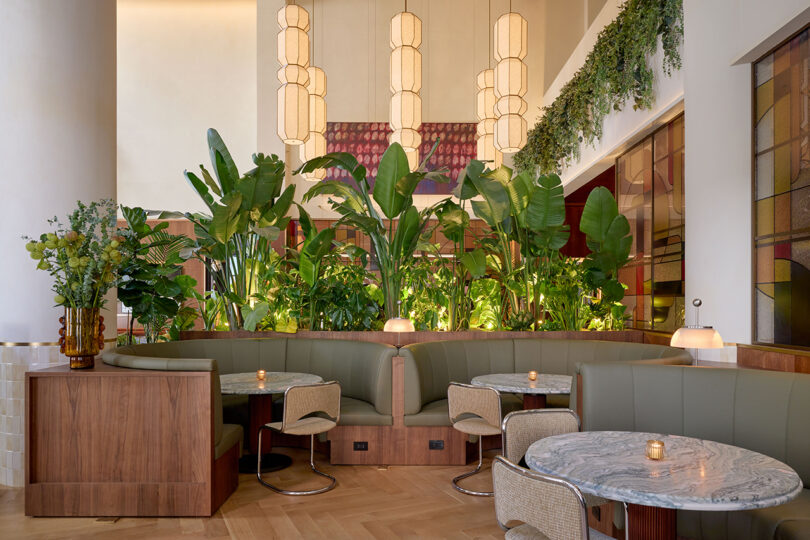
The design narrative subtly weaves together disparate influences. Hints of Palm Springs Tropical Modernism, with its relaxed elegance and integration of natural elements, intermix seamlessly with the restrained yet warm Milanese style of the mid-20th-century period. This eclectic yet harmonious blend creates an atmosphere that is sophisticated, inviting, and uniquely contemporary. The designers intentionally moved away from the "shock and awe" approach prevalent in some earlier hotel designs, instead opting for a human-scale accommodation that prioritizes comfort and connection.
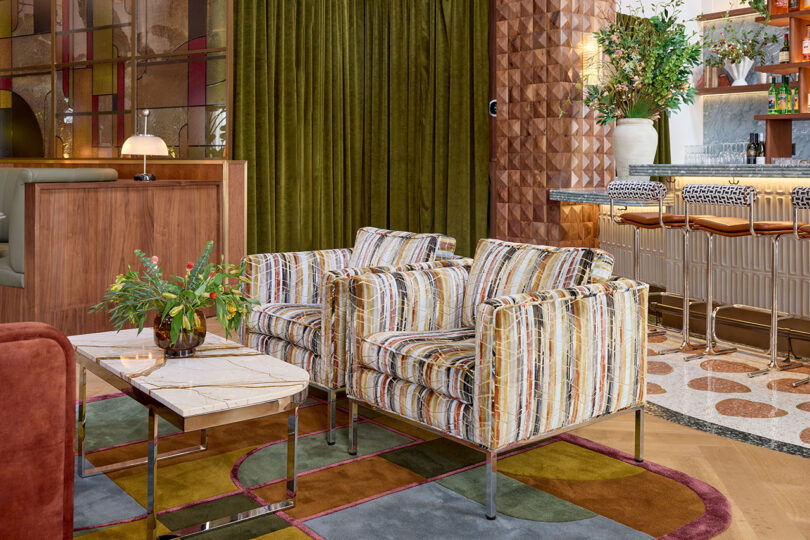
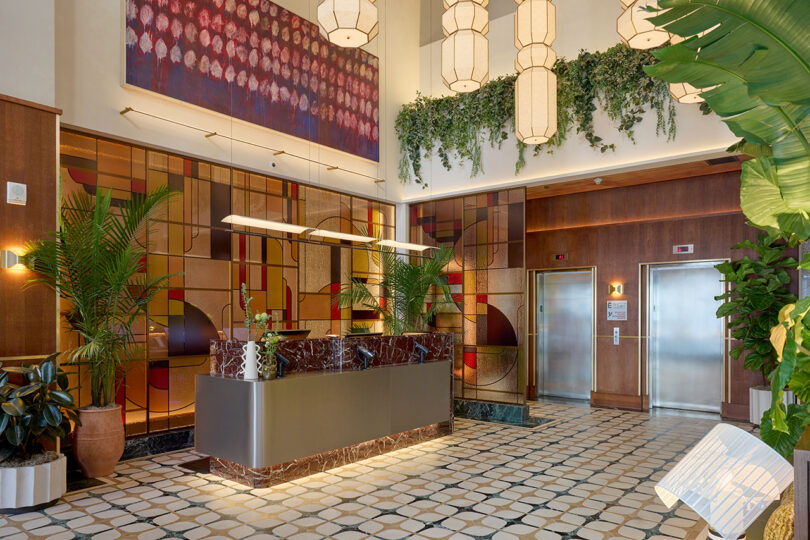
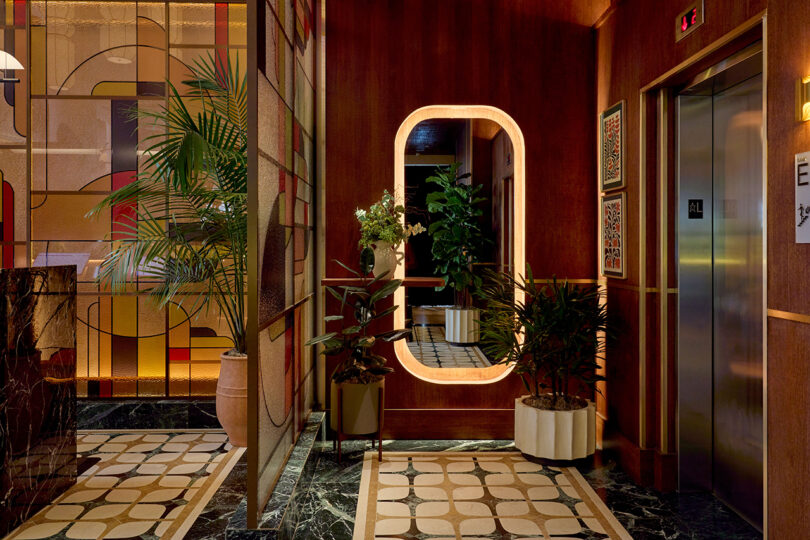
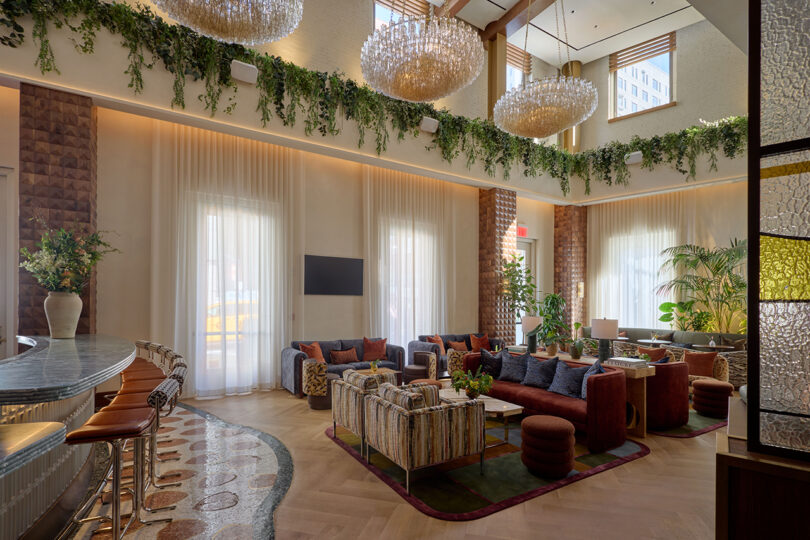
At the foundation of the newly designed lobby is a bespoke amoebic-form patterned tile floor. This distinctive groundwork serves not just as a visual anchor but also as a subtle guide, delineating a series of partially contained alcoves. This strategic partitioning breaks what might otherwise have been an overly imposing and monotonous singular void, instead creating intimate pockets for varied activities – from quiet contemplation to lively conversations.
Iconic Design Elements and Curated Spaces
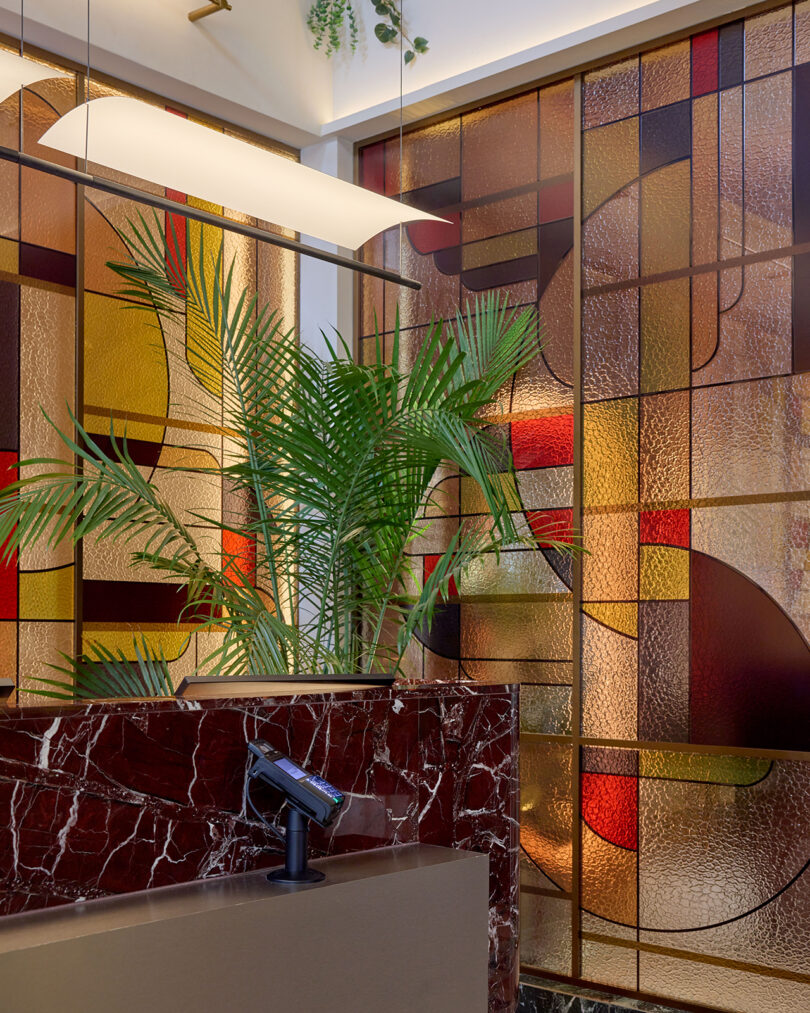
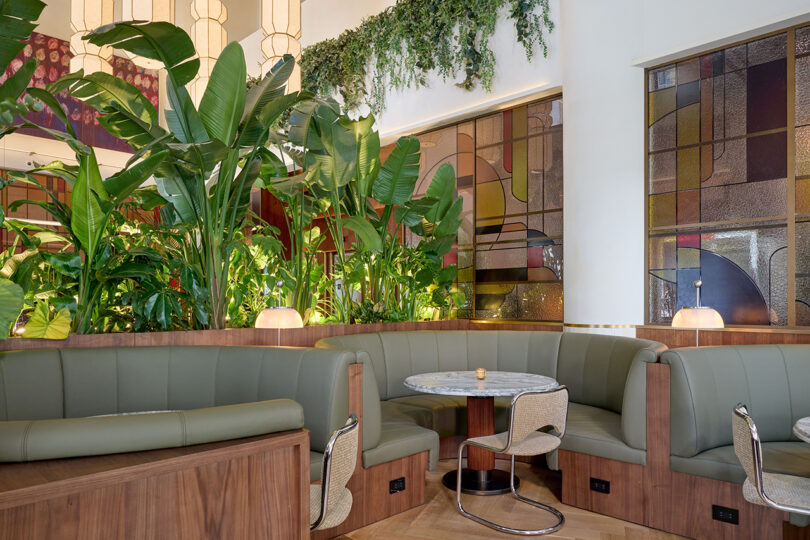
Central to the lobby’s grandeur is the richly veined wooden reception desk, strategically positioned to command attention without being overly formal. Its importance is further accentuated by a striking stained glass wall, geometrically composed to echo the floor’s organic patterns. This Bauhaus-inspired backdrop is not merely decorative; it ingeniously takes in and refracts natural and indirect artificial light, creating unexpected plays of light and shadow throughout the day. Suspended above, paper lanterns reminiscent of Isamu Noguchi’s iconic Akari lamps pay homage to the Japanese-American polymathic artist, whose contributions to design and art, particularly in New York City, are often celebrated. This detail not only adds a touch of artistic heritage but also infuses the space with a soft, ambient glow.
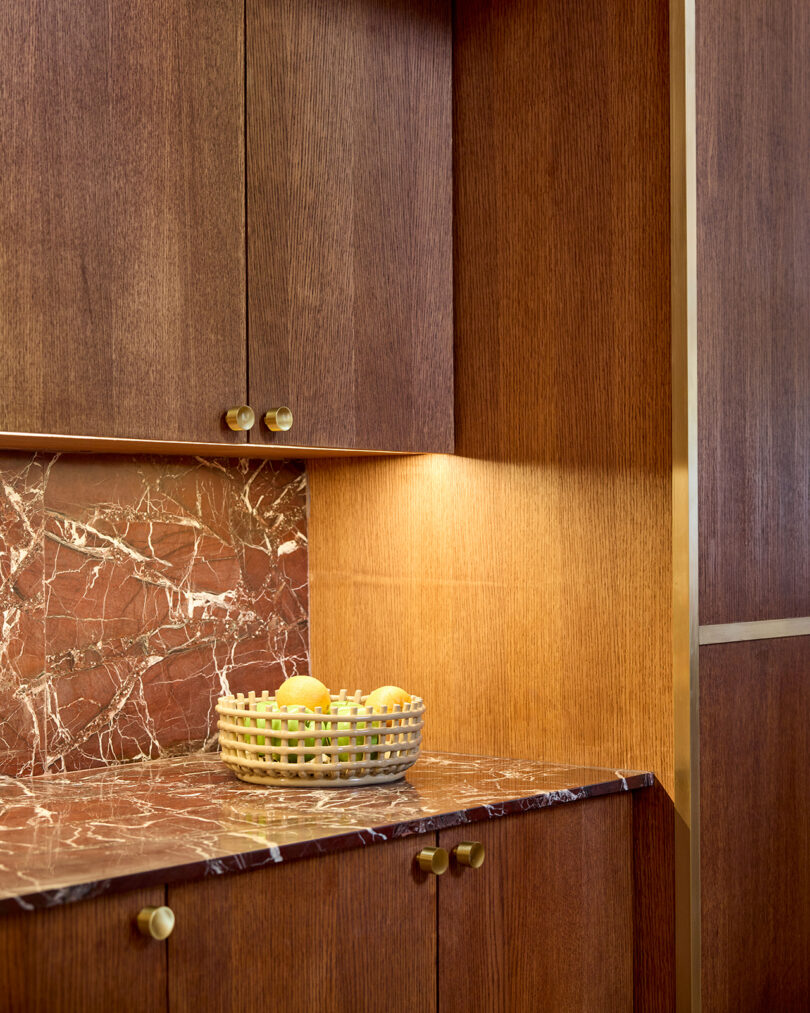
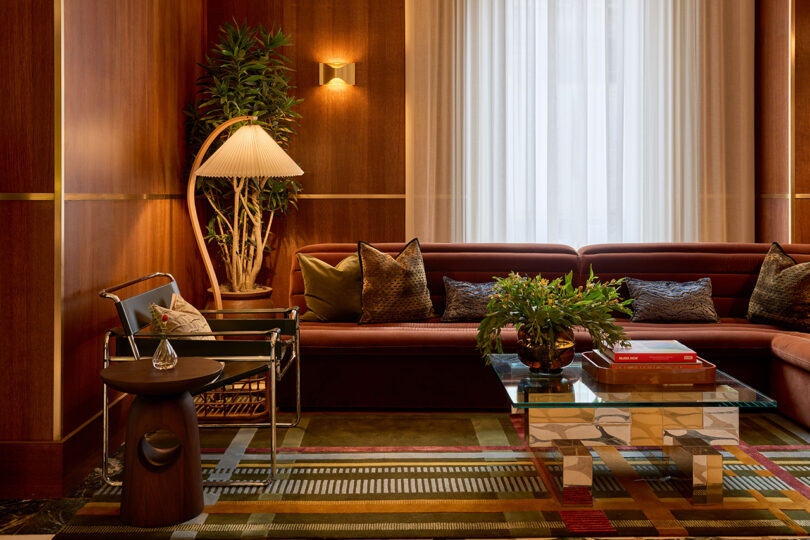
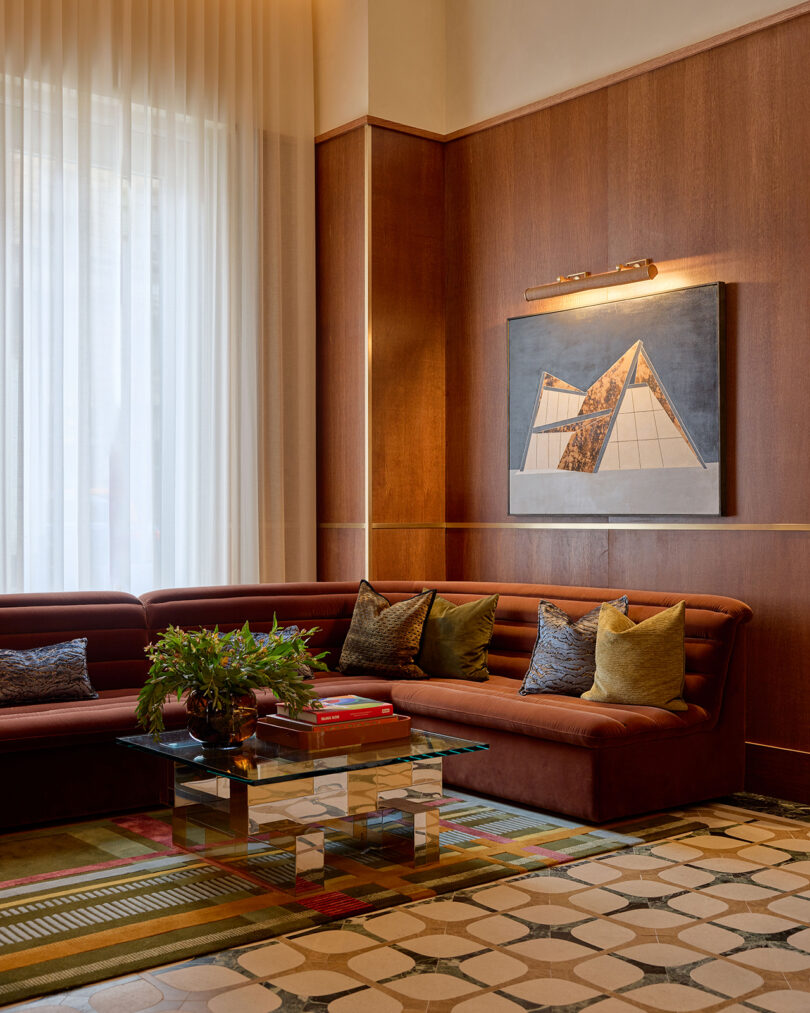
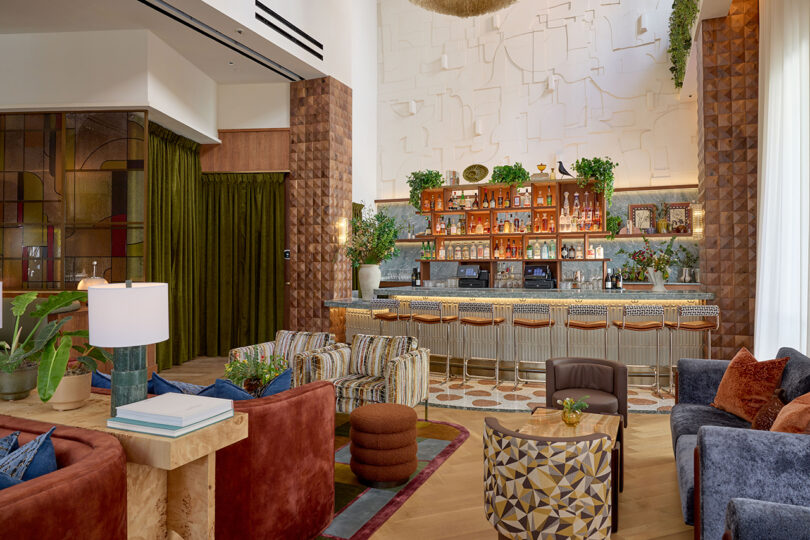
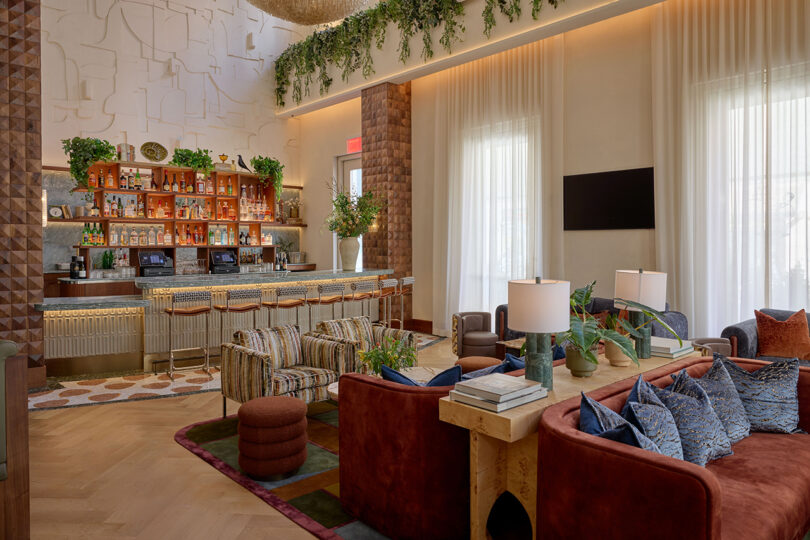
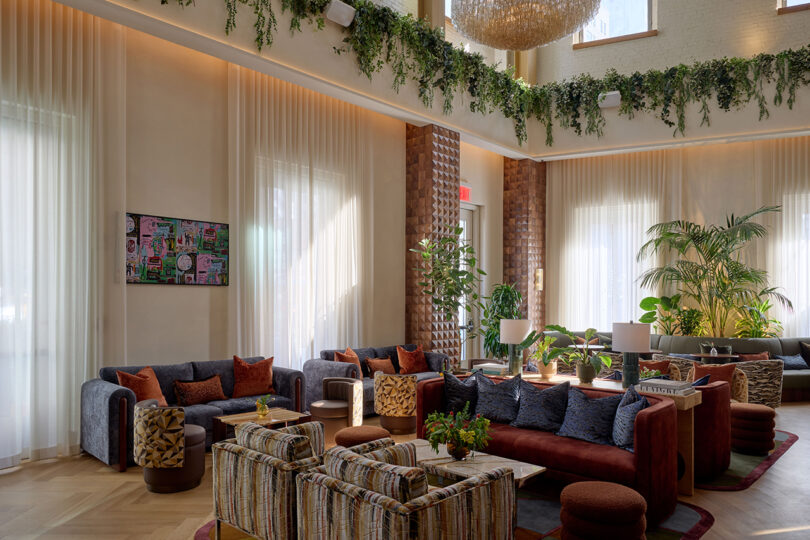
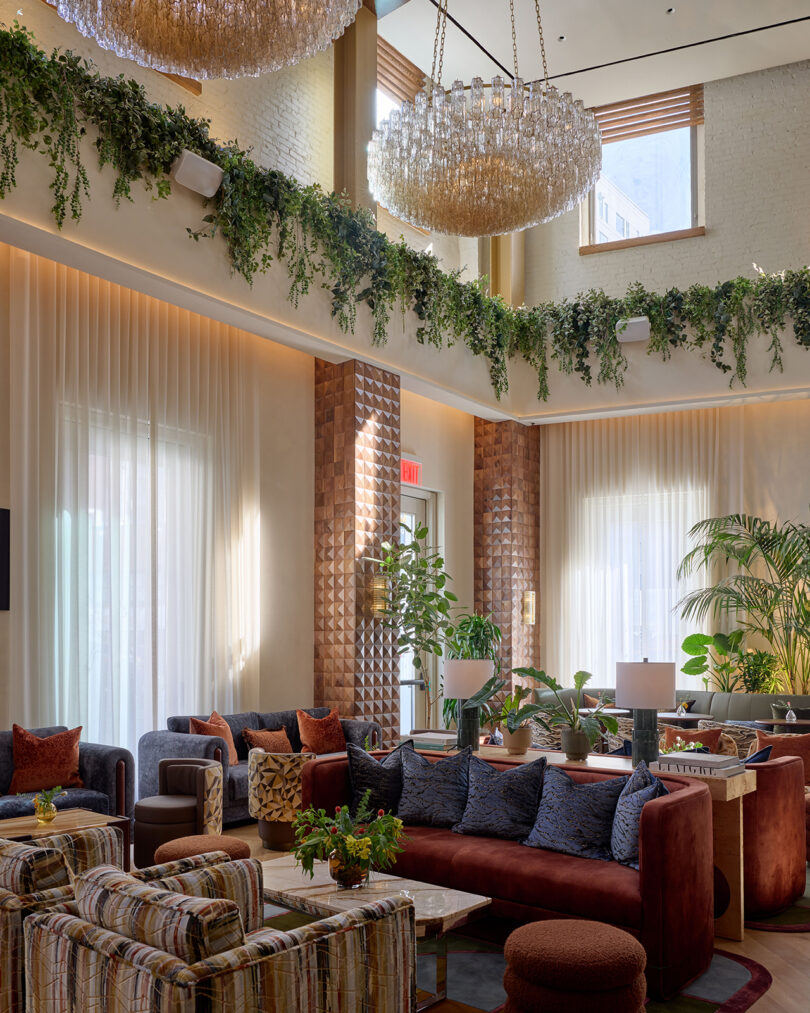
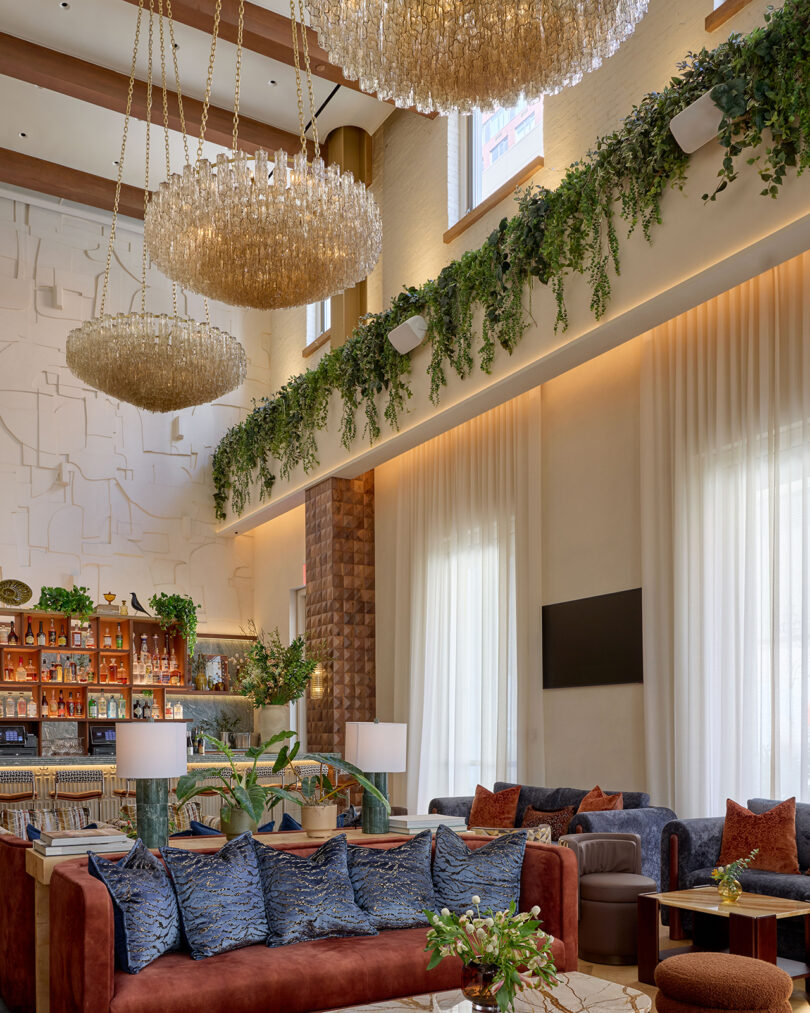
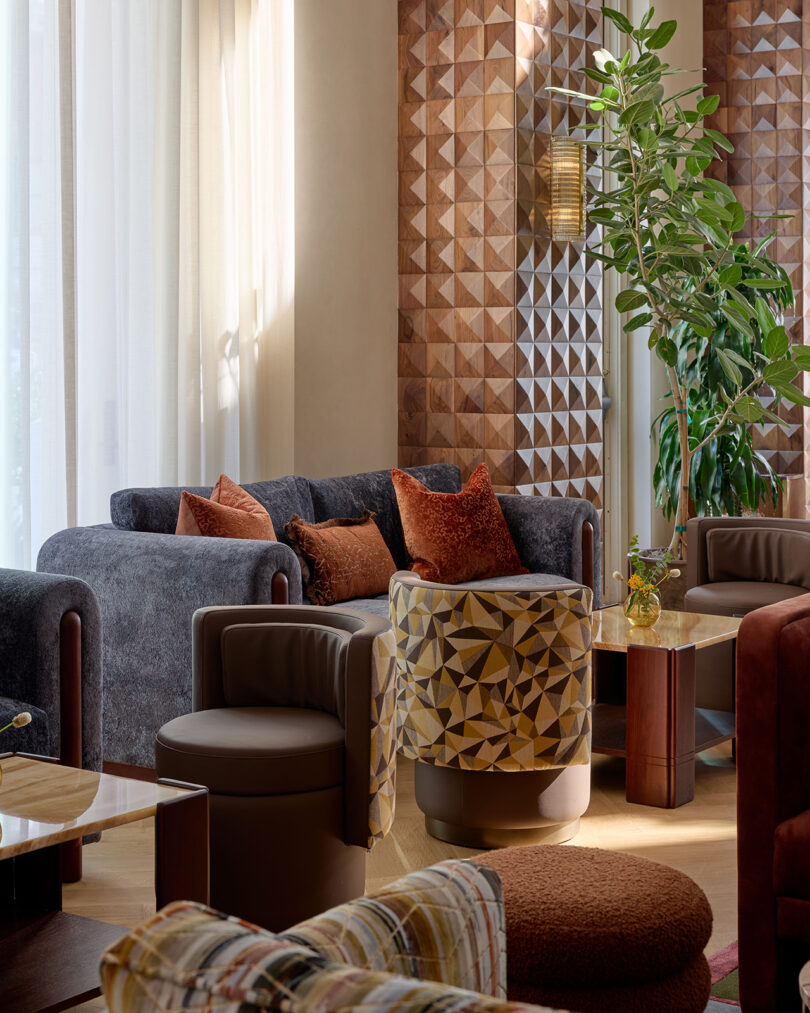
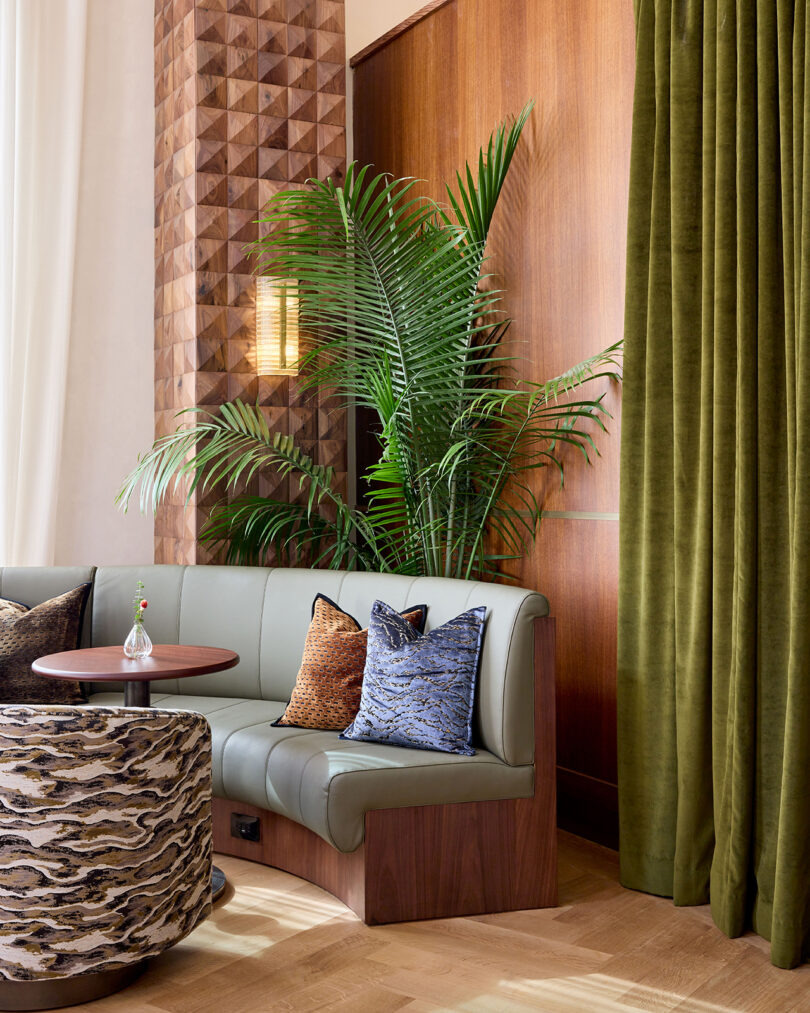
Beyond the main reception, the lobby seamlessly transitions into a series of distinct zones, each with its own character and purpose. The adjoining guest lounge, for instance, adopts more intimate proportions. Wrapped in warm, wood-paneled walls, the space is defined by comfortable, low-slung sofa pits, a nod to 1970s design aesthetics. Playful rugs and carefully selected polished vintage accents are layered in, adding depth and personality. A continuous thread of verdant greenery, encased in elevated linear planters, extends across the entire lobby, bringing the refreshing vitality of nature indoors and creating a cohesive visual flow.
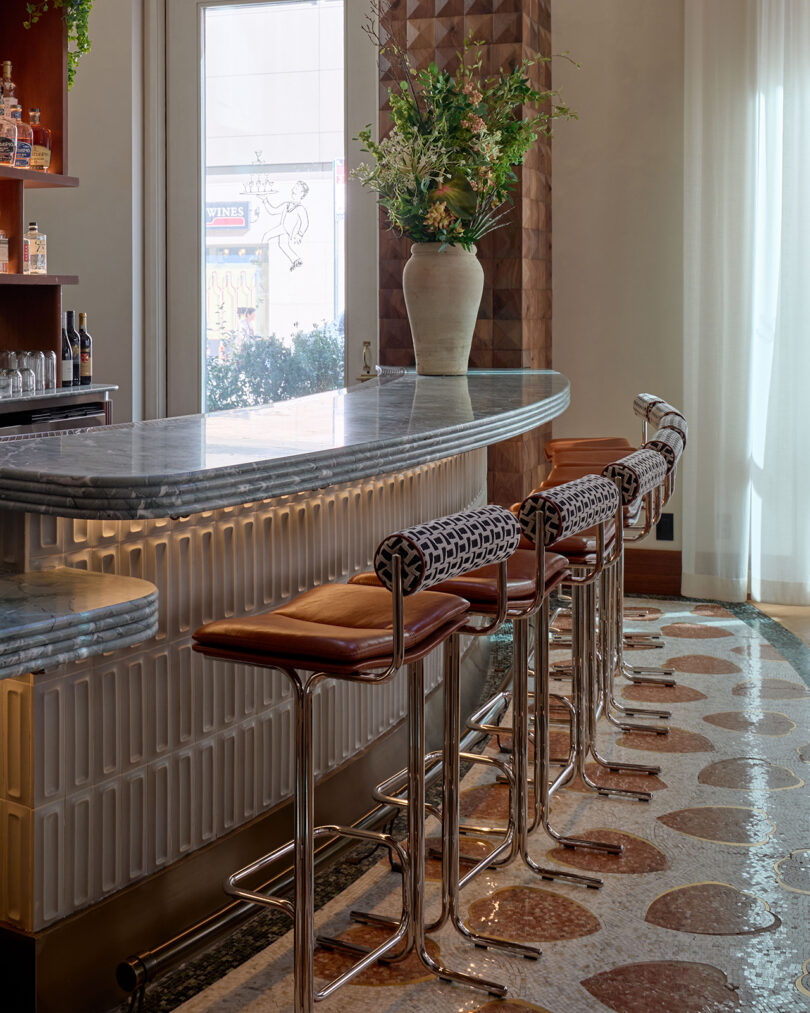
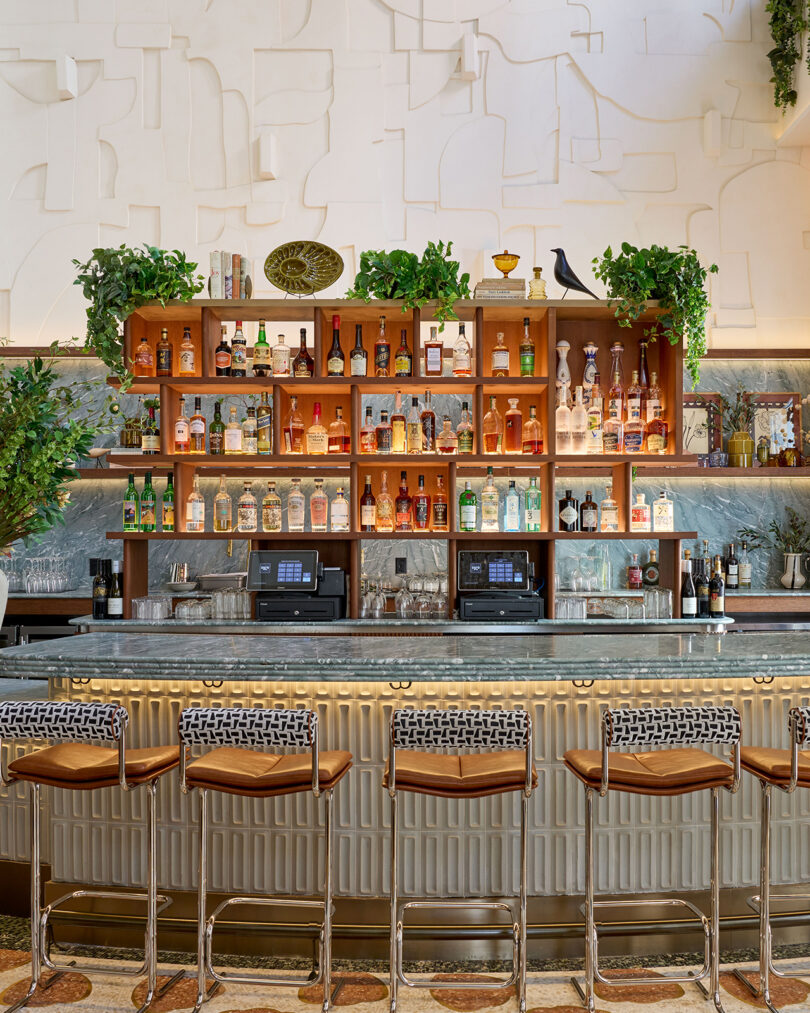
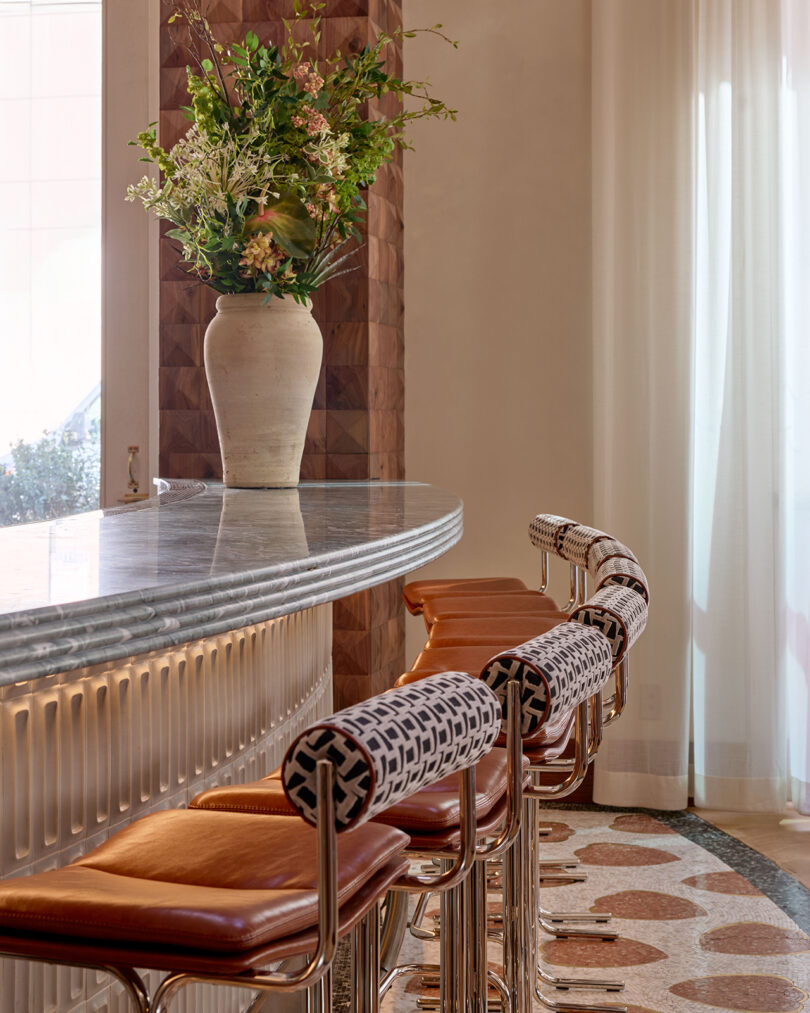
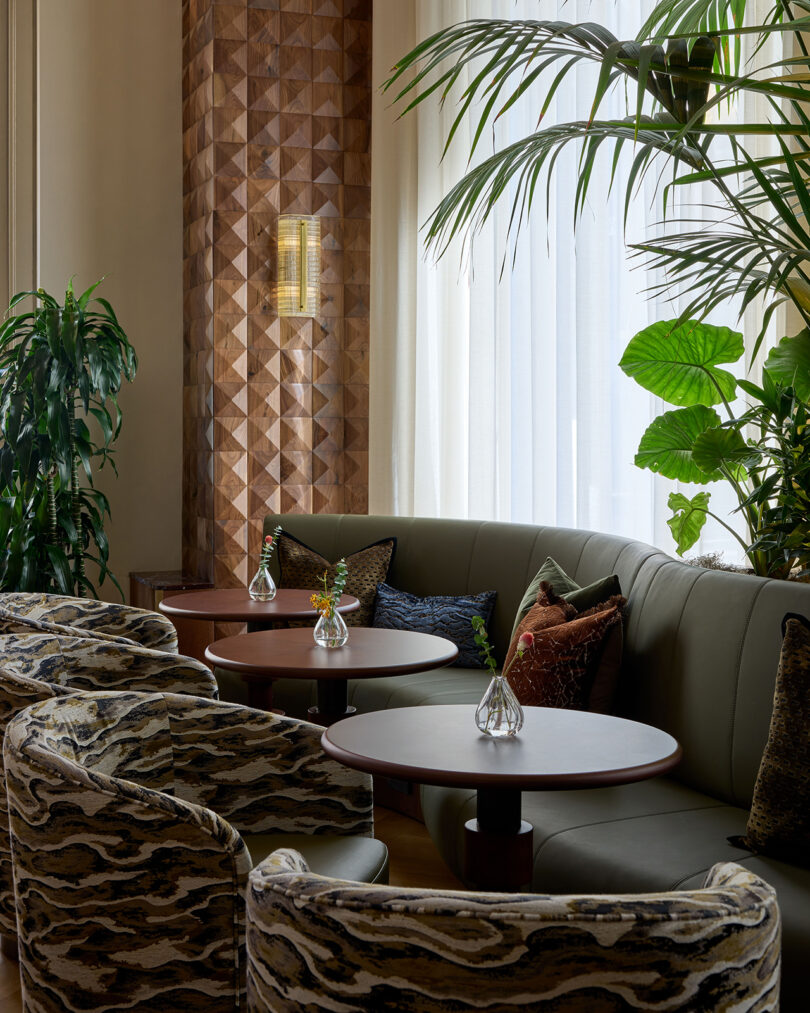
Toward the rear, the cocktail lounge emerges as a sophisticated haven. Its architecture is anchored by soaring columns, encased in intricate diamond-patterned woodwork that adds texture and visual interest. Subtle touches, such as Murano glass-inspired sconces, provide a warm, diffused light and tie into the mid-century design influences. The banquettes within the lounge are illuminated by iconic Sergio Mazza Alfa lamps, serving as elegant focal points. The main bar itself is a masterpiece of design, featuring a Charlotte Perriand-inspired bottle shelf that combines functionality with minimalist aesthetics, and a large slab of Verde Antigua marble for the countertop, adding a touch of natural luxury. A ripple-pattern plaster relief extends across the adjoining wall, contributing to the lounge’s tactile richness. This space exhibits a remarkable duality: glistening with natural light and a large Venetian chandelier by day, it transforms into a sultry, dimly lit haunt by night, perfectly suited for evening socializing.
Union Square: A Historic Nexus and Cultural Beacon
The choice of the Hyatt Union Square for this ambitious renovation is particularly apt given its location. For many New Yorkers, Union Square represents a central axis of the city, gracefully straddling the dynamic edge of downtown and uptown. Its cultural and historical significance is immense. The area was once home to Andy Warhol’s legendary Factory, a crucible of pop art and counterculture. The esteemed Parsons School of Design, a global leader in art and design education, is also nearby, contributing to the neighborhood’s creative energy.
Union Square Park itself is a vibrant public space, hosting a renowned twice-weekly farmers’ market that draws crowds from across the city, and transforming into a festive holiday village during the winter season. Its circuitous plaza is a frequent site for major public gatherings, protests, and celebrations, reflecting its role as a democratic heart of the city. From this central point, New York’s extensive array of diversely defined yet ever-evolving districts unfolds in all directions, making the Hyatt Union Square a gateway to the city’s myriad experiences. By creating a public-facing salon within the hotel, LEGEARD STUDIO and Hyatt have not only enhanced the property but also reinforced its connection to this iconic, bustling urban landmark.
Broader Implications for Hospitality and Urban Integration
The transformation of the Hyatt Union Square lobby by LEGEARD STUDIO represents more than just an interior design project; it signifies a pivotal moment in the evolution of hospitality design and urban integration. This adaptive reuse initiative underscores a growing industry trend towards creating hotels that are deeply embedded within their communities, serving as vibrant social and cultural anchors rather than insular establishments.
The implications are far-reaching. For the hospitality sector, it highlights the strategic value of investing in public spaces to diversify revenue streams, enhance brand identity, and cultivate customer loyalty. Hotels that successfully adopt this model are better positioned to attract a broader demographic, including locals who might not otherwise consider patronizing a hotel. For urban planning, such projects demonstrate how existing infrastructure can be sustainably revitalized to meet contemporary needs, contributing to the economic and social vibrancy of neighborhoods. By fostering spaces that encourage interaction, collaboration, and relaxation, these hotels actively contribute to the "third place" ecosystem that is vital for a healthy urban environment.
Furthermore, the design itself, with its thoughtful blend of historical reverence and modern functionality, sets a new benchmark for creating engaging and timeless interiors. The careful selection of materials, the interplay of light and shadow, and the deliberate creation of diverse zones within a cohesive whole speak to a sophisticated understanding of human needs and aesthetic desires. The project offers a blueprint for how luxury and comfort can coexist with public accessibility and community engagement, proving that the time for intimidatingly grand, singular hotel lobbies has indeed passed. Instead, what has emerged is a welcoming, human-scale accommodation that is both nostalgic – evoking the romantic drama of legendary establishments like the Palladium nightclub that once stood nearby – and perfectly contemporary in its thoughtful design and multifaceted purpose.
The Hyatt Union Square, through LEGEARD STUDIO’s vision, has not merely been renovated; it has been reimagined as a dynamic urban salon, a place where travelers and locals alike can connect, work, relax, and immerse themselves in the rich tapestry of New York City life. This project stands as a powerful testament to the evolving role of hotels as essential components of the modern urban experience.







