Cintya Tara Annisa
The air corridor between Seoul’s Gimpo International Airport and Jeju International Airport is consistently ranked as the busiest flight path in the world, facilitating the movement of over 10 million passengers annually. This logistical feat underscores Jeju Island’s central role in South Korean life, serving as a vital atmospheric counterbalance to the hyper-urbanized environment of the capital. While Seoul is characterized by its high-density architecture, rapid technological integration, and fast-paced commercialism, Jeju Island offers a landscape defined by volcanic topography, maritime traditions, and a rhythmic pace dictated by the natural elements. In recent years, this geographical distinction has fostered a sophisticated specialty coffee scene that rivals any global metropolitan center, driven by a demographic shift of artists, digital nomads, and young entrepreneurs seeking a departure from the "Pali-pali" (hurry-hurry) culture of the mainland.
The Cultural Shift: From Mass Tourism to Han Dal Salgi
Historically, Jeju was perceived primarily as a destination for short-term domestic honeymoons and school excursions. However, the last decade has seen the emergence of the han dal salgi phenomenon, which translates to "living for a month." This trend involves individuals—often remote workers or creatives—relocating to the island for extended periods to establish a temporary routine centered on wellness and creative output. Data from the Jeju Tourism Organization suggests that the rise of long-term stays has directly influenced the island’s service economy, shifting the focus from high-volume tourist traps to independent, thoughtfully designed spaces.
This evolution is most visible in the island’s coffee industry. Unlike the centralized coffee districts of Seoul, such as Seongsu-dong or Hannam-dong, Jeju’s specialty cafes are decentralized. They are frequently housed in repurposed structures—traditional stone homes, maritime warehouses, or modernist glass pavilions—situated along coastal perimeters or tucked within the inland oreums (volcanic cones). This distribution requires visitors to engage with the island’s geography, making the pursuit of a high-quality beverage an integrated part of the exploration of the landscape.
Kiekee Coffee Stand: Neighborhood Integration in Jeju City
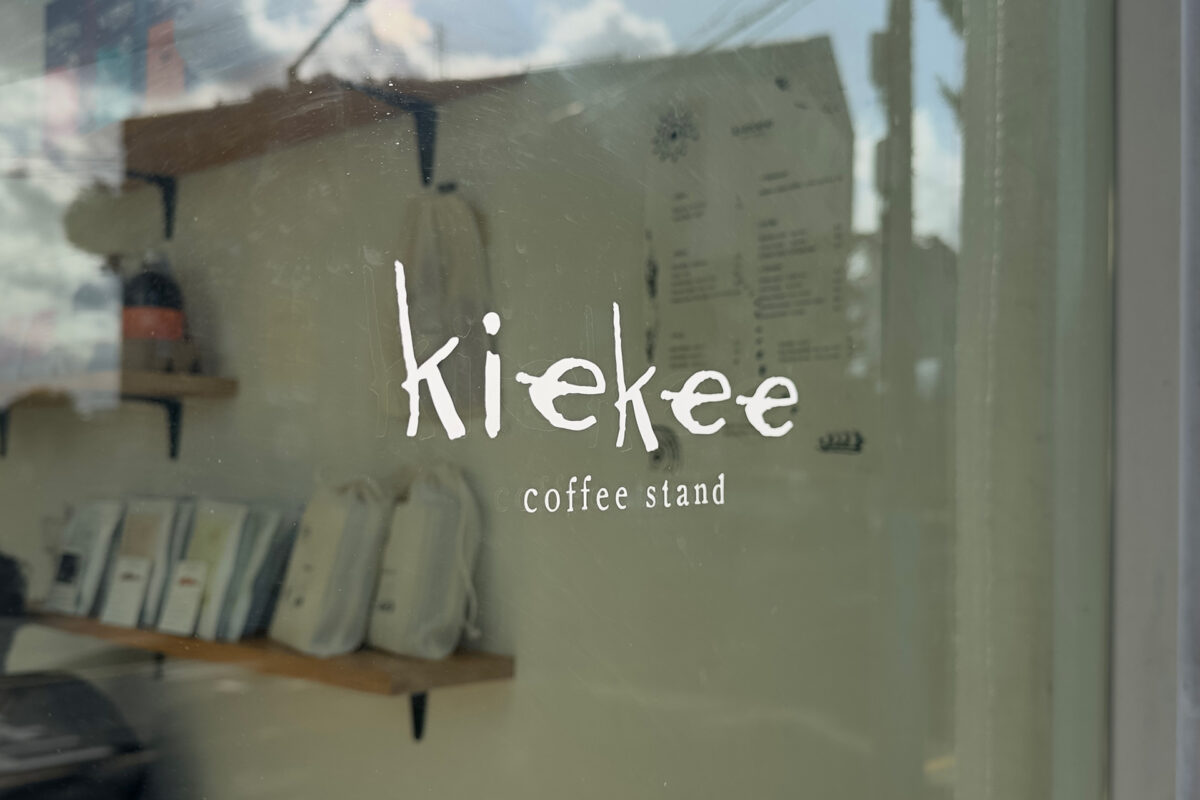
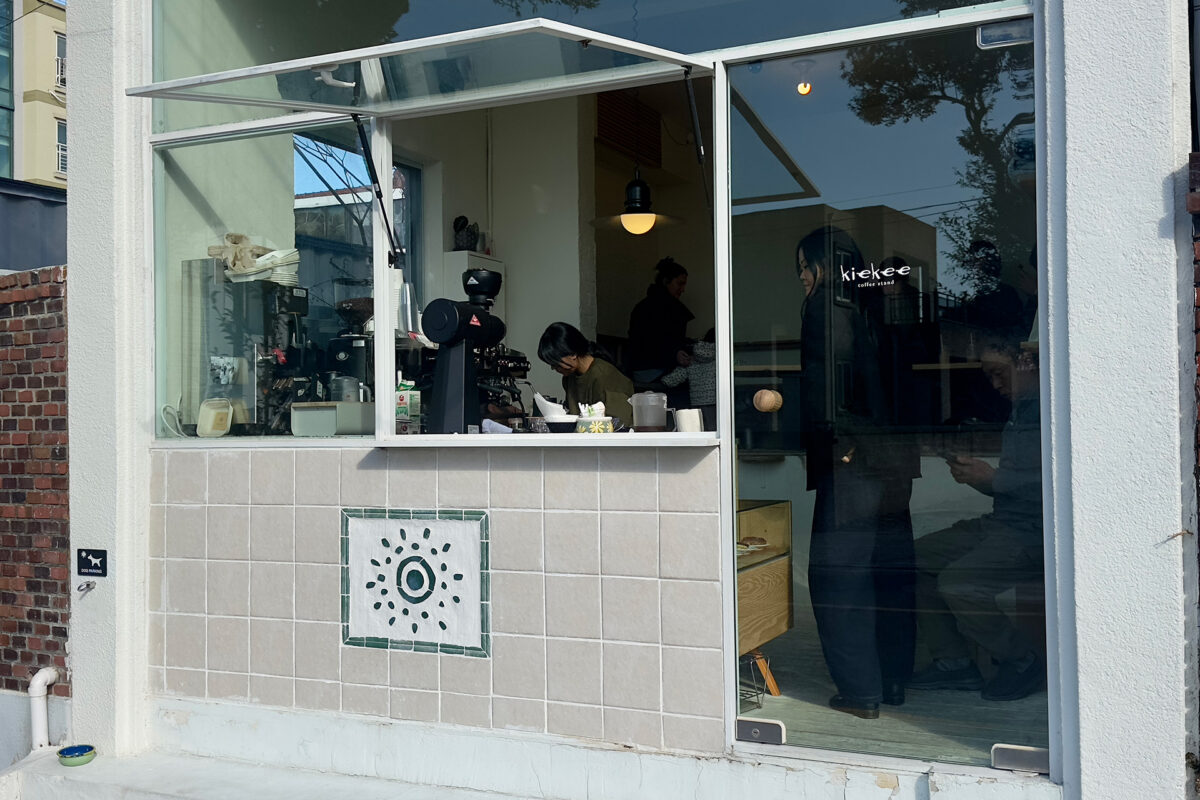
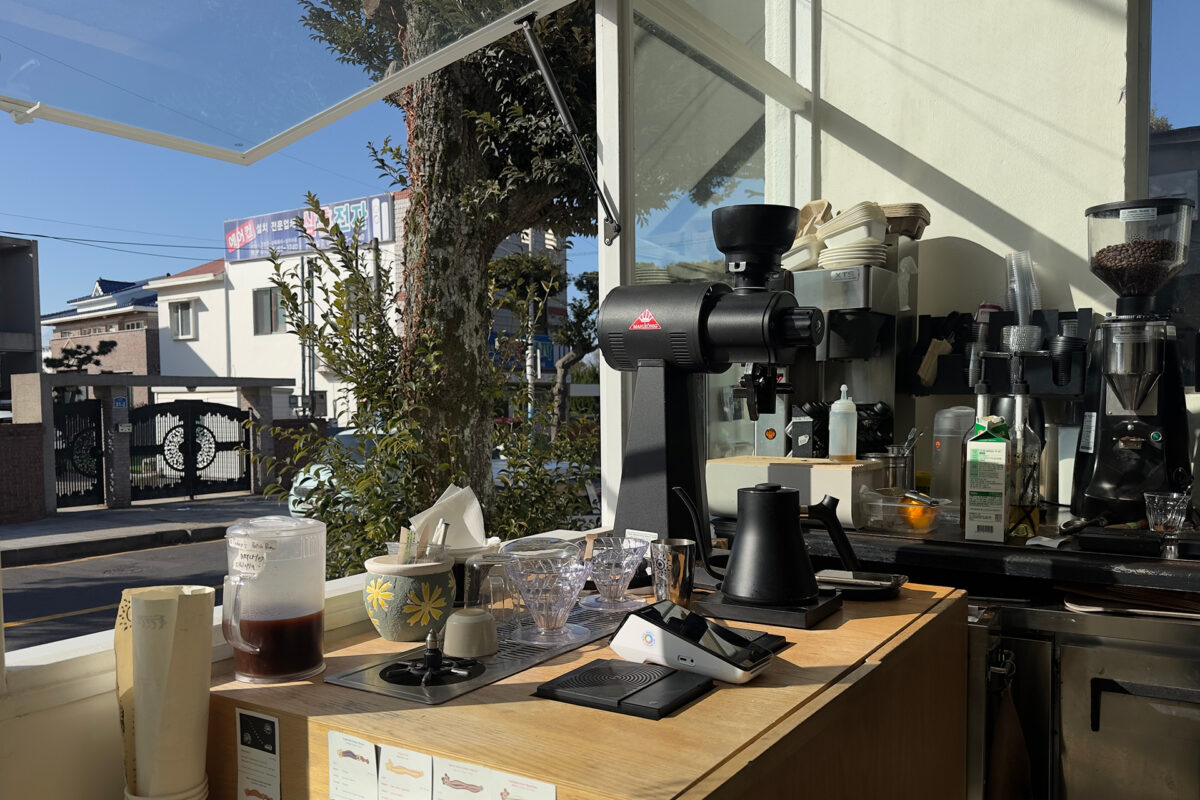
For those beginning their journey in the northern urban center, Kiekee Coffee Stand represents the successful integration of specialty coffee into the local neighborhood fabric. Located in Jeju City, the space utilizes a unique two-tiered architectural layout that blurs the line between the service area and the seating gallery. By elevating the seating area, the design provides patrons with a panoramic view of the baristas at work, emphasizing the transparency of the brewing process.
Kiekee operates its own roasting facility near the city center, focusing on a balance between accessible blends and technical single-origin offerings. A notable feature of their service model is the availability of single-origin batch brews, catering to a clientele that values specialty quality without the temporal commitment of a traditional pour-over. The cafe has also become a focal point for the island’s growing fitness community; it serves as a frequent "post-run" or "post-ride" destination for local cycling and running clubs. This community-centric approach is complemented by a focused pastry program, headlined by a signature cinnamon roll designed to pair with their medium-to-dark roast profiles.
Coffee Nap Roasters: A Hybrid of Tradition and Modernity
Situated on the western trajectory toward the popular Hyeopjae Beach, Coffee Nap Roasters serves as a prime example of architectural "Newtro" (new-retro) design. The facility is a reconstructed traditional Korean house that maintains its original structural integrity while incorporating modern concrete elements. The proximity to the ocean is a defining characteristic of the location, where the saline air and sea spray contribute to the sensory experience of the space.
Coffee Nap Roasters is recognized within the Korean specialty industry for its proficiency in medium-roast profiles, emphasizing sweetness and clarity. Their menu features a diverse range of Asian and European-inspired pastries, with the Hong Kong-style egg tart cited as a particular highlight. Beyond the aesthetics, the roastery maintains a high technical standard, offering what many critics consider the premier flat white and decaffeinated pour-over options on the island. The presence of neighborhood cats, for whom the staff provides food, further domesticates the high-design environment, making it a space of both artistic merit and local warmth.
By Mot: Luxury Coffee in a Volcanic Landscape
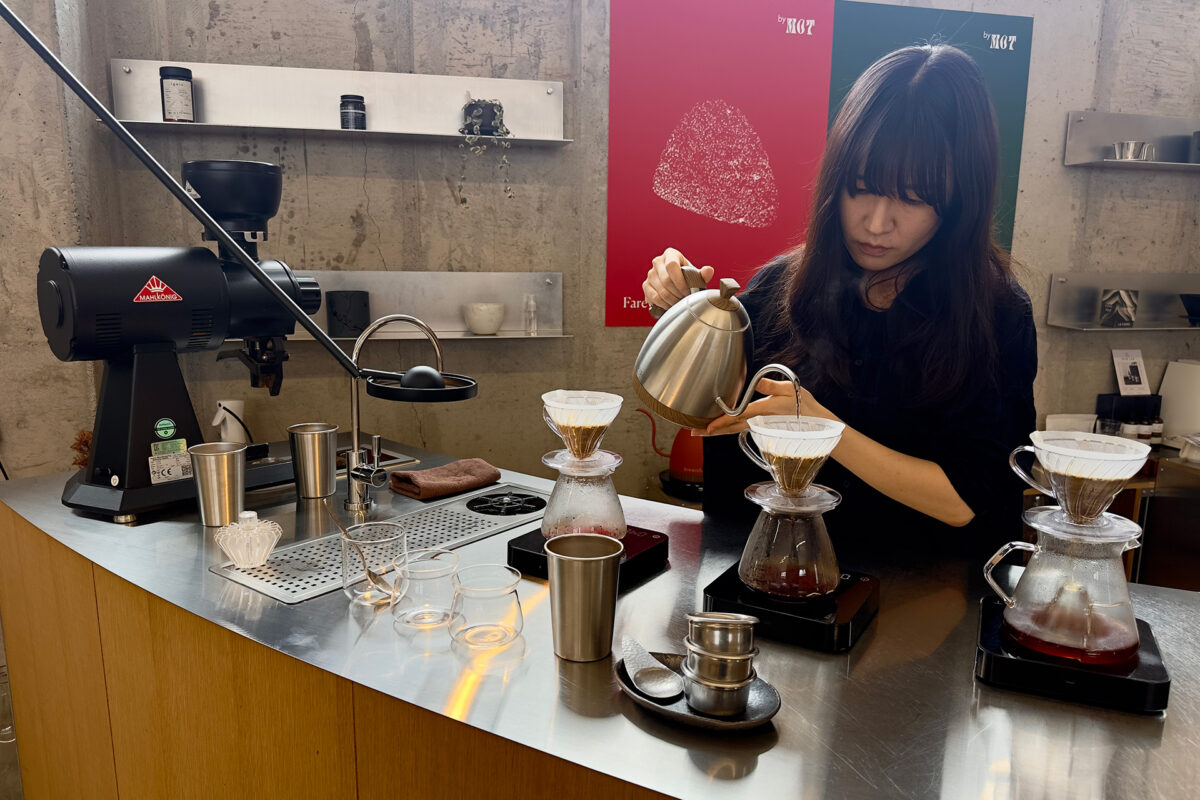
In the shadow of Geum Oreum, an expansive volcanic cone, sits By Mot. This establishment operates more like a coffee estate than a standard cafe. The modernist concrete-and-glass structure is isolated from residential zones, surrounded by the island’s signature grassy plains. The architectural choice of floor-to-ceiling windows ensures that the dramatic topography remains the focal point for patrons.
By Mot is positioned at the "luxury" end of the specialty spectrum, frequently offering rare fermentations and high-scoring microlots that command prices exceeding $10 per cup. The technical setup is rigorous, featuring a Mahlkönig EK43 grinder and multiple Hario V60 stations, allowing baristas to manage complex brewing variables simultaneously. On-site roasting is conducted in partnership with Coffee Collage, but the menu also features a curated selection of "guest roasters" from the global stage, including La Cabra (Denmark), Datura (France), and SEY (United States). This international outlook positions By Mot as a bridge between Jeju’s local terroir and the global specialty coffee movement.
Little Waves City Roasters: Japanese-Influenced Precision
In the heart of Jeju City, Little Waves City Roasters offers an atmosphere of disciplined calm. The interior design draws heavily from Japanese aesthetics, utilizing dark wood paneling and warm, low-intensity lighting to create a space that encourages mindfulness. The staff adheres to a formal uniform code, a detail that reflects the establishment’s commitment to the professional craft of the barista.
The technical infrastructure at Little Waves includes a Synesso MVP Hydra espresso machine and Origami drippers for manual filter coffee. Their signature "City Latte" is engineered for a higher coffee-to-milk ratio, providing a more robust flavor profile than a standard latte. Additionally, the cafe utilizes local agricultural products, such as Jeju-grown matcha, to create specialized beverages like the strawberry matcha latte. The pastry program focuses on high-quality ingredients, featuring Valrhona chocolate brownies and butter scones, reinforcing the cafe’s status as a destination for slow, intentional consumption.
Fritz Coffee: The heavyweights at Sunrise Peak
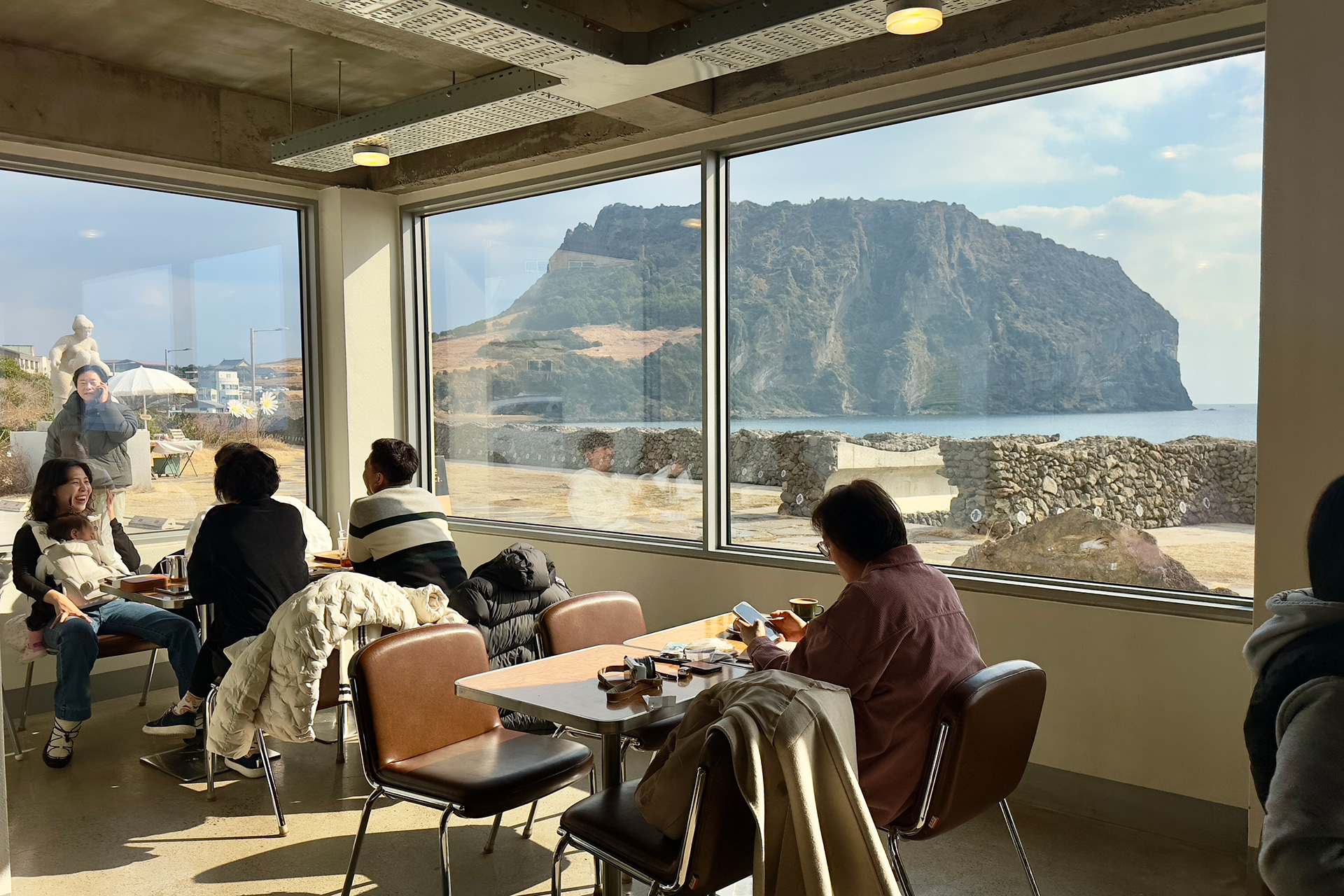
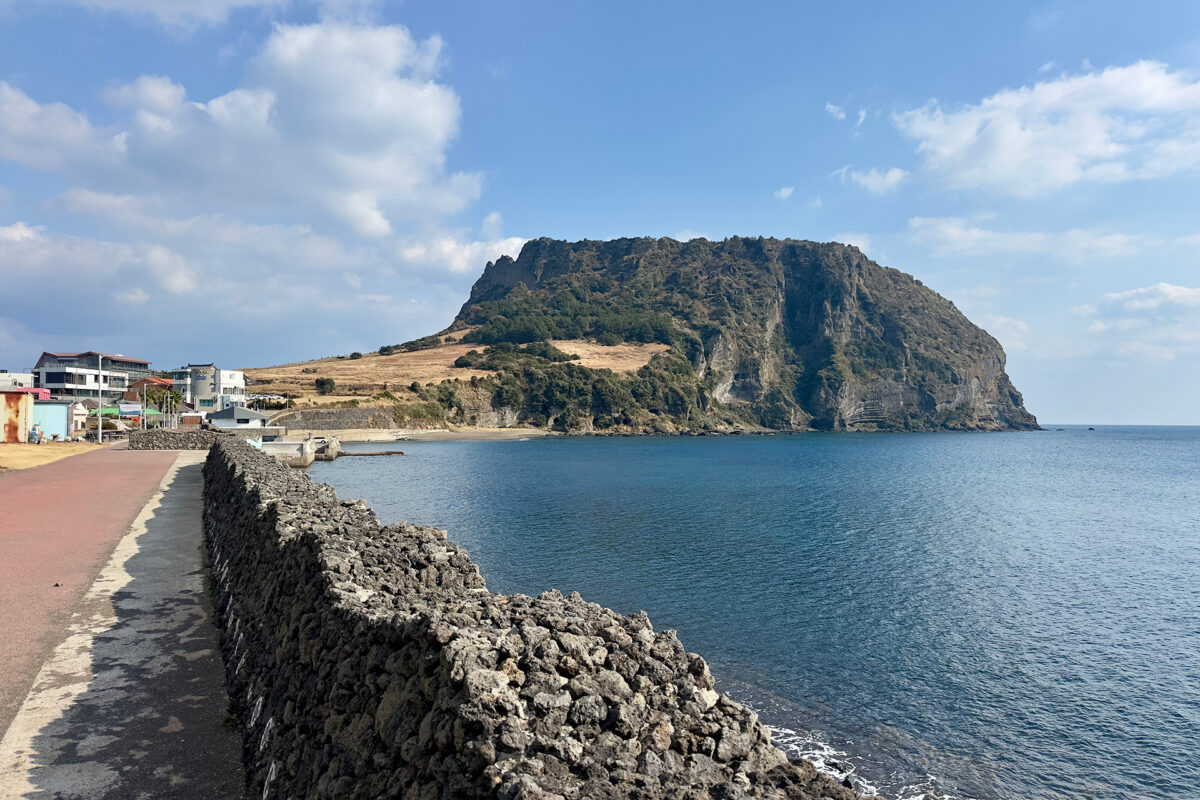
Seongsan Ilchulbong, or Sunrise Peak, is a UNESCO World Heritage site and perhaps the most iconic landmark on Jeju’s eastern coast. Within walking distance of this volcanic monument is the Jeju outpost of Fritz Coffee. Fritz is a foundational pillar of the South Korean specialty coffee scene, known for its cohesive branding and meticulous sourcing. The Seongsan location is expansive, designed to accommodate the high volume of visitors attracted to the nearby peak without sacrificing the quality of the service.
The menu at Fritz is highly customizable, allowing patrons to select specific espresso blends, milk types, and sweetness levels. Unique to the Jeju location are experimental beverages such as the Chai Matcha Latte and the Fritz Ale—a sparkling, spiced citrus drink. The bakery operates on a traditional Korean-French model, where customers select items like morning buns and galette des rois from a central display. The presence of Fritz at such a high-profile tourist site signifies the maturity of the island’s coffee culture; it demonstrates that high-volume tourism and high-standard specialty coffee are no longer mutually exclusive.

Ohsayo Coffee: Technical Hospitality in Seogwipo
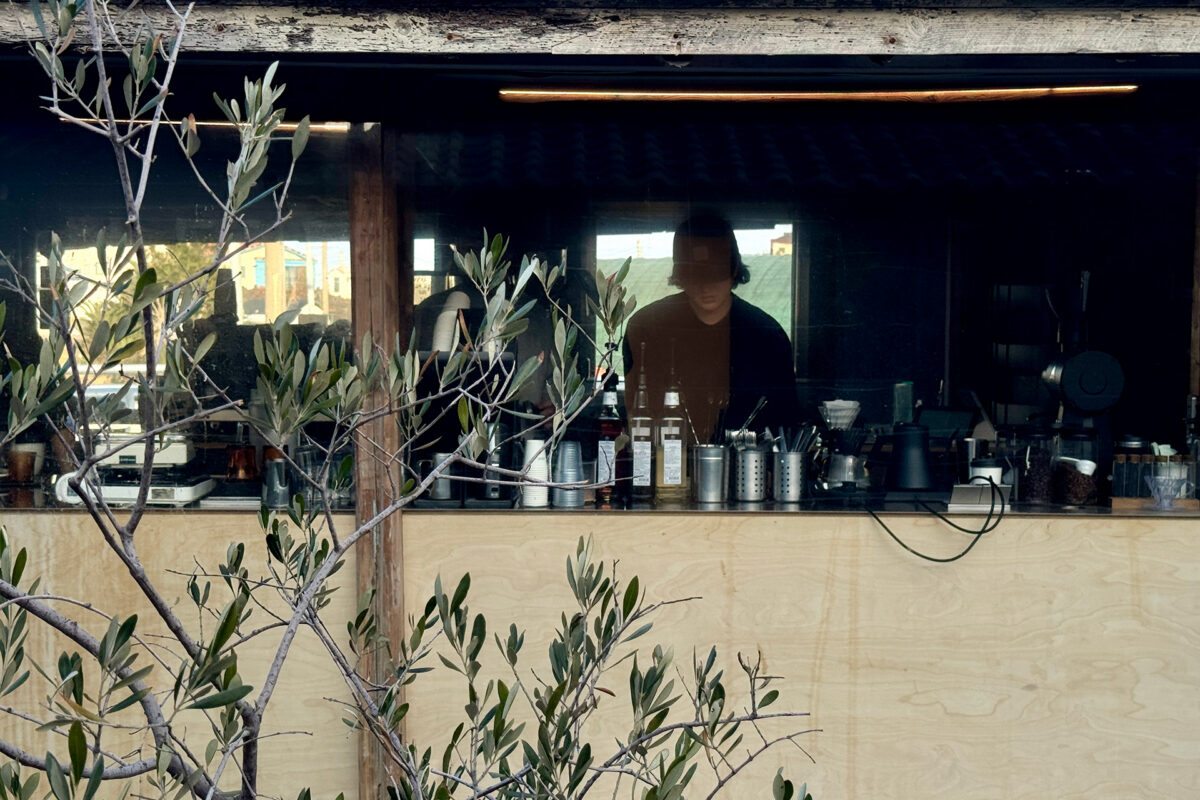
In the southern city of Seogwipo, Ohsayo Coffee provides a contrast to the larger "destination" cafes. Tucked into a quiet residential neighborhood, the cafe is characterized by a minimalist menu and a high degree of technical experimentation. Ohsayo utilizes the Decent DE-1 espresso machine, a piece of equipment known for its ability to precisely control pressure and flow profiles. This allows the owner to explore non-traditional extraction methods, resulting in a unique espresso experience that appeals to the "coffee purist" demographic.
Despite the high level of technicality, the defining feature of Ohsayo is its hospitality. The owner-operated nature of the space fosters a personal connection between the producer and the consumer, a quality that is often lost in larger commercial operations. It serves as a reminder that the core of Jeju’s coffee culture is not just the beans or the machinery, but the individuals who have relocated to the island to build a life centered on quality and community.
Economic and Social Implications for the Region
The proliferation of these specialty spaces has significant implications for Jeju Island’s future. Economically, it diversifies the tourism sector, attracting a higher-spending demographic that values artisanal products over mass-market experiences. Socially, it provides a viable career path for young Koreans who wish to exit the competitive environment of the mainland while remaining part of a sophisticated professional network.
However, this growth also brings challenges. The demand for "aesthetic" cafes has led to rising real estate prices in once-quiet villages, a phenomenon that requires careful management by local authorities to prevent the displacement of traditional farming and fishing communities. Furthermore, the environmental impact of increased tourism on the island’s delicate volcanic ecosystem remains a point of concern.
As Jeju continues to evolve, its coffee culture stands as a testament to the island’s unique ability to blend the elemental with the refined. Whether through a high-tech espresso extraction in Seogwipo or a quiet pour-over overlooking a volcanic cone, the island has successfully established itself as a premier global destination for coffee enthusiasts, proving that the busiest flight path in the world leads to a place where time, finally, slows down.