Michael Sholeh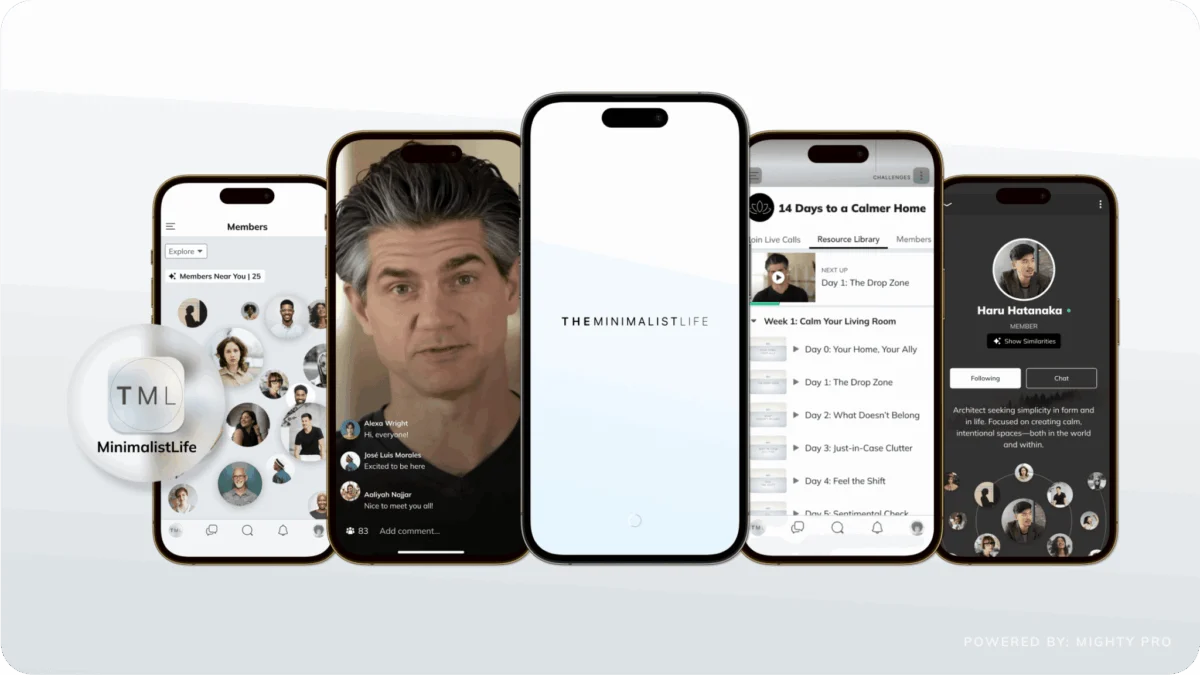
Joshua Becker, the founder of the influential digital platform Becoming Minimalist, has announced a strategic expansion of his work with the launch of "The Minimalist Life," a private membership community designed to transition followers from content consumption to sustained lifestyle implementation. This development marks a significant milestone in Becker’s 17-year career as a leading voice in the modern simplicity movement, shifting the focus from educational resources to interactive, long-term community support. Since its inception in 2008, Becoming Minimalist has grown from a personal blog into a global phenomenon, producing over 1,700 articles and reaching millions of readers seeking a reprieve from consumer-driven culture.
The introduction of this new community model addresses a recurring challenge reported by practitioners of minimalism: the difficulty of maintaining intentional habits after the initial enthusiasm of a decluttering project fades. Becker’s initiative seeks to bridge the gap between theory and practice by providing a structured environment where members can apply minimalist principles to diverse facets of life, including financial management, scheduling, digital consumption, and interpersonal relationships. The program is positioned as a response to the "content fatigue" often found in the digital age, prioritizing human interaction and peer accountability over automated or AI-generated advice.
A Chronology of the Modern Simplicity Movement
To understand the significance of Becker’s new offering, it is essential to trace the trajectory of the minimalism movement over the past two decades. The "simplicity" trend gained significant traction following the 2008 global financial crisis, as individuals began to reevaluate their relationship with debt, possessions, and career-driven stress. Becker, a former pastor from Arizona, launched Becoming Minimalist in May 2008 after a transformative experience cleaning his garage while his young son played alone in the backyard. This realization—that possessions were stealing time from his family—became the cornerstone of his philosophy.
By 2010, the movement saw a surge in visibility with the rise of other key figures, such as Leo Babauta of Zen Habits and the duo known as The Minimalists. Throughout the 2010s, Becker expanded his reach by publishing several bestselling books, including The More of Less and The Minimalist Home, which provided tactical frameworks for reducing physical clutter. In 2016, he launched the "Uncluttered" course, an intensive twelve-week program that has since served over 90,000 participants. The 2020s brought a new set of challenges, as the COVID-19 pandemic forced a global re-examination of home environments, leading to a renewed interest in minimalism as a tool for mental health and domestic order. The launch of "The Minimalist Life" in 2025 represents the latest evolution in this timeline, moving toward a "subscription-to-lifestyle" model that emphasizes longevity over quick fixes.
Supporting Data: The Economic and Psychological Cost of Clutter
The expansion of Becker’s platform is supported by a growing body of data highlighting the necessity of minimalist interventions in modern society. According to market research, the average American home contains approximately 300,000 items, a figure that has tripled over the last 50 years. This increase in physical inventory has correlated with a rise in domestic stress; a study by the University of California, Los Angeles (UCLA) found that high levels of "clutter" in the home were directly linked to elevated levels of cortisol, the primary stress hormone, particularly in women.
Furthermore, the economic implications of consumerism are stark. Data from the Federal Reserve indicates that US household debt reached a record high of over $17 trillion in 2024, with credit card balances accounting for a significant portion of that growth. Becker’s move to include financial minimalism in his new community reflects a broader trend of "intentional spending" aimed at curbing impulsive consumption. Additionally, the digital landscape has become a source of significant cognitive load. Research from the Pew Research Center suggests that the average adult checks their phone dozens of times per day, leading to what psychologists call "continuous partial attention." By addressing digital minimalism and schedule management, Becker’s new program targets the systemic "clutter" of the modern mind as much as the clutter of the physical home.

Structural Features of The Minimalist Life Community
The new membership platform is designed to offer a multifaceted approach to personal development. Unlike previous one-off courses, "The Minimalist Life" operates on a monthly cadence, focusing on different themes to ensure comprehensive lifestyle integration. Key components of the community include:
- Thematic Monthly Focus: Each month is dedicated to a specific area of life, such as "Minimalism and Finances," "Minimalist Habits," or "Digital Minimalism." This allows for a deep dive into topics that are often overlooked in standard decluttering guides.
- Direct Interaction: Members receive direct access to Becker through monthly live Q&A sessions and curated lessons. This high-touch approach is intended to differentiate the platform from the influx of generic, AI-curated lifestyle content.
- Peer Accountability: The community aspect is central to the program’s design. Discussion forums and group challenges provide a social framework that reinforces individual commitment, leveraging the psychological principle of social proof to foster habit formation.
- Founding Member Incentives: To catalyze the initial launch, Becker has introduced a "founding member" rate of $18 per month or $180 per year. This pricing strategy, available until June 30, aims to build a robust initial cohort that will set the cultural tone for the community.
Industry Implications and Expert Perspectives
The shift toward community-based models in the personal development industry reflects a broader change in how consumers interact with digital creators. Analysts in the "Creator Economy" suggest that as information becomes a commodity—readily available for free via search engines and social media—the value proposition for influencers is shifting toward curation, community, and coaching. By moving from a "content creator" to a "community leader," Becker is aligning his business model with the current demand for authentic, human-led experiences.
Industry observers note that this move also addresses the "completion rate" problem inherent in online education. Traditional online courses often see completion rates as low as 5% to 15%. By offering an ongoing membership rather than a static course, Becker increases the likelihood of long-term engagement. While some critics argue that the "subscription-ization" of personal growth can lead to member fatigue, proponents suggest that for lifestyle changes as radical as minimalism, a continuous support system is the only way to combat the pervasive influence of mass-market advertising and consumer culture.
Analysis: The Future of Intentional Living
The launch of "The Minimalist Life" serves as a case study for the maturation of the minimalism movement. What began as a niche aesthetic or a radical rejection of possessions has evolved into a sophisticated framework for holistic well-being. Becker’s emphasis on "human interaction" in his announcement is particularly noteworthy. In an era where artificial intelligence can generate endless tips on how to organize a closet, the perceived value of a shared human journey has reached a premium.
The long-term impact of this community will likely be measured by its ability to help individuals navigate the complexities of a post-possession-focused life. As people successfully declutter their homes, they often face a "vacuum" of time and purpose. Becker’s curriculum, which promises to address relationships and habits, suggests that the next frontier of minimalism is not about what people take out of their lives, but what they choose to put back in.
As the June 30 deadline for founding membership approaches, the response from Becker’s audience will provide insight into the viability of high-engagement community models in the self-help space. For Becker, the transition represents the culmination of nearly two decades of advocacy. For his followers, it represents an opportunity to turn a philosophy into a permanent practice. The success of this venture could signal a shift for other lifestyle influencers to move away from the "broadcast" model of communication toward more intimate, participatory environments, fundamentally changing the landscape of digital personal development.