rifanmuazin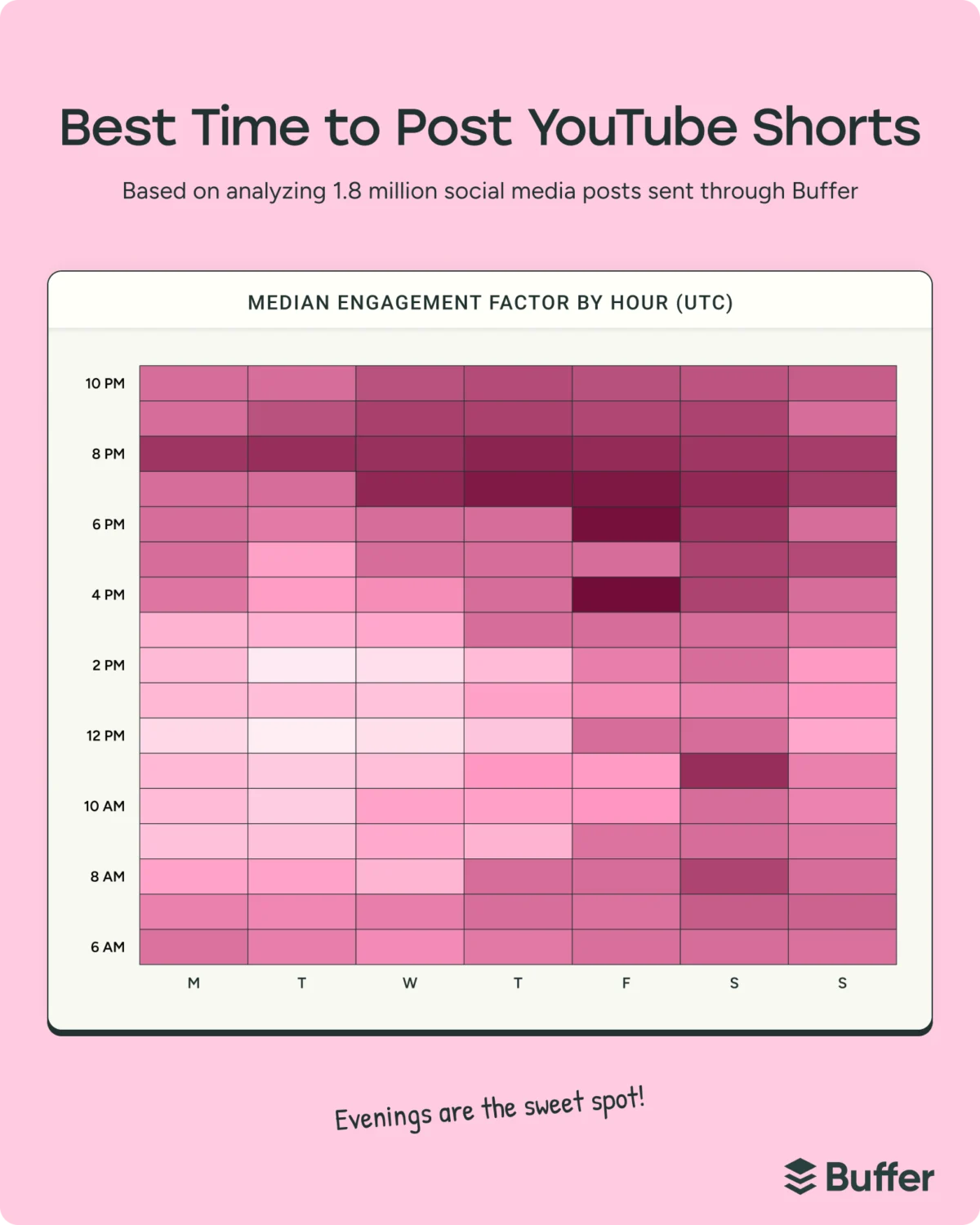
Buffer, a leading social media management platform, recently concluded an extensive analysis, delving into millions of social media posts, including reels, TikToks, Shorts, and long-form videos, to identify the most effective times for content publication across major digital platforms. This ambitious project aims to provide marketers and content creators with data-backed insights to enhance their social media strategies in an increasingly competitive online landscape. The study underscores that while specific timing can offer a crucial advantage, it is merely one component of a multifaceted approach to digital content success, with consistency remaining the paramount factor.
The Evolving Landscape of Digital Engagement
The digital marketing sphere has long sought the elusive "best time" to post on social media, a quest complicated by ever-changing platform algorithms and dynamic user behaviors. Buffer’s latest research, encompassing data from Facebook, Instagram, LinkedIn, TikTok, YouTube, X (formerly Twitter), and Threads, represents a significant update to industry understanding. The methodology varied by platform, focusing on median engagement for text- and image-heavy platforms like Facebook, LinkedIn, and X, while prioritizing median reach and video views for visually driven platforms such such as Instagram, TikTok, and YouTube. A key finding reiterates that there is no universal optimal time; instead, each platform exhibits distinct patterns influenced by its unique user base and primary function. All recommended times in this study are universally applicable local times, thanks to mathematical adjustments made by Buffer’s data scientists.
Historically, social media engagement has been a moving target. Early analyses often pointed to universal midday peaks, but as platforms diversified and user demographics shifted, the landscape became far more nuanced. LinkedIn, for instance, traditionally thrived during professional working hours. However, Buffer’s 2026 data indicates a discernible shift, with increased engagement observed outside conventional office times, suggesting a blend of professional and personal interaction. This evolution necessitates a flexible and data-driven approach to content scheduling, moving beyond generalized assumptions to platform-specific and audience-centric strategies.
Key Findings: A Platform-by-Platform Breakdown
Buffer’s comprehensive study reveals distinct peak engagement windows for each major social media platform:
-
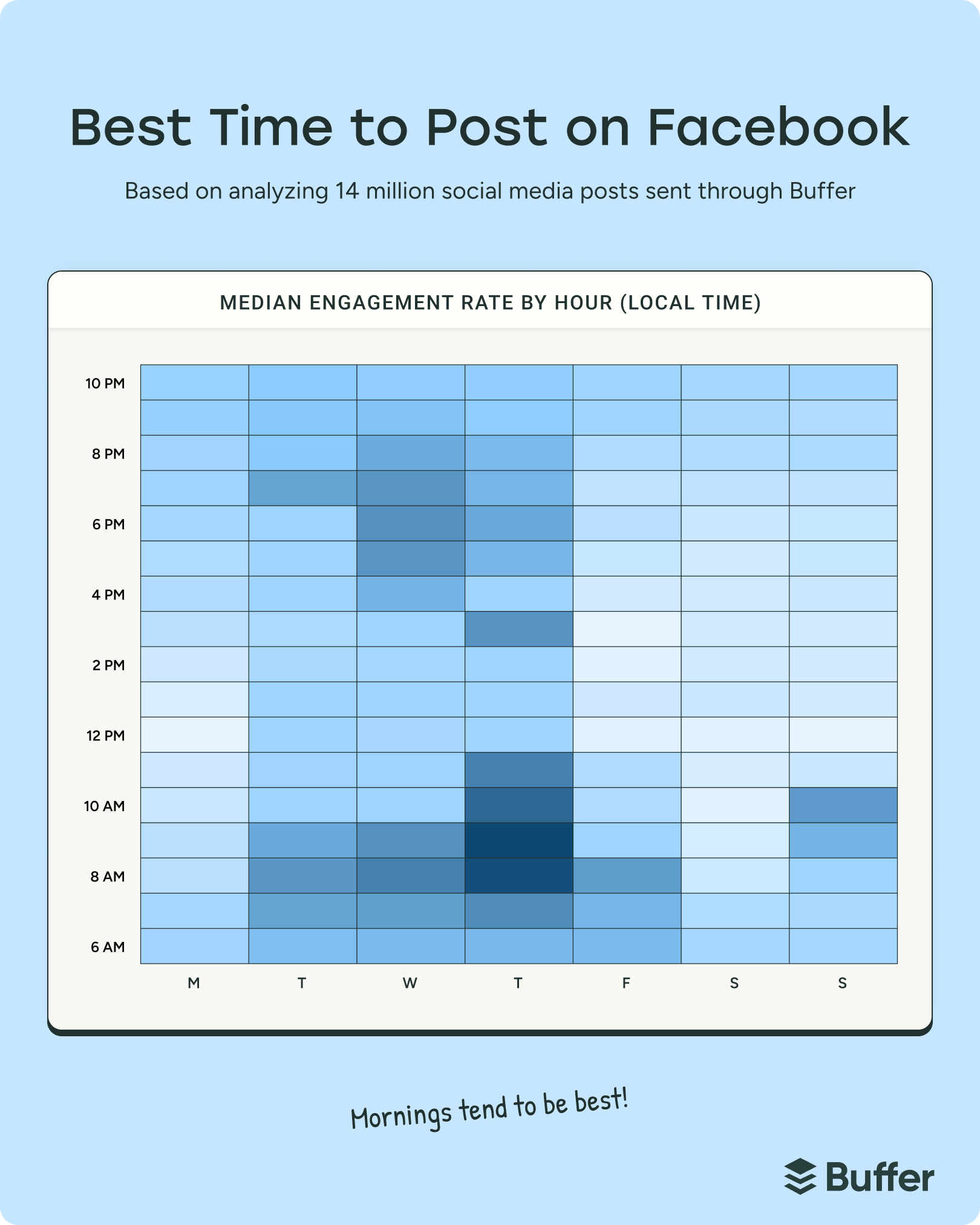
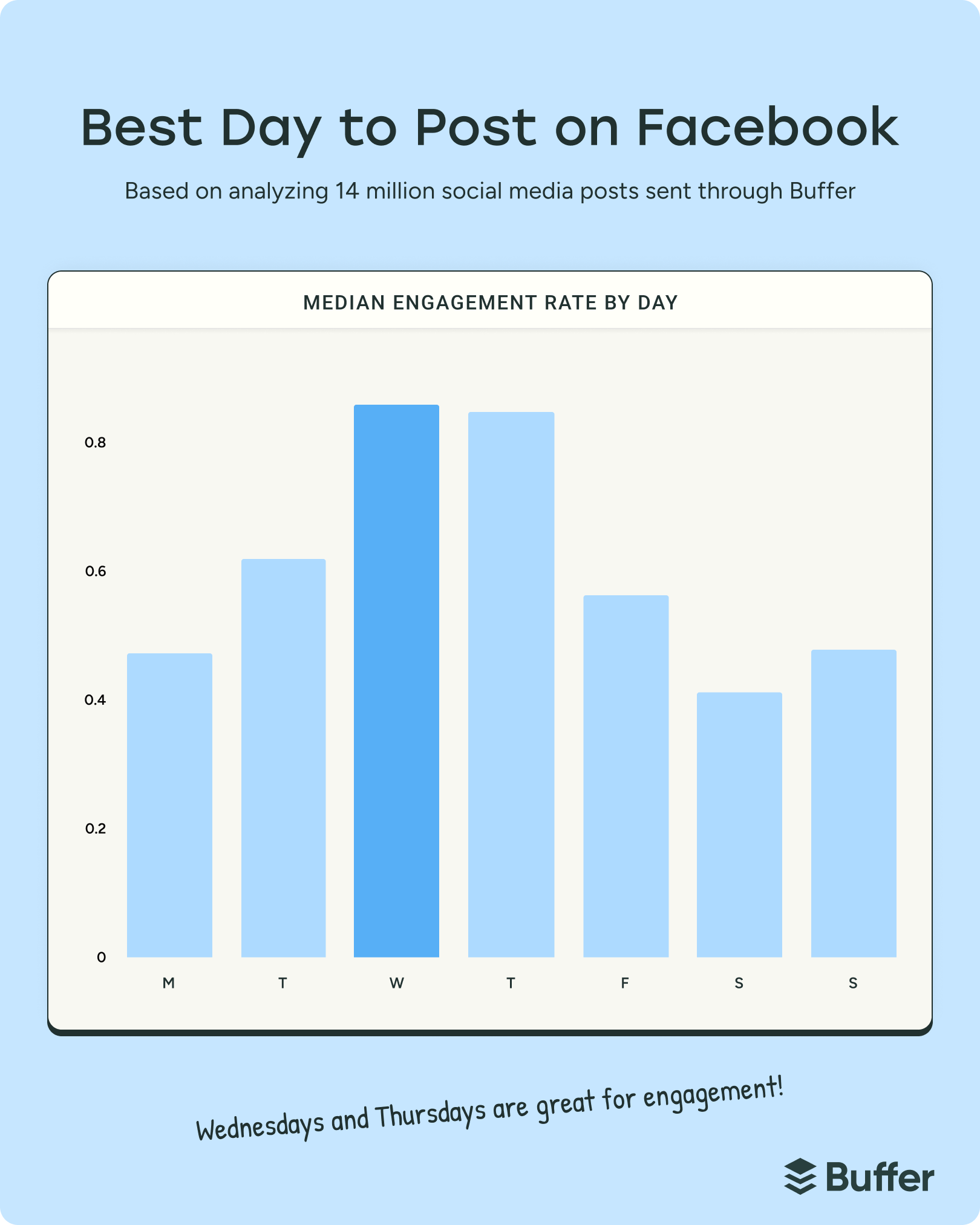
Facebook: The research pinpoints 9 a.m. on Thursday as the single most engaging time, with Thursday mornings consistently leading. Generally, morning hours (8 a.m. – 12 p.m. on weekdays) are identified as the "magic window" for Facebook content. Engagement typically rises through mid-morning, peaks around midday, and tapers off, with a slight evening resurgence. Wednesday emerges as the strongest day overall for engagement, closely followed by Thursday. Weekends, particularly Saturday, show a noticeable dip in activity, suggesting Facebook users are less engaged with content during these times. This pattern aligns with Facebook’s broad user base, where many individuals check their feeds during morning commutes or early work breaks.
-
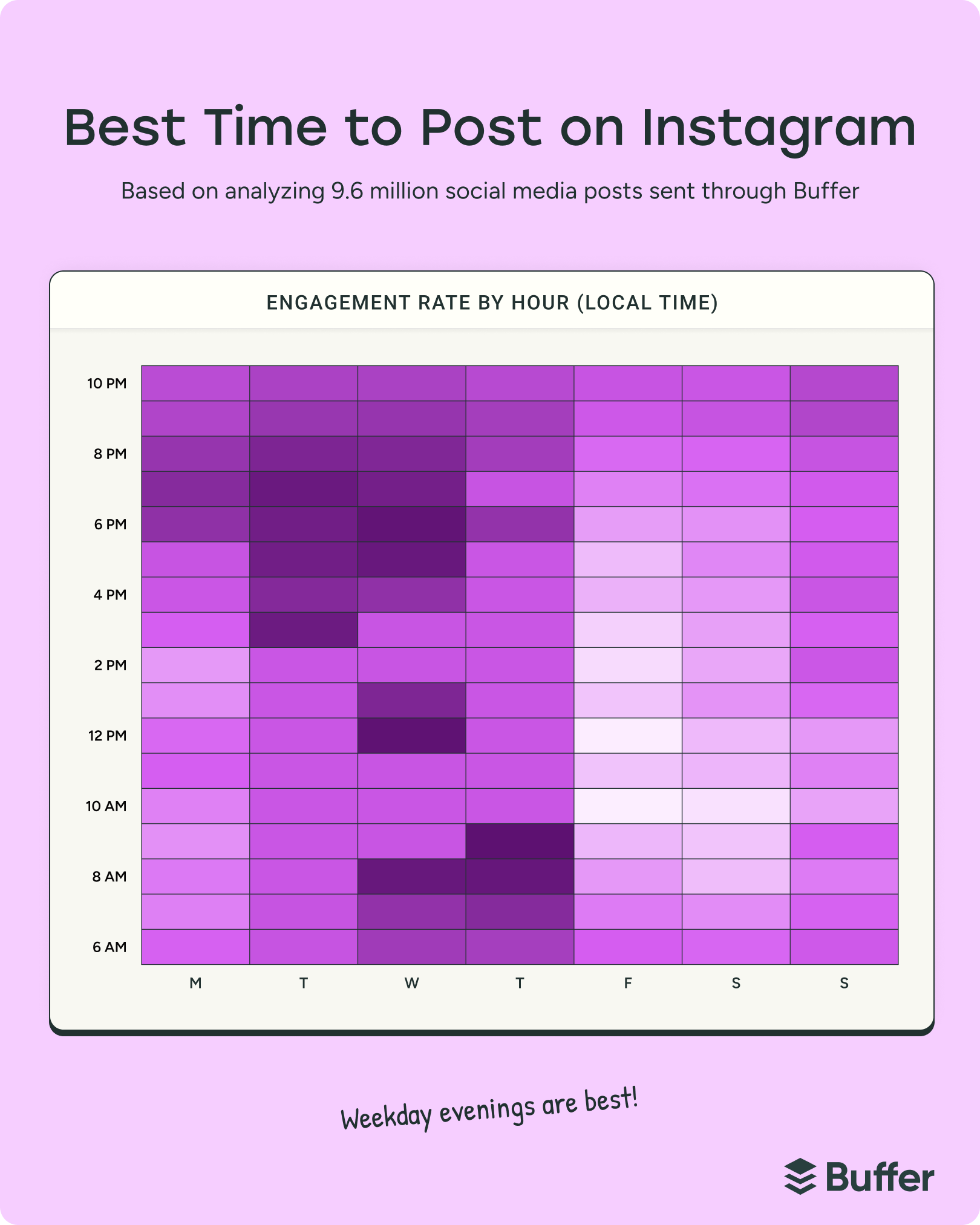
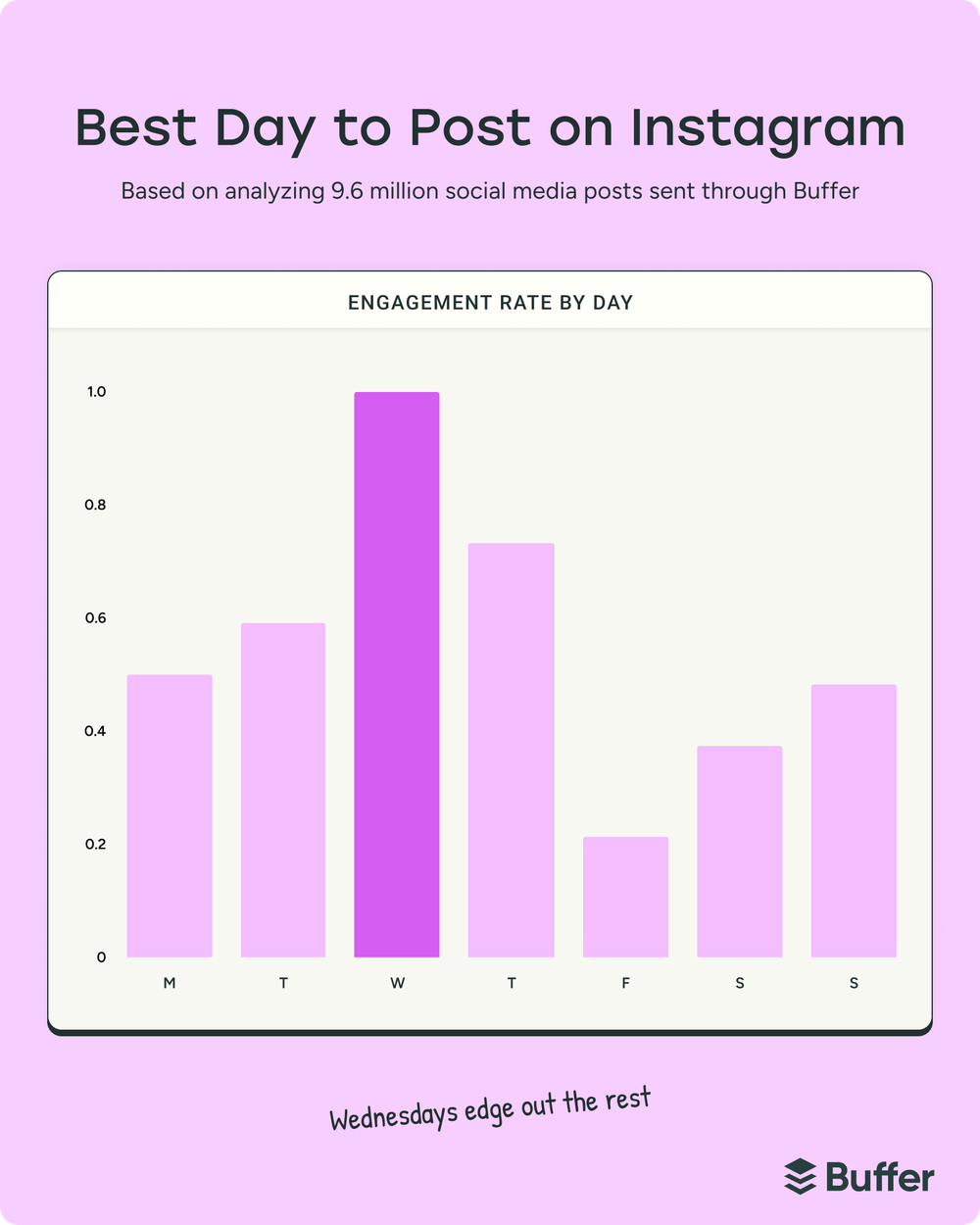
Instagram: Mirroring Facebook, Thursday at 9 a.m. is identified as the optimal posting time for Instagram, achieving the highest reach in an analysis of nearly 10 million posts. Early mornings on Wednesday and Thursday are strong contenders, with another notable spike in engagement occurring around 6 p.m. on most weekdays. While weekdays generally promise solid reach, Wednesday stands out as the day with the highest overall engagement. Conversely, Friday is flagged as the least effective day, marking a significant drop in post performance that extends through the weekend. The evening peak for Instagram suggests users engage more with visual content during leisure hours.
-
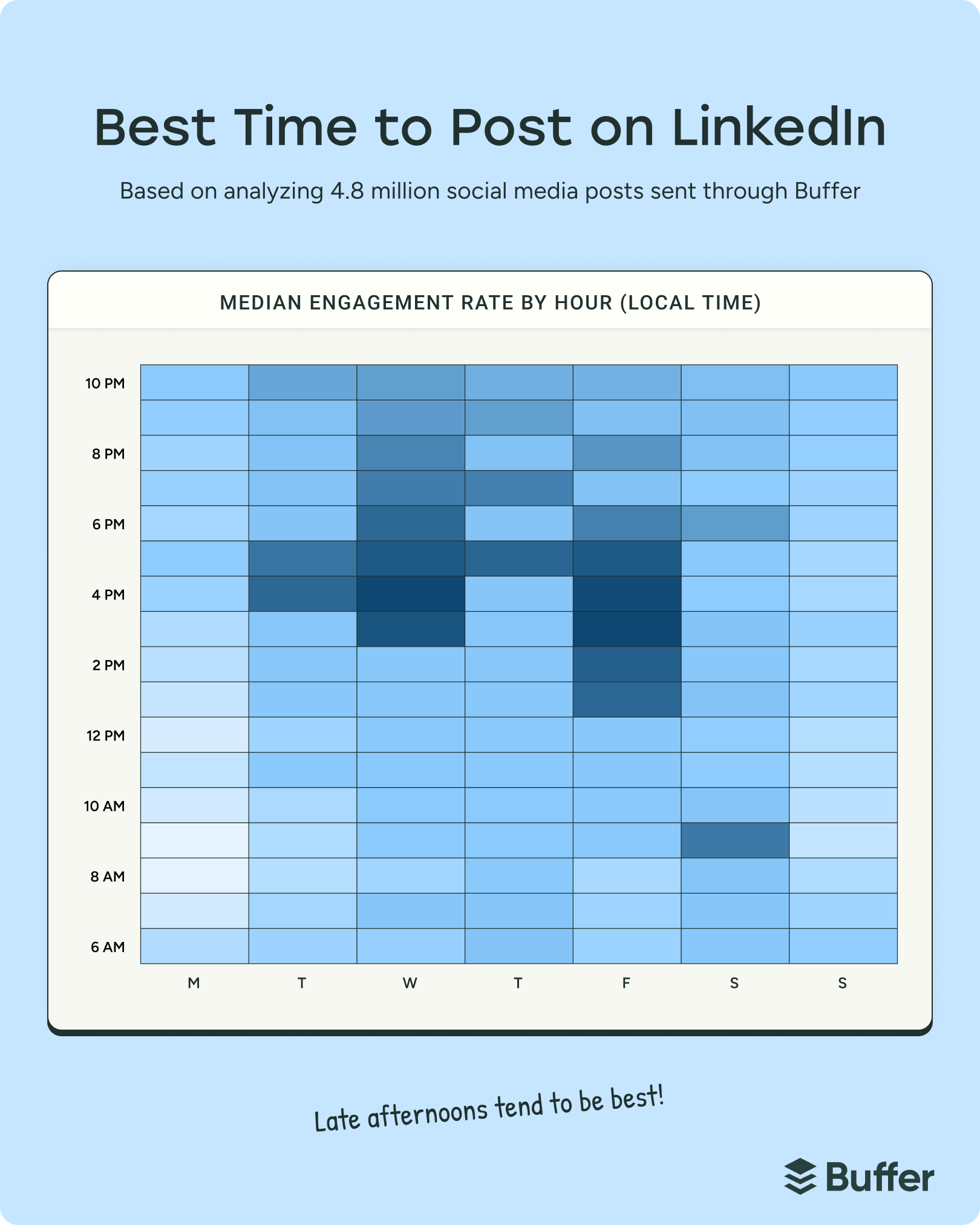
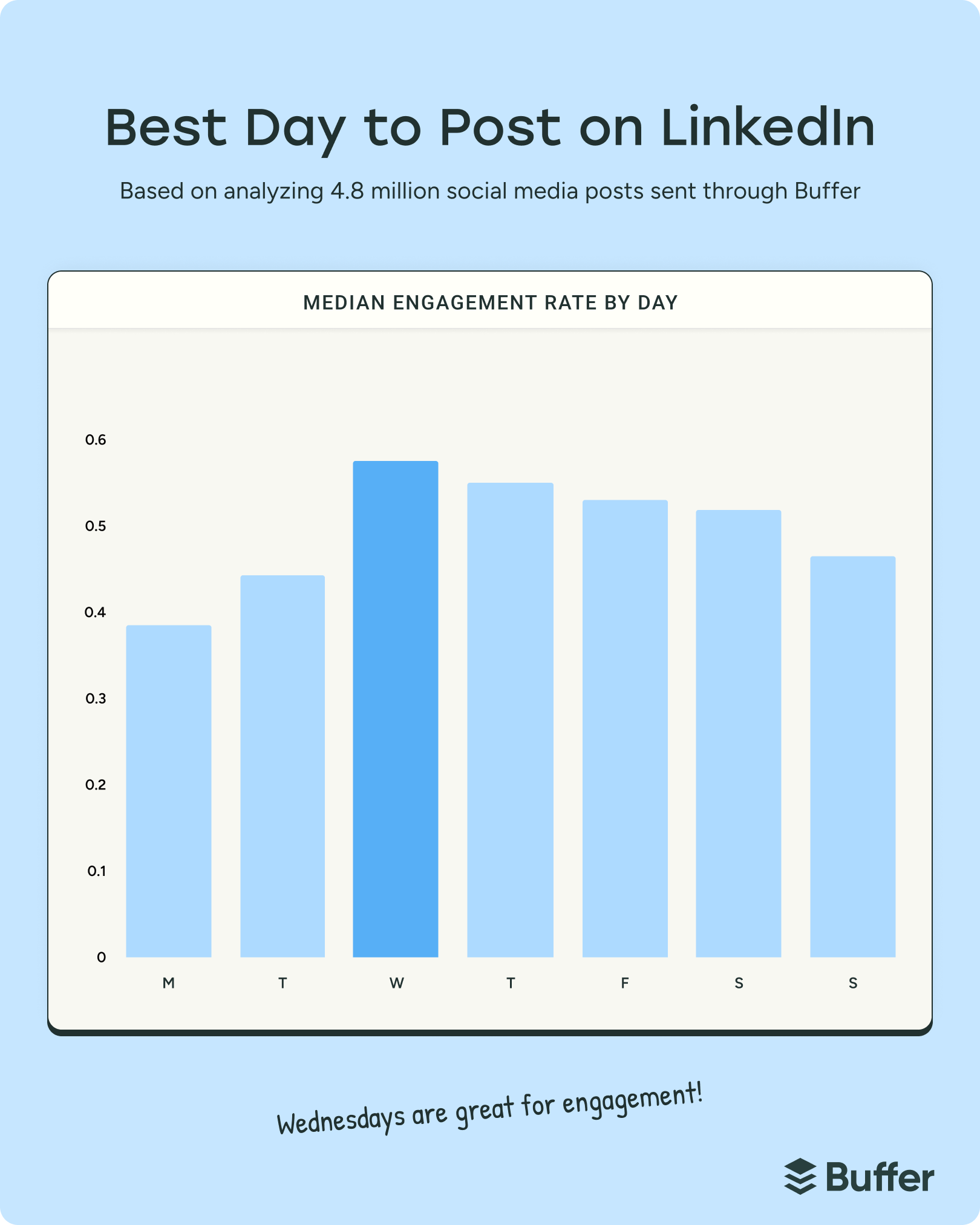
LinkedIn: A significant shift from previous years is observed on LinkedIn. While professional networking remains its core, optimal posting times have moved from strictly within the workday. The best times are identified as 4 p.m. on Wednesday, 4 p.m. on Friday, and 3 p.m. on Friday. This indicates a growing trend of users engaging with professional content outside traditional office hours, possibly during commutes, winding down in the evening, or brief scrolls before bed. Posts published between 6 a.m. and 11 a.m. now show comparatively lower engagement. Wednesday continues to be the leading day for LinkedIn engagement, closely followed by Thursday and Friday. Surprisingly, weekend posts (Saturday and Sunday) demonstrate notably higher engagement than those published during the early weekdays, challenging the conventional wisdom for this professional platform. This could be attributed to professionals having more uninterrupted time to browse and engage with thought leadership content during weekends.
-
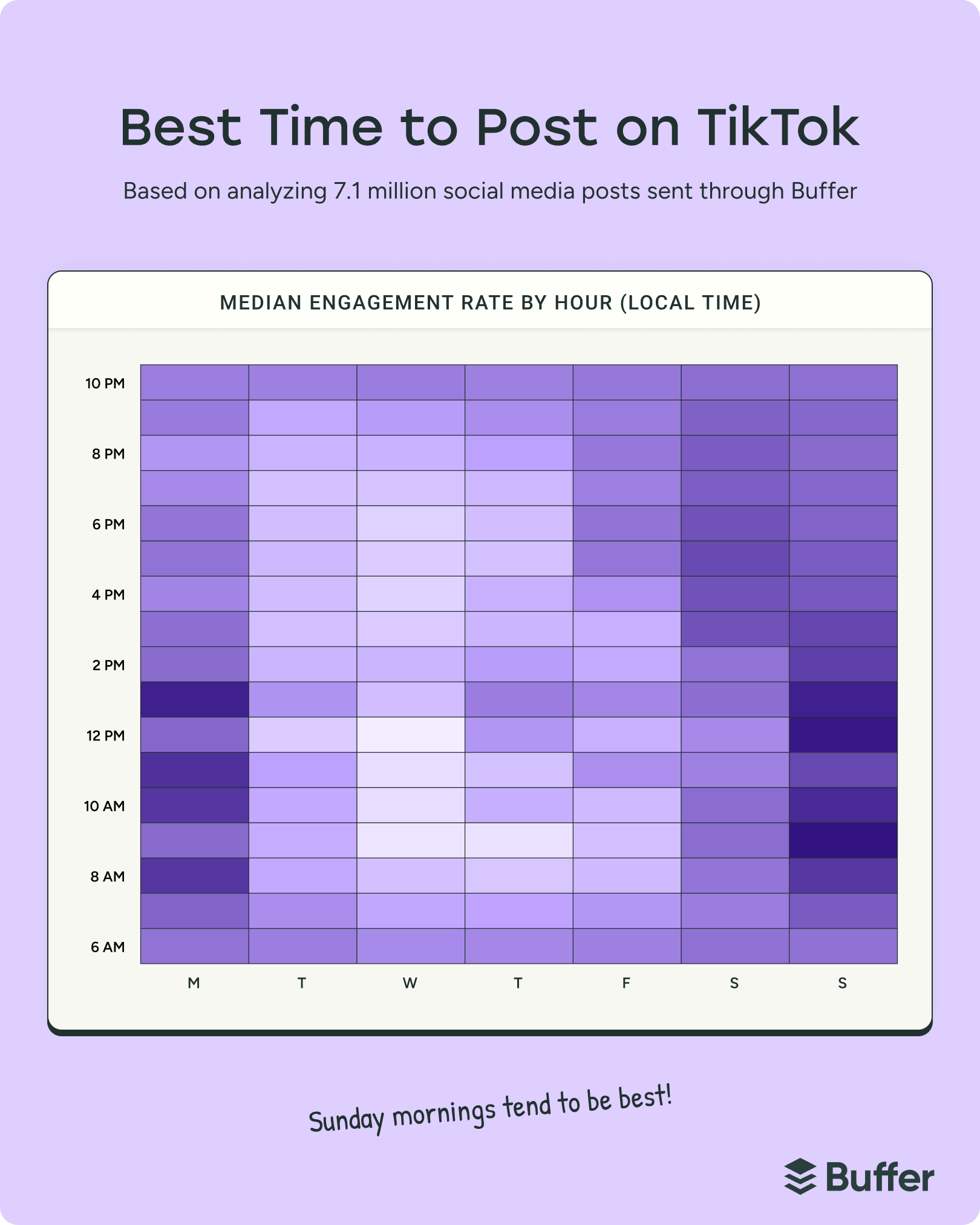
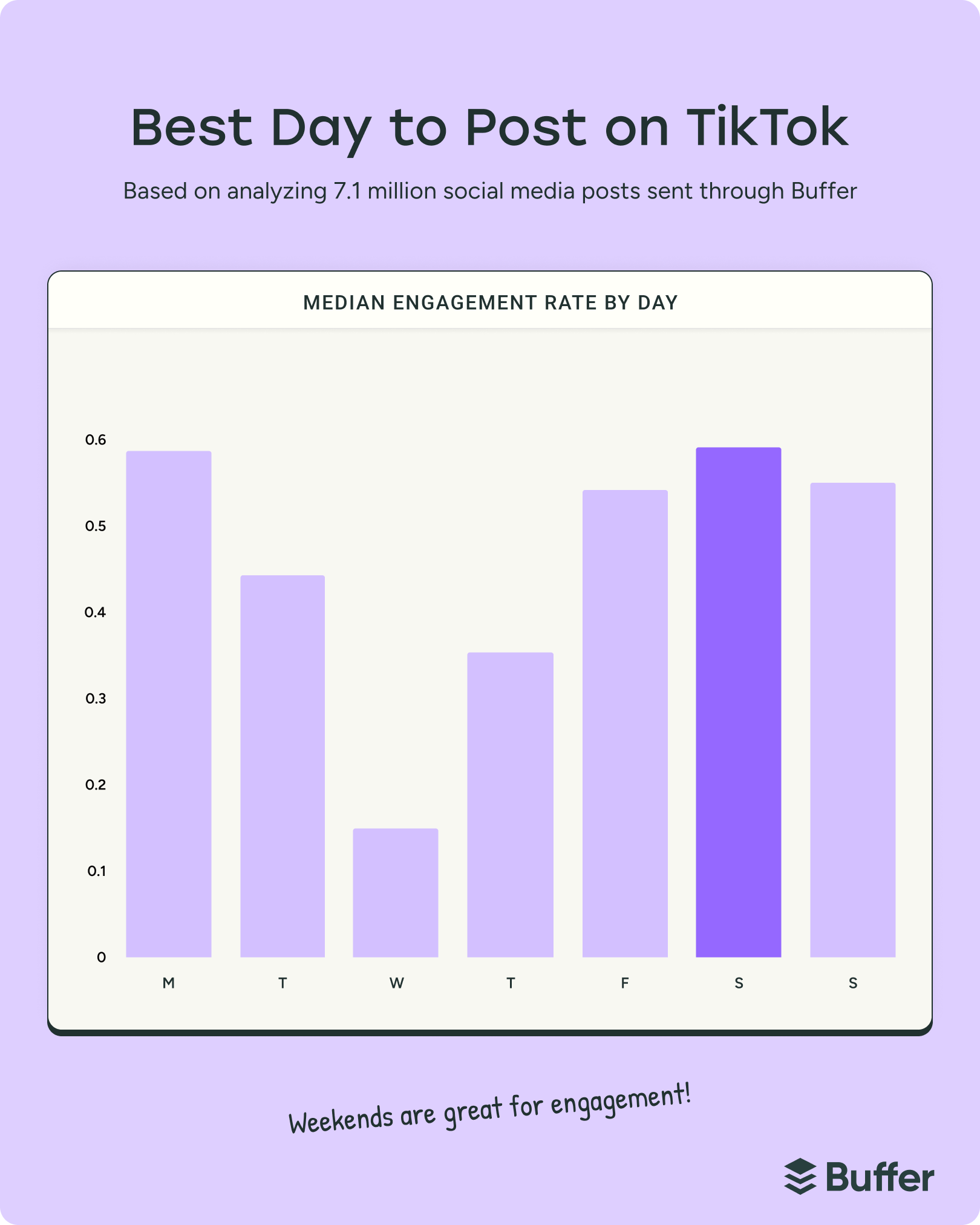
TikTok: Reflecting its entertainment-centric nature, TikTok sees peak engagement in the evenings and over weekends. The single best time to post is Sunday at 9 a.m., followed by Monday at 1 p.m. and Sunday at 1 p.m. Generally, views on TikTok surge between 6 p.m. and 11 p.m., suggesting that users are most active during leisure time. Afternoons (12 p.m. – 5 p.m.) are typically quieter. Saturday is identified as the best day for TikTok, with Monday also performing strongly. Uniquely among the platforms studied, Wednesday is the worst day for TikTok engagement, highlighting its distinct user behavior compared to more business-oriented networks. The visual, short-form content thrives when users are seeking quick entertainment.
-
YouTube: Given the distinct consumption patterns of YouTube Shorts and long-form videos, Buffer analyzed them separately.
- YouTube Shorts: Friday at 4 p.m. emerged as the top-performing time, with 6 p.m. and 7 p.m. on Fridays also showing strong engagement. Weekday evenings (6 p.m. – 11 p.m.) are generally when Shorts gain the most traction, aligning with their quick, digestible format suited for unwinding. Friday, Saturday, and Thursday are the strongest days. Tuesday and Monday tend to see the lowest engagement.
- YouTube (Long-Form Videos): For longer content, evenings (6 p.m. – 10 p.m.) remain the sweet spot, as dedicated viewing time is often available after work or on weekends. Sunday stands out as the strongest day overall for long-form content, followed by Tuesday and Monday. Midweek (Wednesday and Thursday) tends to be quieter. The research suggests that content creators should aim to publish longer videos towards the end of the week and over the weekend, when viewers are more likely to have extended periods for consumption. However, context matters; instructional or work-related videos might still perform well during weekdays.
-
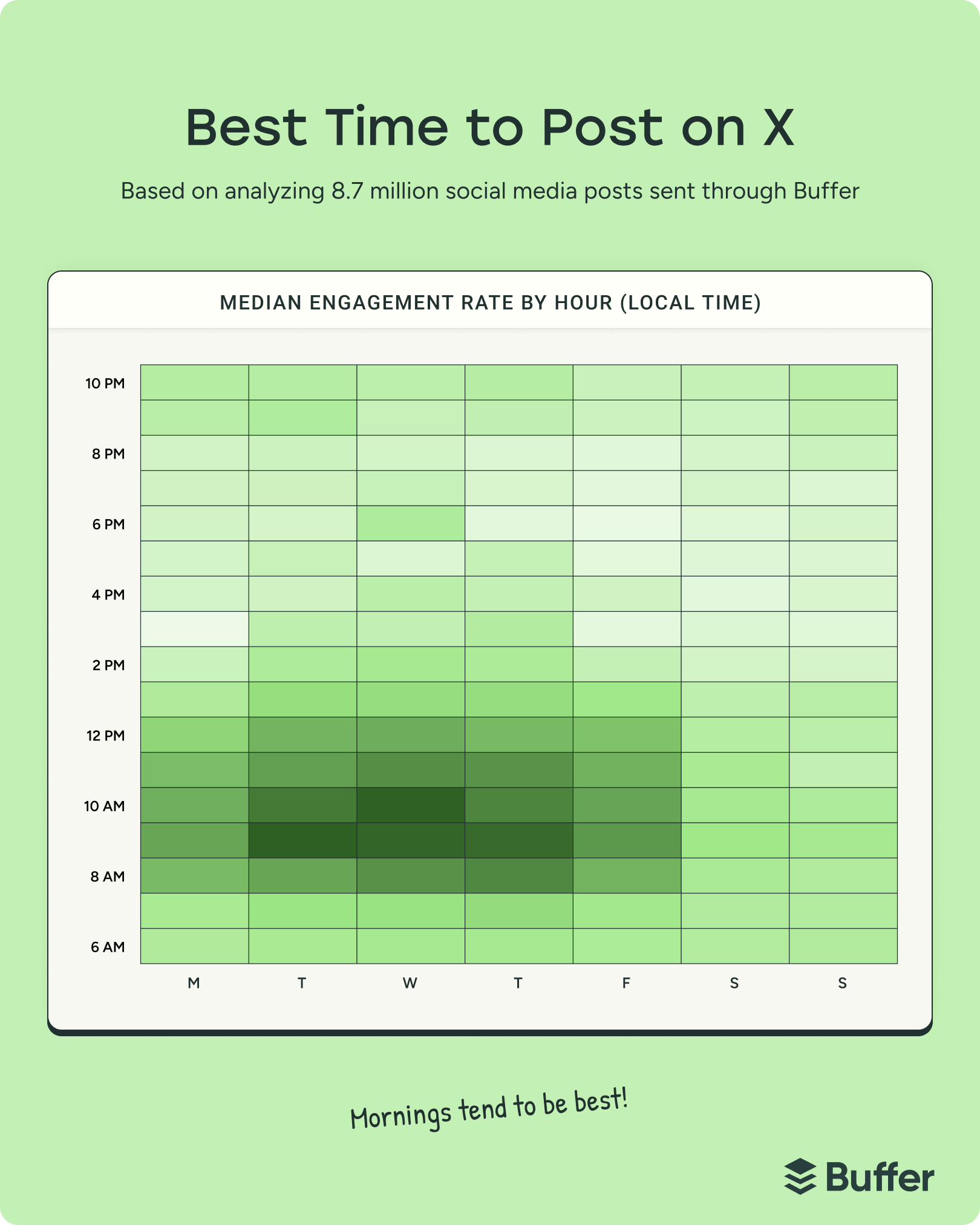
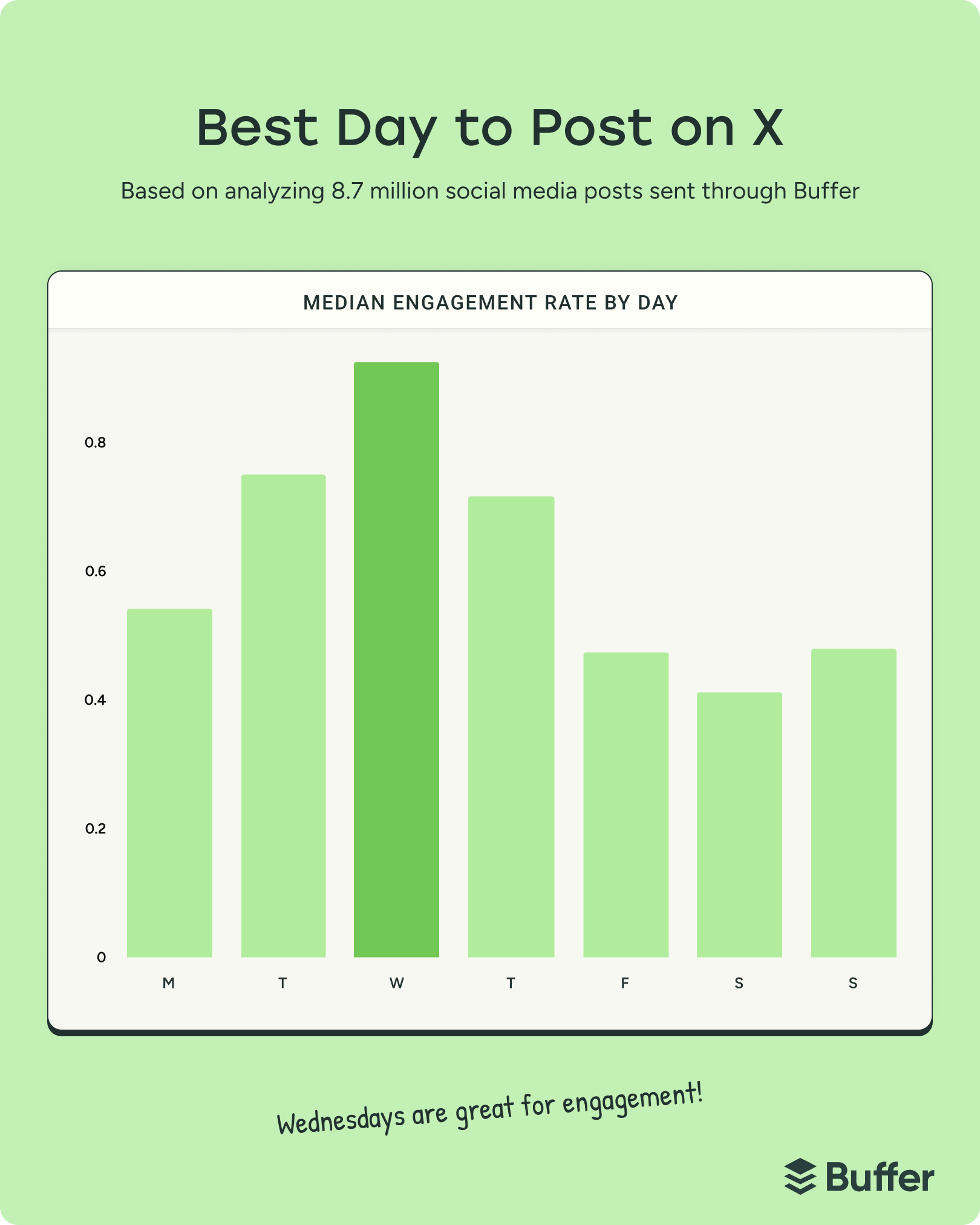
X (formerly Twitter): Analyzing over 8 million posts, Buffer found Tuesday at 9 a.m. to be the optimal time for X, yielding the highest engagement. Other strong times include Wednesday at 10 a.m. and Wednesday at 9 a.m. Generally, weekday mornings (8 a.m. – 11 a.m.) are identified as the prime window, aligning with the platform’s role as a real-time news and information source often checked during work breaks. Engagement typically tapers off into the afternoon. Wednesday is the best day to post on X, with Tuesday and Thursday also performing well. Weekends, particularly Saturday and Sunday, are the quietest days, suggesting users shift their attention away from immediate news and public discourse.
-
Threads: The newest platform in the study, Threads, shows optimal engagement at 9 a.m. on a Thursday, a pattern consistent with Facebook, Instagram, and X. Overall, 7 a.m. – 12 p.m. on weekdays are excellent windows. Wednesday is identified as the best day for Threads engagement, followed by Thursday and Tuesday, indicating a strong midweek presence. Conversely, Saturday, Sunday, and Monday experience the lowest engagement. This suggests Threads users are primarily active during the workweek, potentially as a companion app to Instagram or as a microblogging platform for professional updates and quick interactions.
Strategic Implications for Digital Marketers
The findings from Buffer’s extensive research carry significant implications for digital marketing strategies. The overarching message is clear: a one-size-fits-all approach to social media timing is ineffective. Instead, marketers must cultivate a nuanced, platform-specific content calendar that accounts for the unique behavioral patterns of each network’s audience.
"These insights are invaluable for any brand striving to cut through the digital noise," stated a representative from Buffer’s analytics team. "While content quality and audience relevance remain paramount, strategically timing posts can provide that crucial initial boost, signaling to algorithms that your content is valuable and deserving of wider distribution."
The study reinforces the importance of using social media management tools like Buffer. These tools not only allow for scheduled posting at optimal times but also provide granular analytics to track performance and fine-tune strategies based on individual audience data. Marketers are encouraged to view Buffer’s recommendations as a starting point, subsequently testing and iterating based on their specific audience’s engagement metrics. Platforms like Instagram and YouTube offer native analytics highlighting peak audience activity, and for others, manual analysis of top-performing posts can yield valuable insights. Buffer’s own analytics features can consolidate this data, recommending the best days and times across integrated platforms.
Furthermore, the research subtly highlights shifts in global work culture and leisure habits. The increasing evening engagement on platforms like LinkedIn and the strong weekend performance on TikTok and YouTube underscore a blend of professional and personal life intersecting on digital channels. Brands need to consider not just what their audience is doing but when they are most receptive to different types of content. A brand targeting professionals might schedule thought leadership pieces for Wednesday evenings on LinkedIn, while a creator aiming for younger audiences would prioritize weekend mornings or weekday evenings on TikTok.
Beyond Timing: The Enduring Importance of Consistency and Quality
While the study meticulously outlines optimal posting times, Buffer is quick to reiterate a critical caveat: timing is a facilitator, not the ultimate determinant of success. "If there were a secret sauce to content success, it would be consistency," the report emphasizes. Social media algorithms are complex, factoring in engagement rates, watch time, user preferences, location, and numerous other signals. Posting time is merely one piece of this intricate puzzle.
Industry experts echo this sentiment. Dr. Evelyn Reed, a digital media strategist, commented, "While Buffer’s data provides excellent tactical guidance, marketers must not lose sight of the foundational elements. A perfectly timed post with subpar content will invariably underperform. Conversely, compelling, relevant content consistently delivered will often find its audience, regardless of hitting the precise second of peak activity."
The implications extend to broader content strategy. Businesses should prioritize creating high-quality, audience-resonant content that aligns with their social media marketing goals. This involves understanding the target demographic, crafting narratives that engage, and utilizing visuals that captivate. A robust social media marketing strategy, built from scratch with clear objectives, audience insights, and a well-planned content calendar, will always yield greater returns than an overreliance on timing alone.
In conclusion, Buffer’s latest research serves as a powerful guide for navigating the complexities of social media timing. By offering platform-specific, data-driven recommendations, it equips marketers with actionable insights to optimize their publishing schedules. However, the study’s most enduring message is a reminder that these tactical advantages work best when integrated into a holistic strategy where content quality, audience understanding, and consistent engagement remain the true pillars of social media success. Businesses are encouraged to leverage these findings as a dynamic starting point, continuously testing and adapting to their unique audience’s evolving digital habits.