
 Ali Ikhwan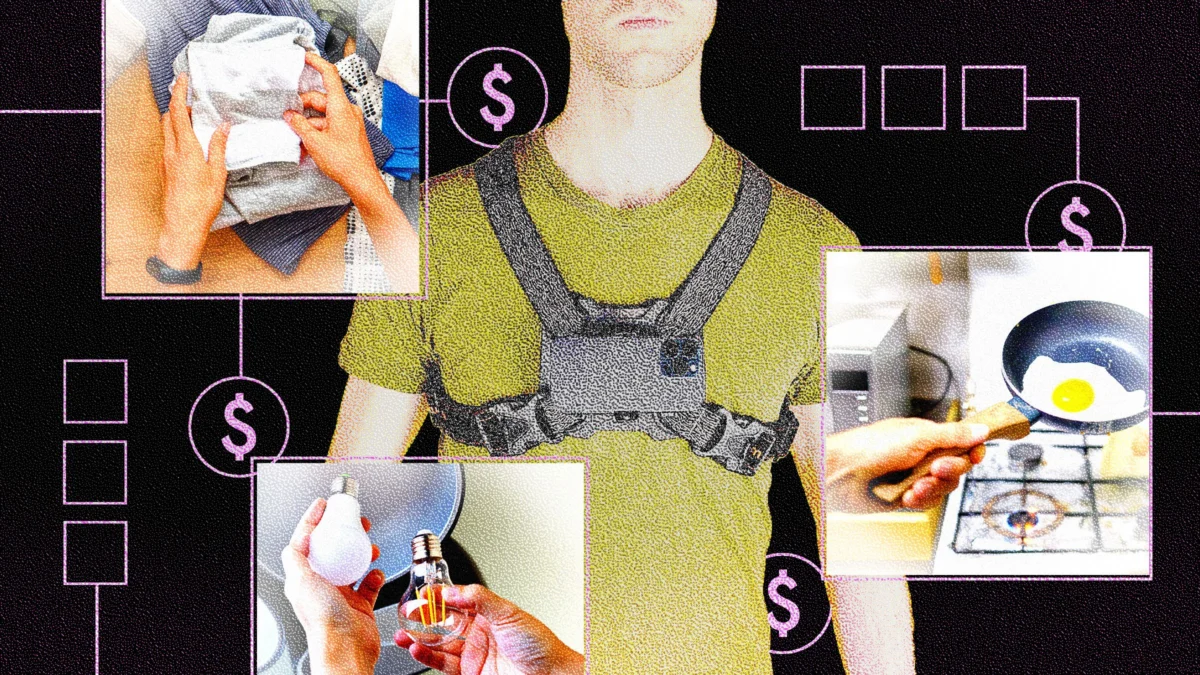
The landscape of the gig economy is undergoing a fundamental shift as DoorDash, the prominent food delivery platform, expands its operational scope beyond logistics and into the realm of artificial intelligence (AI) development. Through the introduction of its new "Tasks" application, DoorDash is leveraging its vast network of independent contractors to generate high-quality, real-world data sets designed to train generative AI models and humanoid robotic systems. Unlike the company’s core business of transporting goods from merchants to consumers, Tasks focuses on the acquisition of visual and auditory data through human-performed activities, ranging from household chores to complex spatial navigation.
The Emergence of Human-Centric Data Acquisition
The DoorDash Tasks platform represents a strategic move to capitalize on the growing demand for "human-in-the-loop" data. As AI developers move from purely digital environments to physical-world applications, the need for diverse, high-fidelity video data of human movement has become critical. According to DoorDash’s official communications, the data gathered via the app helps AI and robotic systems understand the nuances of the physical world—a field of study often referred to in the tech industry as "embodied AI."
The mechanics of the app involve users performing specific actions while recording themselves, typically using a smartphone. In many instances, the app requires the user to wear a body mount to ensure the camera captures a first-person perspective of their hands and movements. This perspective is vital for training computer vision algorithms to recognize objects, understand depth, and replicate the dexterity required for tasks that humans perform instinctively.
Operational Framework and Task Categorization
The Tasks app organizes its offerings into several distinct categories, reflecting the diverse needs of robotics developers. These categories include:

- Household Chores: Activities such as loading dishwashers, making beds, repotting plants, and folding laundry. These tasks provide data on object manipulation and sequence planning.
- Handiwork and Maintenance: Simple to moderate physical projects, such as changing lightbulbs or pouring cement, which test a robot’s potential for industrial or home repair applications.
- Culinary Preparation: A significant portion of the current task list involves egg preparation—frying, poaching, and scrambling. These tasks are particularly useful for training robots in heat management and delicate handling.
- Spatial Navigation: Gigs that require users to walk through parks, museum lobbies, or apartment complexes. This data assists in refining autonomous navigation and obstacle avoidance in crowded or complex environments.
- Linguistic Data: The app also seeks "natural conversations" in various languages, including Mandarin Chinese and Russian, to improve the conversational nuances of large language models (LLMs).
Each task is accompanied by a specific set of instructions and a fixed compensation rate, typically presented as an hourly figure that is pro-rated based on the time taken to complete the video upload.
Compensation Structures and Economic Realities
DoorDash has set the standard pay for most tasks at $15 per hour. However, because these tasks are micro-assignments, the actual payout per video is often measured in cents. For example, a task involving the loading of ten items into a washing machine—estimated to take less than two minutes—yields approximately $0.37. While the pay rate aligns with the federal minimum wage in the United States, it sits below the minimum wage in many high-cost-of-living urban centers.
This micro-task model mirrors the structures of older platforms like Amazon Mechanical Turk or Scale AI’s Remotasks, but with a focus on physical video rather than digital labeling. For the gig worker, the appeal lies in the ability to earn small amounts of capital without leaving their home, though the necessity of specific hardware, such as smartphone body mounts, adds a layer of overhead. DoorDash has addressed this by providing free body mounts to users who complete an initial "onboarding" task.
Geographic Restrictions and Regulatory Context
A notable aspect of the Tasks rollout is its restricted availability. Residents of California, New York City, Seattle, and Colorado are currently blocked from participating in the program. While DoorDash has not officially detailed the reasons for these exclusions, industry analysts point to the stringent gig-economy regulations in these jurisdictions.
States like California (under Proposition 22) and cities like Seattle and New York have implemented specific pay floors and transparency requirements for delivery and ride-share drivers. The "Tasks" model, which relies on a pro-rated hourly rate for brief video segments, may present legal complexities in regions where gig workers are entitled to guaranteed minimum earnings per active hour or specific benefit contributions. By launching in states like Kansas with fewer such regulations, DoorDash can test the viability of the platform with lower administrative and legal risk.
.jpg)
Privacy, Ethics, and Data Governance
As with any platform involving the recording of private spaces and public interactions, DoorDash Tasks faces significant scrutiny regarding privacy. The company has established a rigorous set of guidelines to mitigate these risks. Prohibited actions include:
- Recording Minors: Users are strictly forbidden from capturing footage of children.
- Sensitive Locations: Filming is prohibited in hospitals, schools, prisons, airports, and military bases.
- Personally Identifiable Information (PII): Users must ensure that no personal data, such as mail, credit cards, or identification documents, is visible in the frame.
- Consent Requirements: For navigation tasks in public or semi-public spaces, users are instructed to obtain consent before filming others, though the practical enforcement of this rule remains a point of contention.
The challenge of "accidental" data capture is high. In public navigation tasks, avoiding the recording of bystanders is difficult, leading some users to abandon tasks in crowded areas to avoid violating terms of service or ethical norms.
The Technical Objective: Solving the "Sim-to-Real" Gap
The primary driver behind the Tasks app is the "Sim-to-Real" gap—the difficulty of taking an AI trained in a simulated, digital environment and making it functional in the messy, unpredictable real world. Roboticists have found that while a robot can be programmed to fold a digital towel perfectly, it struggles with the weight, texture, and unpredictability of a real, damp cotton towel.
By collecting thousands of videos of different humans loading different washing machines in various lighting conditions and home layouts, developers can create a "diversity of data." This allows machine learning models to generalize. If a robot sees 5,000 different ways to crack an egg, it is less likely to fail when it encounters a slightly different shell thickness or kitchen counter height.
Broader Implications for the Future of Work
The launch of DoorDash Tasks signals a new phase in the relationship between human labor and automation. Historically, gig work was seen as a way for humans to use technology to provide services to other humans. In this new iteration, humans are providing services to the technology itself.

Critics argue that this creates a paradoxical cycle where gig workers are essentially "training their own replacements." If the data provided by a worker today allows a robot to fold laundry or deliver groceries tomorrow, the long-term viability of low-skill manual labor may be threatened. Conversely, proponents suggest that this creates a new tier of "data-entry" labor that is more flexible and less physically taxing than traditional delivery or warehouse work.
Industry Outlook
DoorDash is not alone in this endeavor. Companies like Tesla, with its Optimus humanoid robot project, and various AI startups are also hungry for proprietary data sets. However, DoorDash’s advantage lies in its existing infrastructure. With millions of "Dashers" already onboarded onto its platform, the company possesses a ready-made workforce that can be activated to generate data at a scale few other firms can match.
As the AI industry continues to receive billions of dollars in venture capital investment, the demand for human-labeled and human-generated data is expected to grow exponentially. The success of DoorDash Tasks will likely be measured by the quality of the data it produces and its ability to navigate the complex ethical and regulatory landscape of 21st-century labor. For now, the app stands as a unique bridge between the mundane chores of the American household and the cutting-edge frontiers of robotic intelligence.







