 Ali Ikhwan
The modern household has become an increasingly complex ecosystem of overlapping schedules, professional deadlines, school extracurriculars, and personal commitments. As digital connectivity continues to permeate the home environment, the reliance on fragmented calendar applications—such as Google Calendar, Outlook, and Apple’s iCal—has created a paradox of organization. While these tools are powerful, they require constant device interaction, often leading to "screen fatigue" or missed appointments. In response, a new category of hardware has emerged: the dedicated, wall-mounted digital smart calendar.
Market leaders like Skylight have pioneered this space, offering sleek, touchscreen interfaces that sync across multiple platforms. However, these devices often operate under a "razor-and-blade" business model, where the initial purchase of the hardware is followed by a recurring subscription fee to unlock premium features like meal planning, photo integration, and advanced task management. A notable shift in the market is occurring with the emergence of subscription-free alternatives, such as the HomeCal 21.5-inch smart calendar, which is currently seeing significant retail discounts.
The Rise of the Connected Household
The emergence of digital wall calendars represents a shift in consumer demand toward "ambient computing." Unlike smartphones or tablets, which are designed for active, high-intensity engagement, digital wall calendars are intended for passive consumption. They function as a centralized hub, providing an "at-a-glance" view of family dynamics.
According to industry reports, the smart home display market has grown by roughly 12 percent annually over the last three years. While smart displays—such as the Amazon Echo Show or Google Nest Hub—are versatile, they are often perceived as intrusive or overly complex. Digital calendars strip away the unnecessary voice-assistant clutter, focusing entirely on time management and domestic coordination. This specialization has proven highly effective for households managing multiple calendars, as it allows users to aggregate disparate data streams—work, school, medical, and personal—into one physical, communal space.
Product Analysis: The Everblog HomeCal
The HomeCal 21.5-inch display is currently positioned as a direct competitor to the subscription-heavy models that dominate the premium segment. By eliminating the paywall, Everblog is attempting to capture the segment of the market that is increasingly wary of "subscription fatigue."
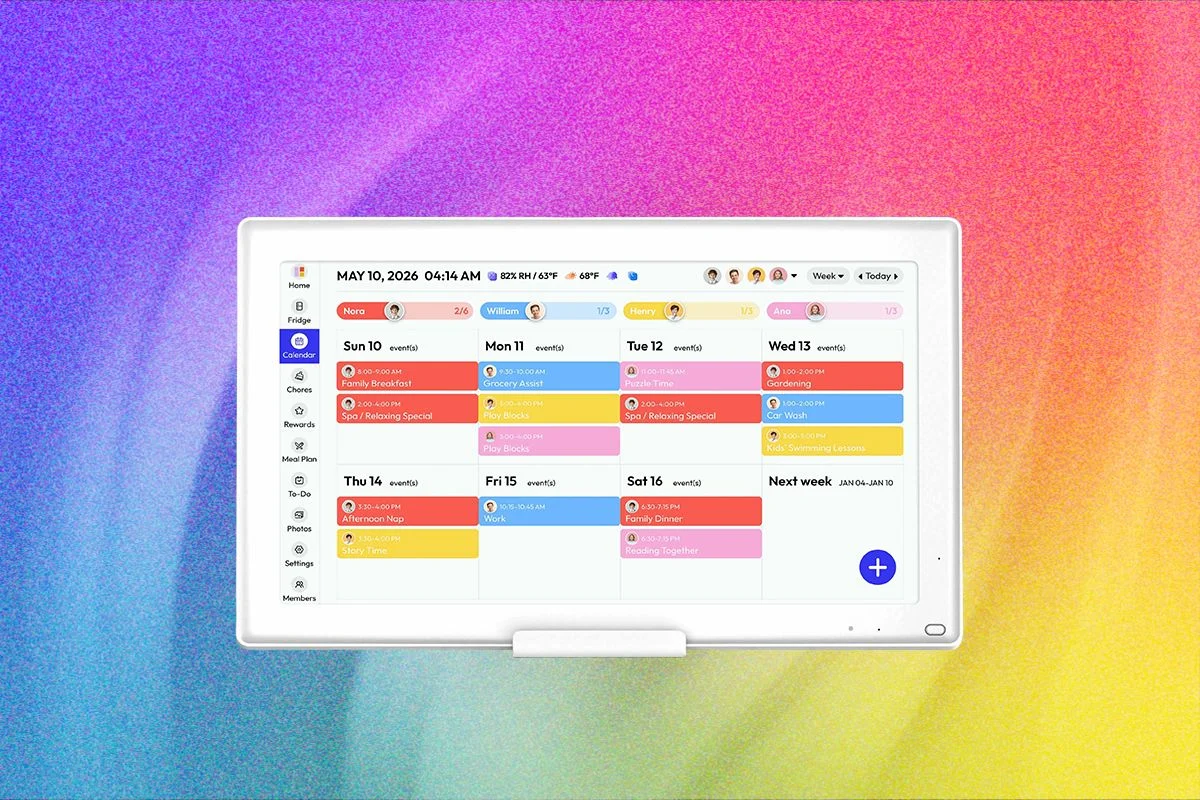
The hardware architecture of the HomeCal includes a high-definition 21.5-inch panel, which provides enough screen real estate to display a month-long view without the text becoming illegible from a distance. The device’s software integrates directly with common calendar APIs, allowing for real-time updates across various platforms. Key features include:
- Integrated Task Management: Users can assign chores to individual family members, track completion rates, and manage reward systems.
- Meal Planning: A native module allows for weekly menu scheduling, which reduces the friction of daily domestic logistics.
- Visual Personalization: The device serves as a digital photo frame, though the current software iteration requires manual, sequential photo uploading—a trade-off for the lack of a cloud-based subscription fee.
From a design perspective, the unit is versatile. It features an integrated wall-mounting system and a flat bottom for tabletop display. However, users seeking a more polished aesthetic often look toward third-party accessories, such as custom wood frames, to ensure the device complements existing home decor.
Market Dynamics and Pricing Strategy
The current promotional activity surrounding the HomeCal—with retail prices at Amazon dropping to approximately $300, a $100 reduction—suggests a strategic push by manufacturers to clear inventory ahead of the peak holiday shopping season.
This pricing strategy highlights a significant divergence in the smart home sector. Companies like Skylight rely on the "Software-as-a-Service" (SaaS) model to ensure long-term revenue, often justifying the subscription by pointing to the costs of cloud storage for photo galleries and ongoing software maintenance. Conversely, hardware-only companies like Everblog emphasize total cost of ownership. For a family planning to use the device for three to five years, the cumulative cost of a monthly subscription (typically ranging from $5 to $10 per month) can exceed the initial cost of the device itself. Consequently, the "no-sub" value proposition has become a primary competitive lever.
The Role of Domestic Automation
The utility of these devices extends beyond simple date-tracking. The inclusion of "chore tracking" and "allowance management" tools indicates that these calendars are being marketed as behavioral management systems. By gamifying household tasks, these devices attempt to instill routine in younger family members.
While the current generation of digital calendars remains largely absent of native voice assistants, this is not necessarily a technical limitation but a design choice. Integration with voice assistants like Alexa or Google Assistant would require additional privacy protocols and hardware microphones, which could increase the device’s complexity and price point. As it stands, most users appear satisfied with the "touch-only" interface, which maintains a distinct boundary between the calendar as a tool and the smart speaker as an entertainment device.
Technological Limitations and Future Outlook
Despite the benefits, the current hardware landscape has clear limitations. The primary challenge remains the software-to-hardware interface. In many current models, including the HomeCal, the companion mobile application serves as the primary gateway for data entry. Any latency in the app’s synchronization process reflects directly on the wall-mounted unit.
Furthermore, the lack of universal standards for interoperability means that users are often locked into a specific manufacturer’s ecosystem. If a consumer chooses a device that does not support their specific calendar provider, they are forced to use cumbersome workarounds, such as exporting ICS files or setting up secondary, synced accounts.
Industry analysts predict that the next iteration of these devices will likely focus on "open-source" compatibility and enhanced privacy features. As concerns over data privacy grow, consumers are increasingly asking where their sensitive calendar data is being stored and who has access to the metadata associated with their household schedules.
Implications for the Smart Home Industry
The success of subscription-free digital calendars could force a reevaluation of how smart home hardware is marketed. If manufacturers can achieve profitability through hardware sales alone, the industry may see a rollback of aggressive subscription models that have frustrated consumers in the "Internet of Things" (IoT) space.
For the average household, the decision to invest in a digital calendar is no longer just about buying a gadget; it is about choosing a management system for the home. As these devices continue to evolve, they will likely become as essential as the refrigerator or the microwave—centralized nodes of information that keep the modern, high-speed family on track.
Conclusion
The current trend toward larger, subscription-free, and highly integrated displays signals a maturation of the smart home market. By prioritizing long-term value over short-term subscription revenue, companies like Everblog are meeting a clear consumer need for utility without the recurring financial burden. Whether these devices will eventually integrate more sophisticated AI to automate scheduling entirely remains to be seen, but for now, they offer a tangible, effective solution to the problem of modern time management. As holiday shoppers look for ways to streamline their lives in the coming year, the digital calendar stands out as a practical, high-value investment for the organized household.