Angie Faith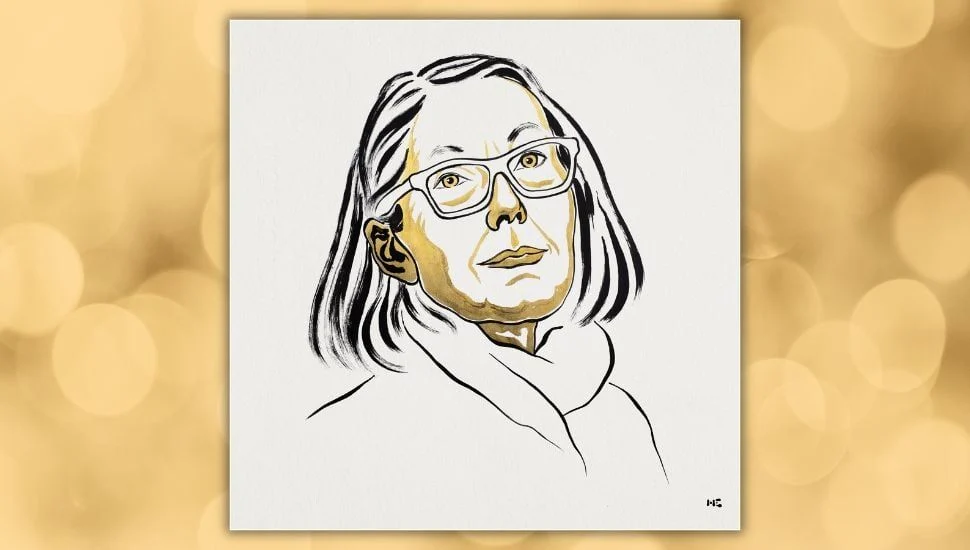
The Swedish Academy has announced Canadian poet, essayist, and translator Anne Carson as the recipient of the 2026 Nobel Prize in Literature. Carson was formally recognized by the Nobel Committee for her bold and inventive oeuvre that, in playful dialogue with the classical tradition, has created new forms for contemporary literature. The prestigious honor brings global attention to a writer renowned for effortlessly bridging ancient antiquity and avant-garde modernism, shattering traditional boundaries between poetry, prose, criticism, and visual art.
Upon receiving word of the honor during a broadcast in Iceland, Carson offered a characteristically understated and idiosyncratic reaction to the news, remarking simply, "Crazy, I think they’re all crazy." This response aligns with the author’s long-standing public persona: fiercely independent, deeply academic, yet profoundly skeptical of conventional literary fanfare and institutional pageantry.
The announcement places Carson among the most distinguished literary figures of the past century, cementing her status as a titan of contemporary letters. Her selection breaks new ground for Canadian literature on the global stage, highlighting a body of work that has spent decades challenging how readers consume, interpret, and experience written art.
Chronology of a Literary Career
Anne Carson’s path to the Nobel Prize spans nearly four decades of groundbreaking publication, academic rigor, and cross-disciplinary experimentation. Born in Toronto, Ontario, in 1950, Carson pursued her undergraduate and graduate studies at the University of St. Michael’s College and the University of Toronto, ultimately earning her Ph.D. in classics in 1981. Her early academic foundation focused heavily on ancient Greek literature, a bedrock that would permanently shape her creative output.
Throughout her career, Carson has balanced her life as a creator with positions as an educator. She has taught classical Greek, mythology, and literature at various prestigious institutions across North America, including McGill University, Princeton University, and the University of Michigan. Her academic background is not merely a biographical footnote; it serves as the active engine behind her literary innovations.
Carson burst onto the international literary scene in 1986 with the publication of Eros the Bituminous, a masterwork of essayistic scholarship exploring the nature of desire in ancient Greek poetry. However, it was her 1998 book Autobiography of Red that established her as a revolutionary force in modern poetry. Written as a novel in verse, the book reimagined the ancient Greek myth of Geryon and Herakles, transposing the mythological characters into a modern, contemporary setting. The work was an immediate critical sensation, praised for its lyrical precision, psychological depth, and structural audacity.
In the decades that followed, Carson continued to defy genre classification. Her 2000 publication, Economy of the Unlost, further blended classical scholarship with contemporary economic theory. In 2005, she released Decreation: Poetry, Essays, Opera, a multi-genre collection examining the annihilation of the self through the works of figures like Sappho, Simone Weil, and Marguerite Porete. Her subsequent works, including Nox (2010)—an elegiac, book-in-a-box tribute to her late brother that pushes the physical boundaries of the medium—and Float (2016), a collection of discrete chapbooks designed to be read in any order, cemented her reputation as an author who views the physical book itself as a canvas.
Supporting Data and Literary Impact
The Nobel Prize in Literature carries a monetary award of 11 million Swedish kronor (approximately $1 million USD), alongside the enduring prestige of joining an elite roster of laureates that includes Toni Morrison, Gabriel García Márquez, Seamus Heaney, and Louise Glück. Carson becomes the first Canadian-born writer to win the Nobel Prize in Literature since Alice Munro received the honor in 2013, reinforcing Canada’s quiet yet formidable footprint in global high literature.
Statistically, Carson’s work has enjoyed enduring critical acclaim, though it often occupies a space distinct from commercial blockbusters. Her books are regularly studied in university curricula across the globe, bridging departments of English, Classics, Comparative Literature, and Art History. Autobiography of Red frequently appears on lists compiled by critics and scholars ranking the greatest works of literature published in the late 20th century. Furthermore, her translations of classical Greek tragedy—most notably her acclaimed renditions of Euripides and Sophocles, such as Bakkhai and Antigone—are regularly staged in professional theaters worldwide, proving that her classical interpretations possess vibrant, living theatricality.
Official Responses and Institutional Praise
The Swedish Academy’s citation emphasized Carson’s unique ability to converse with antiquity while formulating entirely new paradigms for modern writing. Mats Malm, the permanent secretary of the Swedish Academy, highlighted during the announcement how Carson challenges the very definition of what poetry can achieve, pushing readers beyond comfortable narrative structures into spaces of philosophical and emotional inquiry.
Literary organizations, publishers, and fellow authors quickly flooded public channels with praise following the announcement. Canadian Prime Minister and cultural officials issued statements celebrating Carson’s monumental achievement, noting that her voice has long been a source of national pride and international intellectual enrichment.
Peers within the global literary community lauded the committee’s choice, noting that Carson has spent decades writing books that stubbornly refuse to fit into marketing categories. Poets and essayists praised her fearlessness, observing that her work demands an active, intellectual partnership from the reader, transforming the act of reading into an exploratory excavation of human emotion, history, and language.
Broader Implications and Significance for Contemporary Literature
Carson’s Nobel win marks a notable philosophical pivot for the Nobel Committee toward forms of writing that explicitly blur the lines between genres. In an era dominated by rapid digital communication, genre-fluid content, and fragmented media consumption, Carson’s work serves as a high-art precursor to contemporary literary hybridization. By seamlessly integrating translation, poetic verse, visual art criticism, and essayistic philosophy, she demonstrated long before the digital age that rigid boundaries between literary forms are artificial constraints.
The decision is also likely to spark a renewed global interest in classical literature. By demonstrating how ancient myths and classical philosophies can be harnessed to unpack modern trauma, isolation, and desire, Carson has consistently proven that antiquity is not a dusty museum exhibit, but a living, breathing reservoir of human experience. Publishers anticipate a significant surge in sales and academic research surrounding her backlist, introducing her genre-bending creations to a fresh generation of readers.
As the literary world processes the 2026 Nobel announcement, Anne Carson remains anchored in the ethos that has defined her decades-long career: a relentless commitment to intellectual curiosity, formal experimentation, and a profound respect for the mysteries of language. Whether she is translating Sappho on an airplane napkin or dissecting the color red through the lens of ancient myth, Carson’s voice continues to expand the horizons of what literature is capable of communicating.