 Ali Ikhwan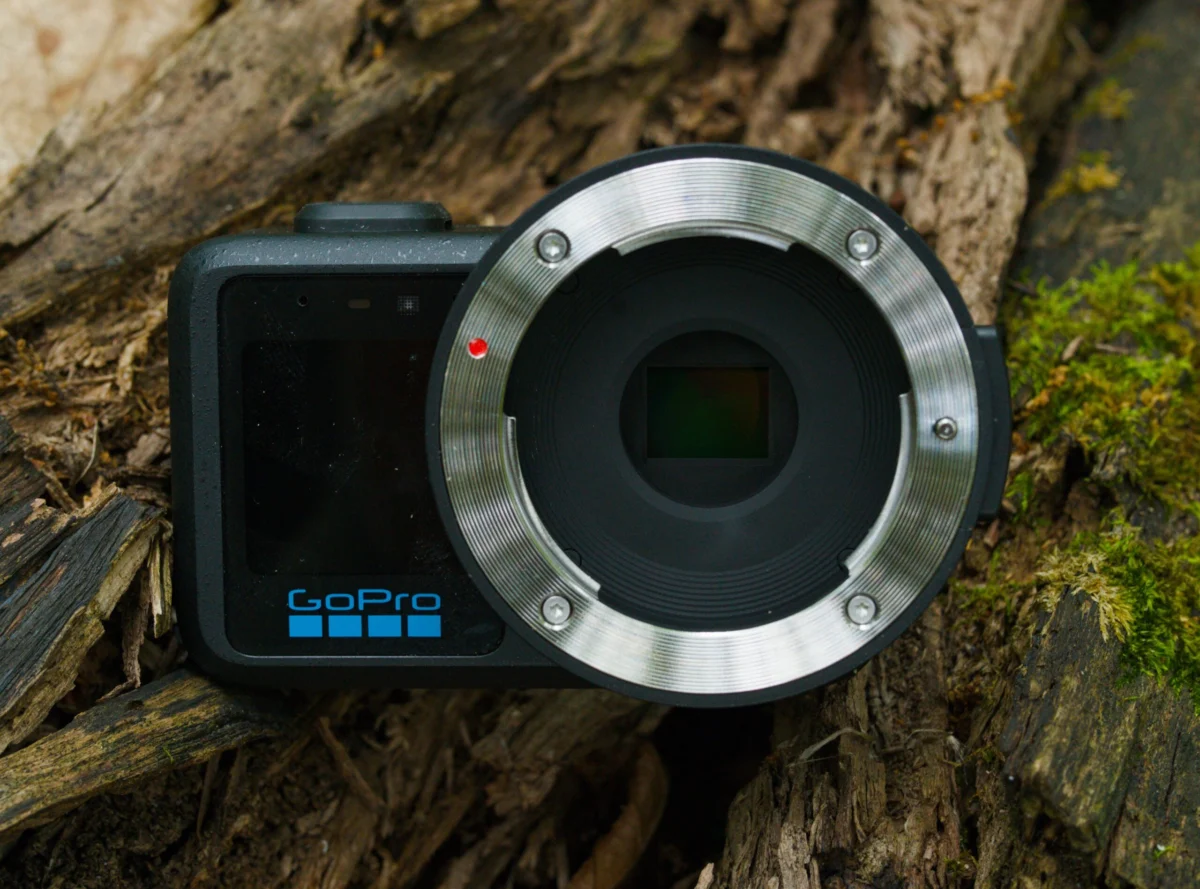
The introduction of the GoPro Mission 1 Pro ILS (Interchangeable Lens System) represents a significant pivot for a brand historically defined by fixed-lens, ultra-wide action photography. By transitioning into the realm of professional cinema tools, GoPro has invited a new demographic of filmmakers to experiment with its ecosystem. However, this transition brings a unique set of technical constraints, particularly regarding lens compatibility, manual focus requirements, and the ergonomic limitations inherent in such a compact form factor. As users begin to integrate the Mission 1 Pro ILS into their professional workflows, the balance between its high-fidelity image output and the operational hurdles of its manual-only design has become the primary focus of technical scrutiny.
Technical Specifications and Lens Compatibility Constraints
The architectural design of the Mission 1 Pro ILS necessitates a departure from modern autofocus-dependent workflows. Because the system lacks electronic contacts between the camera body and the lens mount, it cannot facilitate electronic focus or aperture control. This design choice effectively restricts the user base to manual lenses featuring mechanical aperture rings.
For filmmakers, this requirement fundamentally alters lens selection strategies. Testing conducted with the Laowa 7.5-mm lens illustrates the importance of understanding effective focal lengths within the ILS ecosystem. When the camera’s HyperSmooth stabilization is active, the effective focal length mimics a 23-mm lens on a full-frame sensor. With stabilization disabled, the field of view widens to the equivalent of a 20-mm lens. Given the sensor’s specific crop factor and the necessity for extreme wide-angle coverage, fisheye lenses have emerged as the most viable candidates for users seeking to maximize the camera’s unique perspective.
The absence of electronic communication also creates a compatibility barrier for popular Micro Four Thirds (MFT) lenses. For instance, the Panasonic 20-mm pancake lens, a staple in the MFT community, is incompatible with the Mission 1 Pro ILS because it relies entirely on the camera body for aperture adjustments. Consequently, users are currently limited to a specialized library of fully manual, high-quality optics. GoPro’s internal experts, including product developer Abe Kislevitz, have curated resources to assist users in identifying compatible glass, yet the current market remains sparse, requiring filmmakers to source vintage or specialized manual-focus lenses to unlock the camera’s full potential.
The Challenge of Manual Focus in Field Environments
The shift to a manual-focus-only system is a significant operational departure for a brand that built its reputation on the "set it and forget it" reliability of autofocus. While professional cinematography has long relied on manual focus, the Mission 1 Pro ILS presents unique ergonomic challenges. The primary obstacle is the integrated display, which is dimensionally constrained.
While the camera includes focus peaking—a tool that highlights areas of high contrast to indicate sharp focus—its efficacy is hampered by the screen’s small surface area. In high-contrast or bright outdoor environments, identifying the precise threshold of the focus plane becomes difficult. Furthermore, while magnifying the image on the screen can assist in precision, the small display resolution limits the clarity of these magnified views.
From a production standpoint, these limitations necessitate a trade-off. To achieve optimal focus, a filmmaker must typically position the camera at eye level, which restricts the potential for creative angles and dynamic framing. While external monitors or smartphone-based app tethering can mitigate these issues, the addition of such peripherals—often requiring cages, external power, and mounting hardware—counteracts the primary advantage of the Mission 1 Pro ILS: its portability. When fully rigged with external accessories, the camera’s footprint begins to mirror that of larger, more capable sensor platforms, such as the Panasonic GH7, raising questions about the intended use case for the device.
Chronology of the ILS Development
The development of the Mission 1 Pro ILS follows a decade of GoPro’s evolution from an adventure-sports camera manufacturer to a provider of professional broadcast tools.
- 2014–2016: GoPro explores modularity with the Hero4 and Hero5, establishing the foundation for its proprietary image processing.
- 2020–2022: The company pivots toward the "Pro" market, emphasizing sensor quality and color science, culminating in the release of the Hero11 and Hero12 Black, which featured larger sensors and advanced stabilization.
- 2024: GoPro officially announces the Mission 1 Pro ILS, marking its entry into the interchangeable lens market.
- Current Status: The system is currently sold as a body-only unit. Neither the manufacturer nor authorized third-party resellers have introduced lens bundles, placing the burden of ecosystem building entirely on the end-user.
Comparative Analysis: The Image Quality Benchmark
Despite the operational friction, initial field testing has drawn positive comparisons to early professional cinema cameras, specifically the Blackmagic Pocket Cinema Camera series. The image quality produced by the Mission 1 Pro ILS—characterized by its dynamic range and color rendition—is notable for a device of its diminutive scale. For filmmakers who are willing to navigate the manual focus process, the output serves as a high-fidelity alternative to larger, more cumbersome systems.
However, the lack of electronic iris control remains a point of contention among industry professionals. Electronic aperture support is considered a standard feature for modern digital cinematography, as it allows for smooth exposure ramping and remote iris adjustments. The omission of these connectors in the Mission 1 Pro ILS suggests that the current iteration is intended for a niche audience of enthusiast videographers and vintage lens collectors rather than production crews requiring fast-paced, multi-camera coordination.
Broader Industry Implications and Future Outlook
The release of the Mission 1 Pro ILS signifies a strategic diversification for GoPro, yet it also highlights the limitations of attempting to bridge the gap between action camera heritage and cinema-grade functionality. The market impact of this camera will likely be determined by how quickly the third-party lens market responds to the specific mount requirements of the system.
Industry analysts suggest that for the ILS to gain traction in professional circles, subsequent generations must address two key areas: the integration of electronic lens contacts and the refinement of the user interface to accommodate external monitoring. As the industry trends toward modularity, the ability to maintain the Mission 1 Pro ILS’s small form factor while providing the control found in larger systems will be the defining factor of its long-term viability.
For now, the Mission 1 Pro ILS stands as a specialized tool. It offers a unique visual aesthetic that few other cameras of its size can replicate, but it demands a level of manual precision that necessitates a steep learning curve. While it is unlikely to replace the primary cameras of professional production crews, it provides a compelling, high-quality alternative for niche projects where portability is paramount and the technical workflow can be adapted to accommodate manual-only operation. The future success of this product line will depend heavily on whether GoPro chooses to evolve the hardware toward more standard industry protocols or remains committed to the current, highly restrictive manual interface.