 Indra Kusuma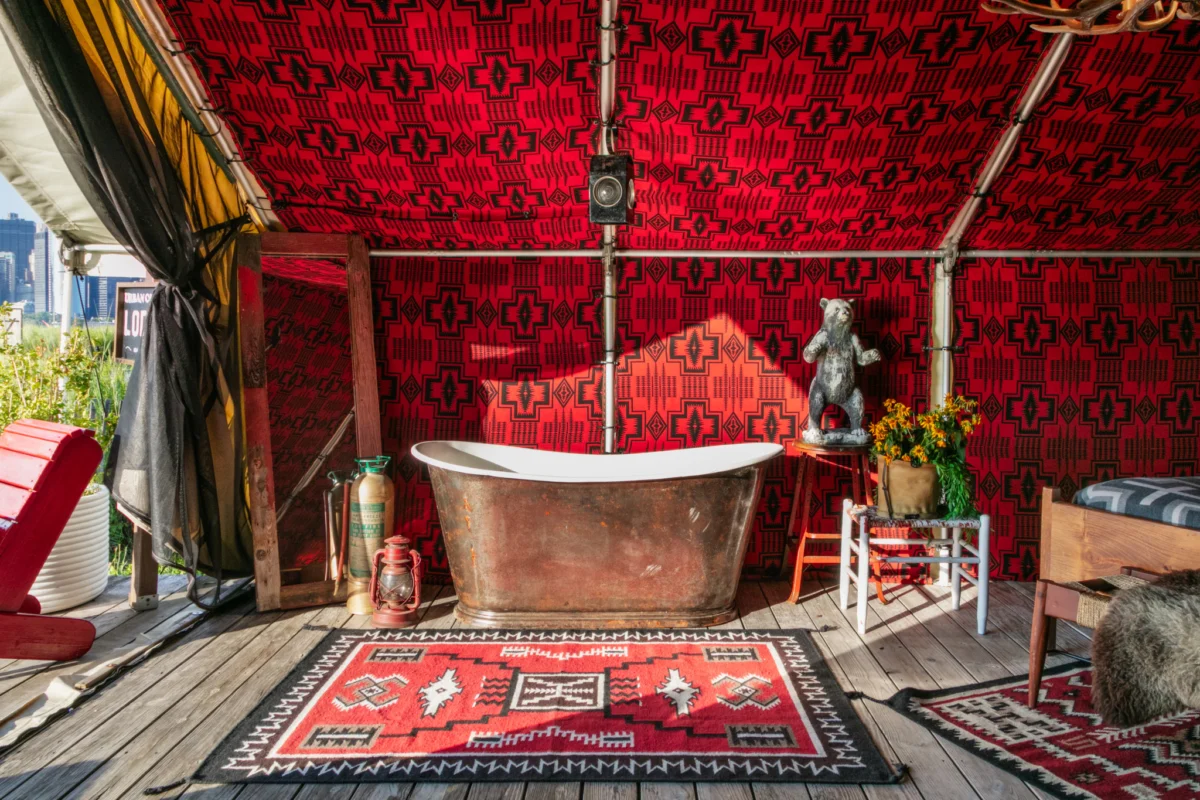
For the urban dweller, the concept of "getting away" usually necessitates a multi-hour trek toward the Catskills or the Adirondacks. However, the geographic constraints of New York City have long been challenged by the seasonal operations on Governors Island. Since 2018, Collective Retreats has operated a six-acre luxury glamping site just eight minutes by ferry from Lower Manhattan, effectively blurring the lines between metropolitan convenience and wilderness immersion. This season, the site has introduced a significant shift in its aesthetic and hospitality offerings through a collaboration with the boutique brand Urban Cowboy. The introduction of the Urban Cowboy Tent represents an evolution in the island’s tourism strategy, moving away from standard-issue luxury toward a highly curated, narrative-driven design experience.
A Chronology of Governors Island Hospitality
The transformation of Governors Island into a destination for overnight visitors is a relatively recent development in the city’s urban planning history. Once a closed military installation, the island transitioned to a public park under the Trust for Governors Island in the early 21st century. The introduction of permanent, seasonal hospitality services in 2018 marked a pivot toward generating revenue to support the island’s infrastructure and maintenance.
Collective Retreats established its presence during this period, offering a model of "glamping" that emphasized minimal environmental impact while providing modern amenities. This year’s introduction of the Urban Cowboy Tent, designed by Lyon Porter—the creative force behind the Urban Cowboy brand—serves as the next chapter in this timeline. It builds upon the established reputation of the Collective Retreats site while injecting the distinct, maximalist design language that Porter first gained acclaim for at the Urban Cowboy Lodge in the Catskills.
The Design Philosophy of the Urban Cowboy Tent
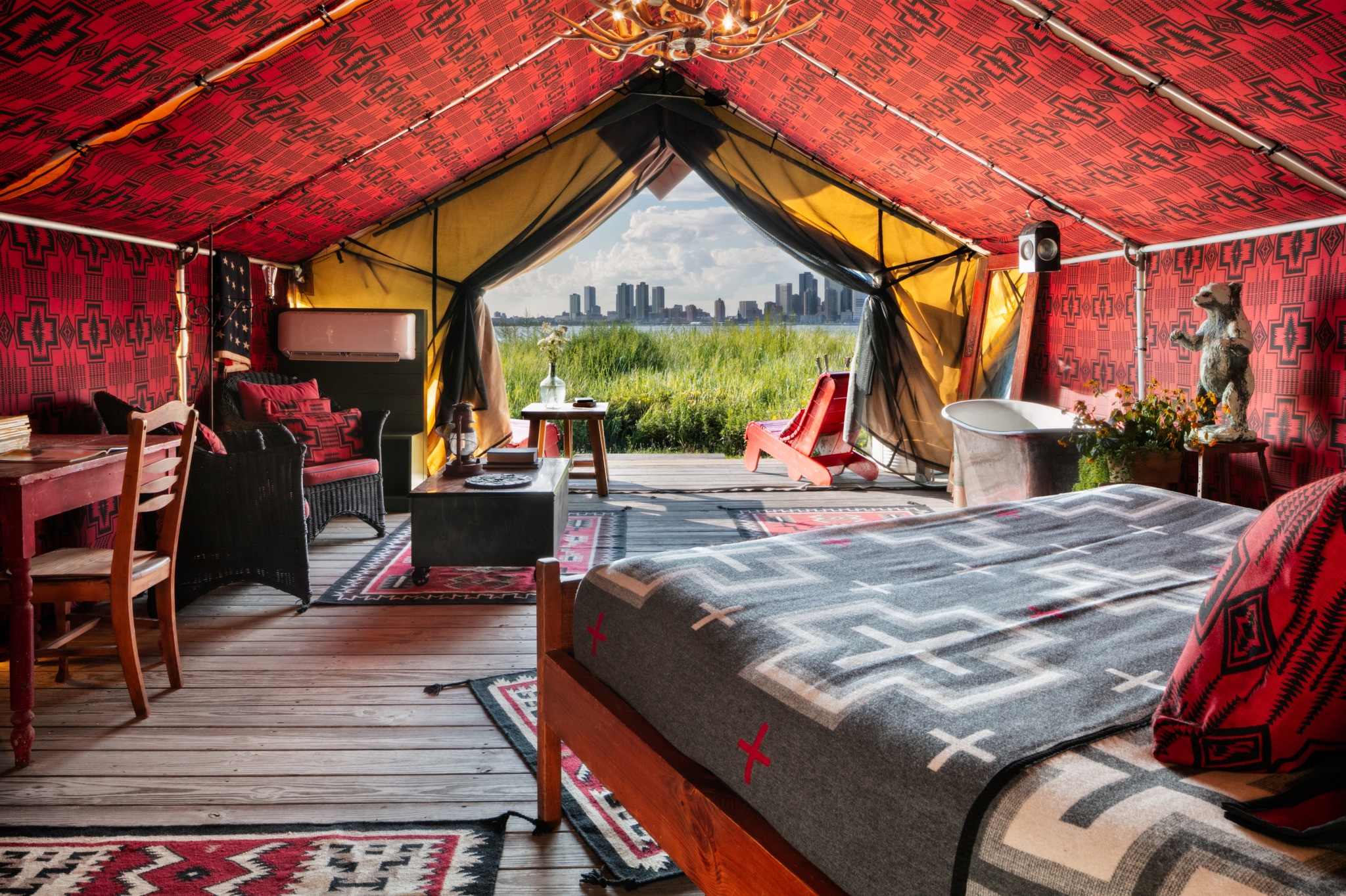
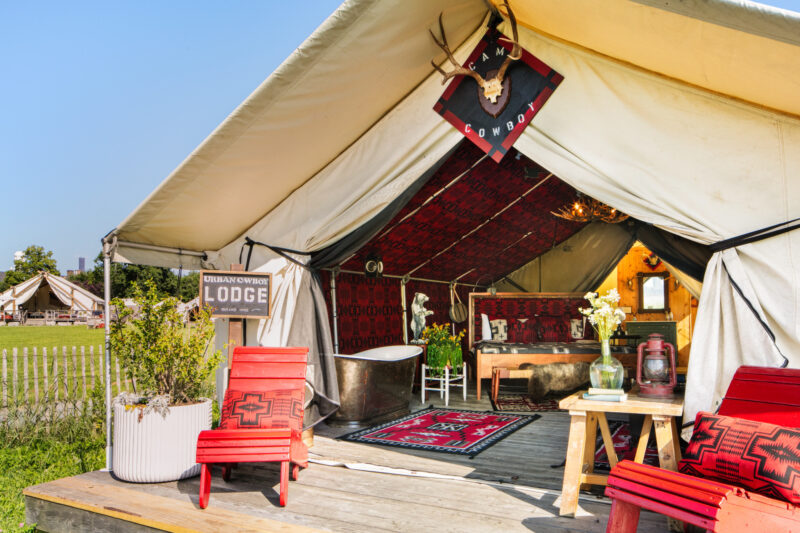
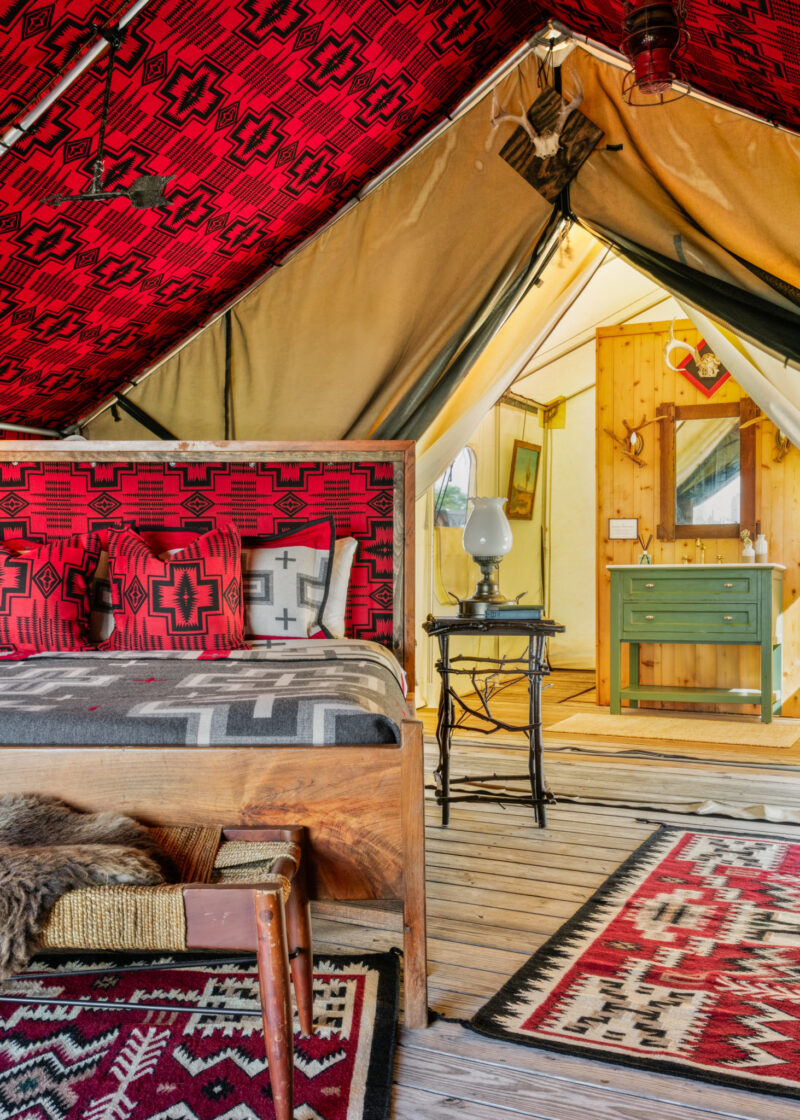
The new 325-square-foot tent is not merely a lodging unit but an exercise in interior curation. Every element, from the red Pendleton textiles to the vintage El Paso Saddle Blanket rugs, has been selected to evoke a sense of storied history. The project’s material sourcing is a testament to the "found object" aesthetic, with components sourced from regional purveyors such as the Beacon Flea Market and Elephant Trunk.
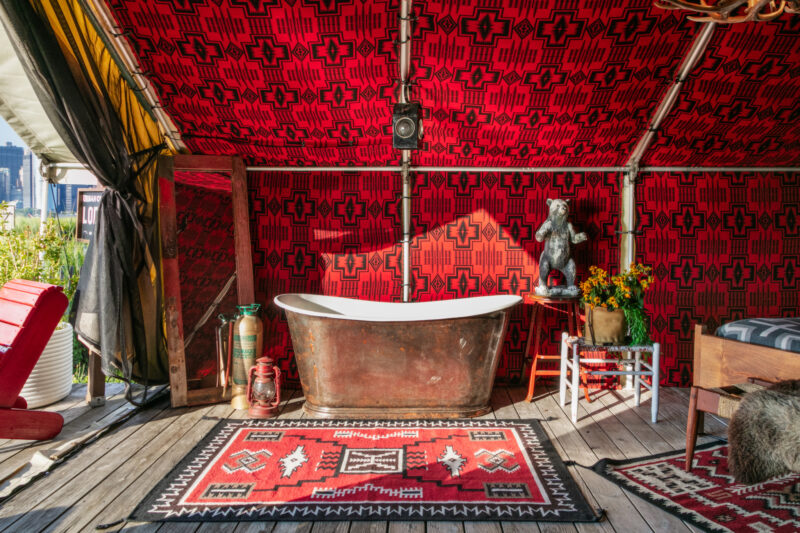
Collaborating with Kevin Jacob Design, Porter has integrated custom elements that anchor the space, including hand-painted stenciling and rustic signage. The inclusion of repurposed boat oars and antique artwork serves to ground the tent in a maritime context, acknowledging its placement on an island in the middle of New York Harbor. The centerpiece of the interior is a patinated cast-iron tub, sourced from a Connecticut estate. According to Porter, this element was chosen for its tactile history and aesthetic weight, serving as a focal point that contrasts with the temporary nature of the canvas tent structure.
Technical Infrastructure and Modern Comforts
Despite the "cowboy" branding, which emphasizes rustic charm, the structural reality of the unit is entirely modern. The tent is equipped with comprehensive HVAC systems, ensuring climate control regardless of the erratic coastal weather. Furthermore, the unit features an ensuite bathroom, a requirement for the luxury market that distinguishes this offering from traditional camping.
The logistical challenge of providing running water and waste management in a temporary, off-grid-adjacent environment on a landmarked island is significant. The integration of plumbing for both the ensuite shower and the freestanding cast-iron tub requires careful coordination with the Trust for Governors Island’s utility infrastructure. This infrastructure allows the site to function at a high standard of comfort without sacrificing the "back to nature" ethos that draws visitors to the island.
Strategic Partnerships and Hospitality Trends
The partnership between Collective Retreats and Urban Cowboy is an extension of an existing professional relationship. Dovetail + Co., the hospitality group behind Collective Retreats, has previously collaborated with Porter on the Urban Cowboy Lodge in the Catskills, which opened in 2020. This ongoing synergy suggests a broader trend in the hospitality industry: the move toward "co-branded" luxury experiences.
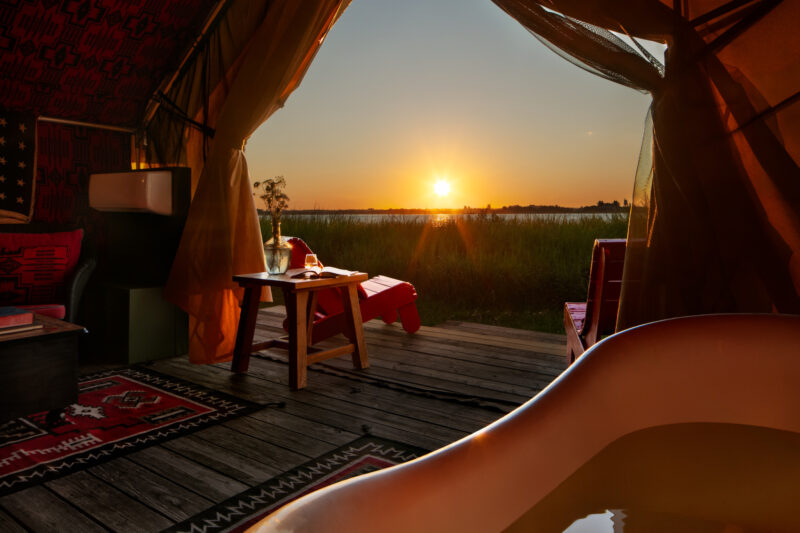
By leveraging the brand equity of Urban Cowboy, Collective Retreats is able to differentiate its Governors Island offering from the increasingly competitive glamping market. For urbanites who are increasingly suffering from "screen fatigue," the tactile, maximalist environment provided by the new tent serves as an antidote. It is a calculated design choice that prioritizes physical texture and environmental engagement over the digital, minimalist aesthetic that has dominated hotel design for the past decade.
Market Implications and Economic Impact
The hospitality market in New York City has seen a surge in demand for "micro-escapes." Data from the hospitality sector indicates that short-term, high-intensity travel experiences—those that offer a complete shift in environment within a short travel window—are seeing higher retention rates than traditional long-form vacation packages. By positioning the Urban Cowboy Tent as a transportive experience within a stone’s throw of the financial district, the operators are tapping into a demographic that values convenience as much as the "Instagrammable" quality of their accommodations.
Furthermore, the environmental footprint of such a project is a key consideration for the city. Because the site is seasonal and utilizes low-impact foundation techniques, it adheres to the strict ecological guidelines required for development on a protected island. The economic impact is twofold: it provides a unique revenue stream for the maintenance of the public park and supports a local ecosystem of designers, antique dealers, and hospitality staff.
Official Perspectives and Future Projections
While official revenue figures for the project are not publicly disclosed, the collaborative nature of the effort indicates a high level of confidence from both Dovetail + Co. and Urban Cowboy. Lyon Porter has framed the project as a necessary development in the evolution of New York’s hospitality offerings. "An authentic Urban Cowboy experience is meant to be transportive," Porter noted, suggesting that the goal is to dismantle the visitor’s perception of their proximity to the city’s grid.
Industry analysts suggest that if the Urban Cowboy Tent succeeds in meeting occupancy targets, it could signal a shift toward more permanent, high-end "pop-up" concepts in other public urban spaces. By proving that luxury and sustainability can coexist in a temporary structure, the developers are setting a precedent for future land-use agreements in metropolitan parks.
Environmental and Cultural Context
Governors Island itself serves as a unique backdrop for this project. With the Statue of Liberty visible from the tent’s deck, the setting is inherently dramatic, bridging the gap between the industrial history of the harbor and the contemporary desire for serene, aesthetic living. The presence of the tent forces a dialogue between the "wild" environment of the park and the "curated" environment of the interior, a hallmark of the glamping movement.
As the city continues to navigate the post-pandemic landscape of tourism, the role of public-private partnerships in park development will likely continue to expand. The Urban Cowboy Tent serves as a case study in how to leverage design to elevate public space, turning a simple overnight stay into a cultural event.
Conclusion and Availability
The Urban Cowboy Tent is not merely a place to sleep; it is a manifestation of a specific, intentional lifestyle brand that prioritizes design, history, and comfort. By bringing this vision to Governors Island, the collaborators have created a destination that addresses the specific needs of the contemporary urban traveler.
Reservations for the Urban Cowboy Tent are available for the remainder of the 2026 season, with operations concluding at the end of November. As the season progresses, the success of this installation will likely inform future design collaborations, cementing the role of boutique hospitality in the ongoing development of New York’s most unique public space. Interested parties are encouraged to visit the official Collective Retreats website for booking availability and further details regarding the site’s amenities and seasonal calendar.