
 Pranda Michaela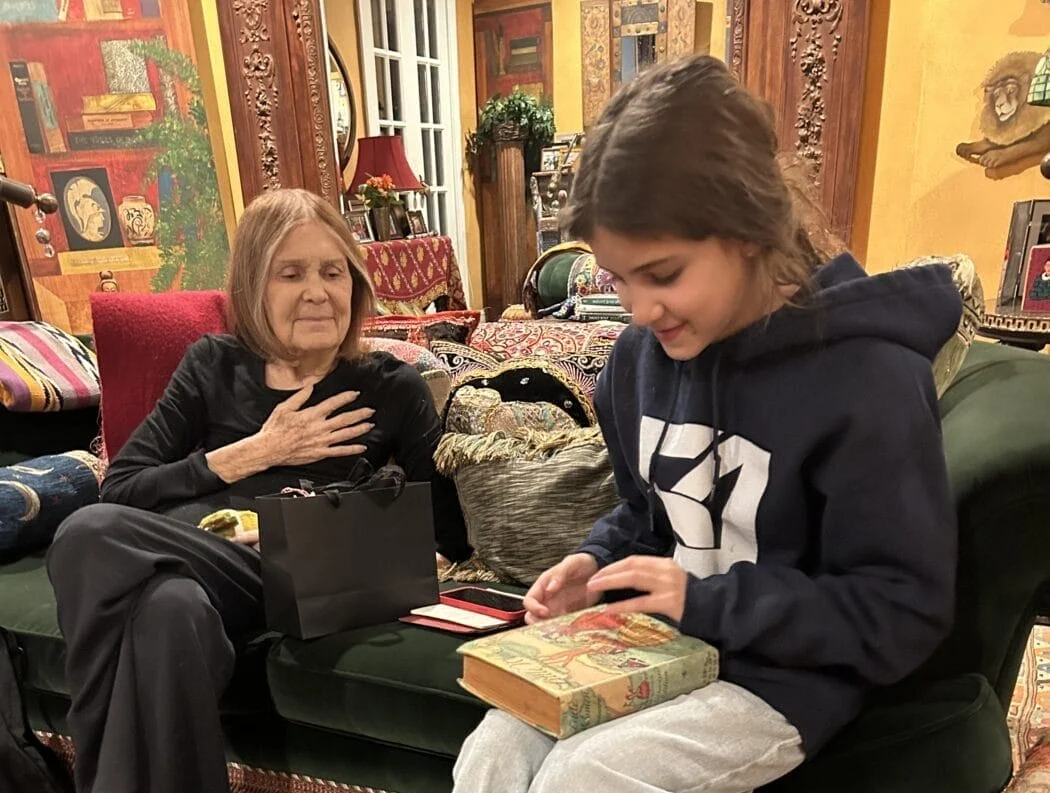
The legacy of Gloria Steinem, a preeminent figure in the American feminist movement, extends far beyond her seminal writings and activist campaigns. In the years preceding her passing, Steinem increasingly turned her focus toward the next generation, advocating for a radical shift in how society views the role of parenting and the autonomy of children. Her philosophy, summarized by the mantra that the primary duty of an adult is to foster the unique identity of a child rather than mold them into predetermined societal expectations, has gained renewed significance as a guide for modern parents navigating a complex social landscape.

The genesis of this perspective was often grounded in the quotidian, exemplified by candid conversations in unlikely settings—such as the back of a New York City taxi. These moments, which Steinem frequently used to engage with the public, served as the backdrop for her reflections on gender, power, and the future of familial structures. For those who worked closely with her, such as Erin Grau, an inaugural fellow at the Gloria Steinem Foundation, these informal dialogues became foundational lessons in activism and parenthood.

A Philosophy of Curiosity and Autonomy
Steinem’s approach to childhood was rooted in a deep-seated respect for the intellectual and emotional capacity of children. She often challenged the notion that children were merely vessels to be filled with the traditions of the past. Instead, she viewed them as innate philosophers who possess a natural skepticism toward arbitrary social constraints. Her advocacy for "discovering who our daughters are" is not merely a call for parental support; it is an appeal for a structural shift that allows children the space to define their own potential.

This viewpoint is supported by developmental psychology, which emphasizes that fostering autonomy is a key predictor of long-term emotional health. By moving away from restrictive gender roles—a cornerstone of Steinem’s career—parents are better equipped to allow children to develop interests and identities independent of historical biases.

The Intersection of Feminism and Family Dynamics
The historical evolution of feminism has frequently grappled with the role of the family. In the late 20th century, some radical feminist critiques identified the nuclear family as a potential site of patriarchal reproduction. Steinem, however, evolved her analysis to focus on the democratization of the home. She frequently noted that inequality often begins at the kitchen table, where labor and decision-making are unfairly distributed.

By the early 2020s, the cultural discourse had shifted, witnessing a resurgence in the celebration of traditional gender roles in some corners of society, while simultaneously facing a reckoning regarding the "motherhood tax" and the lack of systemic support for working parents. Steinem’s response to these regressions was characteristically pragmatic: she refused to treat them as permanent states of being. Instead, she framed these cycles as challenges to be met with sustained advocacy, maintaining that progress is not a linear trajectory but an ongoing commitment to dismantling systemic barriers.

Data and Societal Context: The Current Landscape of Parenting
The relevance of Steinem’s call to action is underscored by current data on gender inequality. According to recent reports from institutions such as the Pew Research Center and the World Economic Forum, the "motherhood penalty"—the reduction in wages and career advancement for women after having children—remains a persistent global issue. Furthermore, data on domestic labor distribution indicates that even in households where both parents work, women continue to shoulder a disproportionate share of the "emotional load" and childcare responsibilities.

These systemic issues create a world that often fails to "deserve" the potential of the next generation. When children, particularly girls, are conditioned to shrink their ambitions to fit into a landscape of limited opportunity, society suffers from a loss of intellectual and creative capital. Steinem’s activism was designed to address this by urging parents to actively participate in the creation of a more equitable world, effectively "building a world that deserves them" rather than merely preparing them to survive in a flawed one.

A Chronology of Influence: From the Road to the Foundation
Steinem’s life on the road was more than a professional necessity; it was a method of gathering perspective. Her memoir, My Life on the Road, documents how she utilized the taxi as a mobile salon for grassroots dialogue. This practice informed her work at the Gloria Steinem Foundation, which has become a vital hub for preserving the history of the women’s movement while funding current initiatives at the intersection of technology, artificial intelligence, and power.

The foundation’s efforts to maintain her Manhattan apartment—a site of decades of strategic planning—serve as a symbolic gesture of continuity. When individuals like Erin Grau brought their children to this space, the act was not merely social; it was pedagogical. By exposing children to the history of activism through the artifacts of the movement, such as early editions of Louisa May Alcott’s Little Women, Steinem bridge-built between the Victorian-era struggles for female self-determination and the digital-age challenges of the 21st century.

The Unfinished Business: A Call to Action
The passing of Gloria Steinem in 2026 prompted a massive public outpouring, with many families gathering at her residence to pay tribute. Among these tributes were artistic expressions from children—drawings of taxi cabs and sketches of books—that signaled a younger generation’s nascent engagement with her work. This scene was a testament to the fact that her influence had moved beyond the confines of academic feminism into the everyday lives of families.

The broader implication of Steinem’s death is the transition of her "unfinished business" to a wider constituency. Her collaborators, including activist Amy Richards, have characterized this shift as a "beautiful responsibility." This involves not just the preservation of her historical papers, but the active, daily work of challenging inequality in schools, workplaces, and government policy.

Analyzing the Impact on Modern Motherhood
For modern mothers, Steinem’s legacy offers a framework for navigating the pressures of the contemporary era. In an age where digital surveillance and the "optimization" of childhood—from extracurricular tracking to academic hyper-competitiveness—have become the norm, Steinem’s advice to "listen more closely" and "practice empathy as a radical emotion" provides a necessary counter-narrative.

Steinem’s philosophy suggests that the most effective way to empower a daughter is to demonstrate, through one’s own life, that one does not need to shrink to fit into an existing mold. This includes:

- Challenging the Status Quo: Encouraging children to question why certain societal norms exist, particularly those regarding gender and economic power.
- Prioritizing Emotional Intelligence: Treating empathy as a core competency rather than a soft skill, recognizing its necessity in building inclusive communities.
- Active Citizenship: Demonstrating that activism is not an abstract concept but a duty performed through daily choices, voting, and advocacy.
Looking Toward the Future
As the generation that grew up reading Steinem’s work takes on the mantle of parenthood, the application of her principles is becoming more visible. The rise of grassroots organizations aimed at equitable parenting, the push for universal childcare, and the continued advocacy for gender-neutral educational policies are all reflections of the long-term impact of her career.

Gloria Steinem’s life’s work serves as a reminder that the world is not a static construct. It is a malleable environment that responds to the collective will of those who inhabit it. By focusing on the development of the individual child, while simultaneously working to dismantle the macro-level systems of inequality that limit that child, parents can honor the legacy of one of history’s most influential thinkers.

The "adventures" of the next generation—whether named Matilda, Frankie, or any other name—are, in the final analysis, the true metric of the success of the feminist movement. The responsibility now lies with those who remain to ensure that the world they inherit is one where their potential is not only recognized but actively supported and celebrated. In doing so, we fulfill the promise of a movement that has always been about more than just equality—it has been about the fundamental liberation of the human spirit.