
 Indra Kusuma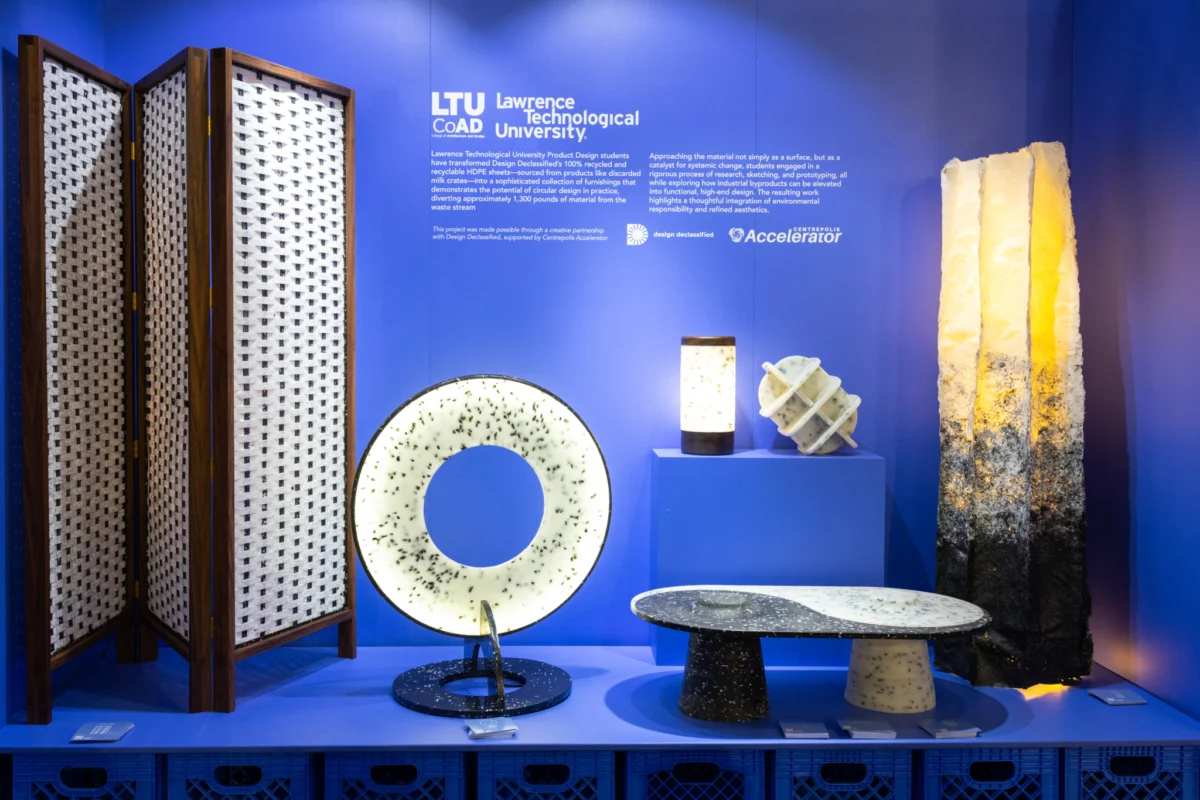
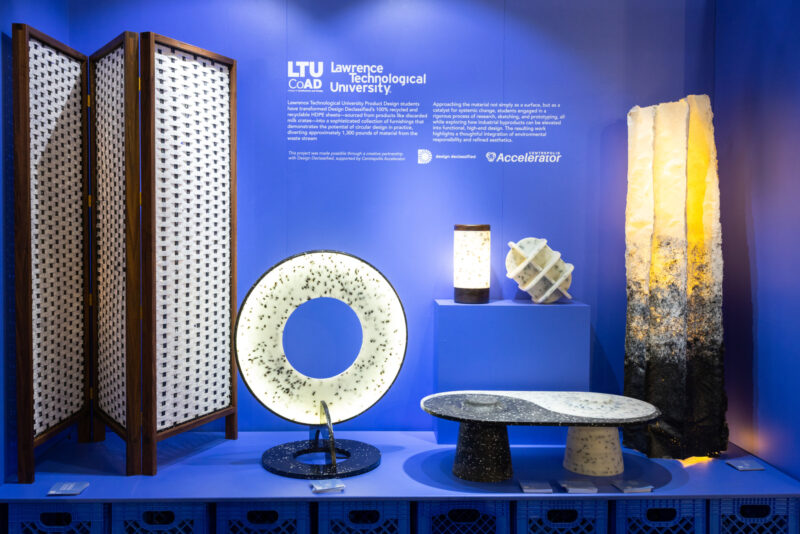
Furniture, lighting, and even a room divider might not seem to have much in common at first glance, but Lawrence Technological University (LTU) in Southfield, Michigan, found unity in an unexpected place: sheets of 100% recycled HDPE made from post-consumer plastic, including discarded milk crates. Created by six sophomore Product Design students at LTU, the collection transformed the material into a cohesive series of objects that explored craftsmanship, experimentation, and the creative potential of circular design, earning the university the Best of Schools award at this year’s WANTED Schools Showcase during ICFF. This significant accolade not only celebrated the innovative spirit and technical prowess of LTU’s emerging designers but also underscored the critical role of sustainable practices in the future of industrial design.
A Prestigious Recognition in the Design World
The International Contemporary Furniture Fair (ICFF) stands as North America’s premier showcase for contemporary design, drawing tens of thousands of attendees annually, including architects, interior designers, retailers, and developers. Within this esteemed event, the WANTED Schools Showcase provides a vital platform for design universities worldwide to present the cutting-edge work of their students. Winning the "Best of Schools" award is a testament to exceptional vision, technical execution, and pedagogical excellence. For LTU, a university with a strong focus on technology and applied learning, this award signifies a powerful validation of its innovative approach to product design education, particularly its emphasis on sustainability and real-world problem-solving. The jury, comprising leading figures in design and manufacturing, recognized LTU’s collection for its seamless integration of aesthetic appeal, functional utility, and profound environmental responsibility, setting a new benchmark for what is achievable with recycled materials.
The Genesis of Innovation: LTU’s Sustainable Systems Course
The award-winning exhibition was the culmination of efforts within LTU’s "Sustainable Systems" course, a core component of its Bachelor of Science in Product Design program. This course is designed to immerse students in the principles of circular economy, life cycle assessment, and responsible material selection. It challenges them to move beyond conventional design paradigms and consider the entire journey of a product, from its raw materials to its end-of-life. Adjunct Professor Erika Cross, who both teaches the course and curated the exhibition, envisioned a project that would push students to confront the limitations and unlock the potential of a single, challenging recycled material. "Unlike most School Showcase booths, which feature curated collections of work pulled from across entire design programs, ours was a collection produced solely by undergraduate students within this single course," Professor Cross stated, highlighting the remarkable cohesion and quality achieved by a singular cohort. This focused approach allowed for a deeper exploration of the material’s properties and a shared design language that unified the diverse projects.
HDPE: From Waste Stream to High Design
The chosen material, 100% recycled High-Density Polyethylene (HDPE), is one of the most common plastics globally, known for its durability, strength-to-density ratio, and resistance to chemicals. It is ubiquitously found in post-consumer waste streams as milk jugs, detergent bottles, and, notably, milk crates. While HDPE is highly recyclable, its transformation into a material suitable for high-end furniture and lighting design presents unique challenges. Recycled HDPE often exhibits color variations and surface imperfections, which many designers might view as drawbacks. However, the LTU students, under Professor Cross’s guidance, embraced these characteristics as integral to the material’s story and aesthetic.
The collaboration with Michigan-based manufacturer Design Declassified was instrumental in providing the students with access to high-quality recycled HDPE sheets. Design Declassified specializes in transforming plastic waste into durable, versatile sheets, contributing significantly to the regional circular economy. Their expertise ensured that the students had a reliable and consistent material source, allowing them to focus on design innovation rather than material sourcing complexities. This partnership also offered students invaluable insights into industrial manufacturing processes, bridging the gap between academic theory and practical application.
The environmental impact of this project is significant. By utilizing recycled HDPE, the students diverted approximately 1,300 pounds of plastic waste from landfills. To put this into perspective, the average American generates about 0.5 pounds of plastic waste per day. This single project effectively offset the daily plastic waste of over 2,600 individuals, demonstrating the tangible benefits of circular design thinking. Beyond the raw numbers, the project showcased recycled HDPE’s potential beyond conventional, low-value applications, challenging preconceived notions about the aesthetic and structural limitations of reclaimed materials.
Strategic Partnerships Fueling Educational Excellence
The success of the exhibition was further bolstered by the support of the Centrepolis Accelerator, a leading advanced manufacturing and product development accelerator based in Southfield, Michigan, co-located with LTU. The Centrepolis Accelerator provides crucial resources, mentorship, and funding to startups and small businesses, often facilitating collaborations between industry and academia. Their involvement in this project provided logistical support, access to advanced prototyping facilities, and invaluable industry connections, enabling the students to translate their conceptual designs into tangible, exhibition-ready pieces. This synergistic relationship between the university, a specialized manufacturer, and a regional accelerator exemplifies a robust model for experiential learning, where students gain hands-on experience in a professional environment, preparing them for the complexities of the modern design industry.
A Singular Achievement from a Dedicated Cohort
What makes LTU’s achievement particularly notable is that the exhibition wasn’t a curated selection of projects from across the entire university’s design program. Instead, the entire collection was produced by a single undergraduate class of six sophomore Product Design students: Ashgen Boyer, Dante Cerroni, Lourdes Davish, Sofia Eddy, Delanie Shorten, and Ryan Sukhraj. This unified effort fostered a unique collaborative environment, where students could learn from each other’s explorations and collectively push the boundaries of the chosen material. The shared constraint of working with recycled HDPE encouraged a collective visual language while simultaneously allowing for individual expression and methodological divergence.
A Tapestry of Ingenuity: Individual Projects and Methodologies
The resulting collection presented a diverse array of functional and sculptural pieces, each approaching the shared material through a different lens of innovation:
-
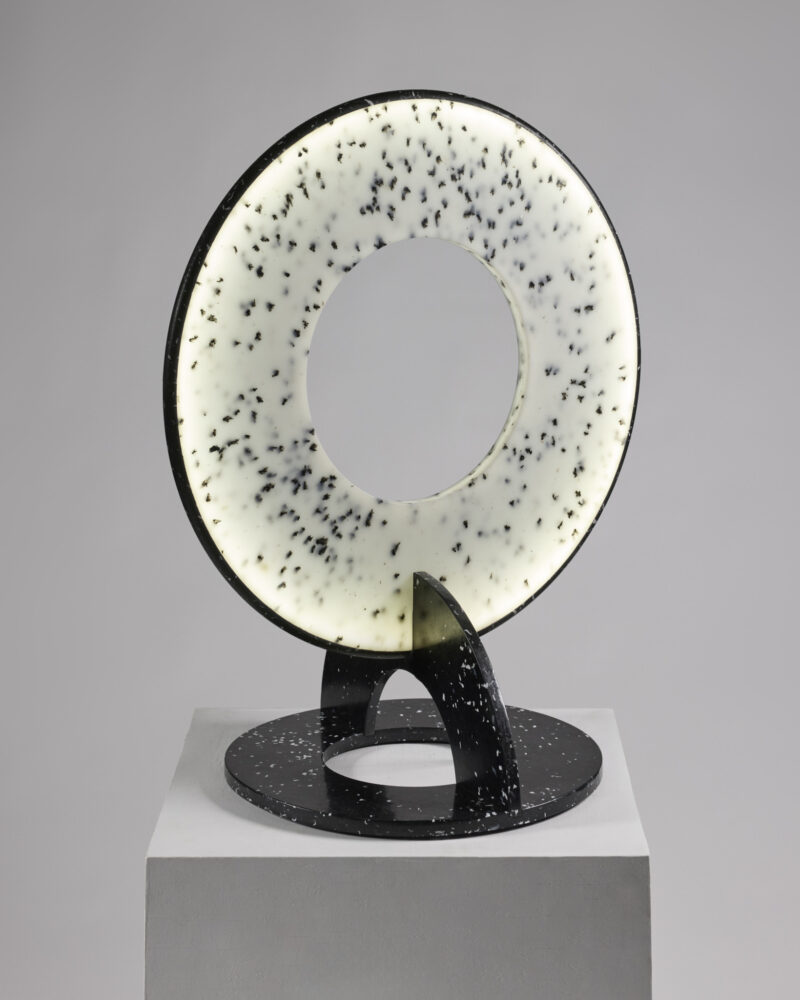
Dante Cerroni’s Loop Lamp: Cerroni’s design explored the material’s flexibility and potential for continuous forms. The Loop Lamp, a striking circular sculpture with a hollow center, stood upright on a matching arched base, showcasing the speckled texture of the recycled HDPE in an elegant, modern aesthetic. His methodology likely involved precise cutting and heat-forming to achieve the desired curvilinear geometry, demonstrating how a utilitarian material can be elevated to a piece of art.
-
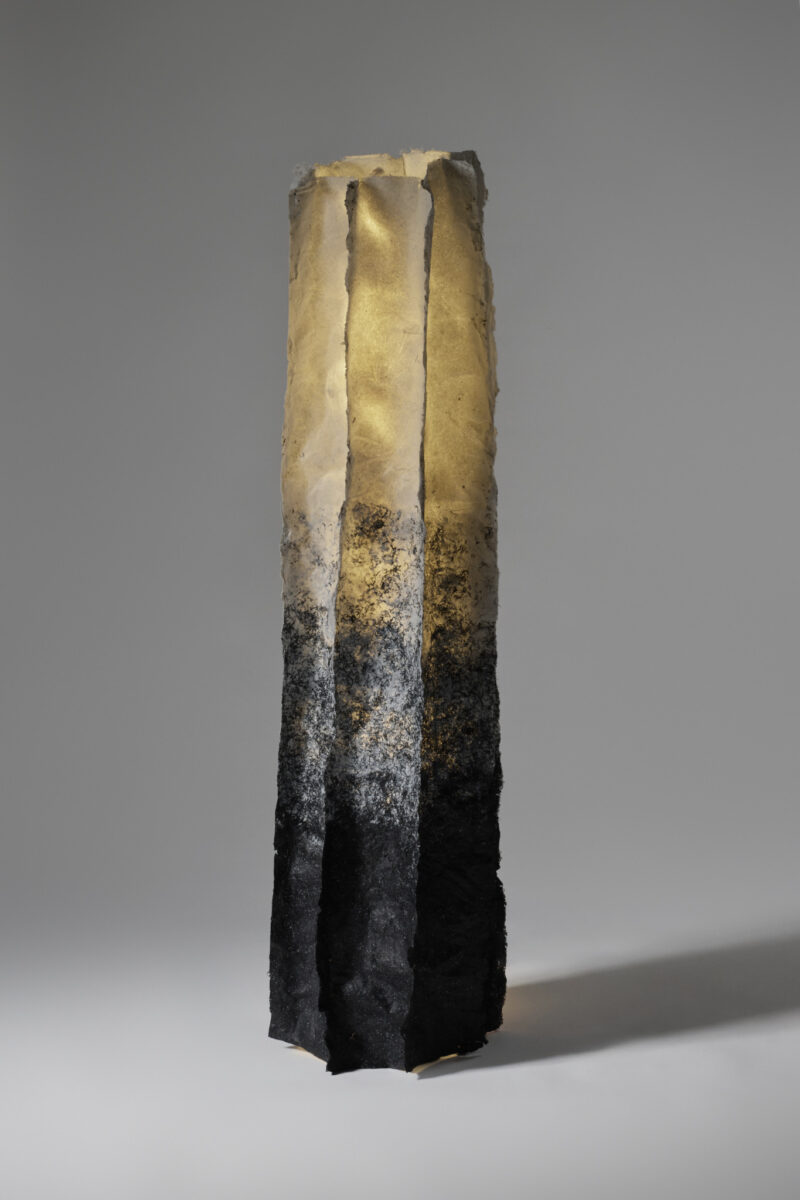
Lourdes Davish’s Phoji Room Divider and Fade Floor Lamp: Davish demonstrated an exceptional commitment to waste reduction and material ingenuity. For her Fade Floor Lamp, she meticulously collected waste shavings from the CNC router, melted them into translucent, veneer-like sheets, and then stitched them together. This process not only minimized waste but also created a unique aesthetic, complete with a subtle black-to-white gradient, showcasing the material’s ability to transform through re-processing. Her Phoji Room Divider likely built upon similar principles, exploring the material’s acoustic and visual properties when arranged in a modular fashion. This innovative approach to material utilization and aesthetic refinement highlights a profound understanding of circular design principles.
-
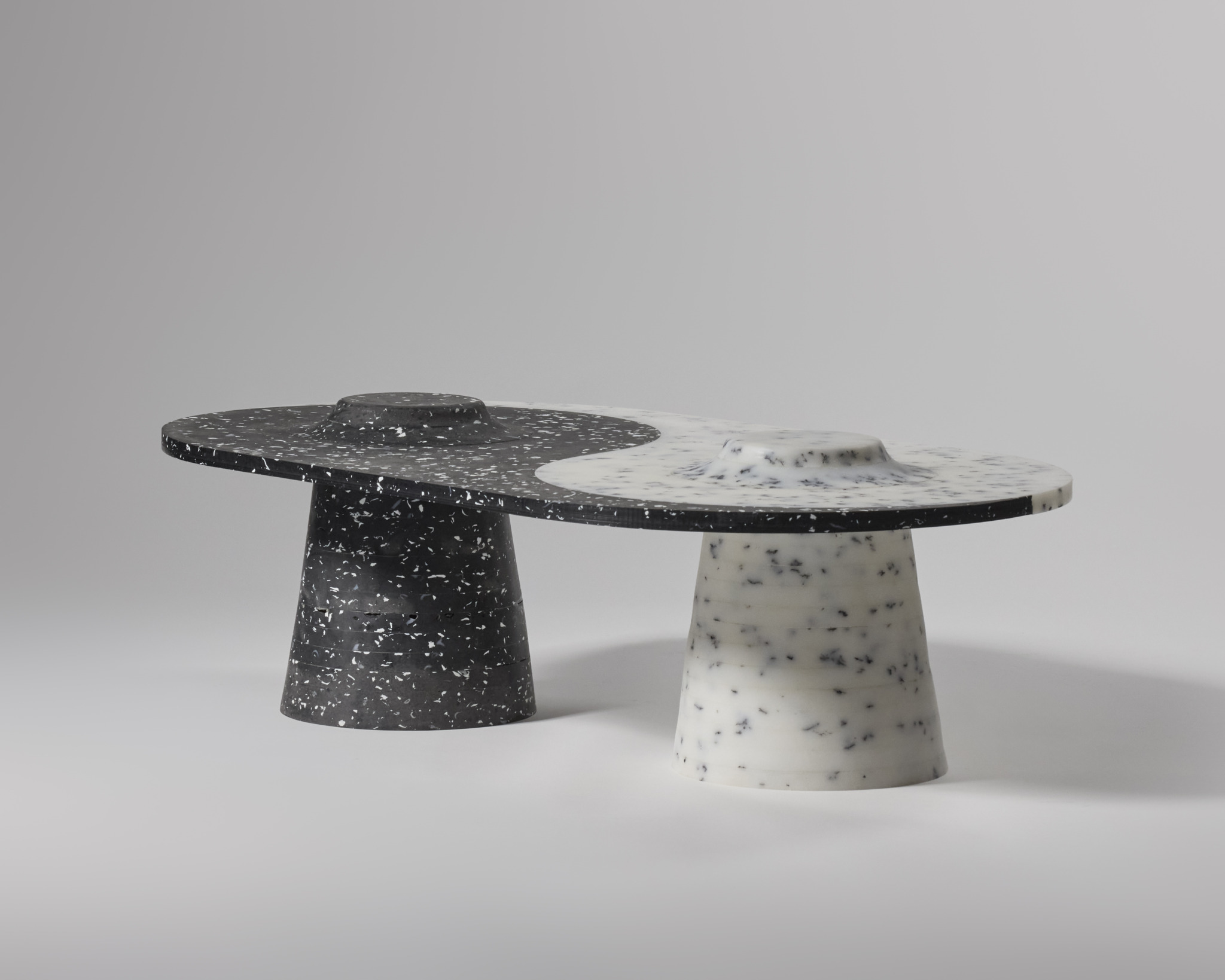
Delanie Shorten’s Nested Coffee Table: Shorten focused on modularity and adaptability. Her Nested Coffee Table explored how the inherent properties of HDPE could be used to create versatile and space-saving furniture. The design likely leveraged the material’s durability and ease of fabrication to create interlocking or stacking components, offering multiple configurations for different needs. Her project emphasized practical utility without compromising on sophisticated design.
-
Sofia Eddy’s Expandable Coffee Table Base: Eddy’s work delved into the structural capabilities of recycled HDPE. She experimented with kerf-cut HDPE, a technique that involves making a series of partial cuts to allow a rigid material to bend. After heat-forming, her expandable coffee table base retained enough flexibility to accommodate multiple tabletop sizes, showcasing a clever solution for adaptable furniture. This project highlighted the importance of understanding material mechanics and innovative fabrication techniques.
-
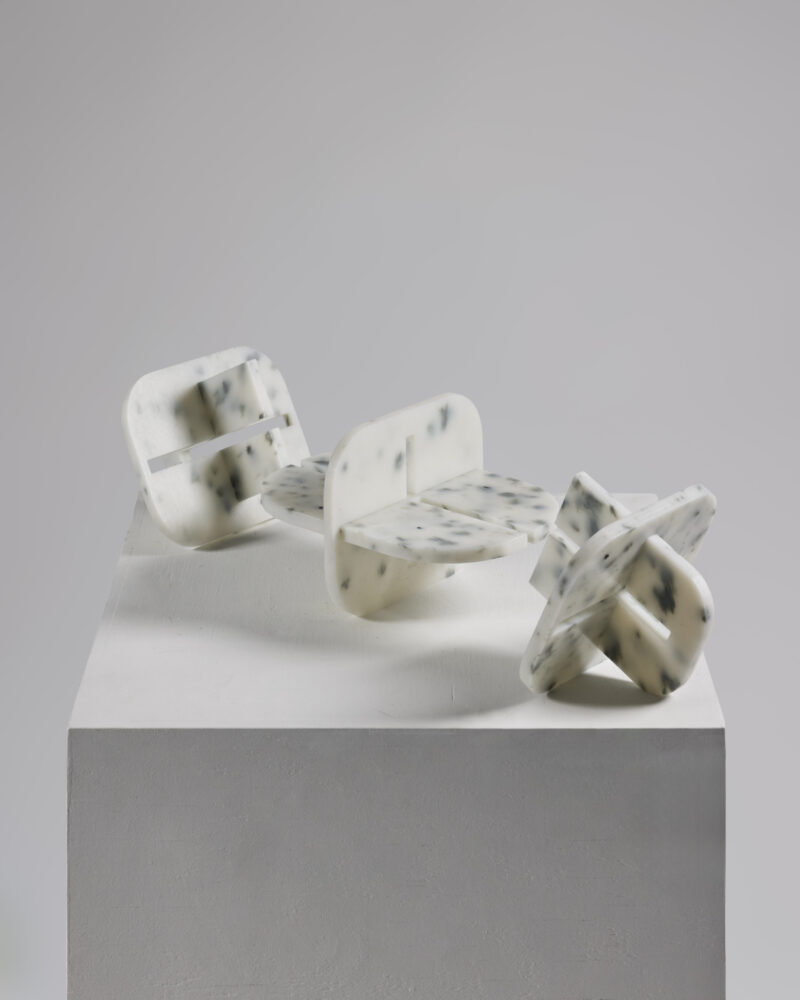
Ryan Sukhraj’s Cloud Puzzle: Sukhraj’s project, consisting of abstract, interlocking sculptural objects, explored the playful and artistic potential of the material. The speckled white and black pattern of the HDPE was prominently featured, transforming what might be considered industrial waste into a tactile and visually engaging piece. His methodology likely involved precise CNC cutting and careful assembly, demonstrating the material’s capacity for intricate forms and functional aesthetics.
-
Ashgen Boyer’s Contribution: While specific details of Boyer’s project were not individually highlighted in the original brief, her involvement as part of this cohesive cohort suggests a contribution that resonated with the collective theme of material exploration and sustainable design. Her work, like that of her peers, undoubtedly contributed to the overall strength and diversity of the exhibition.
Professor Cross emphasized the freedom given to the students: "The students didn’t have to worry about their pieces fitting our collection. The material was the common denominator, but the students’ unique methodologies were the variables.” This pedagogical approach fostered both individual creativity and a collective sense of purpose, resulting in a remarkably cohesive yet diverse exhibition.
Pedagogical Philosophy: Learning by Doing and Material Empathy
For Professor Cross, these moments of unexpected discovery throughout the semester reinforced a fundamental lesson in design: meaningful innovation often begins by understanding a material rather than imposing preconceived ideas upon it. This philosophy, central to LTU’s Product Design program, encourages students to engage deeply with the physical properties, limitations, and potential of their chosen materials. It’s a hands-on, iterative process of experimentation, prototyping, and refinement, where failures are seen as learning opportunities and unexpected outcomes lead to new insights. This approach cultivates a sense of "material empathy," where designers develop an intuitive understanding of how materials behave and how they can be manipulated to achieve desired functional and aesthetic outcomes.
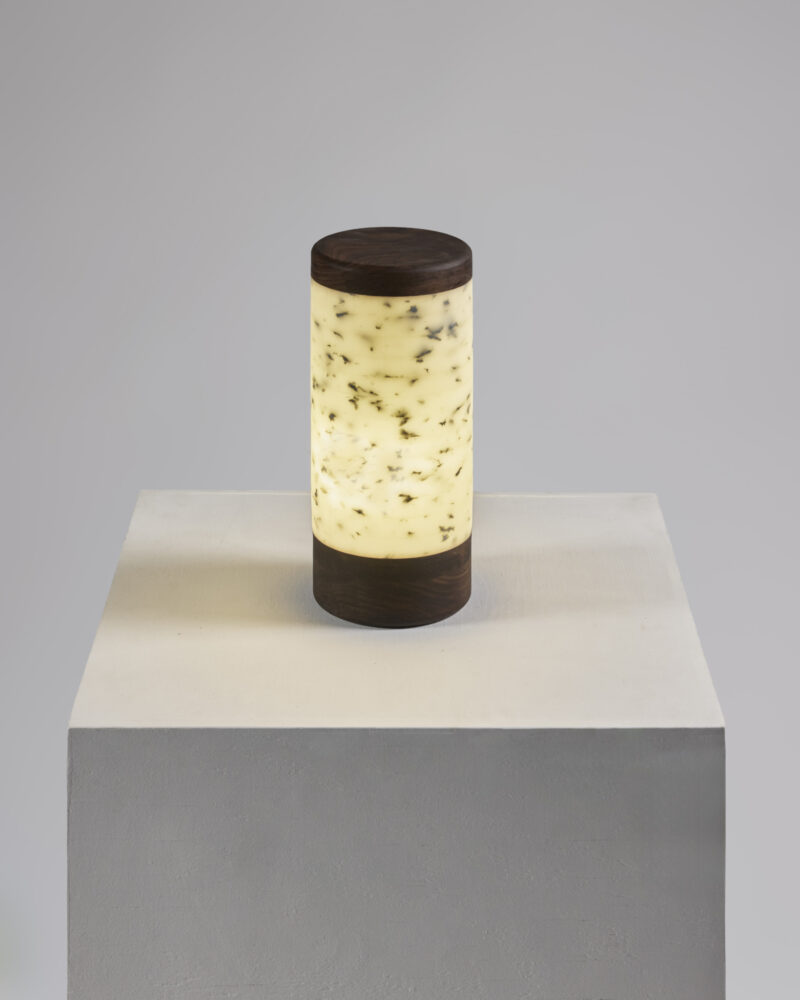
"The real exercise was proving that recycled materials can achieve a high level of luxury and craft," Cross explained. "Ultimately, the goal was to design pieces so aesthetically compelling and structurally thoughtful that they stand on their own merits first, with their sustainable origin story as a beautiful secondary discovery.” This statement encapsulates the core objective: to transcend the common perception of recycled materials as inferior or purely utilitarian. By demonstrating that post-consumer waste can be transformed into objects of beauty, durability, and high design, the LTU students challenged the industry to reconsider its material palette and embrace circularity as a pathway to innovation and luxury.
Validation and Vision: The Award’s Broader Significance
Receiving the Best of Schools award at ICFF validated not only the students’ exceptional work but also LTU’s broader emphasis on industry partnerships and hands-on, project-based learning. It signals that the university is at the forefront of preparing the next generation of designers to address complex global challenges, particularly those related to environmental sustainability. For the university administration, the award serves as a powerful endorsement of their curriculum and strategic investments in cutting-edge design education. It enhances LTU’s reputation as a leader in product design, attracting prospective students who are passionate about making a tangible impact through their creative work.
The success of this project also highlights a growing trend in design education: the move towards interdisciplinary collaboration and real-world engagement. By partnering with manufacturers like Design Declassified and accelerators like Centrepolis, LTU provides its students with unparalleled opportunities to experience the full design-to-production cycle, learn from industry experts, and understand the commercial viability of sustainable design solutions. This model ensures that graduates are not only skilled designers but also informed, responsible, and market-ready professionals.
Future Trajectories: Shaping Sustainable Design and Education
Professor Cross expressed her hope that projects like this will continue to shape the future of design education, giving students opportunities to engage directly with emerging materials, innovative manufacturing processes, and real-world collaborators while developing thoughtful solutions to increasingly complex challenges. The implications extend beyond the classroom:
- For Design Education: This project sets a precedent for how design programs can integrate sustainability not just as a theoretical concept, but as a practical, hands-on challenge that drives innovation and fosters creativity. It encourages other institutions to adopt similar models of experiential learning and industry collaboration.
- For Sustainable Manufacturing: The project demonstrates the economic and aesthetic viability of using recycled content in high-value products, potentially inspiring more manufacturers to invest in recycling infrastructure and embrace circular supply chains.
- For Consumer Perception: By showcasing designs that are both beautiful and environmentally responsible, the exhibition helps to shift consumer perceptions of recycled products, encouraging greater demand for sustainable alternatives.
- For the Circular Economy: The success story contributes to the broader narrative of the circular economy, illustrating how waste can be transformed into valuable resources, thereby reducing resource depletion and landfill burden.
Lawrence Technological University’s Product Design program continues to be a beacon for innovative, responsible design. Through initiatives like the Sustainable Systems course and its successful exhibition at ICFF, LTU is not just educating designers; it is cultivating pioneers who are equipped to lead the charge towards a more sustainable and creatively vibrant future.
To learn more about Lawrence Technological University’s Product Design program, interested parties can visit ltu.edu and follow the College of Architecture and Design on Instagram at @ltu_coad for updates on their groundbreaking work.







