Ali Ikhwan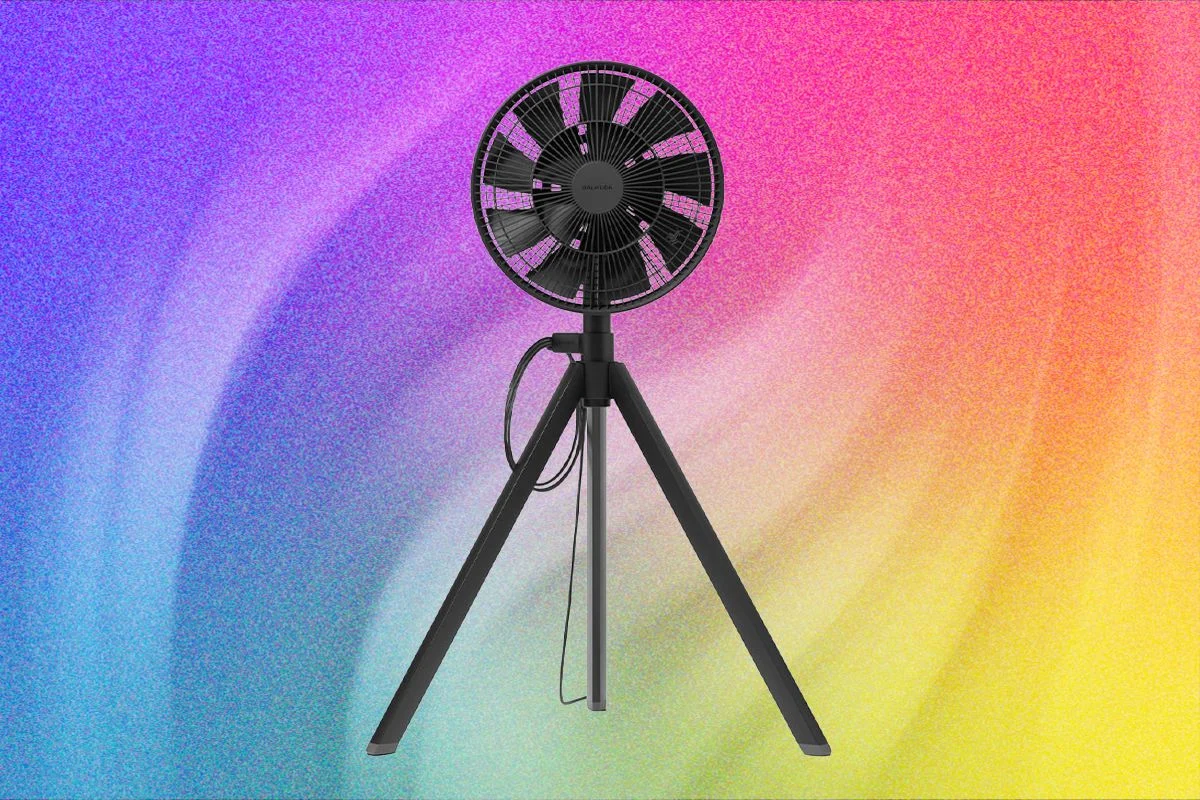
Balmuda, the Tokyo-based premium appliance manufacturer, has officially expanded its footprint in the North American market with the release of the NatureWind Studio, a high-end pedestal fan priced at $429. This launch marks a significant step for the company, which has built a reputation in Asia and among design enthusiasts for its "quiet luxury" aesthetic and specialized engineering. Positioned as a direct competitor to high-status brands like Dyson, the NatureWind Studio enters a market where household appliances are increasingly viewed as interior design statements rather than mere utility items. While the $429 price point exceeds that of many entry-level air purification and cooling units from established brands, Balmuda justifies the cost through patented airflow technology and a design philosophy that prioritizes sensory experience over digital connectivity.
The NatureWind Studio, available in monochromatic black or white finishes, departs from the trend of "smart" home integration. Unlike many modern competitors in the $400-plus bracket, the device lacks a remote control, Wi-Fi connectivity, or a dedicated smartphone application. Instead, the fan focuses on a singular mechanical objective: the replication of natural wind patterns. This is achieved through a proprietary dual-blade system that aims to eliminate the "choppy" air sensation common in traditional oscillating fans. As the premium appliance sector continues to grow, the NatureWind Studio serves as a case study in minimalist luxury, testing whether American consumers will pay a premium for mechanical precision in the absence of digital features.
Technical Engineering: The Science of the Dual-Blade System
At the core of the NatureWind Studio’s value proposition is its patented dual-blade technology, a feature that has been the cornerstone of Balmuda’s cooling line since its inception in Japan. Traditional fans typically utilize a single set of blades that move air in a concentrated, vortex-like spiral. While effective at moving volume, this concentrated air can feel aggressive or fatiguing over long periods of exposure. Balmuda’s engineers sought to solve this by introducing two sets of blades—inner and outer—operating on a single axis.
The inner blades are designed to move a smaller volume of air at a slower velocity, while the larger outer blades move air faster. When the two streams of air meet in front of the fan, they collide and break the concentrated vortex. This collision results in a diffused, planar airflow that spreads across a wider area. According to technical documentation provided by Balmuda, this process mimics the sensation of an outdoor breeze coming through an open window. By disrupting the mechanical "buffeting" effect, the fan aims to provide cooling that does not cause the physical discomfort or dryness often associated with high-velocity mechanical fans.
This engineering choice is supported by the unit’s physical construction. While many pedestal fans rely heavily on plastic components to reduce weight and shipping costs, the NatureWind Studio utilizes metal for the blade and motor housing. The result is a more stable platform that minimizes vibrations, which are a primary source of mechanical noise and wear over time. The fan stands on a sturdy tripod base, and while the height is fixed, the build quality suggests a lifespan intended to exceed the standard three-to-five-year cycle of mass-market appliances.
Acoustic Performance and the 9-Decibel Benchmark
One of the most striking claims made by Balmuda regarding the NatureWind Studio is its noise profile. The company rates the fan at 9 decibels (dB) on its lowest operating setting. To put this figure in context, a human whisper is typically measured at 30 dB, while the sound of rustling leaves is approximately 20 dB. A measurement of 9 dB is technically below the ambient noise floor of most urban and suburban residential environments, rendering the device effectively inaudible to the human ear in standard conditions.
Achieving this level of silence requires extreme precision in the motor’s brushless DC (BLDC) design. Traditional AC motors found in budget fans are prone to electromagnetic humming and friction noise. By utilizing a high-efficiency BLDC motor, Balmuda reduces friction and allows for finer control over the rotation speed. During independent testing in residential settings, observers have noted that the fan remains silent enough that users may inadvertently leave it running when exiting a room, as there is no auditory cue of its operation.
The silence of the NatureWind Studio is positioned as a health and wellness feature. Research into environmental stressors suggests that constant low-frequency noise from household appliances can contribute to cognitive fatigue and sleep disruption. By prioritizing a sub-10 dB operating volume, Balmuda targets a demographic of "sensitive sleepers" and professionals working in quiet home-office environments where traditional fan noise would be a distraction.
Historical Context: From Tokyo to the Global Market
Balmuda was founded in Tokyo in 2003 by Gen Terao, a high school dropout and former musician who transitioned into industrial design. The company’s trajectory has been defined by a focus on "experience-based" appliances. Its first major international success was "The Toaster," which used steam technology to revolutionize the way bread is reheated. This product established the Balmuda blueprint: take a common household item, identify a fundamental sensory flaw, and use high-end engineering to solve it, regardless of the final retail price.
The NatureWind Studio is not a new invention, but rather a refined version of a product that has existed in the Japanese market for over a decade. Originally launched in Japan in 2010 as the "GreenFan," the device was a response to the energy crisis following the Great East Japan Earthquake. With electricity in short supply, Japanese consumers needed a cooling solution that was far more efficient than air conditioning but more sophisticated than the loud, cheap fans of the era. The GreenFan became a cultural phenomenon in Japan, credited with creating the "premium fan" market segment.
The 2024 launch of the NatureWind Studio in the United States represents the final stage of Balmuda’s long-term strategy to become a global lifestyle brand. The company began its US expansion with The Toaster and The Kettle, followed by The Brew (a high-end coffee maker). By introducing the NatureWind Studio, Balmuda is attempting to capture the summer seasonal market, competing with Dyson’s Air Multiplier technology and the growing number of high-end air circulators from brands like Vornado and Meaco.
Design and Aesthetics: The Philosophy of Gen Terao
The aesthetic of the NatureWind Studio reflects the broader Japanese design movement of "Kanso" (simplicity). The fan avoids the futuristic, bladeless look of Dyson or the industrial aesthetic of Western brands. Instead, it resembles a classic piece of studio equipment, hence the "Studio" moniker. Its tripod legs and caged windmill head are designed to blend into a variety of interior styles, from mid-century modern to industrial loft.
A notable design detail is the inclusion of a 10-foot fabric-wrapped power cord. In the luxury market, the quality of the power cable is often used as a signifier of overall build quality. The fabric wrapping prevents tangling and is more durable than standard PVC cabling. Additionally, Balmuda includes a small hook on the back of the fan’s stalk for cable management, allowing users to loop excess cord length neatly.
The lack of a remote control is perhaps the most controversial aspect of the NatureWind Studio’s design. In an era where even budget fans come with infrared remotes or Bluetooth connectivity, Balmuda’s decision to omit these features is a deliberate choice. The company argues that physical interaction with the device encourages a more mindful relationship with the home environment. However, market analysts suggest this may be a hurdle for US consumers who have become accustomed to the convenience of "smart" homes. The controls are located on the motor housing, requiring the user to physically walk to the fan to adjust settings or toggle the oscillation.
The Premium Appliance Landscape: Comparative Analysis
The entry of a $429 fan into the US market occurs at a time when consumer spending on home goods is undergoing a shift toward quality over quantity. The "Dyson Effect" has already conditioned consumers to accept that a vacuum cleaner or a fan can cost several hundred dollars if it offers superior technology or status.
When compared to the Dyson Purifier Cool ($499 – $649), the Balmuda NatureWind Studio offers a different value proposition. Dyson focuses on air filtration (HEPA filters) and "bladeless" safety, often including complex LCD screens that report air quality in real-time. Balmuda, conversely, focuses almost exclusively on the "feel" of the air and the silence of the motor. While Dyson fans are often criticized for having a "whiny" or high-pitched sound profile at high speeds, the Balmuda remains consistently low-frequency.
From an energy perspective, the NatureWind Studio is highly efficient. Operating at its lowest setting, the fan consumes as little as 1.5 watts of power. Even at its maximum setting, it remains significantly more energy-efficient than traditional AC-motor fans. This efficiency is a carryover from the product’s origins in energy-conscious Japan, and it aligns with the growing demand for "green" appliances in the United States.
Consumer Considerations and Market Reception
Early reactions from the US market indicate a split between design-conscious consumers and tech-oriented buyers. For those who value the "set it and forget it" nature of smart appliances, the lack of an app or remote is a significant drawback. Furthermore, the fan does not feature a height-adjustment mechanism, a standard feature on many pedestal fans costing a fraction of the price. Users must rely on the tilt of the head to direct airflow vertically.
However, the ease of maintenance is a frequently cited positive. Unlike many modern fans that are difficult to open for cleaning, the NatureWind Studio is designed for easy disassembly. The guard housing and blades can be removed quickly, allowing users to wipe down the metal components and ensure that the air being circulated remains dust-free. This "built to last" approach is a core part of the brand’s sustainability narrative.
The assembly process, while more involved than a standard fan, has been noted for its precision. Components click together with a level of tolerances rarely seen in consumer electronics. This tactile feedback is part of the "Balmuda experience," intended to reassure the buyer of the product’s engineering integrity from the moment it is unboxed.
Broader Impact and Implications
The success or failure of the NatureWind Studio in the US will likely influence how other international luxury brands approach the American market. If Balmuda can prove that there is a significant audience for high-end, "dumb" (non-smart) appliances, it could trigger a move away from the "Internet of Things" (IoT) fatigue that some consumers are beginning to experience.
The launch also highlights the increasing globalization of Japanese design. Once confined to specialized import shops, brands like Balmuda, Muji, and Snow Peak are finding mainstream success in the US by offering a counterpoint to the maximalist, feature-heavy products of Western corporations. The NatureWind Studio is more than just a cooling device; it is a test of whether the American consumer’s definition of "innovation" can include the perfection of a simple breeze.
As climate change continues to drive demand for residential cooling solutions, the market for high-efficiency, high-comfort fans is expected to expand. While air conditioning remains the primary cooling method in the US, the high energy costs and environmental impact of AC units are prompting more consumers to look for supplemental cooling. The Balmuda NatureWind Studio, with its focus on low energy consumption and naturalistic airflow, is well-positioned to capitalize on this trend, provided it can overcome the hurdle of its premium price tag in a competitive landscape.