Angie Faith
In 2026, a significant legislative trend is emerging at the state level, targeting books and libraries through a strategic, and some argue, manipulative, application of two core legal concepts: the Miller Test and the "government speech" doctrine. These legal frameworks, originally intended to define obscenity and delineate governmental expression, are increasingly being repurposed by lawmakers seeking to facilitate book bans in public schools and libraries across the nation. This shift represents a concerning evolution in the ongoing debate over intellectual freedom and the First Amendment rights of citizens.
The Evolving Landscape of Book Bans
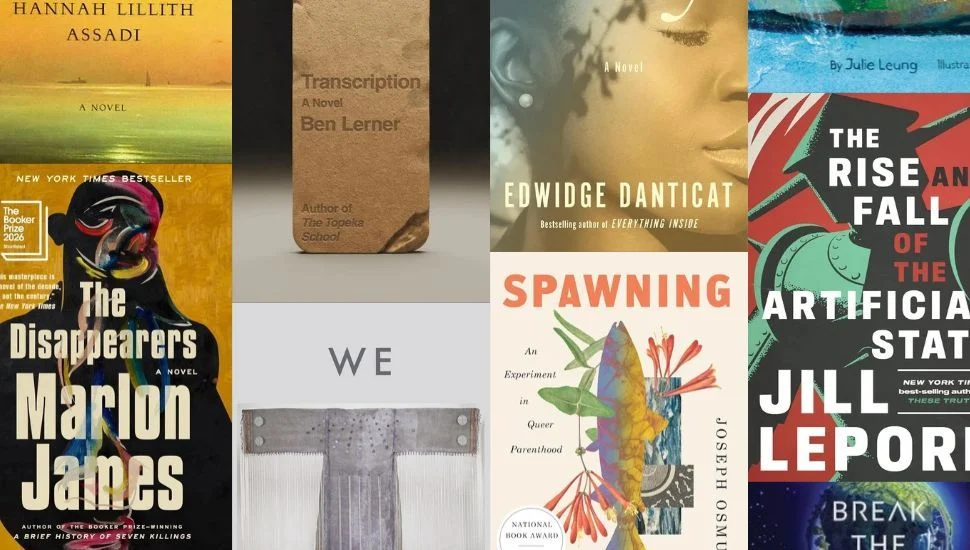
The current wave of book challenges and removals is not entirely unprecedented, but its scale and the legal strategies employed mark a distinct escalation. Data from organizations tracking these trends, such as PEN America, reveal a dramatic increase in challenged books since 2021. While specific numbers fluctuate, reports consistently indicate that hundreds, if not thousands, of unique titles have been targeted, disproportionately affecting books by and about marginalized communities, particularly LGBTQ+ individuals and people of color. This surge in activity has prompted concerns that partisan interests are exploiting legal ambiguities to advance censorship agendas.
Deconstructing the Miller Test: A Bulwark Against Obscenity Claims
At the heart of the legal debate surrounding obscenity is the Miller Test, established by the Supreme Court in Miller v. California in 1973. This landmark ruling sought to provide a clear, albeit complex, definition of obscenity, a category of speech that falls outside the protections of the First Amendment. The test comprises three distinct prongs, all of which must be met for material to be deemed legally obscene:
- Prurient Interest: Would the average person, applying contemporary adult community standards, find that the matter, taken as a whole, appeals to prurient interests (i.e., an erotic, lascivious, abnormal, unhealthy, degrading, shameful, or morbid interest in nudity, sex, or excretion)?
- Patently Offensive: Would the average person, applying contemporary adult community standards, find that the matter depicts or describes sexual conduct in a patently offensive way (i.e., ultimate sexual acts, normal or perverted, actual or simulated, masturbation, excretory functions, lewd exhibition of the genitals, or sado-masochistic sexual abuse)?
- Lack of Serious Value: Would a reasonable person find that the matter, taken as a whole, lacks serious literary, artistic, political, or scientific value?
Crucially, the Miller Test emphasizes that the material must be considered "as a whole" and that the assessment is made by an "average person" applying "community standards." The third prong, requiring a lack of serious value, acts as a significant safeguard, ensuring that works with demonstrable literary, artistic, political, or scientific merit are protected, even if they contain elements that might otherwise be considered objectionable by some.
A related, though distinct, legal concept is the Ginsberg Test, which applies a similar framework but is specifically tailored to determine obscenity concerning minors. However, this test is narrowly construed. The Supreme Court has clarified that the government cannot ban an entire category of speech (like nudity) when only a subset could plausibly be deemed obscene. Furthermore, for material to be considered "harmful to minors," the entire population of minors, including the oldest, would need to be harmed. Additionally, a crucial Supreme Court precedent established that school boards cannot remove books from libraries with the express intent of suppressing ideas.
Undermining Miller: The Rise of Vague Terminology and Legislative Attacks
A primary tactic observed in recent legislative efforts to facilitate book bans is the subversion of the Miller Test’s clear definitions. Instead of adhering to the established legal standard for obscenity, proponents of bans frequently employ vague and undefined terms such as "inappropriate," "pornographic," "sexually explicit," or "sensitive." These catch-all phrases lack the specificity required by the Miller Test and allow for subjective interpretations that can sweep broadly, encompassing a wide range of materials that do not meet the legal definition of obscenity. This approach circumvents the constitutional protections afforded by the First Amendment, effectively bypassing the rigorous scrutiny required for restricting protected speech.
Beyond the use of imprecise language, there is a concerted legislative push to dismantle key components of the Miller Test itself. This includes efforts to erode the "community standards" aspect by revoking local control, thereby allowing for broader, state-level prohibitions. More significantly, proponents are attempting to legalize censorship by arguing that books in public schools and libraries constitute "government speech," a legal doctrine that, if applied broadly, could grant the government greater latitude in controlling content.
Florida’s Legislative Front: A Blueprint for Book Bans
Florida has emerged as a focal point for these legislative maneuvers. In previous sessions, bills like House Bill 1539 attempted to create exceptions to the Miller Test, notably by seeking to remove the third prong, which considers literary, artistic, scientific, or political value. Lawmakers have erroneously claimed that the Ginsberg Test allows for book removal irrespective of these values, a misinterpretation of established legal precedent.
While such attempts have not always succeeded, the legislative session of 2026 saw the reintroduction of similar measures through Senate Bill 1692 and House Bill 1119. These bills aimed to disregard the literary, artistic, scientific, and political merit of materials, stripping away crucial elements of the Miller and Ginsberg Tests. Given Florida’s already prominent role in book bans, these legislative proposals were seen by critics as a significant expansion of censorship powers, potentially dictating what students across the state could access. Although these specific bills did not advance during the legislative session, their repeated introduction signals a persistent effort by those advocating for book bans to redefine First Amendment standards.
The challenges to the Miller Test are often rooted in specific incidents. For example, in 2021, a school board member in Flagler County, Florida, filed a complaint alleging that the book All Boys Aren’t Blue was a crime due to being "harmful to minors." The sheriff, in dismissing the claim, noted that while portions might offend some, the book’s award-winning status and widespread recognition indicated it possessed literary value, thus failing the third prong of the Miller Test. Similar claims in other states, such as Michigan, regarding books like The Kite Runner and The Bluest Eye, have also been dismissed by courts for similar reasons, affirming that materials with literary merit are protected.
Despite these legal setbacks, Florida’s legislative efforts have served as a template for other states. Legislation in Idaho and Iowa, for instance, has mirrored Florida’s attempts to undermine local control, rewrite the Miller Test, and restrict citizen access to information. These legislative blueprints, whether enacted into law or not, are viewed as indicators of a broader national strategy to facilitate censorship. The political climate, with certain issues being framed as "state rights issues," has been interpreted by some lawmakers as implicit permission to enact state-specific laws that may diverge from federal protections.
Idaho’s Radical Approach: Obliterating Miller and Creating Dual Standards
Idaho’s House Bill 819 represents a more radical departure, aiming to completely supersede the Miller Test as the standard for obscenity. This bill proposes to criminalize the possession of "sexually explicit content" in public schools and libraries, replacing the nuanced Miller Test with a vague list of descriptors for "quality of material." While offering exemptions for religious texts or "classical works of art," the bill leaves open the subjective determination of what constitutes art, raising concerns that it could be used to prohibit LGBTQ+ books, books on puberty, or any material deemed objectionable by partisan politicians.
Furthermore, HB 819 introduces a stark dichotomy in access. While private schools and libraries would still be subject to the Miller Test’s third prong (consideration of material "as a whole"), public institutions would not. The justification for this distinction is the assertion that public schools and libraries are government entities and, therefore, their contents are "government speech." This is a significant departure from existing legal interpretations and raises serious questions about equal access to information. Idaho has already enacted HB 710, which mandates book banning in both private and public institutions, leading to multiple lawsuits. The creation of HB 819 can be seen as an attempt to further entrench censorship in public institutions while ostensibly protecting private ones, potentially at the expense of public education funding and in alignment with broader efforts to promote "educational choice" which critics argue actively harms public education.
The "Government Speech" Doctrine: A Contested Legal Frontier
The "government speech" doctrine, a relatively recent legal construct, is being aggressively leveraged by proponents of book bans. This doctrine, which emerged from Supreme Court jurisprudence in the late 20th century, posits that the government, when speaking on its own behalf, is not bound by the First Amendment’s requirement of viewpoint neutrality. Examples include a government’s ability to display a Ten Commandments statue or to refuse to issue personalized license plates with certain messages.
However, the application of this doctrine to libraries is highly contested. Critics argue that it is being misconstrued and expanded beyond its intended scope. They contend that libraries, by their very nature, are designed to provide access to a wide array of viewpoints, not to disseminate a singular government message. The Supreme Court has historically protected even unpopular or disfavored speech, and jurists have expressed concerns that the government speech doctrine could be exploited to silence dissenting voices. Justice Samuel Alito, for instance, warned that allowing private speech to be masked as government speech could lead to the silencing of disfavored viewpoints. Justice John Paul Stevens also expressed skepticism about the doctrine’s early applications.
Evaluating "Government Speech": Key Judicial Factors
Courts typically apply three factors to determine whether speech is considered "government speech":
- Public Perception: Would a reasonable observer perceive the speech as originating from the government or a private entity?
- Historical Context: Has the government traditionally used this form of expression?
- Government Control: Does the government exercise final approval authority and effective control over the message?
Based on these factors, the argument that library materials constitute government speech faces significant challenges. Reasonable observers generally do not perceive the vast array of books in a public library as direct government pronouncements. Libraries are understood as centers for knowledge acquisition and diverse perspectives, not as platforms for disseminating government-approved messages. Federal courts in Arkansas, Florida, and Iowa, among others, have consistently ruled that public school libraries do not constitute government speech. In one notable Eighth Circuit opinion, the court pointed to the eclectic nature of library collections, including works by Plato, Machiavelli, Marx, Hitler, and de Tocqueville, to illustrate the absurdity of classifying such a diverse collection as a single, coherent government message. Even the Fifth Circuit, known for its conservative leanings, declined to classify a public library as government speech in a Texas case.
Citizen Empowerment and the Defense of Intellectual Freedom
In light of these evolving legal strategies, advocates emphasize the importance of citizen engagement and vigilance. Understanding the nuances of the Miller Test and the government speech doctrine is crucial for citizens to critically assess legislative proposals and to hold elected officials accountable. The current surge in censorship efforts is seen by many as an attempt to sow confusion and disempower the public.
Leila Green Little, a lead plaintiff in the Little v. Llano County case, underscores the power of civic participation. She advocates for making intellectual freedom and the rejection of censorship "kitchen table issues" that influence voting decisions. Recent electoral victories where voters have rejected candidates who campaigned on book bans suggest that public awareness is growing.
The fight against censorship is intrinsically linked to the preservation of democratic principles. By understanding and actively defending the rights guaranteed by the First Amendment, citizens can push back against what is perceived as legislative manipulation and ensure that public institutions like libraries remain vibrant centers of learning and diverse expression. The power to shape the future of these institutions, advocates argue, ultimately resides with the public, and wielding that power requires informed action and unwavering commitment to intellectual freedom.