
 Ali Ikhwan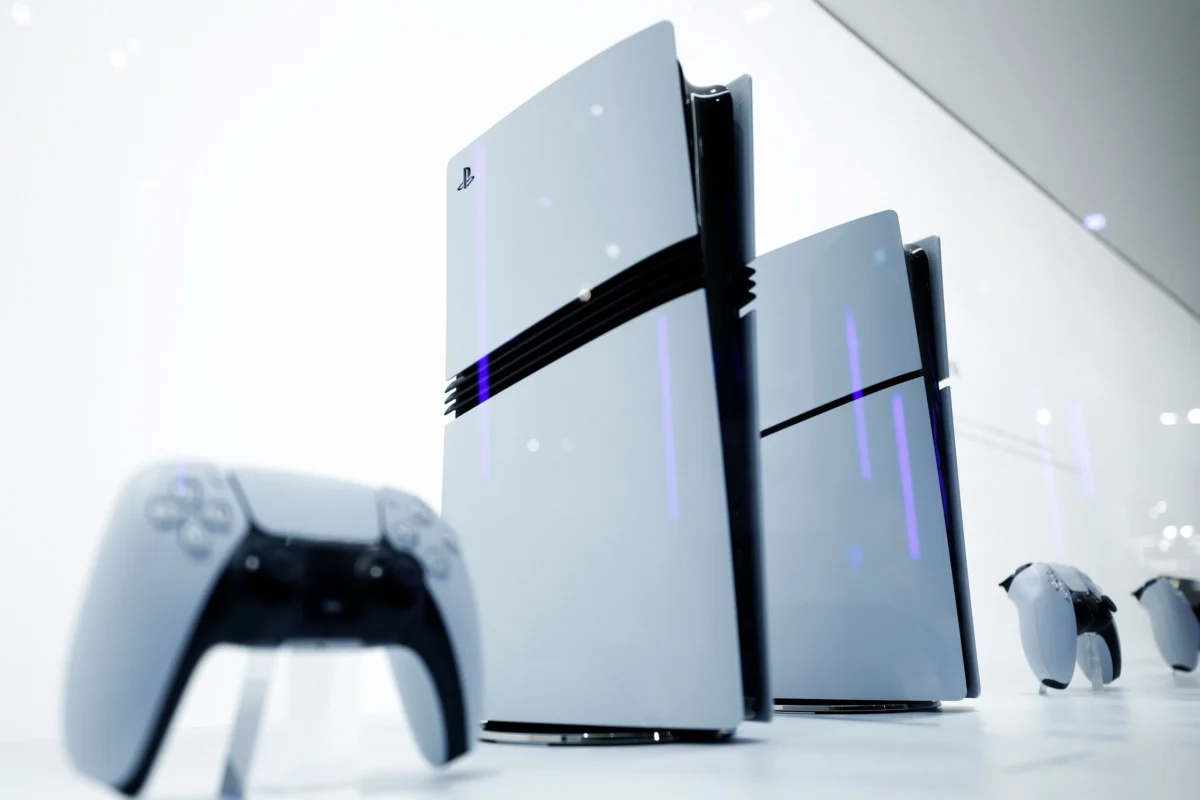
The global gaming industry is currently navigating an unprecedented shift in hardware economics as Sony Interactive Entertainment has officially implemented significant price increases across its entire PlayStation 5 lineup. This move, effective as of April 2, 2026, marks a stark departure from the traditional "price-drop" trajectory that has defined the console market for over four decades. Historically, gaming consoles have followed a predictable lifecycle where manufacturing efficiencies and component maturation allow for retail price reductions roughly five years into a generation. However, the current landscape—strained by an aggressive artificial intelligence (AI) investment bubble, global trade tariffs, and critical component shortages—has forced manufacturers to prioritize profit margins over consumer accessibility.
The most substantial impact is felt at the entry level of the ecosystem. The PlayStation 5 Digital Edition, which launched in 2020 at a retail price of $400, has seen its MSRP climb to $600. This represents a 50 percent increase over its original launch price and follows an earlier adjustment in August 2025. The standard PlayStation 5 equipped with a physical disc drive now sits at $650, while the high-end PlayStation 5 Pro has reached a premium price point of $900. Notably, the Pro model does not include a disc drive, requiring consumers to spend an additional $80 for physical media compatibility. Even peripheral hardware has been affected, with the PlayStation Portal remote player increasing from $200 to $250.
A Chronology of the Ninth Console Generation
To understand the severity of these price hikes, it is necessary to examine the unique challenges that have plagued the ninth generation of consoles since its inception.
In November 2020, both the PlayStation 5 and the Xbox Series X|S launched during the height of the COVID-19 pandemic. This timing resulted in a perfect storm of supply chain disruptions, logistics bottlenecks, and a massive surge in consumer demand as global populations sought home entertainment during lockdowns. By 2021 and 2022, "scalping" became a dominant market force, with secondary market prices often doubling the MSRP due to scarcity.
As supply levels finally stabilized in late 2023 and 2024, the industry was met with a new set of economic hurdles. In August 2025, trade tariffs significantly impacted the cost of importing electronics into the United States, leading to the first wave of price adjustments. By early 2026, the meteoric rise of generative AI began to cannibalize the supply of essential components, specifically DRAM (Dynamic Random Access Memory) and NAND flash storage. This culminated in Sony’s April 2026 announcement, which solidified the reality that the "mid-gen refresh" would be more expensive than the initial launch hardware.
The AI Bubble and the Semiconductor Crisis
The primary driver behind the current pricing volatility is the global demand for AI-capable hardware. Data center operators and AI developers are currently engaged in a high-stakes "arms race" to acquire high-bandwidth memory and high-capacity SSDs. Because gaming consoles rely on the same underlying memory technologies as AI servers, the cost of these components has skyrocketed.
Industry data suggests that RAM and SSD storage prices have experienced triple-digit percentage increases in the wholesale market over the last 18 months. This has had a direct impact on Sony’s broader business operations, leading to the recent suspension of its dedicated memory card division. When manufacturers are faced with choosing between producing low-margin consumer electronics or high-margin AI components, the supply for the former inevitably suffers.
Valve Corporation has echoed these concerns regarding its own hardware. The company recently announced that the 256 GB LCD model of the Steam Deck has been discontinued due to production costs, while the newer OLED models face intermittent stock shortages. Furthermore, Valve’s highly anticipated "Steam Machine" console, originally slated for a late 2025 reveal, has had its release date and pricing moved to an "indefinite" status as the company re-evaluates the cost of memory and storage.
Comparative Market Analysis: Xbox and Nintendo
Sony is not an outlier in this trend; its primary competitors are facing similar pressures. Microsoft’s Xbox division has already implemented multiple price hikes for its hardware and Game Pass subscription services throughout 2025. The flagship 2-TB Xbox Series X currently retails for $800, and analysts suggest another increase could be imminent.
Nintendo, which has traditionally been more insulated from high-end component wars due to its use of older, more affordable technology, is also feeling the strain. Reports indicate that the successor to the Nintendo Switch, colloquially known as the Switch 2, is under intense pricing scrutiny. While Nintendo managed to avoid tariff-induced hikes at the start of 2026, internal memos reportedly suggest a price increase is being contemplated for later this year to offset the rising cost of flash memory.
These collective increases have led to a re-evaluation of the PlayStation 6 and the next-generation Xbox (code-named Project Helix). Initial projections for a 2027 launch have been pushed back, with Bloomberg reporting that Sony may delay the PlayStation 6 until 2029. This delay is intended to wait out the AI-induced parts crisis in hopes that component costs will normalize before the next hardware leap.
Diminishing Returns and the 8K Market Failure
One of the most significant arguments for extending the current console generation is the concept of diminishing returns in visual fidelity. The transition from the standard definition of the PlayStation 2 to the high definition of the PlayStation 3 was a transformative leap for consumers. However, the move from 4K (PS4 Pro/PS5) to 8K is proving to be far less impactful.
While the PS5 Pro is technically capable of 8K output through upscaling technologies like PlayStation Spectral Super Resolution (PSSR), the consumer market has largely rejected 8K displays. High costs, a lack of native 8K content, and the physical limitations of human eyesight mean that 8K only offers a noticeable improvement on screens larger than 75 inches. Consequently, 8K TV sales have been so dismal that Sony itself has exited the 8K television market to focus on the growing 4K OLED and Mini-LED segments.
Current industry sentiment suggests that the 55-to-65-inch 4K TV remains the "sweet spot" for the average consumer. Without a massive shift in display technology adoption, there is little incentive for manufacturers to rush a $1,000+ console to market that offers performance gains most users cannot see.
Potential Silver Linings for the Gaming Industry
Despite the "sticker shock" associated with current hardware, some analysts argue that a longer console generation could provide much-needed stability for the software development side of the industry. Modern AAA game development cycles now frequently exceed five or six years, meaning many studios only release one or two major titles per console generation.
By extending the lifespan of the PS5 and Xbox Series X|S into 2028 or 2029, developers have more time to optimize their engines and maximize the potential of the existing hardware. This "breathing room" also allows the install base to grow. Currently, the PlayStation 5 has sold approximately 91 million units, while the Xbox Series X|S sits at 34.5 million. A longer cycle allows these numbers to climb, creating a more profitable environment for game publishers who are currently struggling with ballooning development costs.
Furthermore, there are early indicators that the AI component bubble may be beginning to stabilize. In late March 2026, DRAM prices showed their first slight decrease in months. This coincided with reports that major AI players, including OpenAI, have scaled back some of their immediate hardware procurement plans following the cancellation of high-resource projects like the Sora video generator. If this trend continues, the projected $1,200 price tag for the next Xbox or the $1,000 target for the PlayStation 6 may be avoided.
Broader Implications and Consumer Outlook
For the average consumer, the message is clear: the era of "cheap" gaming hardware has ended. The convergence of global inflation, geopolitical trade tensions, and the tech sector’s obsession with AI has transformed the console from a mass-market toy into a premium electronic luxury.
PC gamers are facing similar, if not more severe, pressures. The cost of high-end GPUs continues to dwarf console prices, with top-tier cards like the Nvidia RTX 5090 retailing for nearly $4,000. Additionally, the impending end of support for Windows 10 in late 2026 will force millions of users to upgrade their systems, further straining the supply of consumer-grade components.
In this environment, patience appears to be the most viable strategy for players. While the current price hikes are a significant burden for those looking to enter the ecosystem, the existing library of games for the PS5 and Xbox Series X|S is more robust than ever. With the next generation likely years away, the current hardware will remain relevant far longer than its predecessors. As the industry waits for the AI bubble to settle and for manufacturing processes like the 2-nanometer and 3-nanometer chipsets to become more cost-effective, the most prudent move for gamers may be to invest in the software experiences already available rather than chasing the next elusive hardware milestone.







