Sprout Social has long established itself as a premier social media management platform, catering extensively to enterprise-level marketing organizations and large teams requiring robust analytics, comprehensive social listening, and complex multi-user approval workflows. However, its pricing structure—beginning at $99 per month for solo operators and scaling to $249 per user monthly for team tiers—places the software on the higher end of the market. This financial barrier forces smaller marketing departments, independent creators, and growing agencies to reevaluate their software investments and seek out more cost-effective alternatives.

The demand for scalable, budget-conscious software solutions has catalyzed a competitive shift within the digital marketing industry. As businesses face tightening operational budgets and a heightened focus on return on investment (ROI), software buyers are increasingly prioritizing tools that offer comparable publishing, scheduling, and analytics capabilities without prohibitive enterprise pricing. This market evolution has brought numerous platforms to the forefront, ranging from completely free options to sophisticated, feature-rich systems designed for specialized workflows such as video production, advertising management, and multi-brand agency operations.
Market Landscape and Industry Context

The social media management software industry has undergone substantial transformation over the past decade. Initially dominated by basic scheduling tools, the sector now encompasses end-to-end marketing ecosystems capable of handling customer support integration, sentiment analysis, multi-channel advertising, and advanced performance attribution. Enterprise solutions like Sprout Social excel in complex environments where cross-departmental collaboration between marketing, sales, and customer service is essential.
Yet, industry analysts note that the proliferation of niche platforms has democratized advanced social media management. Small-to-medium-sized businesses (SMBs) and freelance creators no longer need to compromise on functionality due to budgetary constraints. Instead, they can select specialized platforms tailored to their exact operational models—whether that involves heavy visual planning for Instagram, comprehensive content marketing calendars spanning blogs and newsletters, or advanced video management for platforms like TikTok and YouTube.
Comparative Overview of Leading Alternatives
To assist organizations in navigating the crowded software market, industry evaluations highlight eight primary platforms capable of replacing or improving upon Sprout Social’s core offerings depending on specific organizational requirements.

| Tool | Best For | Starting Price |
|---|---|---|
| Buffer | Creators, small to mid-sized businesses, and growing agencies wanting a flexible, affordable tool. | Free (paid plans from $6/channel/month) |
| Hootsuite | Large teams handling heavy message volumes, comments, and customer support requests. | 14-day free trial, then $149/user/month |
| Agorapulse | Marketing teams required to prove social media ROI to corporate leadership. | 30-day free trial, then $99/user/month |
| Sendible | Growing agencies managing multiple clients and channels on a budget. | 14-day free trial, then $35/month |
| CoSchedule | Creators and teams managing an entire marketing strategy from a single dashboard. | Free (paid plans from $39/month) |
| Later | Brands combining an Instagram-heavy presence with structured influencer marketing campaigns. | Free (paid plans from $25/month) |
| Metricool | Marketing teams looking to manage paid ad campaigns alongside organic content. | Free (paid plans from $25/month) |
| RecurPost | Creators and teams maintaining a video-heavy social media content strategy. | 14-day free trial, then $9/month |
Detailed Breakdown of Top Alternatives
-
Buffer
Buffer remains a staple for individual creators and small teams seeking a streamlined, intuitive interface. Unlike Sprout Social, which features a steeper learning curve and higher entry costs, Buffer offers a robust free tier permitting up to three social channels and 30 scheduled posts. For users requiring expanded access, Essentials and Team plans begin at highly competitive rates starting around $6 to $12 per channel per month, featuring advanced collaboration spaces, AI-driven idea generation, and detailed multi-format analytics exports.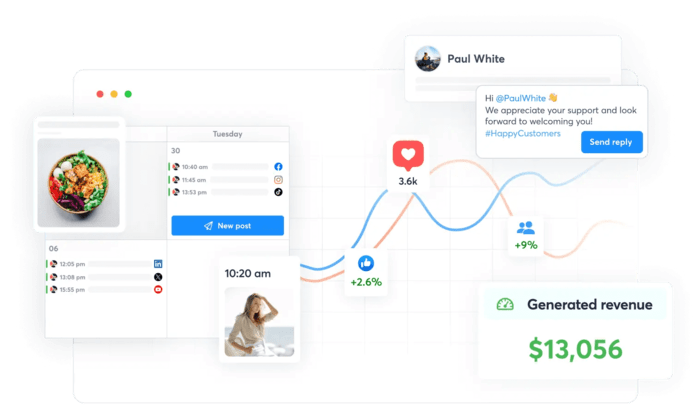
-
Hootsuite
For large-scale operations requiring extensive community management, Hootsuite serves as a direct peer to Sprout Social. Priced at $149 per user monthly, Hootsuite integrates with over 100 third-party applications—including enterprise CRM platforms like HubSpot and customer service software like Zendesk. Its unified inbox, advanced social listening capabilities, and complex approval workflows make it ideal for organizations where social media channels double as primary customer support touchpoints. -
Agorapulse
Agorapulse targets marketing teams whose primary objective is attributing revenue and demonstrating concrete ROI to executive leadership. Operating at $99 per user per month, the platform combines standard publishing and social listening tools with deep analytics engines capable of tracking how specific social campaigns drive leads and sales. Its 30-day free trial provides organizations ample time to audit performance metrics prior to financial commitment.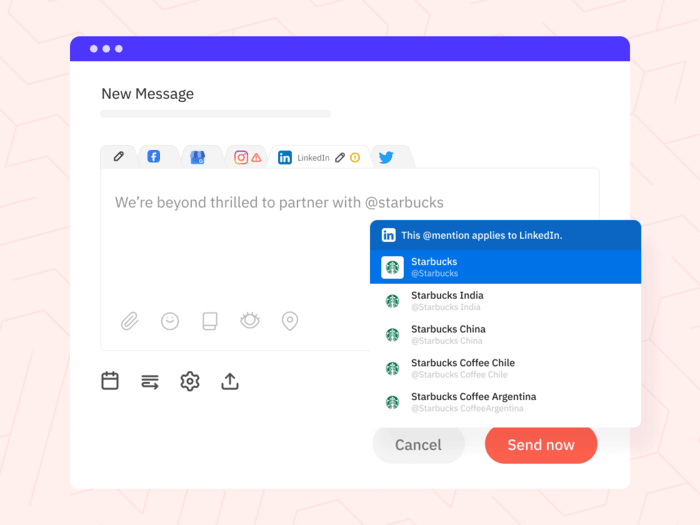
-
Sendible
Designed specifically for agencies managing multiple client workspaces, Sendible provides white-label reporting, automated client updates, and a dedicated Client Connect portal. Priced at $35 per month for a foundational workspace supporting six social channels, Sendible includes unlimited users across all plans, removing the financial penalties associated with growing agency headcounts. -
CoSchedule
CoSchedule bridges the gap between social media scheduling and broader content marketing project management. Accommodating blogs, newsletters, and promotional events alongside social channels, CoSchedule functions as a centralized calendar for content teams. Paid plans begin at $39 per month, appealing heavily to publishers and multi-channel creators who require high-level visibility across diverse marketing initiatives.
-
Later
Originally built as an Instagram-centric visual scheduler, Later has expanded to support most major social networks while retaining its focus on aesthetic grid planning and visual content libraries. With plans starting at $25 per month, Later has increasingly integrated influencer marketing tools, enabling brands and creators to execute comprehensive partnership campaigns and commission-tracking frameworks from a single dashboard. -
Metricool
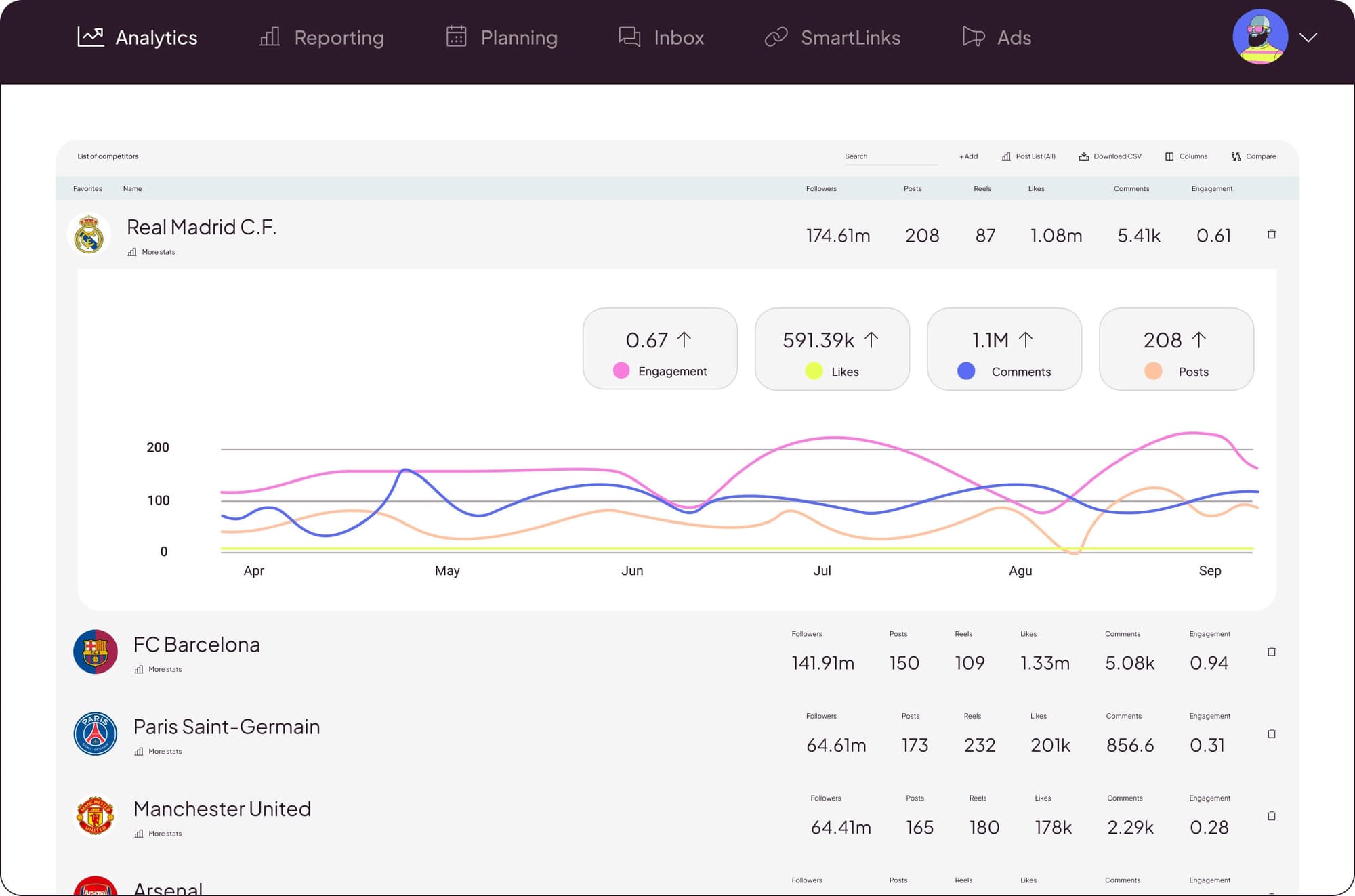
Metricool caters to data-driven marketing teams and managers overseeing both organic content and paid advertising campaigns. Starting at $25 per month, the platform supports multi-brand management and integrates organic metrics with advertising data from Meta, Google, and TikTok. Features such as heatmap-optimized posting schedules and automated competitor analysis provide actionable intelligence for campaign optimization.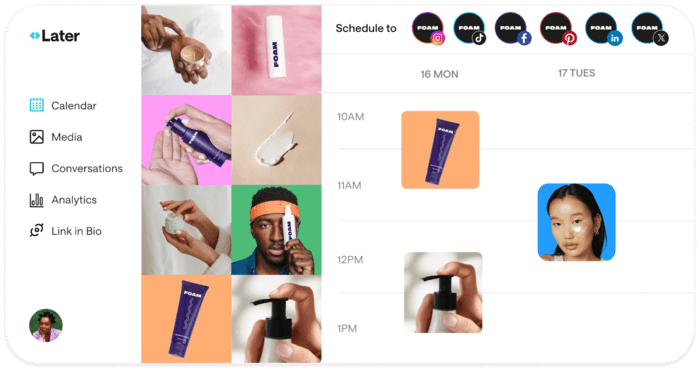
-
RecurPost
RecurPost differentiates itself through advanced video handling and evergreen content recycling. Priced at $9 per month, the platform offers deep integration with video-first networks, allowing users to configure specific settings for YouTube uploads, TikTok privacy controls, and Instagram Reels collaborations directly within the composer.
Strategic Considerations for Transitioning
Migrating from an enterprise platform like Sprout Social requires careful planning to prevent disruption to publishing workflows and data continuity. Industry experts recommend establishing accounts on prospective replacement platforms and migrating queued content before officially canceling legacy subscriptions. While historical analytics data archiving depends heavily on individual platform APIs and social network permissions, modern alternatives often support retroactive data syncing to ease the transition process.
Ultimately, selecting a social media management platform depends on organizational size, budget allocations, primary network activity, and internal collaboration requirements. With a diverse array of free tiers, trial periods, and specialized toolsets available, organizations can successfully optimize their operational efficiency without incurring the high overhead historically associated with enterprise social media software.