 Ali Ikhwan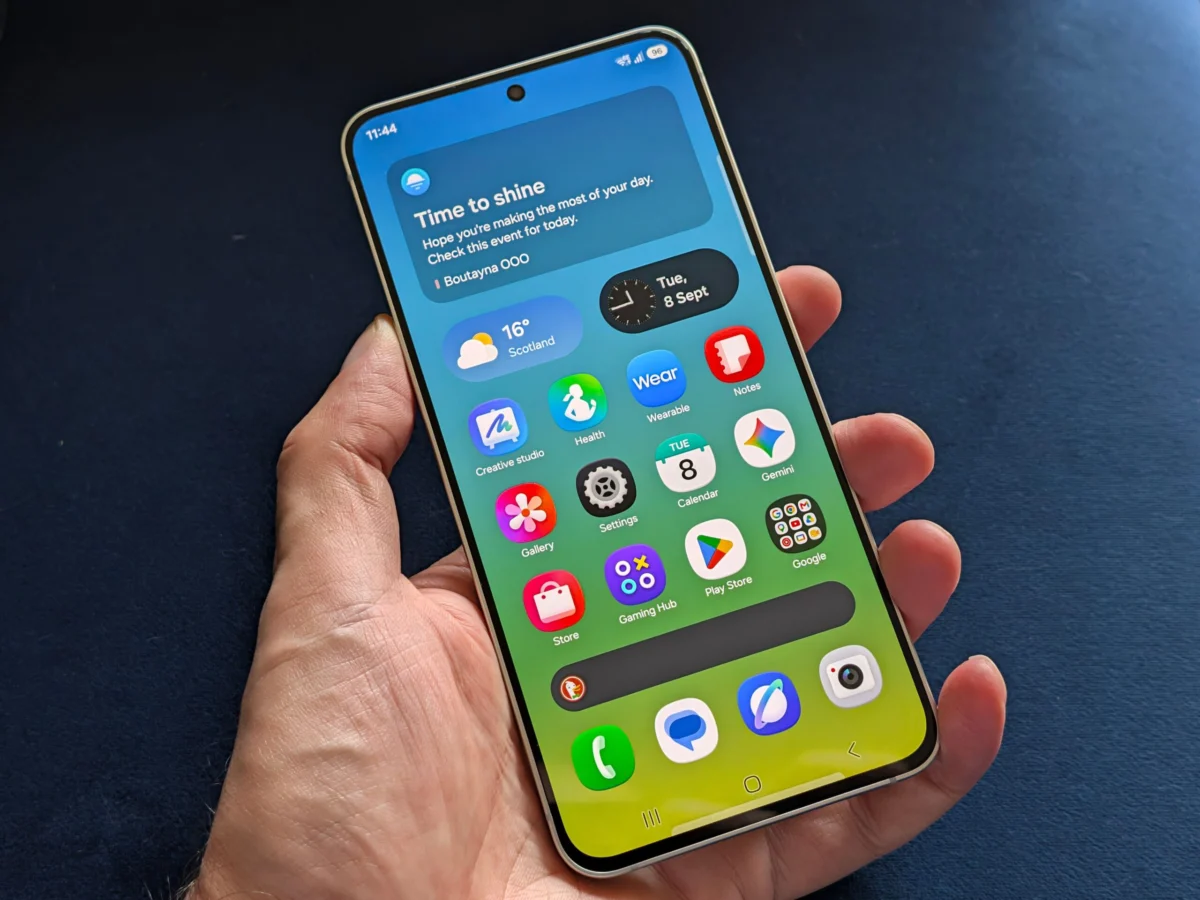
The smartphone industry, currently navigating a period of plateauing innovation and heightened consumer price sensitivity, has seen Samsung Electronics continue its strategy of "Fan Edition" (FE) releases. The latest entry, the Samsung Galaxy S26 FE, arrives as a mid-tier alternative to the flagship Galaxy S26 series, aiming to capture the market segment that desires high-end features at a reduced price point. However, an analysis of the device’s technical specifications, pricing architecture, and current market competition reveals a product struggling to justify its existence within the manufacturer’s own ecosystem.
Technical Performance and Camera Capabilities
The Galaxy S26 FE enters the market with a camera suite that reflects a mix of capable hardware and notable limitations. During daylight testing, the main sensor delivers images characterized by high detail, competent sharpness, and a wide dynamic range. Samsung has opted for a color science that favors vibrancy, which, while visually appealing to many consumers, leans away from naturalistic color reproduction.
In low-light environments, the device relies heavily on Samsung’s proprietary automatic Night Mode. The software processing is generally effective, provided the user maintains stability during the capture process; any significant movement during the long-exposure phase leads to motion blur, highlighting a reliance on computational photography rather than hardware-level light sensitivity. The 2X zoom functionality, while technically a crop from the primary sensor, maintains sufficient clarity for social media sharing.
Beyond the primary shooter, the 3X optical telephoto lens offers versatility for capturing distant subjects. While it provides a functional zoom, it lacks the sharpness found in the main camera, and pushing beyond the 3X optical limit into the 30X digital zoom range results in significant image degradation, characterized by noise and "muddy" textures that render the output largely unusable for professional or archival purposes. The ultrawide lens, meanwhile, serves its purpose for landscape photography but suffers from an absence of autofocus and a higher incidence of visual noise compared to the primary lens. The selfie camera mirrors this deficiency, lacking autofocus, which results in inconsistent performance during video calls or self-portraits.

Video Functionality and Computational Enhancements
Samsung has integrated robust video capabilities into the S26 FE, supporting 4K resolution at 60 frames per second and 8K resolution at 30 frames per second. The device’s stabilization protocols are among the most effective in its class, mitigating the effects of handheld camera shake. A notable inclusion is the horizontal lock feature, which preserves a fixed orientation even during full device rotation—though this must be toggled manually before recording commences.
Furthermore, the introduction of the "My FanCam" feature represents a shift toward AI-assisted video editing. This tool is designed to automatically frame subjects and apply smart cropping, a feature that extends to video files not captured on the device itself. While these tools add value for content creators, their long-term utility remains to be seen, as users often prefer third-party editing suites for more granular control.
Pricing Strategy and the Internal Competition Dilemma
The pricing strategy for the S26 FE is perhaps its most significant point of contention. Launching at $700 for the 128 GB model, the device finds itself in a precarious position. Market data indicates that the standard Galaxy S26—which features a superior processor, increased RAM, and a more robust camera array—frequently receives retail discounts that bring it in line with the FE’s launch price.
The following table summarizes the competitive landscape regarding entry-level pricing:
| Model | MSRP / Retail Price | Key Differentiation |
|---|---|---|
| Samsung Galaxy S26 FE | $700 | Large screen, FE branding |
| Samsung Galaxy S26 | ~$700 (discounted) | Better processor, RAM, telephoto |
| Samsung Galaxy S26+ | ~$800 | Larger screen, superior internals |
| Google Pixel 11 | ~$800 | AI-first features, high-end camera |
| Mid-range alternatives | $400 – $500 | Comparable performance for less |
The 256 GB model of the S26 FE, priced at $800, is particularly difficult to justify. At this price point, consumers can purchase a standard Galaxy S26 with more storage or look toward the Google Pixel 11, which is positioned as a direct competitor with significant advantages in computational photography and software longevity.

Historical Context of the Fan Edition Line
The "Fan Edition" series was originally conceived following the lukewarm reception of the Galaxy Note 7. Samsung introduced the Galaxy S20 FE in 2020 as a response to consumer feedback, stripping away premium materials like glass backs and high-end materials to prioritize the processor and camera performance that enthusiasts valued most.
Over the past four years, however, the FE strategy has evolved. The release of the S21 FE, S23 FE, and now the S26 FE shows a trend of "feature creep" where the devices are no longer significantly cheaper than the standard flagship models. In 2023, the S23 FE faced similar criticism, with reviewers noting that the gap between the mid-range A-series and the flagship S-series had narrowed to the point where the FE series felt redundant.
Broader Market Implications
The launch of the S26 FE underscores a broader challenge for smartphone manufacturers: the "middle market" is being squeezed from both ends. On one side, budget-oriented devices like the Motorola Moto G Stylus and Samsung’s own A-series provide 80% of the functionality of a flagship at 50% of the cost. On the other side, the flagship models offer premium build quality, longer support cycles, and more powerful silicon.
Analysts suggest that Samsung is maintaining the FE line to utilize older supply chains and manage inventory for component parts that are still produced in high volume. However, for the end consumer, the value proposition is increasingly opaque. The proliferation of these models creates "choice paralysis," where the consumer is forced to navigate a complex web of overlapping features and fluctuating price tags.
Official Stance and Future Outlook
While Samsung has not issued a formal statement regarding the specific pricing strategy of the S26 FE, the company historically maintains that the FE series is designed for "the fans who want the best of what they love." This messaging is likely targeted at loyalists who prefer the specific screen size or form factor of the FE line.

Industry experts anticipate that the S26 FE will follow the trajectory of its predecessors: an initial period of stagnant sales followed by aggressive retail discounting. As the holiday season approaches and fiscal quarters conclude, it is highly probable that the S26 FE will see price drops of $100 to $150. For consumers who are currently considering the device, the current market consensus suggests a "wait-and-see" approach. The hardware is objectively functional and capable of handling modern tasks with ease, but at its current MSRP, it lacks the competitive edge required to stand out in an ecosystem that already offers superior alternatives for the same or marginally higher investment.
In conclusion, the Samsung Galaxy S26 FE is a competent piece of hardware that arrives at a time when the consumer is more informed and the market is more saturated than ever before. Unless the price is adjusted to reflect its position as a mid-tier offering, or unless the user is specifically incentivized by a carrier-based promotion, the device remains an outlier in the current Samsung portfolio—a phone that does many things well, but nothing exceptionally better than the devices surrounding it.