Michael Sholeh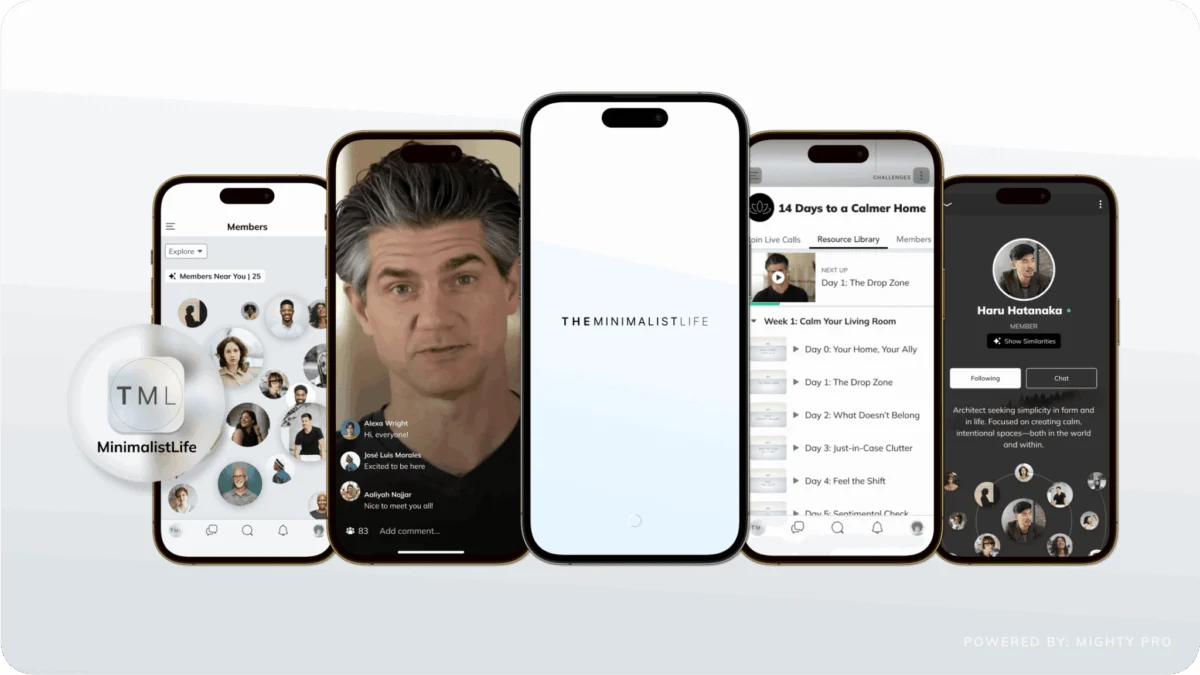
Joshua Becker, a prominent figure in the modern minimalist movement and founder of the Becoming Minimalist platform, has officially announced the launch of a new subscription-based community titled "The Minimalist Life." This initiative marks a significant strategic pivot for Becker, who has spent nearly two decades providing free and premium educational content focused on decluttering and intentional living. The launch is designed to address a recurring challenge cited by followers of the movement: the difficulty of maintaining minimalist habits over the long term once the initial enthusiasm of a decluttering project wanes.
Since its inception 17 years ago, Becker’s platform has grown into a cornerstone of the voluntary simplicity movement. With a portfolio that includes over 1,700 articles, 400 YouTube videos, and several best-selling books, Becker has reached millions of individuals seeking to reduce physical and mental clutter. His "Uncluttered" course alone has seen participation from over 90,000 students. However, the introduction of "The Minimalist Life" represents a shift from a content-delivery model to a community-support model, emphasizing ongoing personal development and human interaction in an increasingly automated digital landscape.
The Evolution of a Movement: A 17-Year Chronology
The announcement of this new community is the culmination of a long-term trajectory that began in a suburban driveway in 2008. To understand the significance of this launch, it is necessary to examine the timeline of Becker’s influence on the minimalist landscape:
- 2008: The Catalyst. Joshua Becker, then a pastor in Vermont, spent a holiday weekend cleaning his garage while his young son played alone in the backyard. A conversation with a neighbor about the burdens of possessions led to a "lightbulb moment," prompting Becker and his family to donate or sell the majority of their belongings.
- 2008–2012: Building the Foundation. The Becoming Minimalist blog was launched to document the family’s journey. During this period, minimalism transitioned from a fringe aesthetic or ascetic practice into a mainstream lifestyle choice, spurred in part by the global financial crisis and a growing cultural exhaustion with consumerism.
- 2013–2018: Expansion and Publication. Becker published several influential books, including The More of Less and The Minimalist Home. These works moved beyond the "how-to" of decluttering and began exploring the philosophical and psychological benefits of owning less.
- 2019–2024: Digital Growth and Course Development. The launch of the "Uncluttered" course provided a structured, 12-week program for participants. During this time, Becker’s YouTube channel and social media presence expanded, reflecting a broader societal trend toward "Slow Living."
- June 2025: The Launch of "The Minimalist Life." Recognizing that a 12-week course often lacks the "aftercare" required for permanent lifestyle changes, Becker introduced a permanent community framework to provide monthly guidance across various life sectors.
Addressing the "Sustainability Gap" in Minimalist Practices
The primary driver behind "The Minimalist Life" is what sociologists often call the "maintenance phase" of habit formation. While many individuals find success in the "purging" phase of minimalism—often characterized by a rapid reduction of household goods—data suggests that long-term adherence to intentional living is significantly harder to achieve.
Market research into the self-improvement sector indicates that while initial engagement with digital courses is high, completion rates for massive open online courses (MOOCs) often hover between 5% and 15%. By transitioning to a community-led model, Becker aims to combat "course fatigue" and provide the accountability necessary to prevent "clutter creep"—the gradual re-accumulation of possessions and commitments over time.
The community is structured to address minimalism not just as a domestic organization strategy, but as a holistic approach to modern life. The program focuses on several key pillars:
- Financial Stewardship: Reducing consumer debt and aligning spending with personal values.
- Digital Wellness: Managing the influx of information and reducing screen time.
- Time Management: Streamlining schedules to prioritize meaningful activities over "busy work."
- Relationship Health: Applying intentionality to social circles and family dynamics.
Supporting Data: The Rising Cost of Clutter
The expansion of Becker’s offerings comes at a time when the psychological and economic costs of overconsumption are becoming more apparent in academic research. A study by the UCLA Center on Everyday Lives of Families (CELF) found a direct correlation between high cortisol (stress hormone) levels in women and a high density of household objects. Furthermore, the average American home reportedly contains over 300,000 items, and the self-storage industry has grown into a $40 billion-plus market in the United States, indicating that physical space is increasingly at a premium.
Becker’s shift toward a monthly membership model also aligns with broader trends in the "Passion Economy." As AI-generated content begins to saturate the internet, there is a measurable increase in consumer demand for "human-centric" platforms. By emphasizing direct interaction and a private community away from the noise of traditional social media, Becker is positioning "The Minimalist Life" as a premium alternative to generic lifestyle advice.

Official Response and Market Positioning
In his official statement regarding the launch, Becker emphasized the necessity of human connection in the journey toward simplicity. "We all need more than just education," Becker noted. "Life change can be difficult. And if we’re going to build habits that transition minimalism from an idea into a way of life, we need the support of like-minded people."
The pricing strategy for the new community—set at a founding member rate of $18 per month or $180 per year—positions it as an accessible entry point within the personal development market. This rate is competitive when compared to other specialized wellness memberships or professional coaching services, which often range from $30 to $100 per month.
Industry analysts suggest that this move is a logical progression for the Becoming Minimalist brand. By creating a recurring revenue model, Becker can move away from the "treadmill" of constant content production for social media algorithms and focus on deeper, more impactful interactions with a dedicated core audience.
Broader Implications for the Self-Improvement Industry
The launch of "The Minimalist Life" reflects a broader maturation of the minimalism movement. What was once seen as a radical response to the 2008 recession has evolved into a sophisticated framework for navigating the complexities of the 21st century.
The move highlights several emerging trends in the digital education space:
- From "What" to "How": Users are moving away from seeking information (which is now ubiquitous and often free) and toward seeking implementation strategies and accountability.
- The Rejection of Algorithms: There is a growing segment of the population looking for "walled garden" communities where they can interact without the influence of advertising or algorithmic manipulation.
- Holistic Minimalism: The focus is shifting from the "physical" (closets and garages) to the "metaphysical" (mental health, digital habits, and legacy).
As the doors to the community open, the success of "The Minimalist Life" will likely be watched closely by other creators in the lifestyle and wellness space. If Becker can successfully bridge the gap between a one-time decluttering event and a lifelong habit, it could provide a new blueprint for how digital influencers transition from content creators to community leaders.
The founding member rate is available through June 30, after which the community is expected to move into its standard operational phase. For the tens of thousands of individuals who have already engaged with Becker’s work, this new offering represents an opportunity to formalize their commitment to a lifestyle that prioritizes "owning less and living more."
In an era defined by digital saturation and economic volatility, the continued growth of Becker’s platform suggests that the desire for simplicity is not a passing trend, but a fundamental shift in how a significant portion of the population chooses to engage with the modern world. Through "The Minimalist Life," Joshua Becker is betting that the future of the movement lies not in more content, but in more connection.