 Michael Sholeh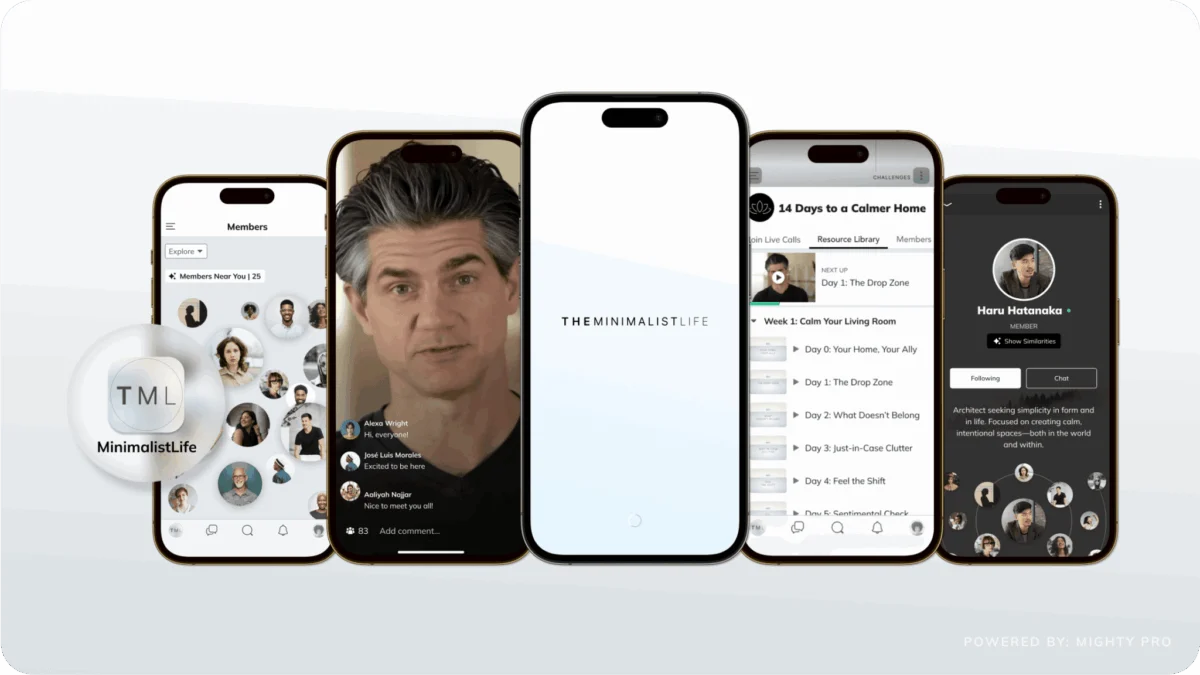
For seventeen years, the digital landscape of intentional living has been shaped largely by the voice of Joshua Becker through his widely read platform, Becoming Minimalist. Having authored over 1,700 articles, published multiple bestselling books, produced 400 YouTube videos, and spearheaded the widely adopted Uncluttered Course—which has guided more than 90,000 participants through room-by-room home organization—Becker has established himself as a leading authority in the modern minimalist movement. Yet, despite reaching hundreds of thousands of individuals seeking to own less and live more, a recurring operational hurdle has persisted among his audience. While millions find inspiration in initial decluttering projects, maintaining long-term behavioral change remains a formidable challenge. In response to this widespread difficulty, Becker has officially launched a private, subscription-based community platform titled The Minimalist Life, marking his first major structural offering designed specifically for continuous, peer-supported habit formation rather than one-time educational consumption.
The evolution of Becker’s platform mirrors a broader cultural shift toward intentional living and mindful consumption over the past two decades. When Becoming Minimalist was founded in the late 2000s, minimalism was frequently perceived as a radical aesthetic choice, heavily focused on stark white interiors, capsule wardrobes, and the physical purging of domestic clutter. Over the intervening seventeen years, however, the movement has matured into a mainstream psychological and lifestyle strategy. Sociologists and consumer psychologists note that modern minimalism is increasingly viewed as a defensive response against hyper-consumerism, algorithmic advertising, and chronic digital connectivity. Despite this growing cultural appetite, consumers routinely encounter what behavioral scientists call the "implementation gap"—the distance between understanding the theoretical value of a lifestyle change and successfully executing it within the friction-filled realities of daily life.
To understand the context of this new initiative, one must examine the chronological progression of Becker’s contributions to the lifestyle sector.
Chronology of the Movement and Platform Development
- 2008: Joshua Becker launches the Becoming Minimalist blog, documenting his family’s transition away from hyper-consumerism and the subsequent domestic benefits.
- 2010–2015: The platform gains mainstream traction, leading to the publication of several foundational books translated into multiple languages, focusing on parenting, home organization, and financial freedom.
- 2016–2020: The introduction of digital products, including the Uncluttered Course, scales Becker’s reach globally, ultimately engaging over 90,000 active participants in structured, multi-week home-clearing campaigns.
- 2021–2024: Continued expansion into multimedia formats, surpassing 400 video releases on YouTube while consistently gathering quantitative and qualitative feedback from community members regarding the sustainability of minimalist habits.
- June 2025: The official rollout of The Minimalist Life community platform, shifting the business and pedagogical model from static, finite courses to dynamic, continuous monthly programming.
The psychological framework underpinning this new community model addresses a fundamental limitation of traditional self-help content. Educational books, blog posts, and video tutorials operate primarily on a transactional model: the consumer receives information, attempts implementation independently, and often experiences a drop in motivation once the novelty wears off. According to user feedback compiled by Becker over his career, the most frequent point of failure occurs months after an initial decluttering phase, when individuals attempt to apply minimalist principles to less tangible areas of life, such as personal finances, digital clutter, work schedules, interpersonal relationships, and daily mental habits.
Economic and psychological analysts observing the personal development sector point out that membership models offering ongoing peer accountability have demonstrated significantly higher rates of long-term habit retention compared to standalone e-learning products. By shifting the focus from physical items to a comprehensive, multi-domain lifestyle framework, The Minimalist Life aims to provide systematic support across various pillars of modern existence.

Structural Elements of The Minimalist Life Initiative
The newly established platform departs from previous offerings by deploying a month-by-month curriculum designed to integrate minimalist principles into multiple domains of daily life. Rather than concentrating exclusively on household possessions, the monthly modules encompass:
- Domestic Environment: Continued maintenance of physical spaces and prevention of re-accumulation.
- Financial Management: Streamlining budgets, curbing impulse spending, and aligning expenditures with personal values.
- Time and Schedule Management: Eliminating non-essential commitments to combat modern burnout and chronic fatigue.
- Digital Minimalism: Managing screen time, organizing digital files, and reducing notification fatigue from personal devices.
- Habit Formation: Utilizing cognitive behavioral strategies to replace reactionary routines with deliberate, mindful choices.
- Relational Intentionality: Cultivating deeper human connections by removing distractions that inhibit interpersonal presence.
Furthermore, the design of the community addresses a growing anxiety within digital spaces regarding automated and artificial intelligence-generated content. In an era where online platforms are increasingly saturated by algorithmic content and automated advice, Becker’s initiative emphasizes human-centric interaction, direct mentorship, and community-driven dialogue among members facing similar lifestyle transitions.
Industry Response and Market Implications
While the formal commercial impact of The Minimalist Life remains to be evaluated over its inaugural operational quarters, industry analysts specializing in the digital creator economy view the pivot toward private, subscription-based communities as a mature maturation phase for content creators. Traditional monetization models—relying heavily on ad revenue, book royalties, and intermittent course launches—frequently struggle to provide ongoing value or predictable revenue streams. Conversely, tiered membership communities foster deeper brand loyalty, higher customer lifetime value, and measurable consumer outcomes.
Observers note that Becker’s established trust capital, accumulated over seventeen years of consistent publishing, provides a significant competitive advantage in a crowded wellness and self-improvement market. By pricing the initiative at founding member rates of $18 per month or $180 annually—with promotional pricing secured through June 30—the platform positions itself accessibly within the consumer market while filtering for dedicated participants genuinely interested in long-term behavioral modification.
Broader Social Impact and the Future of Intentional Living
The launch of platforms dedicated to sustainable minimalism highlights a broader cultural re-evaluation of success and well-being in the 21st century. As work-from-home models persist, digital connectivity intensifies, and environmental awareness grows, individuals increasingly seek refuge from excess. However, experts emphasize that acquiring a minimalist lifestyle requires continuous friction against societal messaging designed to encourage consumption.
Programs like The Minimalist Life function essentially as cultural counterweights, providing the structural reinforcement necessary to maintain intentionality in an environment engineered for distraction. Whether this community-centric model will serve as a blueprint for other creators in the personal growth sector remains to be seen. Nonetheless, Becker’s transition from a solitary writer sharing essays to the facilitator of an active, ongoing support network signifies an important evolution in how digital thought leaders address the genuine, long-term needs of their audiences. For the thousands of individuals seeking to move beyond the superficial appeal of a tidy home toward a profoundly focused existence, the success of this community may well redefine the standard for digital self-development in the years ahead.