Michael Sholeh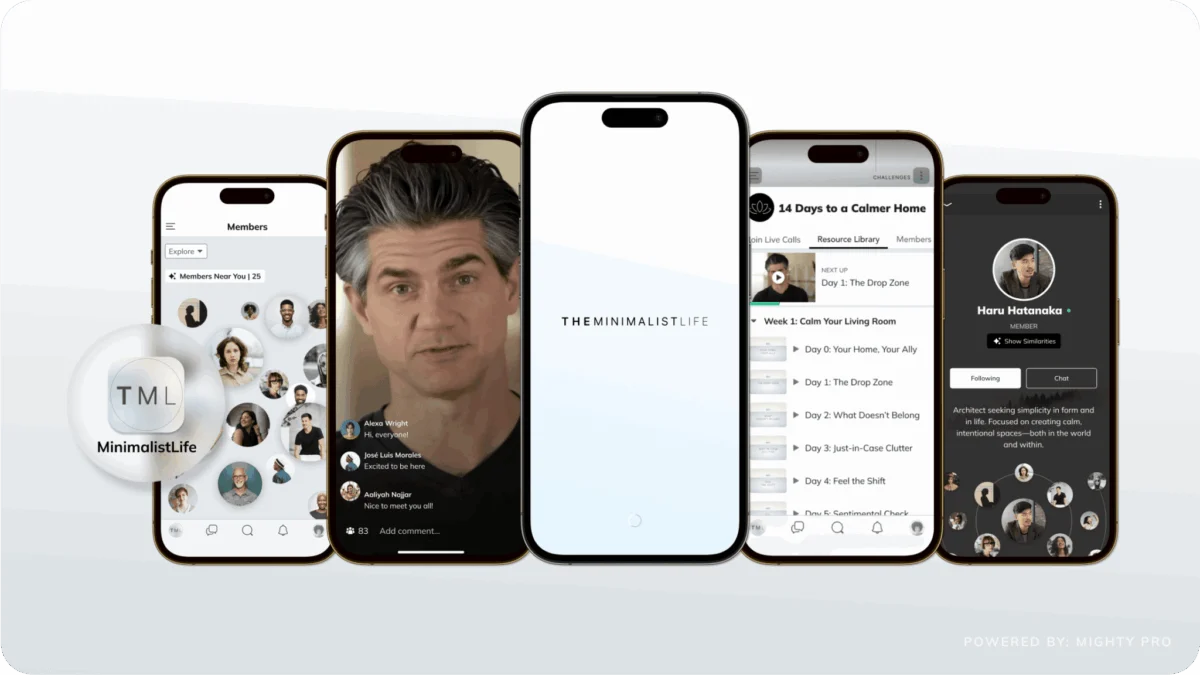
Joshua Becker, a prominent figure in the global minimalism movement and founder of the platform Becoming Minimalist, has announced the launch of a comprehensive membership community titled The Minimalist Life. This initiative represents a strategic pivot for Becker, transitioning from a content-delivery model based on books and standalone courses to a subscription-based, community-focused ecosystem designed for long-term lifestyle maintenance. The launch comes after nearly two decades of Becker’s influence in the voluntary simplicity sector, during which he has authored over 1,700 articles, produced 400 videos, and facilitated the decluttering efforts of over 90,000 students through his "Uncluttered" program.
The introduction of The Minimalist Life is positioned as a direct response to a recurring challenge within the minimalist community: the difficulty of maintaining intentional living habits after the initial enthusiasm of a decluttering project wanes. Becker identifies this as a "sustainability gap," where individuals successfully remove physical excess but struggle to apply minimalist principles to other facets of life, such as financial management, digital consumption, and interpersonal relationships. By moving toward a monthly engagement model, the platform aims to provide the structural support necessary for permanent behavioral modification.
The Evolution of Modern Minimalism: A 17-Year Chronology
The launch of The Minimalist Life is the culmination of a journey that began in 2008. To understand the significance of this new offering, it is essential to trace the timeline of Becker’s career and the broader growth of the minimalism movement.
In the late 2000s, the concept of minimalism as a lifestyle choice—distinct from the art and architectural movements of the mid-20th century—began to gain traction. Becker’s entry into the space followed a personal realization regarding the burden of possessions while cleaning his garage. This led to the creation of Becoming Minimalist, which served as one of the foundational digital archives for the movement.
Between 2010 and 2015, the movement saw a surge in mainstream interest, bolstered by the global financial crisis, which forced many to reconsider their relationship with consumerism. During this period, Becker published several influential works, including The More of Less and later The Minimalist Home, which provided tactical frameworks for reducing household inventory.
By 2016, the "Uncluttered" course was established, marking Becker’s first major foray into structured digital education. The course utilized a cohort-based model to guide participants through a 12-week decluttering process. However, while the course addressed the "how-to" of removing items, Becker noted that participants often requested a "what-now" framework to prevent the eventual accumulation of new clutter. The 2025 launch of The Minimalist Life serves as the functional answer to that demand, shifting the focus from a finite project to an ongoing practice.
Supporting Data: The Psychology of Clutter and Habit Formation
The necessity for a community-based approach to minimalism is supported by a growing body of sociological and psychological research. According to a study by the UCLA Center on Everyday Lives of Families (CELF), there is a direct correlation between high density of household objects and elevated levels of cortisol, the primary stress hormone, particularly in women. The study found that managing a large volume of possessions creates a significant cognitive load, which can lead to chronic stress and decreased productivity.
Furthermore, research into habit formation suggests that "one-time" interventions—such as a single decluttering weekend—are rarely sufficient to alter long-term consumption patterns. A study published in the European Journal of Social Psychology indicates that it takes an average of 66 days for a new behavior to become automatic. Becker’s new platform, which emphasizes month-by-month focus areas, aligns with these findings by providing a prolonged period of reinforcement.

The shift toward community-driven learning also addresses the "loneliness epidemic" and the lack of social support for non-consumerist lifestyles. In a society where economic structures are largely built around the promotion of consumption, individuals attempting to live minimally often face social pressure to conform. Data from various social learning theories suggest that individuals are significantly more likely to adhere to a lifestyle change when they are part of a peer group that shares their values.
Structural Overview of The Minimalist Life
The Minimalist Life is designed to move beyond the "education-only" model of traditional blogs and YouTube channels. The platform is structured around several core pillars intended to foster human interaction and accountability:
- Thematic Monthly Focuses: Rather than attempting to overhaul an entire life at once, the community focuses on one specific area of minimalism per month. These areas include physical possessions, financial health, time management, digital hygiene, and relationship boundaries.
- Live Interaction: In a digital landscape increasingly saturated with automated and AI-generated content, Becker has prioritized direct engagement. The platform includes live Q&A sessions and workshops, allowing members to receive personalized feedback on their specific challenges.
- Peer Accountability: The community provides a private forum for members to share progress, troubleshoot setbacks, and celebrate milestones. This peer-to-peer interaction is intended to replace the isolation often felt by those pursuing minimalist lifestyles in high-consumption cultures.
- Founding Member Pricing Structure: The platform has launched with an introductory "founding member" rate of $18 per month or $180 per year. This pricing strategy is common in the digital subscription industry, designed to reward early adopters and build a stable initial user base before the standard rates are implemented after June 30th.
Industry Implications and Market Trends
The launch of The Minimalist Life reflects a broader trend in the creator economy: the move from "reach" to "depth." For years, digital creators focused on maximizing follower counts on platforms like YouTube and Instagram. However, as algorithms have become more unpredictable and AI has begun to commoditize basic information, many creators are moving toward "walled garden" communities.
Industry analysts suggest that the "membership model" offers greater financial stability for creators and higher transformation rates for users. By charging a recurring fee, creators like Becker can focus on high-quality, high-touch interactions rather than the "click-based" incentives of ad-supported platforms.
Furthermore, this move signals an evolution in the minimalism industry itself. The "first wave" of minimalism focused heavily on the aesthetics of white walls and empty rooms. The "second wave" focused on the tactical process of decluttering (popularized by figures like Marie Kondo). The current "third wave," which Becker is helping to lead, focuses on "Intentional Living"—the application of minimalist philosophy to the invisible aspects of life, such as mental health, environmental sustainability, and ethical consumption.
Broader Impact and Social Analysis
The implications of a sustained minimalist lifestyle extend beyond individual well-being to broader economic and environmental sectors. On an environmental level, the minimalism movement acts as a counter-weight to "fast fashion" and the culture of disposable goods. By encouraging individuals to own less and choose higher-quality items, the movement contributes to a reduction in carbon footprints and landfill waste.
From an economic perspective, the rise of communities like The Minimalist Life suggests a shift in consumer behavior. As more individuals opt out of the "work-to-spend" cycle, there is an increasing emphasis on the "experience economy" and financial independence. This has long-term implications for retail and advertising, as a segment of the population becomes increasingly resistant to traditional marketing tactics.
Inferred reactions from the existing "Becoming Minimalist" audience suggest a high level of readiness for this transition. Many long-term followers have expressed that while they have successfully decluttered their homes, they find it difficult to navigate a world that is constantly "pinging" them for attention and money. The private nature of the community offers a sanctuary from these external pressures.
Conclusion
The Minimalist Life represents a significant milestone in Joshua Becker’s 17-year career and a strategic evolution for the minimalism movement at large. By prioritizing community support, human interaction, and holistic application, the platform seeks to solve the problem of "minimalist burnout" and provide a roadmap for lifelong intentionality. As the doors open to founding members, the success of this initiative will likely serve as a case study for other lifestyle movements seeking to transition from content consumption to community-driven transformation. The June 30th deadline for founding member pricing marks the beginning of this new chapter, as the movement moves further away from the "what" of minimalism and deeper into the "how" of living it every day.