
 Ali Ikhwan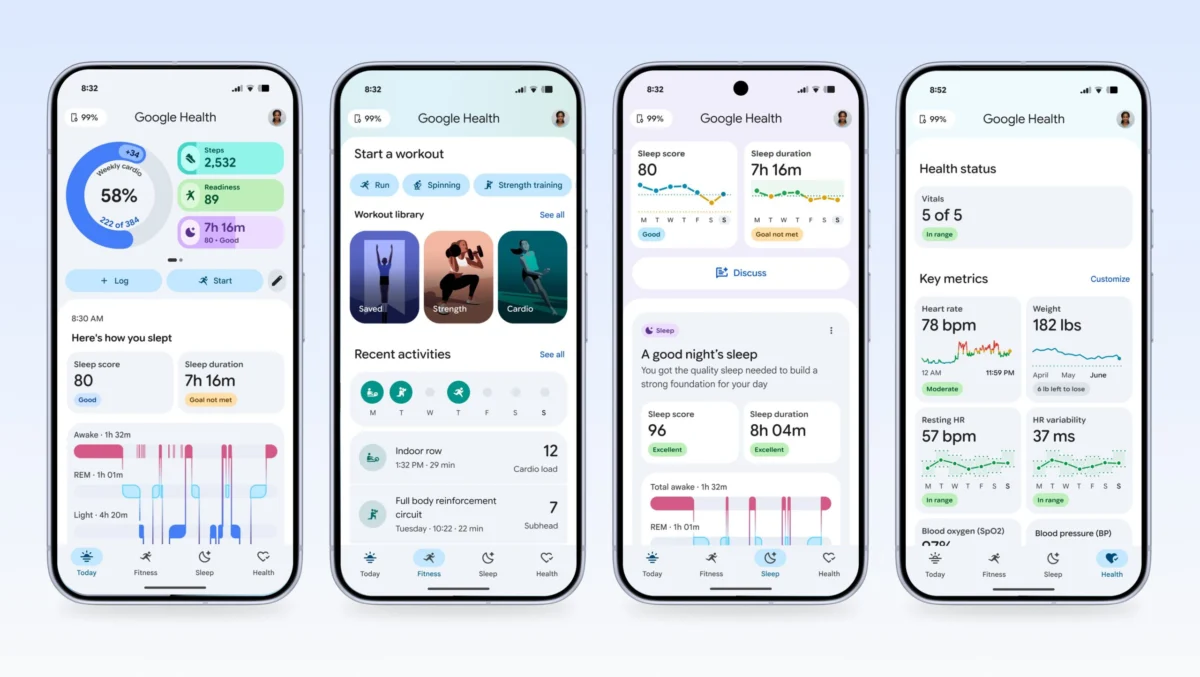
In a decisive move to consolidate its fragmented wellness offerings, Google has officially announced the rebranding of the Fitbit application to Google Health, marking the end of a transitional era that began with the tech giant’s $2.1 billion acquisition of the wearable pioneer five years ago. This strategic shift, scheduled to take effect via a global app update on May 19, represents more than a simple name change; it signals the total integration of Fitbit’s hardware legacy into Google’s broader artificial intelligence and data analytics ecosystem. Simultaneously, Google confirmed that its long-standing Google Fit application, which has served as the company’s primary fitness tracking utility for 12 years, will be sunsetted later this year. While specific timelines for data migration from Google Fit to the new Google Health platform remain forthcoming, the company has assured users that detailed instructions will be provided in the months ahead.
The transition to Google Health is the culmination of years of backend development and regulatory navigation. Rishi Chandra, Google’s Vice President for Health and Home, characterized this moment as the intended destination of the company’s investment strategy since the 2019 acquisition announcement. The rebranding coincides with the official exit of the AI-powered Health Coach from its public beta phase, a feature that utilizes Google’s proprietary Gemini large language models to offer personalized health insights. This evolution reflects a broader industry trend where hardware is increasingly viewed as a delivery mechanism for sophisticated, AI-driven software services.
The Evolution of Google’s Health Strategy: A Chronological Overview
To understand the magnitude of this rebranding, one must look at the decade-long trajectory of both Fitbit and Google’s internal health initiatives. Fitbit debuted in 2007 as a pioneer in the wearable space, long before the Apple Watch or the proliferation of modern smartwatches. For years, it remained the dominant name in step-counting and sleep-tracking technology.
Google’s journey has been more circuitous. The company originally launched a service called Google Health in 2008, which was designed as a centralized repository for personal health records, only to discontinue it in 2011 due to a lack of widespread adoption. In 2014, Google Fit was introduced to compete with Apple’s HealthKit, focusing primarily on mobile-based sensor tracking and integration with Android Wear devices.
The acquisition of Fitbit in 2019 was a pivot point. However, the deal faced intense scrutiny from global regulators, particularly the European Commission and the U.S. Department of Justice, over concerns regarding data privacy and the potential for health data to be leveraged for targeted advertising. It was not until January 2021 that the acquisition was finalized, under strict legally binding commitments to silo Fitbit user data from Google’s advertising business. The 2024 transition to Google Health represents the final stage of this integration, where the "Fitbit" name shifts from being the primary brand to a specialized hardware line within the Google Health umbrella.

The Health Coach and the Role of Generative AI
At the heart of the newly rebranded Google Health app is the Health Coach, an AI-powered chatbot designed to interpret complex physiological data and provide actionable advice. Unlike previous iterations of fitness apps that merely presented raw data—such as heart rate variability or sleep stages—the Health Coach is designed to parse this information in the context of the user’s overall lifestyle.
The Coach is powered by Google’s Gemini models, which have been specifically tuned for health applications. According to company statements, the model is "grounded in science," having been refined through feedback from a Consumer Health Advisory Panel consisting of medical professionals and wellness experts. The AI can perform sophisticated tasks, such as analyzing medical records uploaded by the user, correlating nutritional intake with workout performance, and suggesting modifications to fitness regimens following an injury.
However, the implementation of large language models (LLMs) in a health context is not without risks. The phenomenon of "hallucination"—where an AI generates plausible-sounding but factually incorrect information—is a significant concern for medical applications. Google has acknowledged that during the public beta, some users reported inaccuracies. Rishi Chandra emphasized that the system is architected to avoid providing medical diagnoses or replacing professional medical advice. Instead, the focus is on "safe advice" and supportive coaching, with ongoing evaluations to meet stringent safety requirements.
Hardware Innovation: Introducing the Fitbit Air
Despite the rebranding of the software, Google is not abandoning the Fitbit brand in the hardware sector. Coinciding with the app update is the announcement of the Fitbit Air, the brand’s first new dedicated tracker in three years. Priced at $100 and available for preorder immediately, the Fitbit Air is designed with a philosophy of "simplicity at its core."
The device is screenless, ultra-lightweight, and focused on unobtrusive monitoring. This design choice aligns with a growing segment of the market that prefers "invisible" technology over the notification-heavy experience of a traditional smartwatch. The Fitbit Air is intended to be accessible across demographics, from children to the elderly, providing a streamlined data set that integrates directly into the Google Health app. Chandra noted that the release of the Air was intentionally delayed until the AI Health Coach was ready, stating that the synergy between wearable sensors and intelligent coaching is the "missing link" in the current wearable market.
Ecosystem Interoperability and Subscription Models
In a significant departure from the traditionally closed ecosystems of the past, the new Google Health app is designed to be highly interoperable. It fully supports Google’s Health Connect framework and Apple’s HealthKit. This means that users with an Apple Watch can utilize the Google Health app and its AI Coach to analyze their data. Furthermore, Google has plans to allow Fitbit Air data to be viewed within the Apple Health app, though this functionality will not be available at the May 26 launch.

The financial structure of the app introduces a tiered system. While the basic Google Health app remains free for tracking activity, sleep, and general health metrics, the most advanced features are gated behind a subscription. Google Health Premium, priced at $10 per month or $100 annually, provides access to the AI Health Coach, proactive health insights, and adaptive fitness plans. In a move to add value to its existing ecosystem, Google is including this premium health tier for subscribers of the Google One AI Pro and AI Ultra plans, effectively bundling health services with cloud storage and advanced AI tools.
Privacy, Security, and Regulatory Compliance
Data privacy remains the most sensitive aspect of Google’s health ambitions. As part of the regulatory agreements made during the Fitbit acquisition, Google is legally prohibited from using Fitbit health and wellness data for Google Ads. This "Chinese Wall" remains in place with the transition to Google Health.
The app allows users to sync medical records by logging into provider portals, creating a centralized health history. Google maintains that this data is encrypted and that users have granular control over what is shared. There is an explicit opt-in mechanism for users who are willing to allow their data to be used for research, development, and the training of future AI models. The company has stressed that sharing health data with family members or physicians is an optional, user-initiated feature designed to foster accountability and better clinical outcomes.
Market Implications and Competitive Landscape
The launch of Google Health places the company in direct competition with Apple’s increasingly dominant Health app and Samsung’s Health ecosystem. Apple has recently expanded its offerings to include medication tracking, mental health logging, and the "Vitals" app in watchOS 11. By centering its strategy on generative AI and cross-platform compatibility, Google is attempting to differentiate itself through "intelligence" rather than just "integration."
Industry analysts suggest that Google’s move to support Apple Watch data within the Google Health app is a strategic play to capture users who prefer Apple hardware but find Google’s AI analysis more compelling. By becoming a "one-stop shop" for health data regardless of the device source, Google positions itself as the primary software layer for the global wellness market.
The success of this transition will depend on two factors: the reliability of the Gemini-powered Health Coach and the seamlessness of the migration for the millions of existing Fitbit and Google Fit users. As the May 19 rollout approaches, the tech industry will be watching closely to see if Google can finally unify its health vision and deliver a platform that balances cutting-edge AI with the high stakes of personal medical privacy.







