Muhammad Hendra
In an increasingly complex world where emotional well-being is a paramount concern, recovery coach and acclaimed author Emily Jane has unveiled a new guided meditation designed to equip individuals with the tools to courageously and compassionately engage with difficult emotions. Titled ‘Embodied Compassion for Difficult Emotions,’ this practice challenges the prevalent human tendency to resist or repress painful, confusing, or distressing feelings, advocating instead for a mindful acceptance that can lead to profound healing and a reduction in suffering. This initiative arrives at a critical juncture, aligning with a global mental health discourse that increasingly prioritizes integrated and holistic approaches to emotional regulation and resilience.
The Paradigm Shift: From Resistance to Acceptance
At the core of Emily Jane’s meditation lies a foundational principle of mindfulness: the notion that embracing emotions, even those perceived as negative or overwhelming, is ultimately more conducive to well-being than attempting to suppress them. This concept, though often feeling counterintuitive when confronted with intense feelings such as fear, grief, or anger, forms the bedrock of numerous evidence-based therapeutic modalities. Jane’s work underscores the psychological insight that resistance or repression of internal states can paradoxically intensify distress and perpetuate cycles of suffering. Conversely, a compassionate turning towards these internal experiences is presented as a potent pathway to resolution and inner peace.
Human beings are naturally wired for self-preservation, often leading to an instinctive fight, flight, or freeze response when faced with perceived threats. While effective for external dangers, applying this same mechanism to internal emotional states can trap individuals in an exhaustive struggle against themselves. Psychological research has extensively documented the detrimental effects of emotional suppression. Studies, including those exploring thought suppression, demonstrate that deliberate attempts to push away thoughts or feelings often lead to their increased persistence and intensity. For example, research indicates that individuals who habitually suppress emotions may experience heightened physiological arousal, poorer memory recall for emotional events, and an exacerbation of symptoms associated with conditions such as depression and anxiety. Emily Jane’s ‘Embodied Compassion’ meditation directly addresses this by offering a courageous yet gentle alternative: a conscious, non-judgmental engagement with one’s inner emotional landscape.
Emily Jane’s Foundation: Lived Experience and Professional Acumen
Emily Jane brings a distinctive blend of deeply personal experience and rigorous professional training to her role as a recovery coach and mindfulness teacher. Her journey includes over eight years in recovery, following two decades of active addiction. This profound lived experience is not merely a biographical detail; it is the crucible through which her empathetic, trauma-informed, and highly effective approach to healing has been forged. Her intimate understanding of suffering, addiction, and the intricate path to recovery provides a compassionate lens through which she guides others. Complementing this personal wisdom is her background in social work, which has equipped her with a comprehensive understanding of systemic factors influencing individual well-being and the nuanced needs of diverse populations.
Further bolstering her expertise, Emily Jane is a certified Embodied Processing (EP) practitioner and a seasoned mindfulness teacher. Embodied Processing is a sophisticated therapeutic modality that seamlessly integrates somatic tools with trauma therapy, recognizing the body’s pivotal role in storing, expressing, and ultimately releasing trauma and complex emotions. This modality is intrinsically linked to her concept of ‘Embodied Compassion,’ which acknowledges that emotions are not abstract mental constructs but deeply felt physical sensations. By guiding individuals to attune to their bodily experiences, Jane facilitates a more profound, holistic, and sustainable form of healing. Her insights and methodology are extensively detailed in her critically acclaimed book, Beyond Addiction: A Mindful Guide to Recovery, which outlines her integrated approach to healing from addiction and trauma through mindfulness, coaching, and somatic practices. Through her online platform, Holistic Recovery (holisticrecovery.co.uk), she extends her invaluable resources and support to a global audience seeking paths to wellness.
The Imperative for Emotional Literacy: Supporting Data and Global Context
The escalating global imperative for effective emotional management tools is underscored by alarming mental health statistics. The World Health Organization (WHO) reports that nearly one billion people worldwide live with a mental disorder, with anxiety and depressive disorders being particularly pervasive. The onset of the COVID-19 pandemic significantly exacerbated this crisis, leading to an estimated 25% increase in the global prevalence of anxiety and depression during its initial year alone. In the United States, data from the National Institute of Mental Health (NIMH) consistently reveals that millions of adults grapple with mental illness annually, with a substantial portion experiencing barriers to adequate treatment.
Within this urgent context, the scientific community has increasingly validated mindfulness-based interventions. Decades of research, originating from pioneering programs like the University of Massachusetts Medical School’s Mindfulness-Based Stress Reduction (MBSR) and extending through studies conducted at institutions like Harvard Medical School, have unequivocally demonstrated the efficacy of mindfulness. Its proven benefits include significant reductions in stress, alleviation of symptoms associated with anxiety and depression, enhanced emotional regulation capabilities, and an overall improvement in psychological well-being. A landmark meta-analysis published in JAMA Internal Medicine, for instance, concluded that mindfulness meditation programs offer modest yet consistent improvements for conditions such as anxiety, depression, and chronic pain. These compelling findings provide a robust empirical foundation for Emily Jane’s advocacy for emotional acceptance.
Neuroscientific investigations further illuminate the intricate mechanisms underlying mindfulness. Functional magnetic resonance imaging (fMRI) studies have revealed that consistent mindfulness practice can induce observable structural and functional changes in the brain. Specifically, researchers have noted decreased activity in the amygdala, often referred to as the brain’s "fear center," coupled with increased activity and connectivity in the prefrontal cortex, the region responsible for higher-order executive functions such as attention, emotional regulation, and complex decision-making. This demonstrable neural plasticity highlights how practices like ‘Embodied Compassion’ are not merely transient coping strategies but actively contribute to reshaping the brain’s intrinsic capacity for resilience and emotional intelligence.
Deconstructing the ‘Embodied Compassion’ Meditation: A Practical Guide
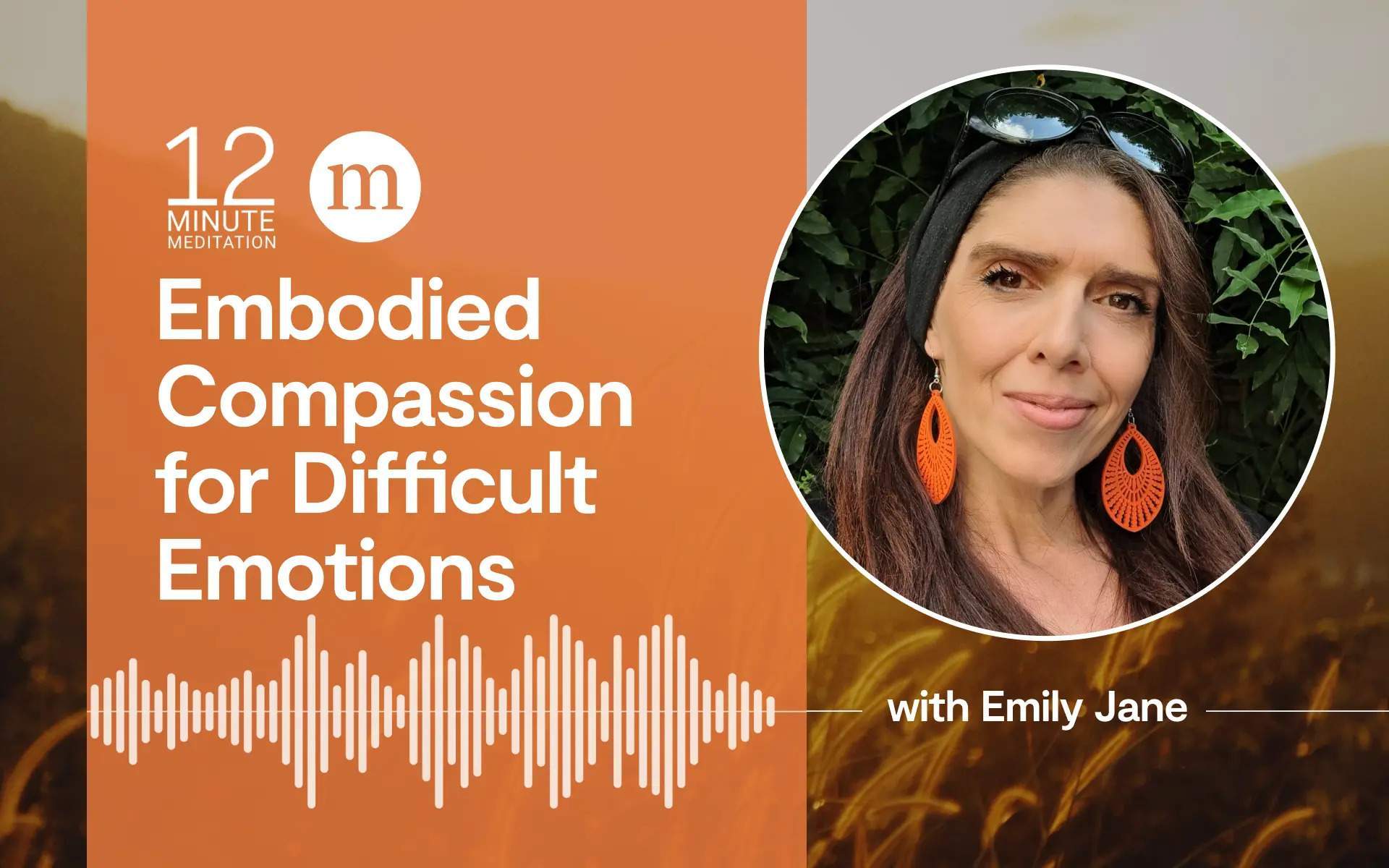
Emily Jane’s ‘Embodied Compassion for Difficult Emotions’ meditation, accessible as both a detailed written script and an audio recording, provides a pragmatic framework for cultivating emotional acceptance. It is designed for immediate application, serving as support "anytime you need support bringing curiosity, courage, and compassion to difficult experiences."
The meditation commences with an essential phase of mindful awareness. This initial step is fundamental for grounding the individual, inviting attention to the present moment without judgment. It typically involves a gentle focus on somatic anchors such as the breath, bodily sensations, or ambient sounds, with a gentle redirection of the mind whenever it inevitably wanders. This foundational awareness establishes a stable and non-reactive platform from which to approach more challenging internal experiences. As Emily Jane articulates, "When we experience difficult emotions, our natural tendency is to repress or resist them, and yet it is often this very resistance that creates even more stress and suffering." This preparatory stage consciously prepares the practitioner to choose an alternative, more constructive path.
Following this initial grounding, the meditation gracefully transitions towards engaging with the very emotions, sensations, and internal parts of oneself that one might instinctively wish to avoid or not feel. This is the juncture where the ‘courage’ component of the practice becomes critically important. Rather than pushing away discomfort, the practice encourages an invitational stance. "We will invite them in and sit with them with compassion, like an old friend," Jane explains. This evocative metaphor signifies a profound shift from an adversarial struggle against one’s internal world to one of empathetic engagement and gentle hospitality.
The concept of "sitting with" an emotion does not imply wallowing in it or becoming overwhelmed by it. Instead, it entails observing the emotion with a sense of detached curiosity, meticulously noting its qualitative aspects, its intensity, its physical manifestations within the body, and its temporal duration, all without attaching judgment. This non-judgmental awareness is a cornerstone of effective mindfulness practice. For example, if a feeling of anxiety arises, instead of mentally labeling it as "bad" or attempting to force its disappearance, one might objectively observe where it is felt in the body, its temperature, its energetic quality, its movement, and its ebb and flow. This observational stance facilitates the emotion’s natural processing rather than its suppression, often leading to a gradual dissipation or even a transformative understanding.
Expert Endorsements and Anticipated Responses
While specific third-party endorsements for this particular meditation are not detailed, the core principles championed by Emily Jane are widely embraced and advocated by preeminent figures within the global mental health and mindfulness communities. Luminaries such as Dr. Jon Kabat-Zinn, the visionary founder of MBSR, have consistently championed radical acceptance as a fundamental pathway to alleviating human suffering. Similarly, leading proponents of Acceptance and Commitment Therapy (ACT), including Dr. Steven C. Hayes, emphasize the crucial role of psychological flexibility, which inherently involves embracing one’s thoughts and feelings rather than engaging in a futile battle against them. The pervasive integration of mindfulness into diverse clinical settings, from major hospitals to private therapy practices, reflects a broad professional consensus regarding its profound therapeutic benefits.
From Emily Jane’s perspective, as inferred from her comprehensive body of work and personal narrative, her motivation is rooted in an unwavering commitment to making transformative healing accessible to a wider audience. Her emphasis on "moving towards ourselves in compassion," even when this feels "incredibly counterintuitive," speaks volumes about her profound understanding of deeply ingrained avoidance patterns and her dedication to guiding individuals beyond these self-limiting behaviors. The anticipated response from individuals actively seeking recovery or enhanced emotional resilience would likely be one of profound relief and empowerment, as they are offered a concrete, compassionate, and scientifically supported strategy for navigating internal turmoil—a strategy that may have been overlooked by more conventional approaches. Her work provides a gentle yet exceptionally potent alternative to the often-exhausting internal battle against one’s own emotional experiences.
Broader Implications for the Landscape of Mental Health
The introduction of practices such as Emily Jane’s ‘Embodied Compassion’ meditation carries significant and far-reaching implications for the broader mental health landscape. Firstly, it substantially democratizes access to sophisticated psychological tools. By making a guided meditation script and audio freely available, Jane effectively bypasses traditional barriers to mental health care, such as prohibitive costs, societal stigma, and geographical limitations. This enhanced accessibility is critically important in a world where equitable mental health support remains an enduring challenge.
Secondly, this initiative reinforces the burgeoning global trend towards holistic and preventative mental wellness. Rather than reacting to crises, these practices proactively equip individuals with essential strategies for emotional hygiene and resilience. They foster a daily commitment to intentional self-care and introspective awareness, thereby cultivating a deeper, more authentic connection to one’s inner wisdom and intuitive guidance. This fundamental shift is vital for nurturing a more emotionally intelligent and resilient global populace, better prepared to navigate the inevitable stresses and complexities of modern existence.
Thirdly, for individuals actively engaged in recovery, particularly from addiction or complex trauma, this meditation offers a vital mechanism for relapse prevention and sustained, deep healing. Addiction is frequently fueled by desperate attempts to escape or numb painful emotions. By meticulously teaching individuals how to skillfully sit with, acknowledge, and process these challenging feelings, Emily Jane’s work actively contributes to dismantling a core driver of addictive behaviors. Her deeply trauma-informed lens ensures that the practice is not only safe but also exceptionally effective for those with intricate personal histories, allowing them to gently process unresolved emotional pain within a supportive and empowering framework.
Finally, the profound emphasis on compassion—both for oneself and for the entire spectrum of one’s difficult emotions—cultivates an invaluable sense of self-acceptance. In a society that often imposes immense pressure on individuals to project an image of perpetual positivity, the radical permission to feel and accept the full breadth of human emotions is profoundly liberating. This cultivated self-compassion is far more than a mere feel-good sentiment; it is a powerful psychological resource that has been consistently linked to enhanced emotional resilience, increased intrinsic motivation, and overall psychological well-being.
In conclusion, Emily Jane’s ‘Embodied Compassion for Difficult Emotions’ meditation transcends the typical scope of a mindfulness exercise. It stands as a strategically designed intervention, deeply rooted in rigorous scientific understanding, and profoundly enriched by her invaluable lived experience. Its purpose is to skillfully guide individuals towards a more authentic, compassionate, and ultimately freer relationship with their intricate inner emotional world. As mental health continues to be an increasingly urgent global priority, such accessible, evidence-informed tools are indispensable in fostering widespread resilience and promoting profound, lasting healing across communities worldwide.