Indra Kusuma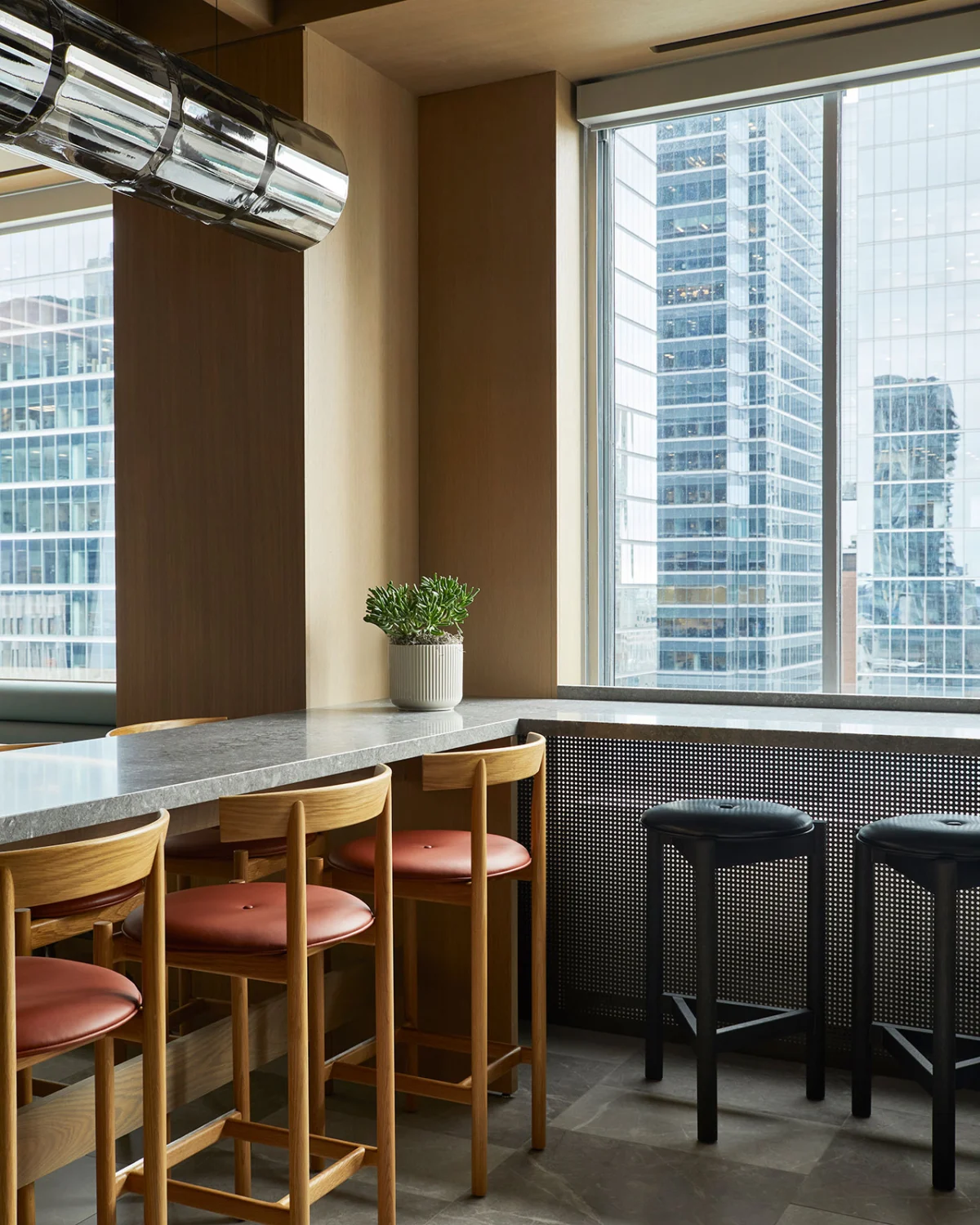
The contemporary office landscape, drastically reshaped by the global pandemic, is undergoing a profound transformation as companies grapple with the complex challenge of enticing employees back to physical workspaces. What was once a perfunctory obligation for many has evolved into a strategic question for organizations: What, precisely, makes the office a compelling destination in an era of flexible work? For McLeish Orlando Lawyers, a distinguished boutique law firm situated in the heart of downtown Toronto, the answer was a bold departure from conventional corporate amenities. Rather than simply upgrading a functional breakroom, the firm partnered with the innovative design practice Studio Ha/Wa to conceive and execute a sprawling, sophisticated lounge that transcends the utilitarian, creating a multi-faceted social and professional hub. This ambitious 685-square-foot space, a significant expansion from its original 530-square-foot footprint, is not merely an aesthetic upgrade; it represents a forward-thinking investment in fostering community, collaboration, and employee well-being, signaling a new paradigm for the return-to-office experience.
The Evolving Dynamics of the Post-Pandemic Workplace
The global shift to remote work during the pandemic fundamentally altered perceptions of office necessity. Initially, many employees cherished the flexibility and work-life balance offered by home-based work, leading to a widespread reluctance to return to pre-pandemic routines. Studies consistently indicated a strong preference for hybrid models, with a significant portion of the workforce expressing a desire for at least some remote work. A 2023 survey by hybrid work software company Scoop, for instance, revealed that approximately 60% of companies were operating under a hybrid model, with only 12% fully in-office. This data underscored a critical challenge for employers: simply reopening doors and reissuing keycards would not suffice. The traditional office, often characterized by monotonous aesthetics, rigid layouts, and limited amenities, no longer held universal appeal. Companies realized they needed to offer more than just a desk; they needed to offer an experience that justified the commute and rivaled the comforts of home.
The legal sector, known for its demanding hours and collaborative nature, felt this pressure acutely. While remote work offered flexibility, it also complicated impromptu discussions, mentorship, and the organic team-building that often occurs in shared physical spaces. Law firms, like many professional services organizations, rely heavily on strong internal relationships and a cohesive culture, elements that can be challenging to cultivate exclusively through virtual platforms. McLeish Orlando Lawyers recognized that their physical office needed to evolve from a purely transactional workspace into a vibrant nexus for both professional interaction and personal respite. This understanding marks a crucial point in the chronology of post-pandemic workplace evolution, moving from an initial phase of mandatory remote work, through tentative returns, to a current phase of strategic re-investment in office environments.
McLeish Orlando’s Strategic Vision: Beyond the Breakroom
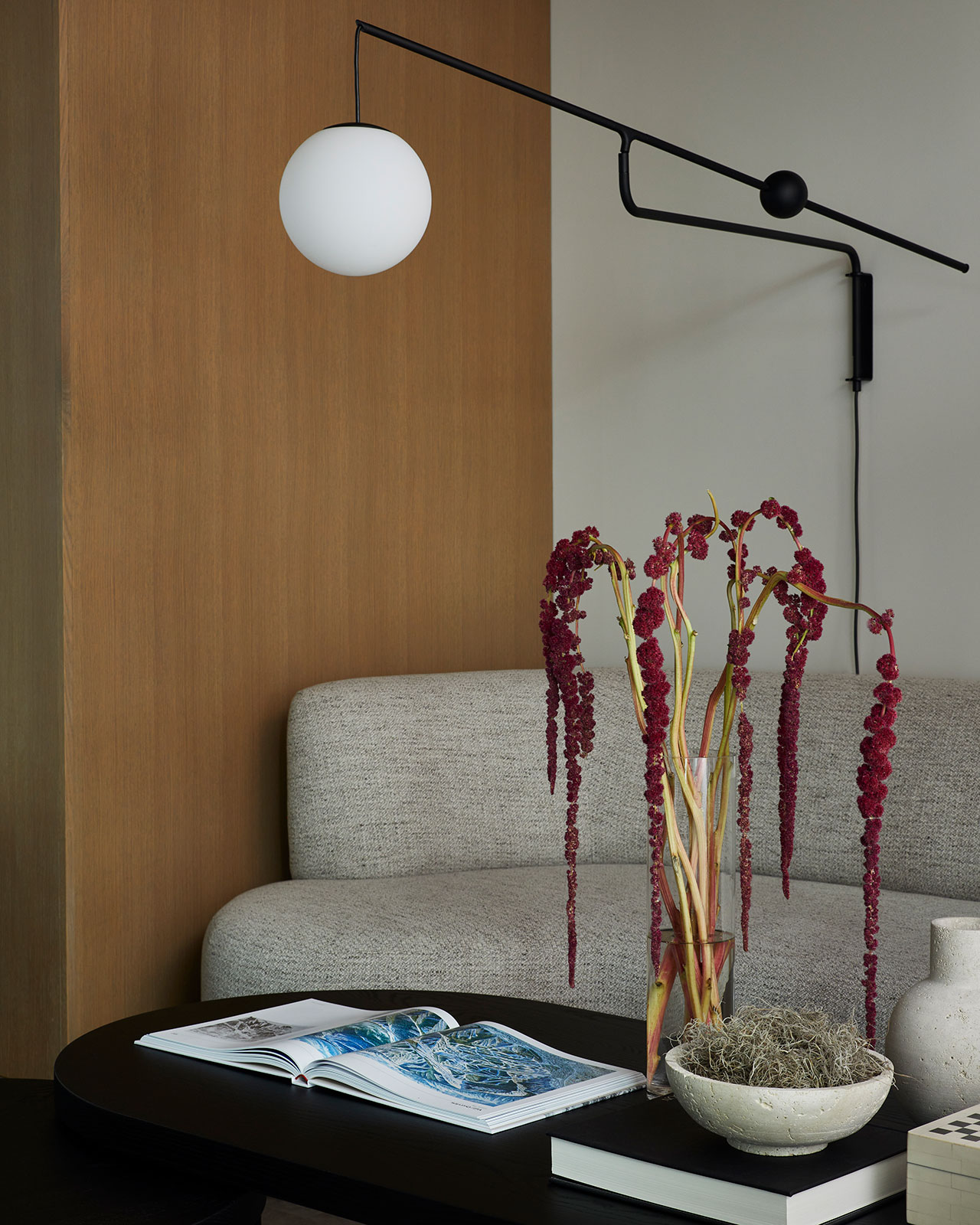
Before its transformation, the space at McLeish Orlando served as an "underused break space"—a description that highlights its limited functionality and appeal. It was, by most accounts, a typical corporate lunchroom: functional but uninspired, characterized by the generic carpet tiles, basic bathroom fixtures, and ubiquitous ceiling panels that define many corporate settings. The firm’s leadership understood that merely polishing this existing model would not achieve their strategic objectives. Instead, they sought a complete re-imagination, one that would make the office a genuine draw, supporting a diverse range of activities that foster both productivity and camaraderie. This vision aligned with emerging trends in commercial real estate, where landlords and tenants are increasingly investing in "amenity-rich" spaces designed to enhance employee satisfaction and engagement. The goal was to create a "social glue" that Zoom calls simply could not replicate—a space for everything from informal coffee breaks and quiet reflection to spontaneous team huddles, communal lunches, and even after-hours social gatherings.
The decision to enlist Studio Ha/Wa for this pivotal project underscores McLeish Orlando’s commitment to a high-caliber design solution. Studio Ha/Wa, known for its expertise in creating sophisticated, human-centered environments, was tasked with transforming the utilitarian into the extraordinary. By merging the existing lunchroom with an adjacent, underutilized office, the designers were able to expand the footprint to 685 square feet, providing ample room to execute a multi-layered design scheme. This expansion wasn’t just about size; it was about reimagining the very purpose and potential of the corporate common area, reflecting a broader trend of companies optimizing their existing real estate to create more impactful spaces rather than simply expanding footprint.
Studio Ha/Wa’s Vision: Blurring the Lines Between Work and Hospitality
The resulting lounge, perched on the 18th floor of a bustling Toronto high-rise, dramatically departs from the stark, often sterile aesthetic associated with traditional corporate environments. Studio Ha/Wa’s design ethos for McLeish Orlando leans heavily into the "resimercial" trend, a portmanteau of residential and commercial, which seeks to imbue workplaces with the comfort, warmth, and aesthetic appeal of a high-end home or boutique hotel. This approach is rooted in the understanding that if employees are to voluntarily return to the office, the environment must offer something genuinely desirable and distinct from their home setups.
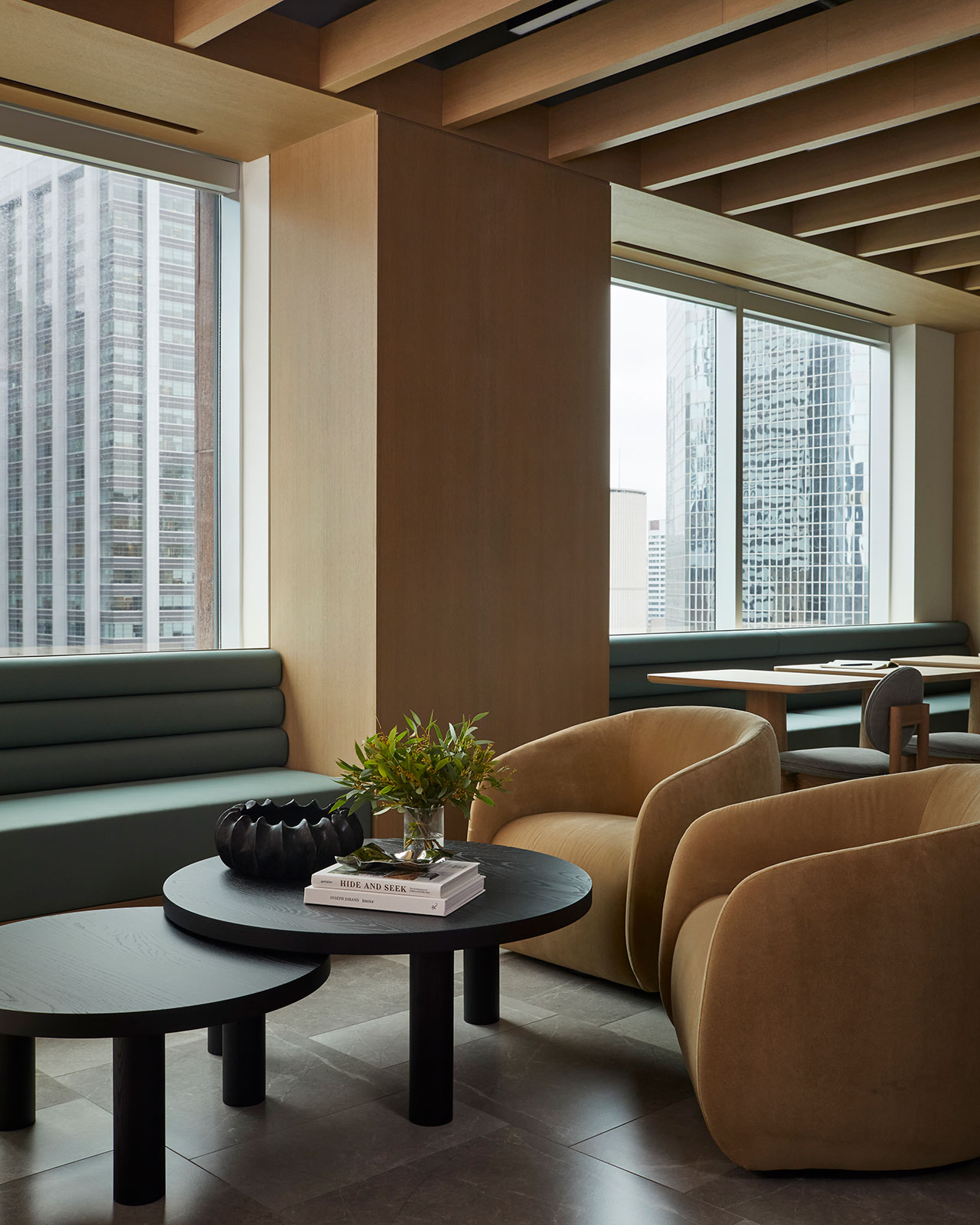
The transformation aimed to create an "open, layered environment" that evokes the sophisticated ambiance of a hotel lobby or an exclusive members’ club. This strategic shift in identity was paramount. It moved the space beyond mere functionality to one of intentional experience. The design principles applied by Studio Ha/Wa offer valuable insights for any organization seeking to make their return-to-office initiatives more magnetic and less transactional. The project serves as a timely proposition for workplaces recalibrating their relationship with in-person culture, offering a blueprint for spaces that foster genuine connection rather than simply providing a place to perform tasks.
Key Design Principles and Their Impact
-
From Utilitarian Breakroom to Dynamic Social Hub:
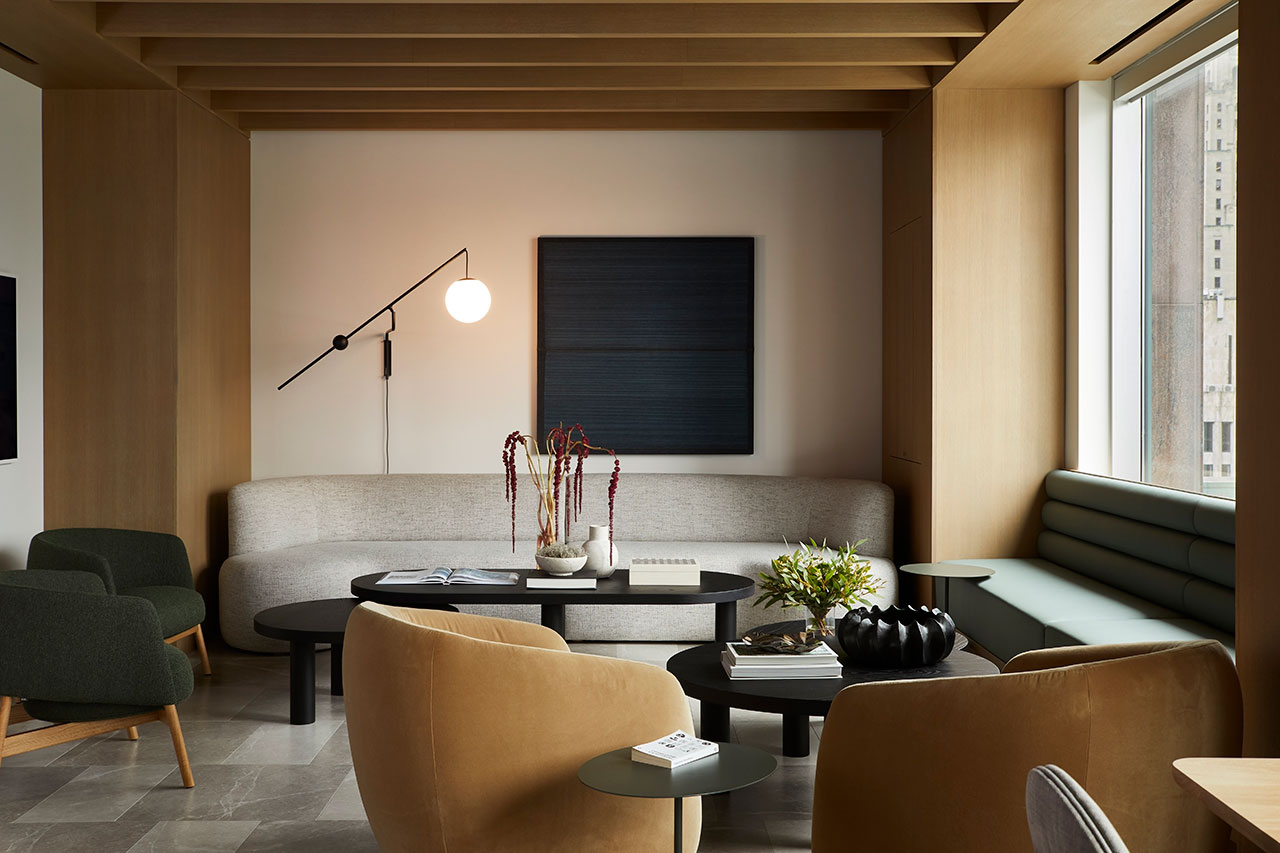
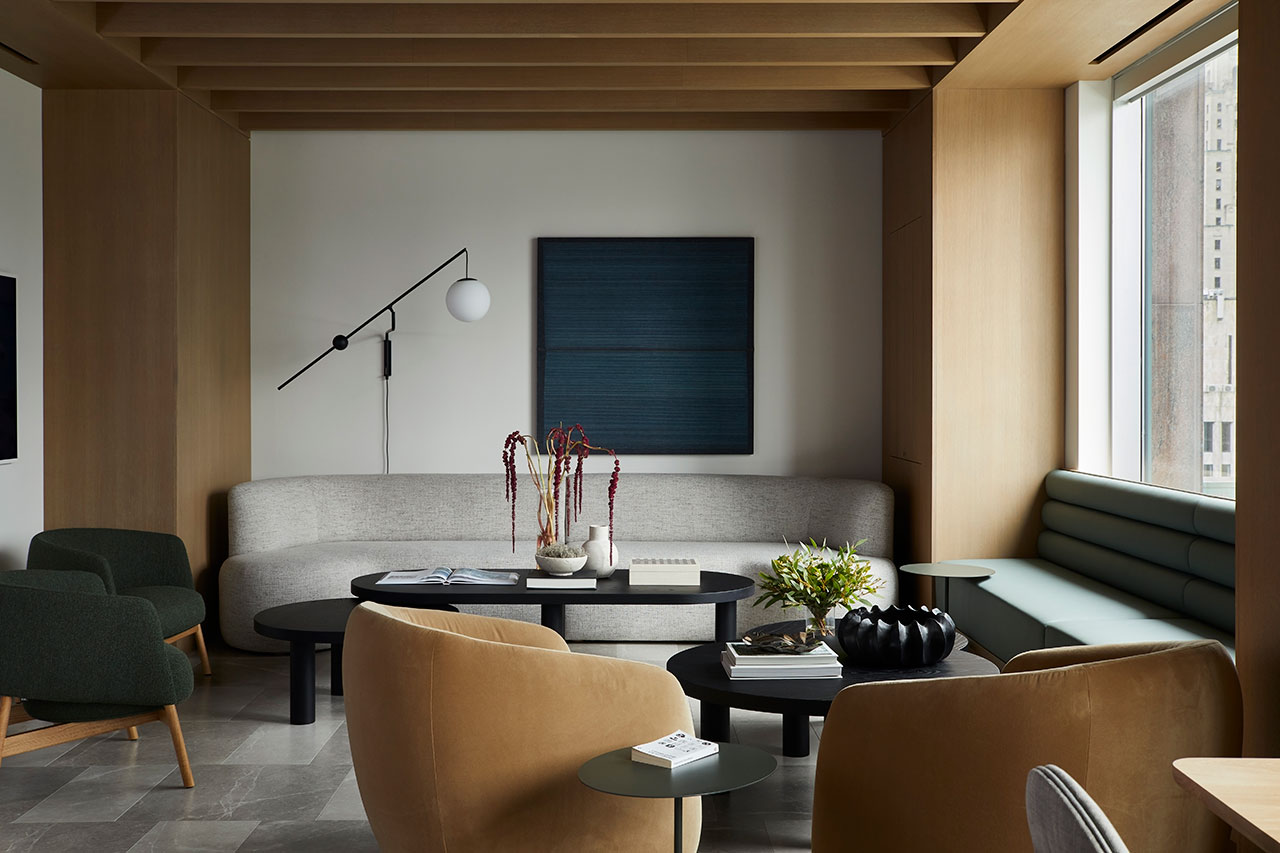
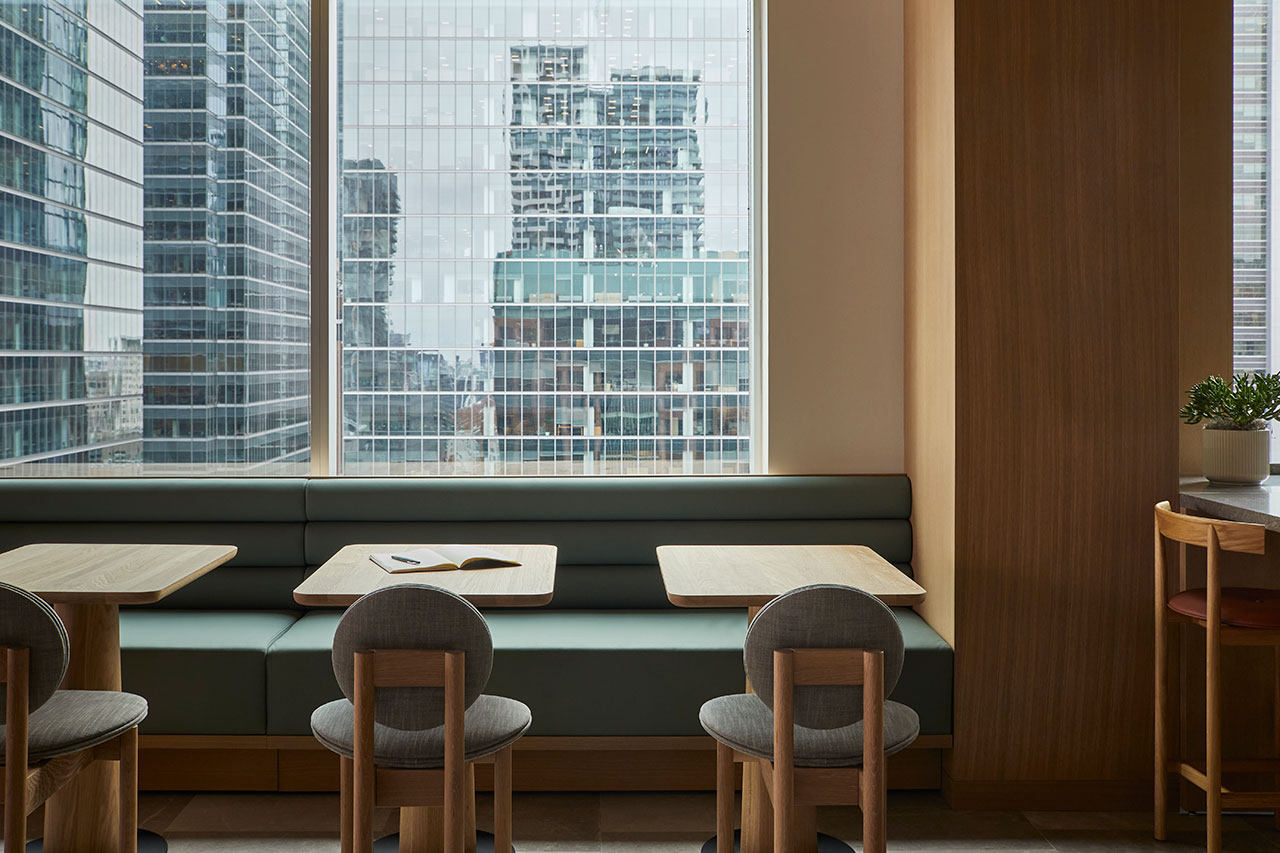
The most fundamental conceptual shift was redefining the space’s identity. Studio Ha/Wa understood that the old "lunchroom" moniker carried connotations of basic utility. By repositioning it as a "social hub," they set the stage for a space that supports a wider array of activities. This hub now features a distinct lounge zone with soft, inviting seating arrangements perfect for casual conversations, focused individual work, or moments of decompression. Adjacent banquettes provide semi-private nooks for informal meetings or collaborative tasks. Dining tables are designed to accommodate both individual lunches and larger group meals, easily reconfigured for different needs. At the heart of it all, a thoughtfully designed kitchen serves as an anchor, evoking the comforting familiarity of a shared domestic ritual, encouraging natural interaction and community building. This multi-functional approach ensures the space is always active and adaptable, a true living room for the office, thereby increasing its utilization and maximizing the firm’s investment. -
The Power of Zoned Spaces, Not Rigid Rooms:
Studio Ha/Wa eschewed rigid walls and compartmentalization in favor of an open-plan layout delineated by distinct zones. This strategy maintains visual connectivity and facilitates smooth circulation while allowing each area to possess its own unique rhythm and purpose. Zoning is subtly achieved through intelligent furniture groupings, varied lighting schemes, changes in material textures, and slight shifts in scale. For instance, perimeter banquettes are strategically placed to maximize seating efficiency and keep the central floor clear for flow, while offering comfortable, semi-enclosed seating. Rectangular dining tables can function individually for focused work or be effortlessly combined to host larger gatherings. Nesting coffee tables in the lounge area offer flexible surface space that can expand or contract based on the group’s needs, embodying adaptability. This fluid approach to space planning acknowledges the diverse needs of modern workers, offering choice and flexibility within a cohesive environment, a crucial element for encouraging diverse groups to utilize the space concurrently.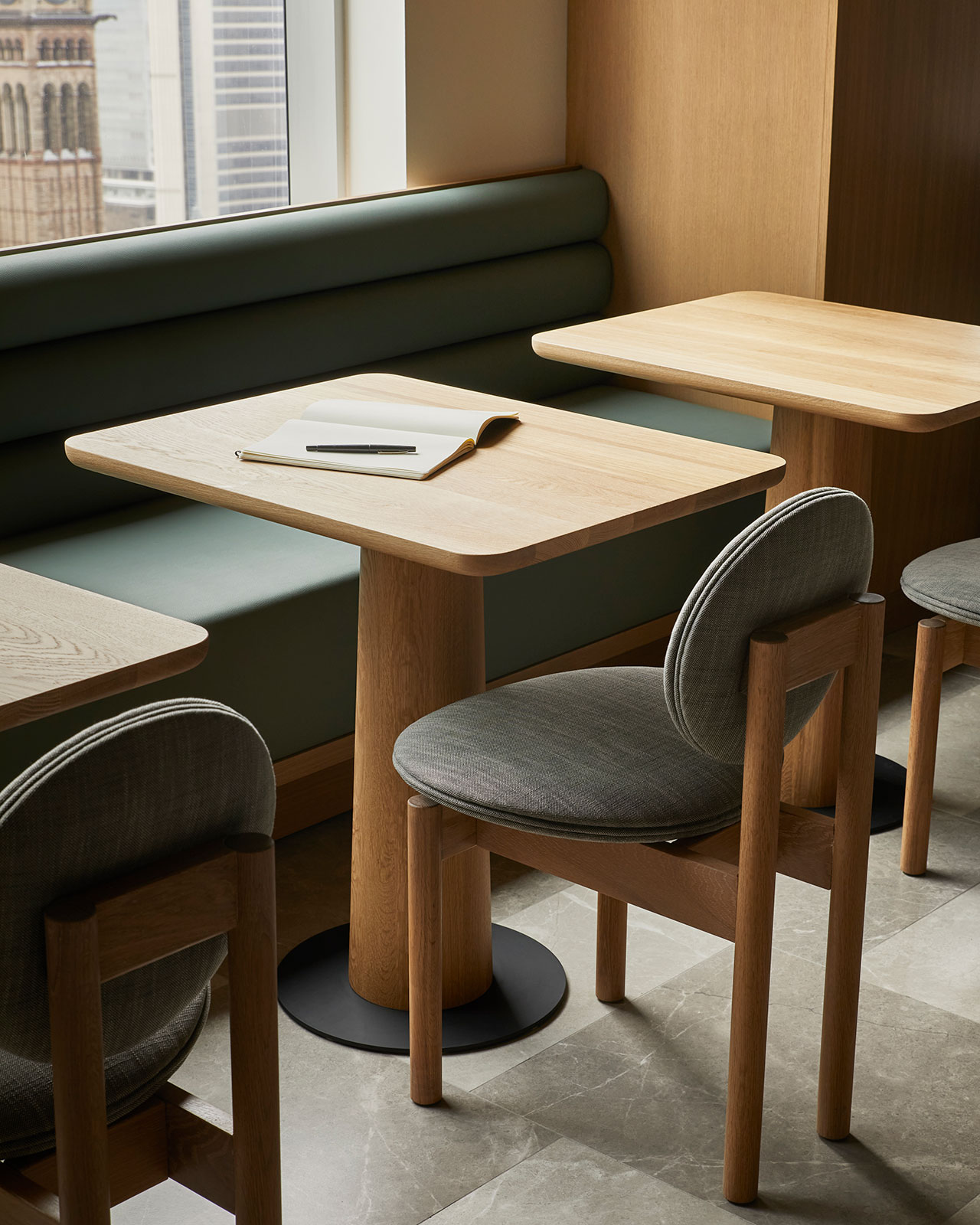
-
Elevating the Overhead: The Rift-Cut White Oak Ceiling:
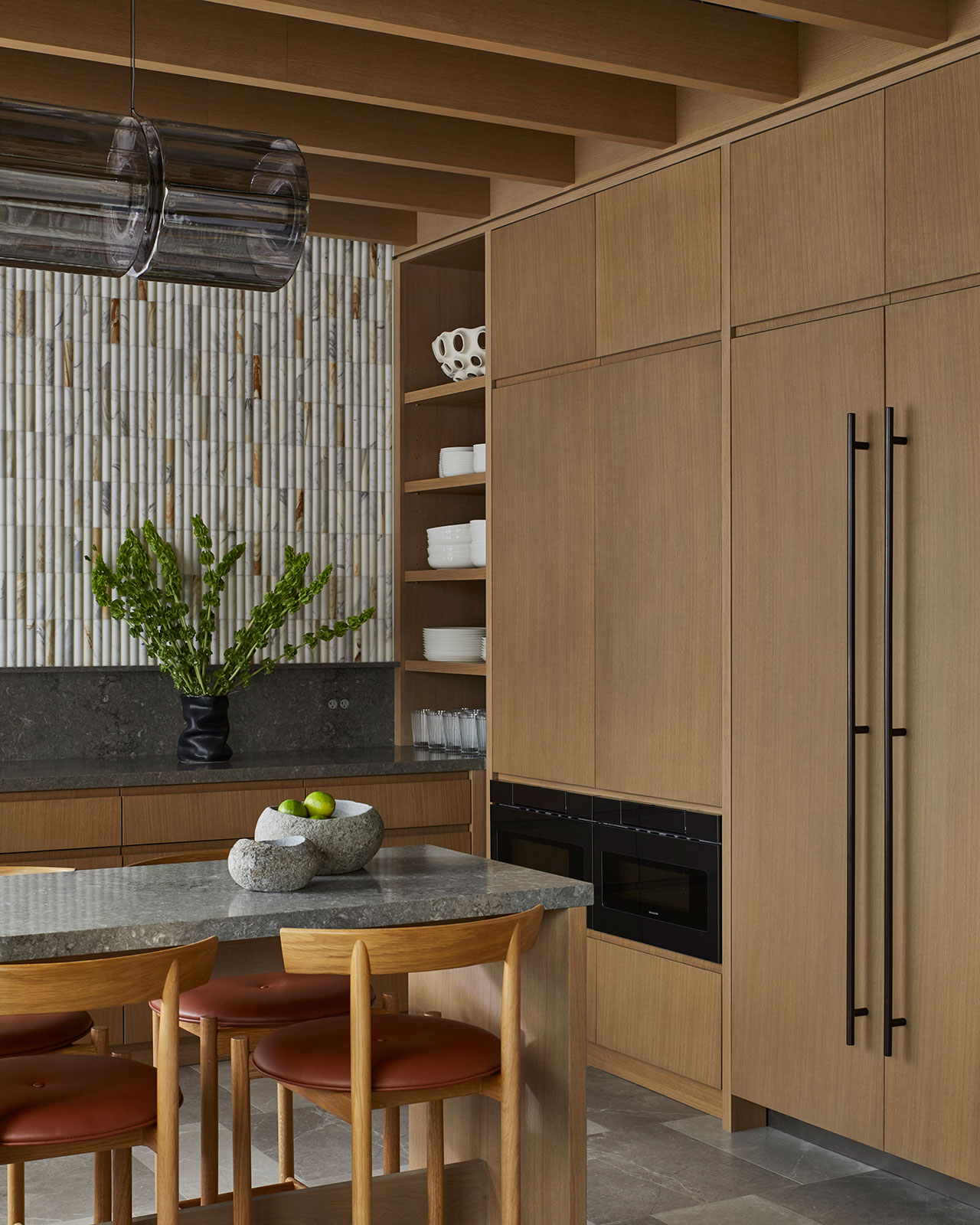
Perhaps one of the most striking and impactful design decisions lies above eye level. The existing dropped acoustic-tile ceiling, a ubiquitous feature of many corporate environments, was replaced with a bespoke beamed, rift-cut white oak ceiling. This architectural gesture is far more than decorative; it introduces profound warmth, dynamic movement, and a sophisticated visual rhythm to the entire lounge. Crucially, it also cleverly conceals mechanical systems, transforming a functional necessity into an aesthetic asset. The use of oak extends beyond the ceiling, wrapping around structural columns and integrating seamlessly with the kitchen millwork, creating a unifying architectural language that grounds the space. This thoughtful treatment of the ceiling serves as a powerful reminder that often-overlooked infrastructural elements can be transformed into key atmospheric contributors, adding a layer of residential comfort and bespoke craftsmanship rarely seen in commercial settings, enhancing perceived value and luxury. -
Resilience Meets Refinement: Material Choices for Commercial Wear:
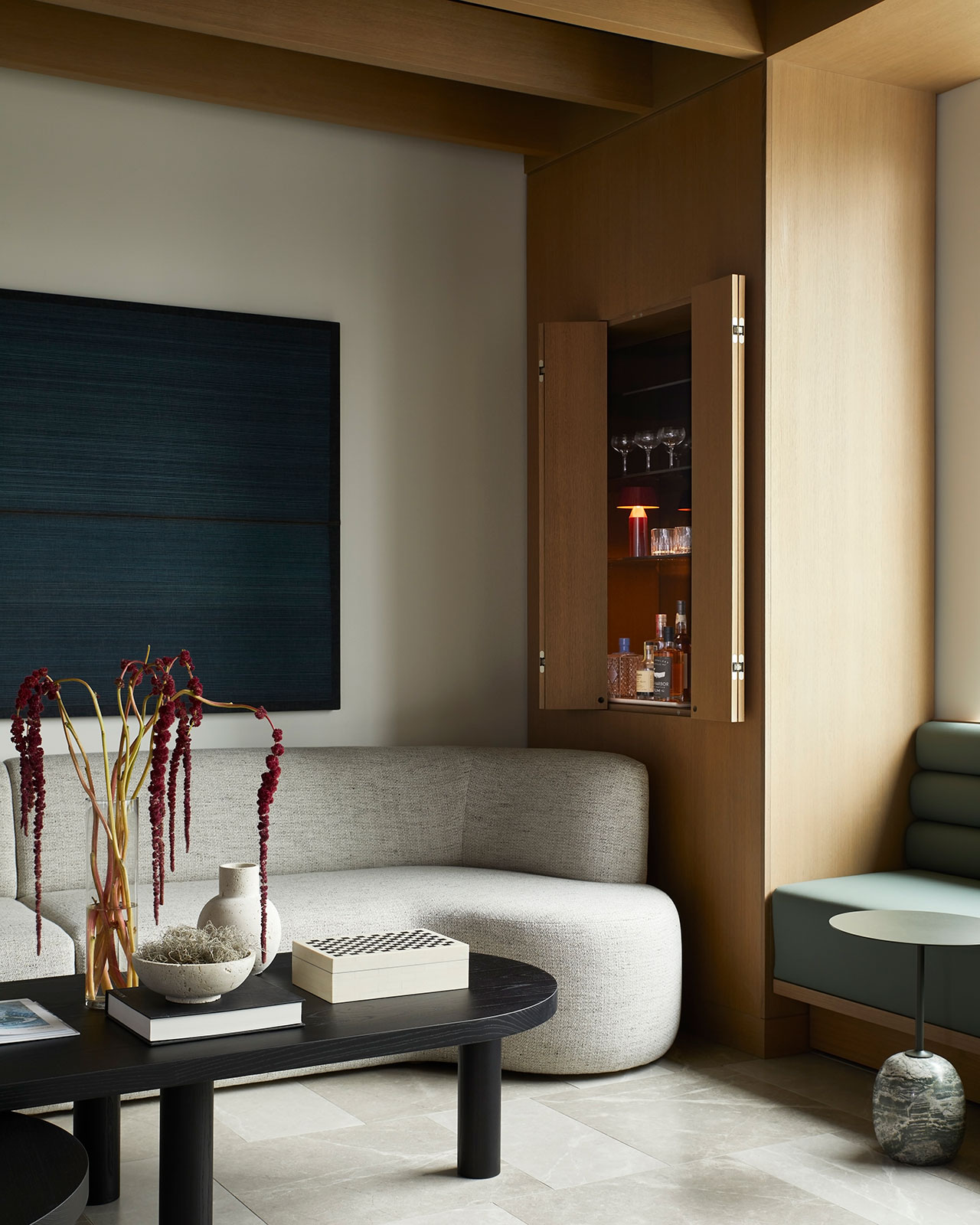
While the lounge exudes a residential-inspired softness, Studio Ha/Wa meticulously selected materials engineered for commercial durability. This balance between aesthetic appeal and practical resilience is critical for a high-traffic corporate environment. The designers opted for robust materials such as porcelain tile flooring, which offers superior wear resistance and easy maintenance; quartz countertops for their non-porous and durable surfaces; and leather stools and vinyl banquettes, chosen for their longevity and ease of cleaning. Performance-grade fabrics are used for upholstered pieces, ensuring they withstand daily use without sacrificing comfort or style. The color palette further reinforces this balance: a neutral base of white walls, tonal greys, black accents, and warm oak provides a serene backdrop. Pops of personality are introduced through carefully chosen accents: green bouclé armchairs, camel performance velvet swivel chairs, sage vinyl banquettes, and rust leather stools. Jewel-toned artwork by Toronto artist Alexander Jowett adds vibrant character without overwhelming the sophisticated, edited aesthetic, creating a space that feels curated yet robust, ensuring the firm’s investment maintains its appeal over time.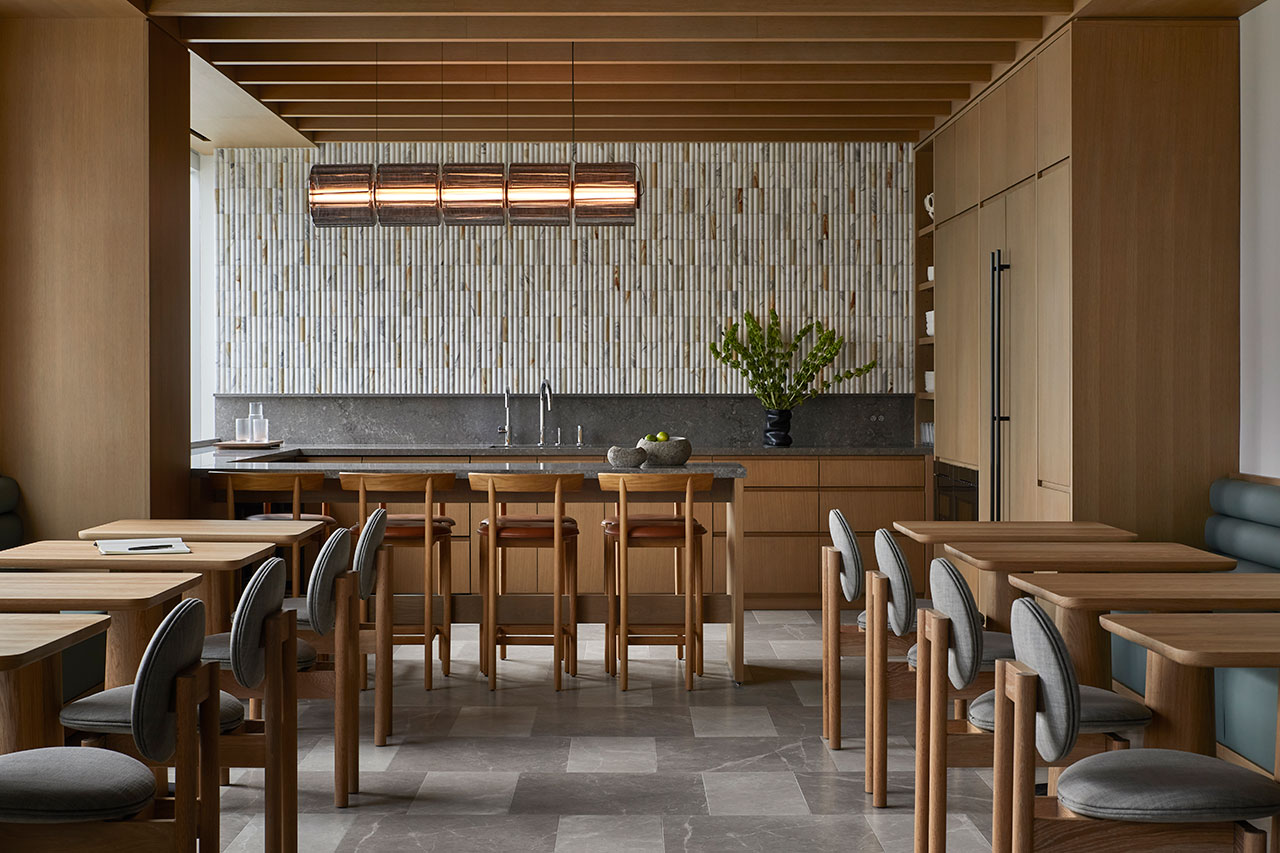
-
A Kitchen for All Hours: Form Meets Function:
The kitchen’s design exemplifies intelligent multifunctionality, seamlessly transitioning from a practical workday amenity to a discreet backdrop for after-hours events. Integrated appliances are concealed behind matching oak panels, maintaining a clean, uninterrupted aesthetic. Drawer microwaves are cleverly tucked below counter height, and an "appliance garage" hides daily essentials like coffee makers and toasters, ensuring a clutter-free appearance when the space shifts from casual lunch spot to sophisticated event venue. A focal point is created at the north end of the room by full-height Calacatta Gold fluted tile, replacing traditional upper cabinets. The natural stone’s elegant warm and cool veining harmonizes with the lounge’s overall palette, while its distinctive curved profile adds textural depth and visual interest, particularly behind A-N-D Light’s sculptural Column Pendant. This design ensures the kitchen is not only highly functional but also a visually appealing element that enhances the lounge’s overall ambiance, capable of receding gracefully when not actively in use, maximizing its utility for various corporate functions. -
Curated Comfort: Residential Styling in a Corporate Setting:
Studio Ha/Wa approached the styling of the lounge with the same discerning eye typically applied to a high-end residential interior. This involved a thoughtful curation of new and vintage accessories, original artwork, sculptural vessels, and a selection of coffee table books chosen to resonate with the sophisticated clientele of a law firm. The key was "restraint" – the styling is edited and intentional, avoiding the common corporate pitfall of overfilling or generic decor. As Erin Hannon-Watkinson, founder and creative director of Studio Ha/Wa, articulates, "The intention of the space, despite being designed to be multifunctional and within a corporate environment, was ultimately to be a refuge for the law firm’s staff and lawyers." This philosophy is evident in every carefully placed item, contributing to an environment that feels welcoming, inspiring, and distinctly human, a critical factor in fostering employee comfort and belonging.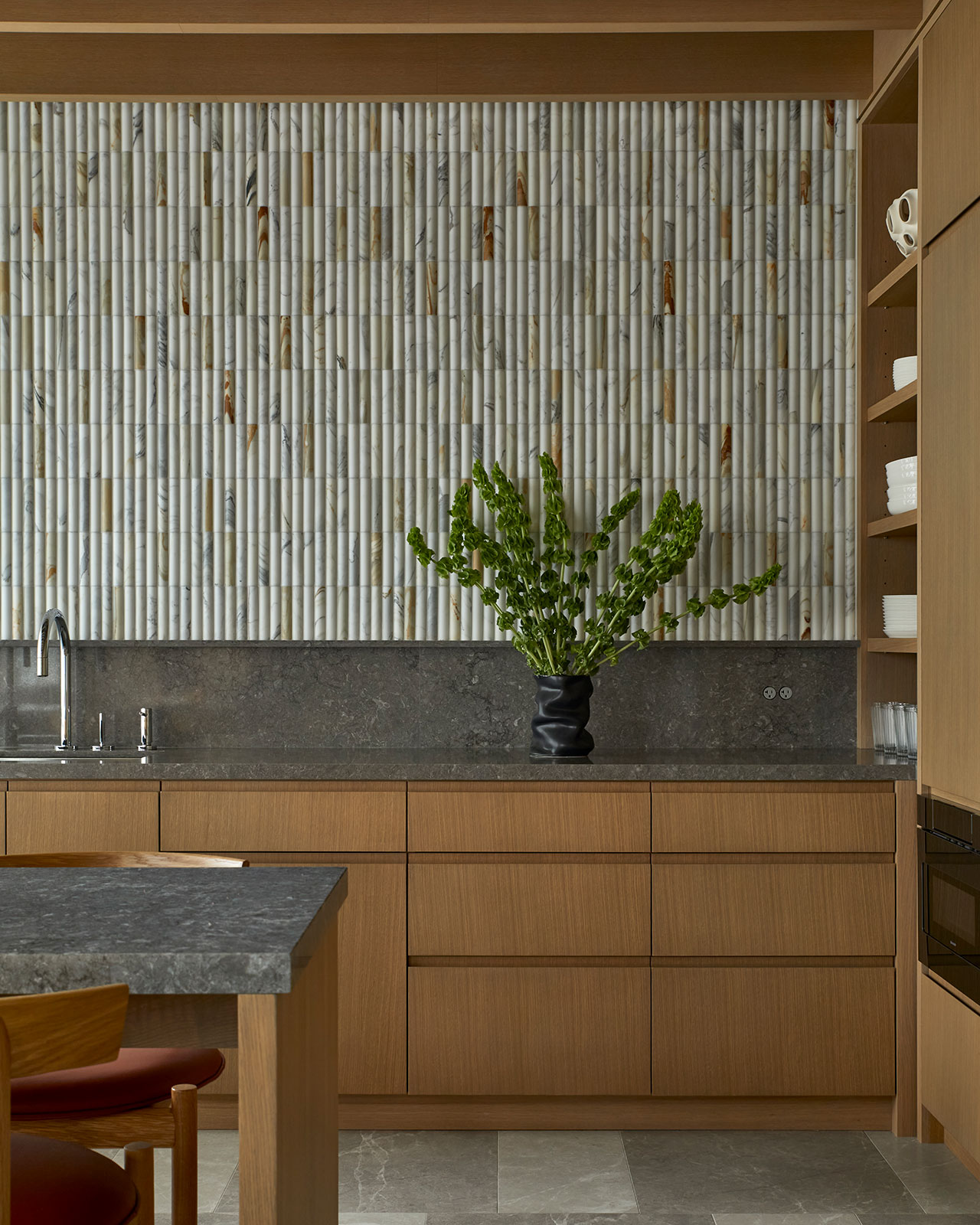
Broader Implications and the Future of Workplace Design
The McLeish Orlando Lawyers lounge project stands as a compelling case study in the evolving demands of the modern workplace. It reflects a growing understanding among forward-thinking organizations that the office, to remain relevant, must offer more than just infrastructure. It must be a strategic tool for talent attraction and retention, a crucible for corporate culture, and a supportive environment for employee well-being.
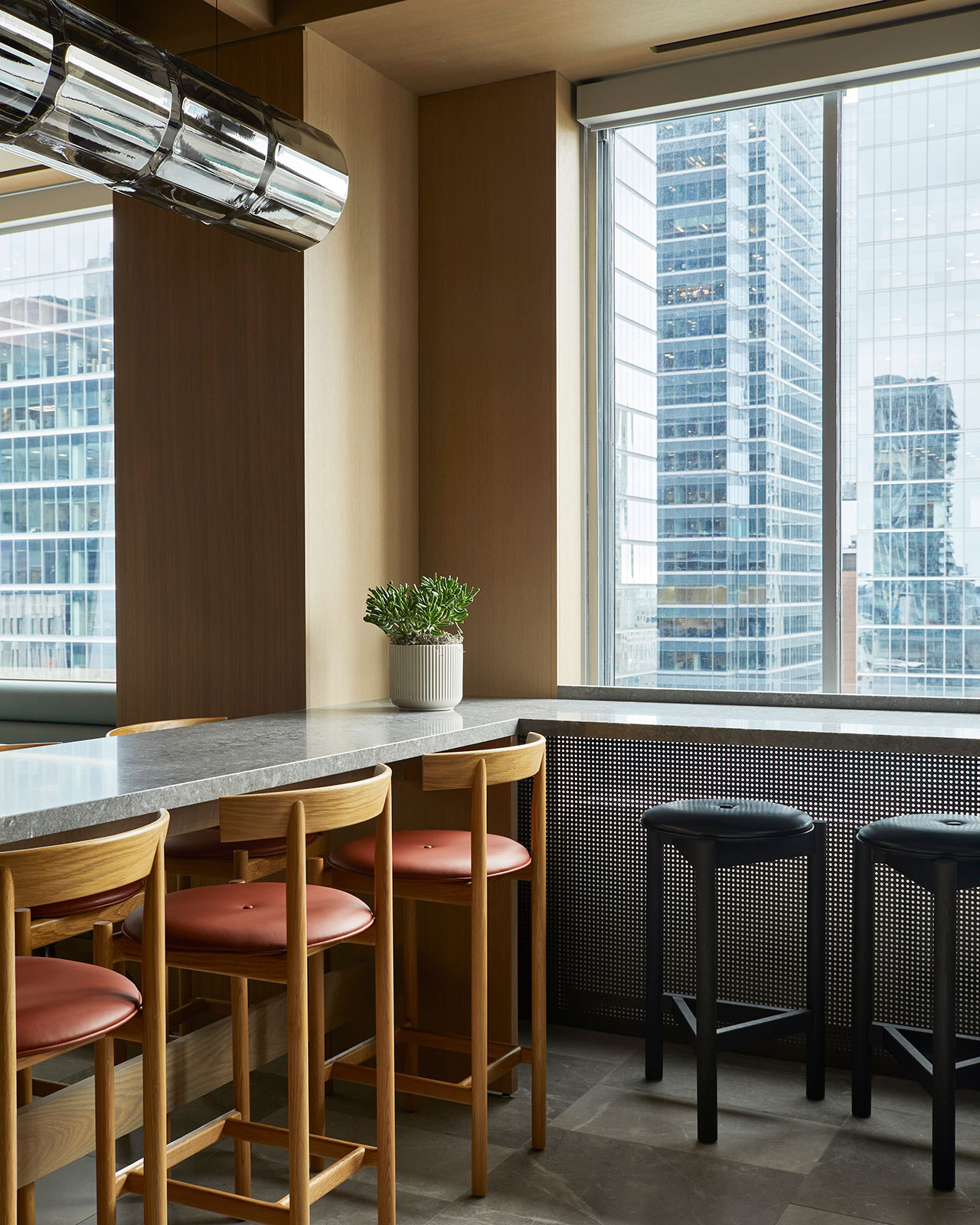
For McLeish Orlando, the investment in this sophisticated lounge is likely to yield multiple benefits. In an increasingly competitive legal market, an attractive, amenity-rich office can be a significant differentiator in recruiting top legal talent, particularly younger generations who prioritize workplace experience. Furthermore, by fostering a more comfortable and engaging environment, the firm can expect enhanced collaboration among its lawyers and staff, improved morale, and potentially greater overall productivity. The emphasis on social interaction, often diminished by remote work, is crucial for building strong internal networks and a cohesive team identity, which is invaluable in a profession reliant on teamwork and mentorship.
Industry experts in commercial real estate and workplace strategy are increasingly advocating for such "destination offices." According to a report by Cushman & Wakefield on global office trends, companies are re-evaluating their real estate portfolios to prioritize quality over quantity, investing in premium spaces that justify a return to the office. This often includes features like enhanced social spaces, wellness amenities, and flexible configurations that support diverse work styles. The McLeish Orlando lounge exemplifies this trend, moving away from purely functional spaces to experiential ones that prioritize comfort, aesthetic appeal, and human connection, effectively making the office a place of choice rather than obligation.
The project also highlights the vital role of skilled design partners like Studio Ha/Wa, alongside collaborators RDG Millwork and MForm Construction Group. Their ability to translate strategic business objectives into tangible, inspiring physical spaces is paramount. The thoughtful integration of durable materials, flexible zoning, and residential-inspired aesthetics demonstrates a sophisticated understanding of both commercial realities and human psychology. This kind of collaborative effort across design, millwork, and construction is essential for delivering complex, high-quality commercial interiors that meet contemporary demands.
In conclusion, the McLeish Orlando Lawyers lounge by Studio Ha/Wa is more than just a beautifully designed office amenity. It is a strategic response to the shifting paradigms of work, a testament to the power of thoughtful design to shape corporate culture, and a blueprint for organizations aiming to make their return-to-office strategies truly magnetic. As companies continue to recalibrate their relationship with in-person culture, projects like this illuminate a path forward: one where the office is not merely a place to work, but a place people genuinely want to be, fostering a vibrant, engaging, and ultimately more productive professional community.