Muhammad Hendra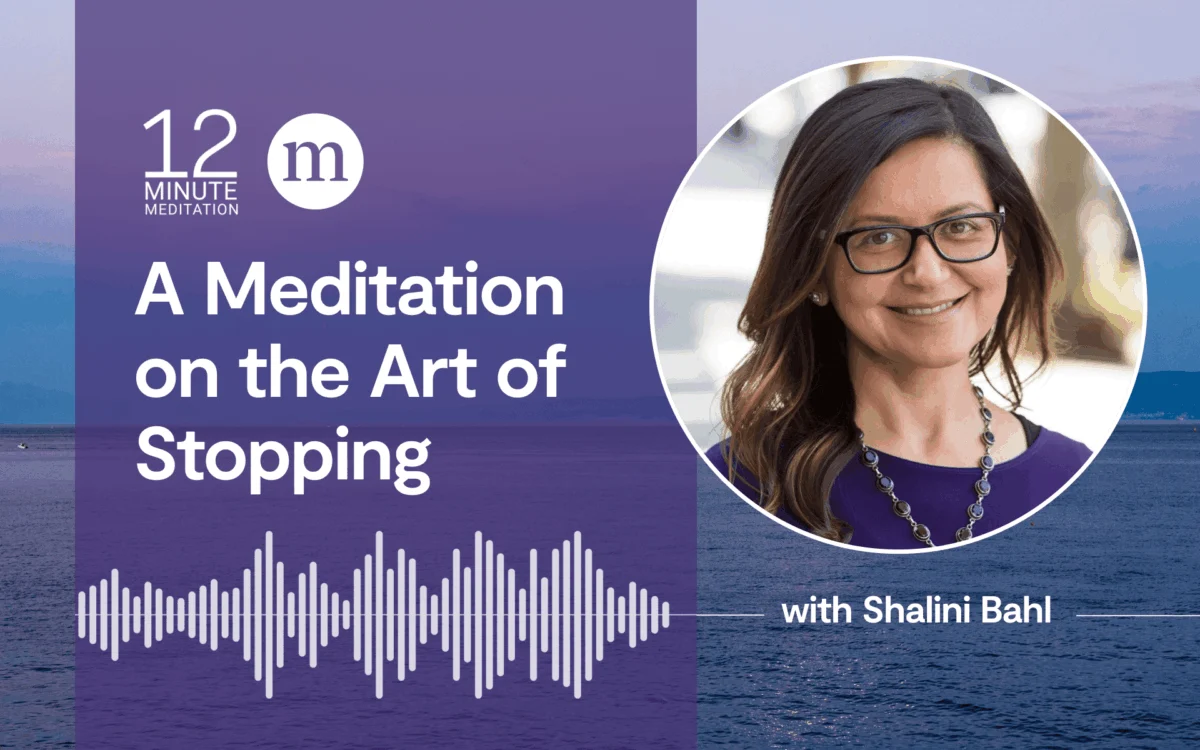
In a significant reinterpretation of traditional mindfulness practices, teacher Shalini Bahl is reminding practitioners and newcomers alike that the essence of mindfulness, in its purest form, is fundamentally about "stopping." This simple yet profound act involves pausing to notice, to breathe, and to gently interrupt the often-unconscious, engrained habits of thought that dominate daily existence, thereby fostering a quiet, present awareness. This perspective challenges the prevalent notion that mindfulness and meditation necessitate extensive, sustained exercises, reframing them instead as accessible collections of "micro-moments."
These micro-moments are characterized by brief periods of intentional stopping, focused breathing, a conscious awareness of one’s body and surroundings, acknowledging distractions, and then gently returning to the present. This iterative process, repeated consistently, forms the bedrock of an effective mindfulness practice. As Bahl articulates, the guided practice she advocates centers on "the art of stopping"—a deliberate release from the mind’s habitual patterns of pushing, pulling, and ceaseless mental activity, in favor of simply "being" for a transient moment.
The Evolution of Mindfulness and the Rise of Accessibility
The concept of mindfulness, rooted in ancient Eastern contemplative traditions, has undergone a significant transformation in its journey to Western societies. Initially introduced through figures like Jon Kabat-Zinn and his Mindfulness-Based Stress Reduction (MBSR) program in the late 1970s, mindfulness was often presented as a structured, intensive program requiring dedicated time and effort, typically in extended meditation sessions. While highly effective, this model sometimes posed a barrier for individuals navigating the relentless pace of modern life, leading to the perception that mindfulness was an arduous commitment rather than an accessible tool.
The past two decades have witnessed a growing recognition of the need for more adaptable and integrate-able mindfulness practices. This shift is partly driven by an escalating global mental health crisis, characterized by rising levels of stress, anxiety, and burnout. According to a 2022 report by the American Psychological Association, 84% of adults reported feeling the effects of stress, with daily stress levels increasing significantly since the pre-pandemic era. In response to these pervasive pressures, the wellness industry and mental health professionals have increasingly explored and advocated for "micro-practices"—short, potent interventions that can be seamlessly woven into the fabric of daily routines. Shalini Bahl’s teachings exemplify this evolution, positioning "the art of stopping" as a direct and highly effective response to the contemporary demand for pragmatic well-being strategies.
Deconstructing "The Art of Stopping": More Than Just Inaction
Bahl’s emphasis on "stopping" is not an endorsement of passive inaction but rather an invitation to active, intentional presence. It involves a conscious disengagement from the default mode network (DMN) of the brain, which is responsible for self-referential thought, mind-wandering, and rumination. By choosing to stop, even for a few seconds, an individual consciously shifts attention from the internal narrative to the immediate sensory experience.
This process typically involves:
- Noticing: Becoming aware of immediate sensations, thoughts, or emotions without judgment. This could be the feeling of breath, the sound of ambient noise, or a specific bodily sensation.
- Breathing: Anchoring attention to the breath, observing its natural rhythm without attempting to control it. The breath serves as a readily available focal point that is always in the present moment.
- Interrupting Engrained Habits: Recognizing the automatic mental patterns—the "pushing, pulling, running in circles"—and gently diverting attention away from them. This is not about suppressing thoughts but rather about observing them as transient phenomena without getting entangled.
- Quiet Presence: Cultivating a sense of stillness and awareness, allowing one to simply "be" without needing to do, achieve, or analyze.
This deliberate interruption, Bahl suggests, acts as a crucial bridge between our automatic reactions and our conscious choices. It creates a space where individuals can observe their internal landscape before reacting impulsively, thereby fostering greater self-regulation and intentionality.
Scientific Underpinnings: The Efficacy of Brief Mindfulness Pauses
The effectiveness of brief mindfulness interventions is increasingly supported by neuroscience and psychological research. Studies have demonstrated that even short periods of mindfulness practice can yield measurable benefits:
- Improved Attention and Focus: Research published in Emotion journal has shown that brief mindfulness training can improve attention and reduce emotional reactivity. Regular micro-pauses help to reset cognitive functions, reducing mental fatigue and enhancing sustained attention.
- Stress Reduction: Short mindfulness breaks have been linked to reductions in cortisol levels, the body’s primary stress hormone. A study in Health Psychology found that even 10-minute daily mindfulness meditations can significantly reduce perceived stress and improve mood. Bahl’s "art of stopping" leverages this mechanism, providing immediate relief from acute stress.
- Enhanced Emotional Regulation: By creating a momentary distance from emotional triggers, micro-practices empower individuals to respond to challenging situations with greater composure rather than reactivity. This aligns with findings that mindfulness strengthens the prefrontal cortex, an area of the brain responsible for executive functions and emotional control.
- Increased Cognitive Flexibility: Regularly shifting focus during micro-moments can enhance mental agility, allowing individuals to adapt more readily to new information and perspectives.
These scientific validations underscore why Bahl’s approach is not merely anecdotal but represents a pragmatically sound strategy for enhancing mental well-being in a data-driven world. The cumulative effect of numerous small acts of "stopping" throughout a day can be as profound, if not more so, than sporadic longer sessions for many individuals.
Integrating Micro-Practices: A Chronology for the Modern Day
The strength of micro-practices lies in their adaptability. Shalini Bahl’s teaching implicitly provides a chronological framework for how these moments can be integrated throughout a typical busy day:
- Morning Ritual (Waking Up): Instead of immediately reaching for a phone, a moment of "stopping" before getting out of bed—noticing the feeling of the sheets, the sound of the morning, the sensation of breath.
- Commute (Transitioning): During a walk, drive, or public transport ride, taking a minute to disengage from planning or worrying and simply observe the surroundings, or focus on the rhythm of movement and breath.
- Workday (Breaks and Transitions): Before starting a new task, after a difficult meeting, or during a coffee break, pausing for 30-60 seconds to recenter. This could involve a few deep breaths, a body scan, or simply noticing the taste of a drink.
- Meal Times (Mindful Eating): Before the first bite, a brief pause to appreciate the food, and then eating with full attention to taste, texture, and aroma, rather than multitasking.
- Evening (Wind-Down): Before sleep, a micro-practice of gratitude or a brief body scan to release tension accumulated throughout the day.
- Anytime (Moment of Frustration): When encountering a stressful situation or feeling overwhelmed, instead of reacting, taking a few seconds to "stop," breathe, and create a space for a more considered response.
This integration transforms mindfulness from a separate activity into an intrinsic quality of daily living, making consistent practice more attainable and less daunting.
Expert Endorsement and Broad Implications
The growing acceptance of micro-practices within the broader wellness community highlights their significance. Mental health professionals and organizations like Mindful.org, where Shalini Bahl’s work is featured, are actively promoting these accessible methods. Experts in the field, while not directly quoted in this context, consistently emphasize that approaches like "the art of stopping" are vital for democratizing mindfulness, making it less intimidating and more inclusive. This fosters greater public engagement with mental well-being strategies.
The implications of this shift are far-reaching:
- Enhanced Individual Resilience: By providing tools for immediate self-regulation, micro-practices empower individuals to navigate daily stressors with greater equanimity, fostering long-term psychological resilience.
- Improved Workplace Productivity and Culture: Companies increasingly recognize the benefits of mindfulness in reducing burnout and improving focus. Integrating micro-breaks can lead to more engaged employees and a healthier work environment.
- Demystification of Mindfulness: Bahl’s approach breaks down the perceived complexity of meditation, making it accessible to those who might otherwise be deterred by the commitment required for traditional long-form practices.
- Cumulative Well-being: The consistent application of small, intentional pauses accumulates over time, leading to profound shifts in awareness, emotional intelligence, and overall quality of life. The power lies not in the length of the practice, but in its regularity and intentionality.
Shalini Bahl’s contribution, articulated through her guided practices and her article on Mindful.org titled "How Micro-Practices Can Be the Bridge Between Your Meditation and Your Choices," underscores the transformative potential of these brief interventions. She effectively posits that these small acts of stopping are not mere substitutes for extended meditation but rather essential complements that integrate the benefits of mindfulness directly into the active flow of daily decision-making and living.
In a world perpetually demanding attention and action, the simple act of "stopping," as championed by Shalini Bahl, emerges as a revolutionary yet profoundly intuitive pathway to cultivating presence, clarity, and inner peace. It offers a sustainable model for engaging with mindfulness, ensuring that well-being remains within reach, even amidst the most demanding schedules.