Cintya Tara Annisa
The long-standing cultural perception of coffee as a fundamentally bitter beverage has historically been attributed to its high caffeine content. For decades, consumers and casual observers alike have assumed that the stimulating alkaloid responsible for coffee’s physiological effects was also the primary driver of its sharp, sometimes acrid flavor profile. However, contemporary food science is beginning to dismantle this assumption, revealing a complex chemical interplay that suggests caffeine’s sensory contribution is far less significant than previously imagined. Recent research conducted by food chemists at the Technical University of Munich and published in the Journal of Agricultural and Food Chemistry provides a rigorous scientific foundation for what specialty coffee roasters have long asserted: coffee possesses a unique internal mechanism that effectively masks the intense bitterness of caffeine.
This scientific inquiry into the "bitterness paradox" of coffee highlights a sophisticated biological and chemical arrangement. While pure caffeine is described by sensory experts as having a harsh, medicinal, and overwhelmingly sharp taste, these notes are largely absent or significantly muted in a standard cup of coffee. The study reveals that coffee contains specific molecular "masks" that prevent caffeine from interacting fully with the human tongue’s taste receptors. This discovery not only changes the understanding of coffee’s flavor profile but also explains why decaffeinated coffee, when processed correctly, maintains a flavor profile nearly indistinguishable from its caffeinated counterparts.
The Sensory Gap: Why Caffeine is Not the Primary Bitter Agent
To understand the significance of the Munich study, one must first understand the nature of caffeine itself. Caffeine (C8H10N4O2) is a methylxanthine alkaloid that occurs naturally in the seeds, leaves, and fruits of various plants, where it acts as a natural pesticide. In its isolated, crystalline form, caffeine is intensely bitter. In a laboratory setting, humans can detect the presence of caffeine at very low concentrations. Given that an average cup of coffee contains between 80 and 150 milligrams of caffeine—well above the human detection threshold—the beverage should, in theory, taste like liquid medicine.
The researchers at the Technical University of Munich sought to investigate why this is not the case. They utilized a panel of highly trained sensory experts to conduct a series of threshold tests. The methodology involved serving the experts standard coffee and then incrementally increasing the caffeine concentration. The results were startling: the experts were unable to detect a distinct increase in bitterness until the caffeine levels reached ten times the amount found in a standard cup of coffee. This suggests that the "background" chemistry of coffee provides a massive buffer, effectively shielding the palate from the alkaloid’s natural harshness.
The Chemistry of Masking: Chlorogenic Acids and Melanoidins
The search for the specific compounds responsible for this masking effect led the research team to isolate various chemicals found in the coffee bean. Through a process of elimination and recombination, two primary groups of compounds were identified as the "molecular silencers" of caffeine: chlorogenic acids and melanoidins.
Chlorogenic acids (CGAs) are a family of esters found in high concentrations in green coffee beans. They are well-known in the medical community as potent antioxidants associated with various health benefits, including improved insulin sensitivity and anti-inflammatory properties. In the context of flavor, CGAs are essential to the acidity and astringency of the brew. However, the study found that CGAs alone do not account for the masking of caffeine.
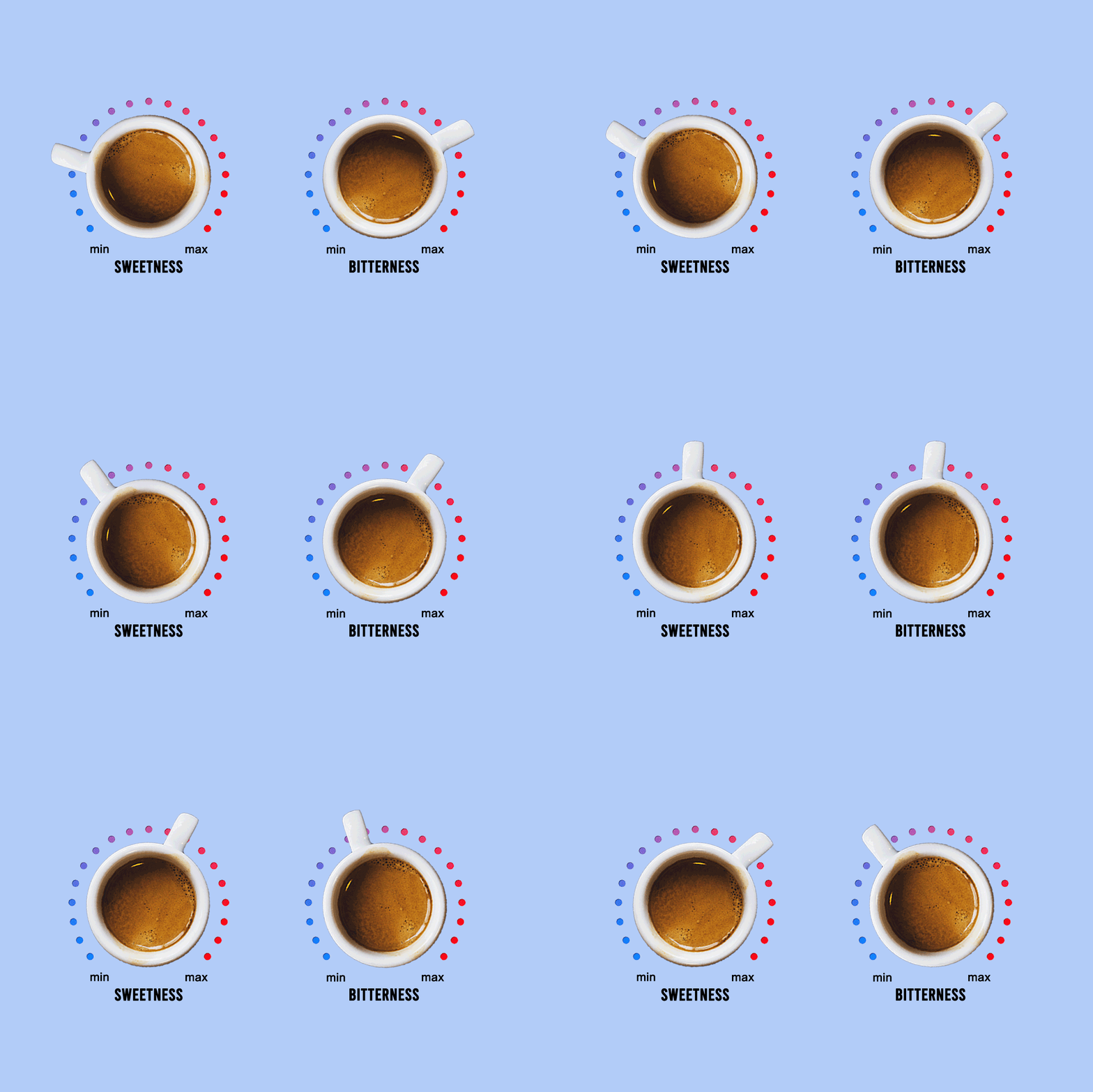
The second component, melanoidins, is even more critical. Melanoidins are complex, high-molecular-weight polymers formed during the roasting process via the Maillard reaction—a chemical reaction between amino acids and reducing sugars that gives browned food its distinctive flavor. These compounds are responsible for the brown color of roasted coffee and contribute to the "body" or mouthfeel of the drink. When researchers introduced a combination of chlorogenic acids and melanoidins into a pure caffeine solution, the perceived bitterness of the caffeine was reduced by approximately 50 percent.
The "Envelopment" Theory: A Molecular Shield
While the precise chemical bonding remains a subject of ongoing study, the Munich researchers have proposed a compelling theory regarding the physical interaction between these molecules. They hypothesize that melanoidins, due to their large and flexible molecular structure, act as a "wrap" or a shield.
In this theoretical model, melanoidins—potentially aided by the presence of chlorogenic acids—physically associate with caffeine molecules in the liquid solution. By essentially "enveloping" the caffeine, these larger complexes make the caffeine molecules too bulky or chemically "hidden" to fit into the TAS2R bitter taste receptors on the human tongue. If the caffeine molecule cannot dock with the receptor, the brain never receives the signal of intense bitterness. This molecular camouflage allows the other nuances of the coffee—such as floral, fruity, or nutty notes—to take center stage, even while the stimulant remains present and active in the solution.
The Roasting Paradox: Creating and Destroying Bitterness
The findings introduce a fascinating paradox regarding the roasting process. It is a common trope in the coffee industry that "darker roasts are more bitter." From a chemical perspective, this is true; the higher temperatures and longer durations of a dark roast break down chlorogenic acids into quinic acid and chlorogenic acid lactones, which contribute to a more traditional, "roasty" bitterness.
However, the roasting process is also what generates the melanoidins necessary to mask the medicinal bitterness of the caffeine. Therefore, the roast is simultaneously creating one type of bitterness (related to carbonization and organic acid breakdown) while creating the mechanism to hide another type of bitterness (caffeine). This delicate balance is what separates high-quality specialty coffee from commodity-grade products. In specialty coffee, the roasting profile is carefully managed to maximize the development of melanoidins and aromatic compounds without crossing the threshold into excessive carbonization, which would introduce "bad" bitterness that even melanoidins cannot hide.
Broader Implications for the Global Coffee Industry
The implications of this research extend far beyond the laboratory, impacting everything from agricultural practices to the multibillion-dollar decaffeination industry.
The Decaffeination Validation
For years, a segment of the coffee-drinking population has claimed that decaf coffee is inherently inferior in flavor because "the caffeine is missing." The Munich study effectively debunks this by proving that caffeine is not a major contributor to the desirable flavor profile of coffee. If decaf tastes "off," it is likely due to the harsh chemicals or high heat used during the decaffeination process—which can strip away the essential chlorogenic acids and precursor sugars—rather than the absence of caffeine itself. Modern, gentler methods like the Swiss Water Process or Carbon Dioxide method preserve the masking agents, allowing for a flavor profile that is chemically similar to regular coffee.

Culinary and Pharmaceutical Applications
Understanding how melanoidins mask bitterness could have significant applications in the wider food and pharmaceutical industries. Many life-saving medications are notoriously bitter, leading to poor compliance among pediatric patients. By isolating or synthesizing coffee-derived melanoidins, pharmaceutical companies could potentially develop more effective flavor-masking agents for oral medications. In the food industry, this knowledge could lead to the development of "functional foods" that are high in bitter nutrients (like polyphenols) but remain palatable to the average consumer.
Agricultural Focus
For coffee farmers, this research underscores the importance of the chemical composition of the raw green bean. If chlorogenic acids are vital for the eventual masking of bitterness, then soil health, altitude, and cultivar selection—all of which affect CGA levels—become even more critical for the final cup quality. This provides further scientific incentive for the production of Arabica coffee, which generally has a more complex chemical makeup than the hardier, more caffeine-heavy Robusta variety.
Timeline of Discovery in Coffee Chemistry
To appreciate the Munich study, it is helpful to view it within the broader timeline of coffee science:
- 1819: Friedlieb Ferdinand Runge isolates pure caffeine for the first time, identifying it as a potent alkaloid.
- 1900s-1950s: Early industrial coffee production focuses on caffeine as a commodity, with little regard for the molecular complexity of flavor.
- 1990s: The "Third Wave" coffee movement begins, emphasizing the nuanced flavors of coffee and questioning the role of bitterness.
- 2006: Researchers identify the TAS2R family of bitter taste receptors in humans, providing a target for flavor-masking studies.
- 2010s: Advanced mass spectrometry allows for the detailed mapping of the 1,000+ compounds in roasted coffee.
- Present: The Technical University of Munich confirms the specific interaction between caffeine, CGAs, and melanoidins, solving the "bitterness paradox."
Conclusion: A New Understanding of the Morning Cup
The revelation that coffee naturally hides its most famous ingredient’s harshest trait is a testament to the beverage’s incredible chemical complexity. It shifts the narrative of coffee from a "bitter delivery system for caffeine" to a sophisticated bio-chemical solution where various compounds work in harmony to produce a palatable experience.
As the food science community continues to investigate the exact binding mechanisms of melanoidins, the coffee industry is likely to use this data to further refine roasting techniques and decaffeination processes. For the consumer, the takeaway is clear: the bitterness in a poorly made cup of coffee isn’t the fault of the caffeine; it is a failure to manage the delicate chemical balance that nature and the roasting process have provided. When executed correctly, coffee is not a bitter drink, but a masterclass in molecular masking.