
 Indra Kusuma
Doors have been considered symbolic portals for millennia, serving as profound thresholds through which the unknown lies, where one condition gives way to another. This charged, in-between state, often experienced subtly, can even manifest in common phenomena like walking into a room and momentarily forgetting one’s purpose. More than mere openings, doors represent arrivals, pauses, decisions, and passages. Yet, the essential hardware that mediates these pivotal moments is still too frequently relegated to an architectural afterthought, specified late in a project’s lifecycle and typically noticed only in its failure. This prevalent oversight in design thinking is precisely what Australian architectural hardware brand Bankston, in collaboration with independent design platform FOR SCALE, sought to challenge and redefine through their recent immersive exhibition, "A Manifesto on Touch," held during NYCxDESIGN Week.

The Profound Significance of the Threshold and Overlooked Details
From ancient temples to modern homes, the doorway has consistently held a powerful psychological and cultural significance. It marks a transition, a boundary between spaces, states of mind, and even identities. Anthropologists and psychologists have long studied this phenomenon, sometimes referred to as the "doorway effect" or "boundary transition effect," where crossing a threshold can lead to a momentary lapse in memory or a shift in cognitive processing. This inherent power of transition is deeply intertwined with our daily lives, yet the physical elements facilitating this—the door handles, pulls, and knobs—have largely been treated as purely functional components, secondary to the grander architectural vision.
Historically, architectural hardware has occupied a curious position within the design hierarchy. While architects meticulously craft spaces and interior designers curate aesthetics, the tactile points of interaction—the very first and last physical engagements with a room—often receive disproportionately less attention. This neglect stems from a perception that hardware is a utilitarian necessity rather than an integral component of experiential design. Consequently, selections are often driven by budget, availability, or a default to conventional styles, rather than a thoughtful consideration of how these objects contribute to the overall sensory narrative of a space. Bankston, however, has fundamentally built its practice around a contrasting premise: that these touchpoints are paramount.
Bankston’s Philosophy: Design Beyond the Visual
Bankston’s brand philosophy centers on the understanding that the interaction with a door handle is often the very first tactile engagement one has with a new space. Before the eye has fully absorbed the visual expanse of a room, before the body has even crossed the literal threshold, the hand has already begun its intricate process of "reading." This haptic information gathering is rich and immediate, conveying crucial details about texture, temperature, weight, resistance, and proportion. Our brains are remarkably adept at collecting and interpreting these small, often subconscious, sensations, integrating them into our overall perception of an environment.
In an era increasingly dominated by visual stimuli and screen-mediated interactions, Bankston champions the profound importance of physical touch. The brand posits that delineating this haptic experience is both the pressure and the privilege of truly thoughtful design. If an individual is to interact with a particular object multiple times every day, that object should not only perform its function flawlessly but also feel as considered and intentional as it functions. This commitment elevates hardware from a mere accessory to an essential element of the architectural and interior experience, influencing mood, comfort, and the perceived quality of a space. A spokesperson for Bankston highlighted, "We believe that the subtle language of touch informs our perception of quality and craftsmanship more profoundly than we often acknowledge. Our mission is to craft hardware that speaks this language fluquently, enriching daily rituals."
"A Manifesto on Touch": The NYCxDESIGN Week Experience
This core philosophy culminated in "A Manifesto on Touch," Bankston’s compelling presentation during NYCxDESIGN Week, a premier event that showcases global design talent and innovation across New York City. The week-long festival, typically held in May, draws architects, designers, manufacturers, and enthusiasts from around the world, making it an ideal platform for challenging conventional design narratives. On May 13, 2026, Bankston and FOR SCALE orchestrated an immersive evening at Colbo, a sophisticated wine bar nestled in New York’s vibrant Lower East Side. The choice of venue was deliberate; moving beyond a sterile gallery setting, Colbo offered a functioning, social environment that allowed guests to engage with the hardware in a natural, unforced manner, mirroring everyday interactions. This strategic decision was crucial to their aim of positioning architectural hardware not as an auxiliary accessory to interiors, but as one of the most intimate and foundational ways we encounter and understand built environments.
Central to the installation and the entire event was the Touch Manifesto itself, a powerful written provocation authored by David Michon, editor, critic, and founder of FOR SCALE. Michon’s manifesto boldly reframed touch as a fundamental form of intelligence, challenging prevailing notions that prioritize visual aesthetics. The manifesto asserted, with striking directness, "TOUCH ME is not what the handle begs; it is how it performs." This statement underscored the argument that the efficacy and experiential quality of hardware lie not in its passive appearance, but in its active engagement with the human hand—its inherent responsiveness, its ergonomic considerations, and its material integrity. The manifesto’s language was strategically integrated throughout the venue, printed across the walls and hand-painted onto mirrors, creating an all-encompassing environment that continuously reminded guests that sensation is not secondary to design but one of its most essential modes of communication. In a contemporary culture increasingly mediated by digital screens and virtual interactions, the exhibition made a resonant and urgent case for physical contact as something profoundly grounding, intimately human, and vital for a holistic sensory experience.

An Immersive Installation: Engaging All Senses
The experiential setting at Colbo was meticulously crafted to render Bankston’s argument tangible and immediate. Guests were invited to move through a space replete with evocative hand photography, excerpts from the Touch Manifesto, and a series of custom interventions designed to encourage active engagement. This wasn’t a passive viewing experience; it was an invitation to feel. Furniture pieces, including bespoke stools and tables expertly fabricated by Caleb Engstrom, were thoughtfully fitted with various pieces from Bankston’s collaborative collections. This integration allowed visitors to naturally grip, pull, press, sit, and linger, experiencing the hardware in a functional, albeit curated, context.
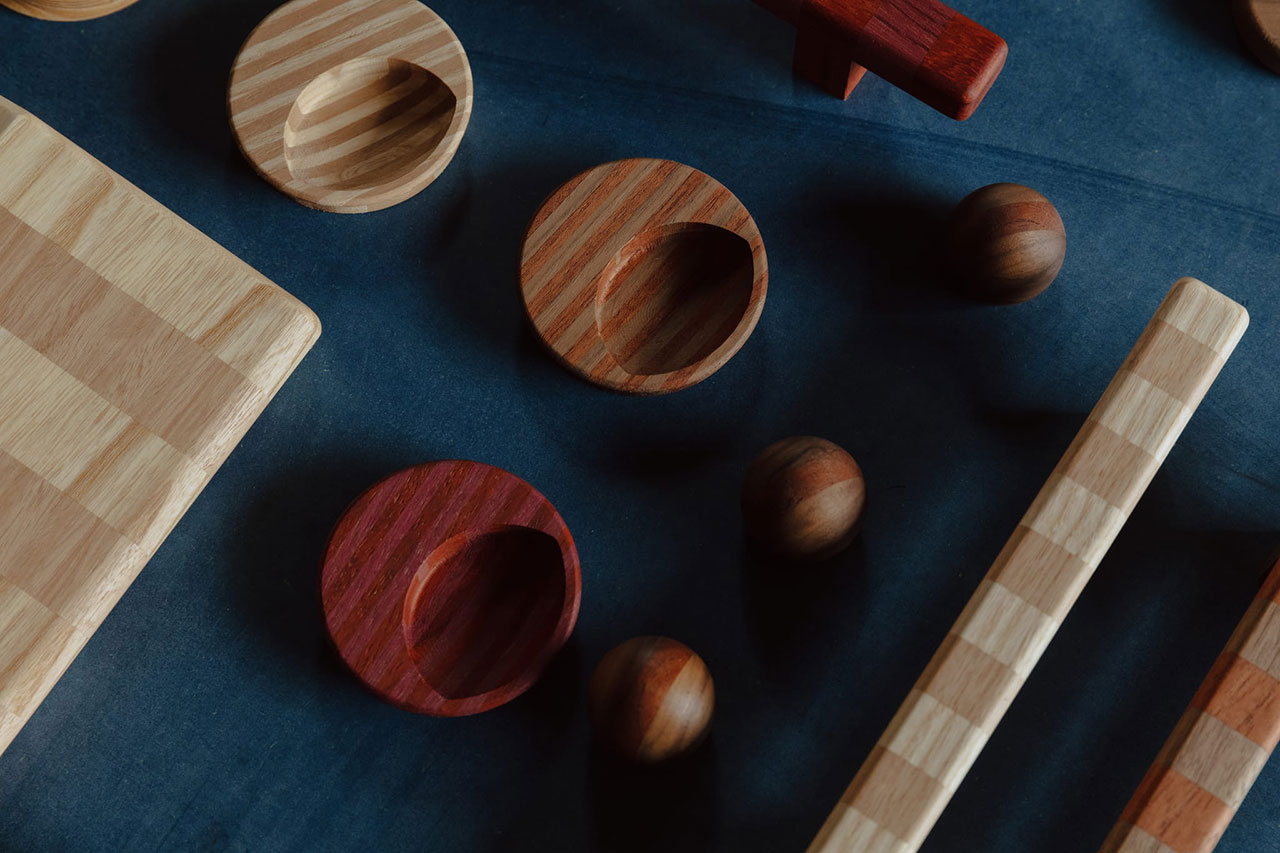
Mirrors, artfully edged with pieces from CIVILIAN’s Hemispheres collection, carried hand-painted manifesto quotes, reflecting both the physical space and the intellectual propositions. Furthermore, works from the Casts collection by Edition Office were strategically placed throughout the room, expanding the installation’s material and formal vocabulary beyond mere functional items. These elements collectively transformed the wine bar into a dynamic landscape of touch, where every surface and object offered a subtle invitation to engage. The event successfully transcended the traditional boundaries of an exhibition. Guests, encouraged to interact freely, spilled onto the street with wine and vermouth spritzes in hand, while inside, the room fluidly became part exhibition, part vibrant conversation, and part compelling argument for the often-unnoticed objects we instinctively reach for. Even the printed manifesto was designed for interaction, with visitors encouraged to tear strips from the posters—a symbolic rip as a kind of pull, a pull as a kind of handle, effectively collapsing the distance between viewer and object and embedding the manifesto’s message directly into a tactile memory.
Showcasing High Design: Bankston’s Collaborative Collections
Taken together, the diverse collections presented at "A Manifesto on Touch" powerfully illustrated the breadth of Bankston’s ambitions. The brand consciously rejects the conventional approach of treating handles, pulls, hooks, and knobs as standardized finishing details. Instead, Bankston elevates them to the status of small-scale design objects, each imbued with significant architectural consequence and a distinct narrative. This approach fosters collaborations that explore diverse aesthetics, materials, and manufacturing techniques.
One such collaboration is Casts, developed with Melbourne-based Edition Office. This collection is a profound exploration of materiality, tactility, and form, utilizing traditional sandcasting techniques to create pieces from raw bronze and aluminum. The resulting hardware features expressive geometries and richly textured surfaces that invite touch and allow for the development of a unique patina over time. This patina becomes an integral part of the object’s evolving relationship with its user, narrating a story of interaction and age. Casts celebrates the imperfections and character inherent in artisanal processes, offering a counterpoint to mass-produced uniformity.

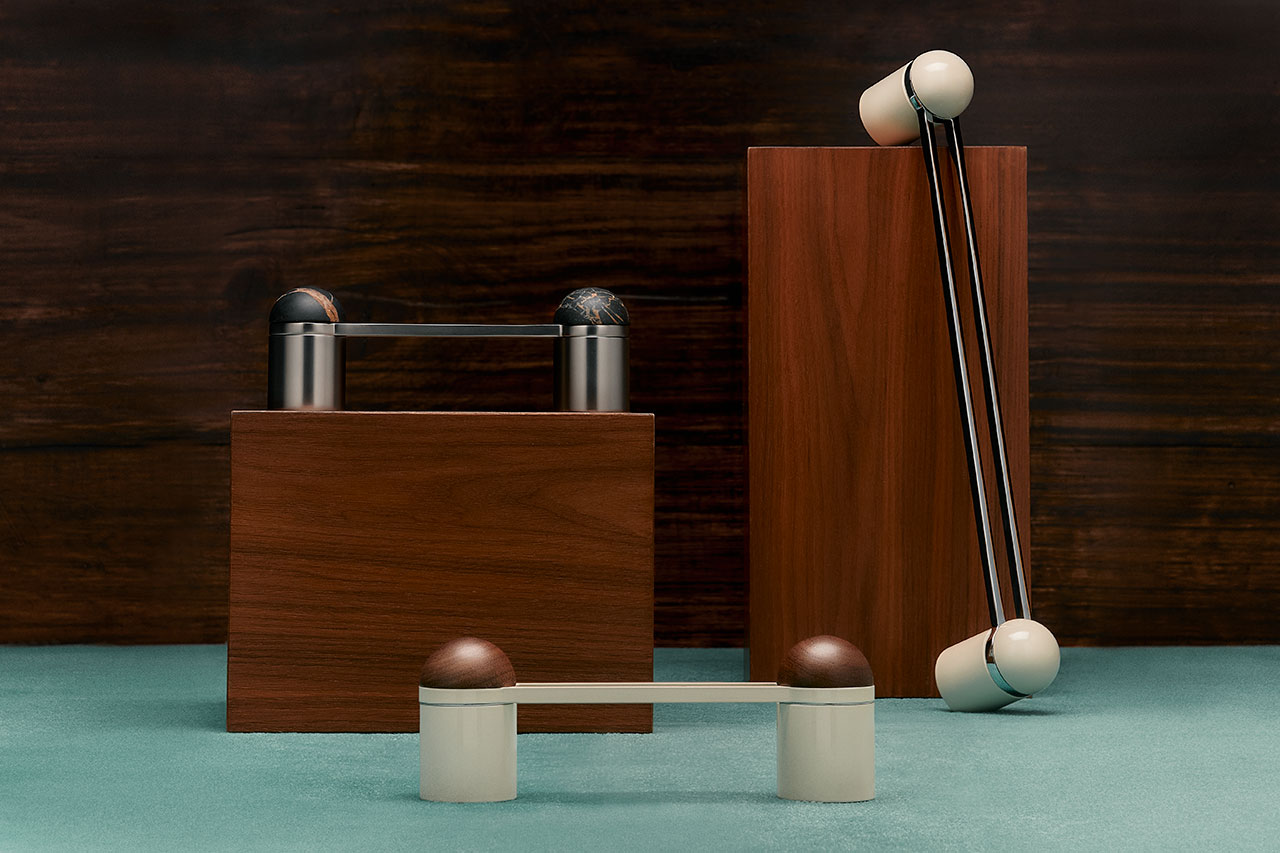
Super, Bankston’s collaboration with Sans-Arc Studio, channels a completely different aesthetic: the visual exuberance and experimental spirit of the 1960s Radical Design Movement. This collection introduces playful levers, pulls, and knobs that inject an element of irreverence and bold form into everyday interactions. Radical Design, originating in Italy, sought to challenge conventional notions of function and aesthetics, pushing boundaries with unconventional shapes and vibrant expressions. Super embodies this spirit, transforming functional hardware into sculptural, joyful elements.
Hemispheres, created with Brooklyn-based CIVILIAN, marked Bankston’s significant U.S. debut. This modular 12-piece collection seamlessly combines architectural precision with artistic influences drawn from both the rugged landscapes of South Australia and the urban dynamism of Brooklyn. Crafted from an exquisite array of materials, including warm American walnut, luxurious Potoro Gold marble, sleek polished chrome, smooth nickel, and organic bone, Hemispheres underscores Bankston’s commitment to globally inflected collaboration and tactile refinement. The material diversity offers a rich sensory palette, inviting users to experience different textures and temperatures with each touch.

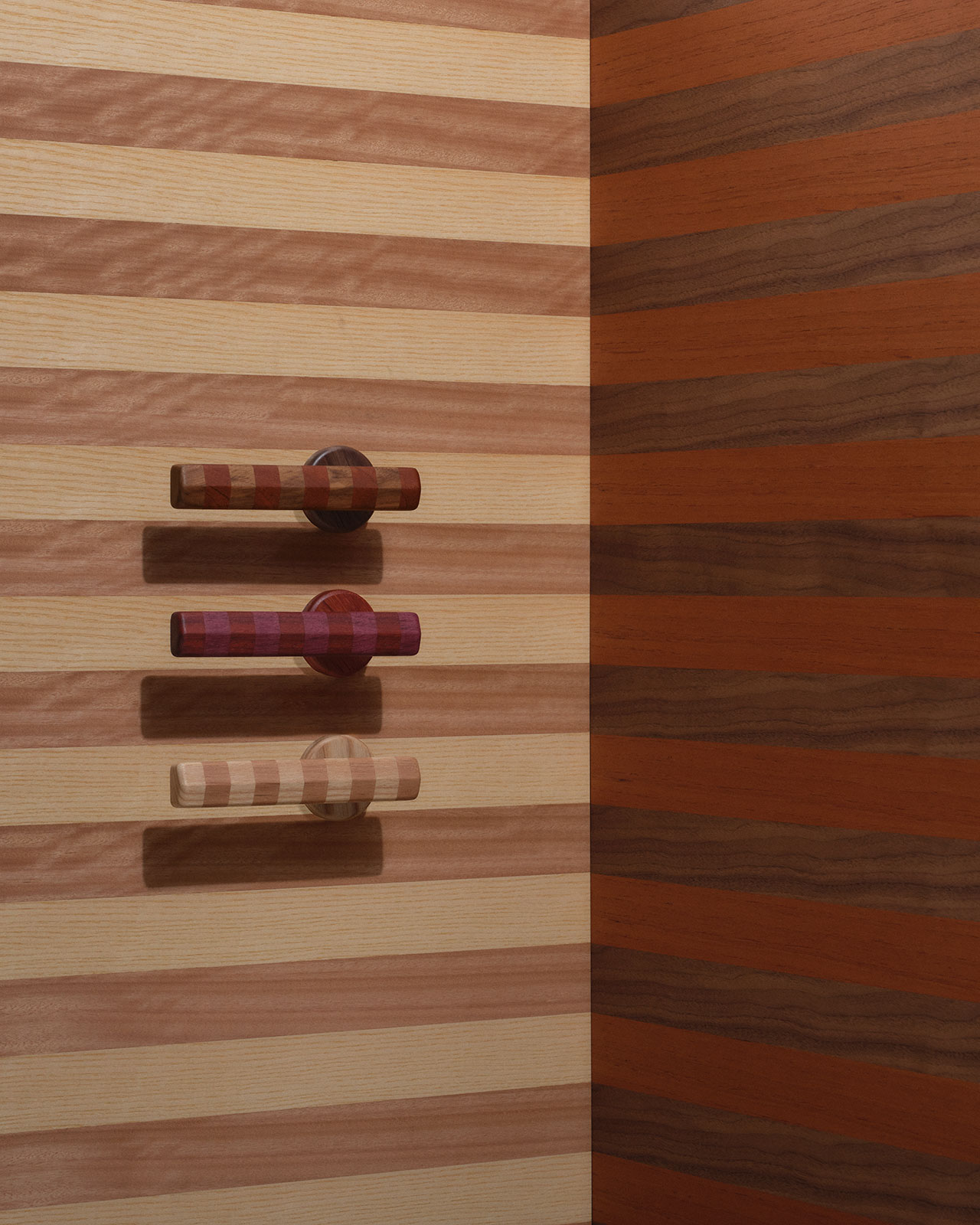
Finally, there is The Streaks, Bankston’s collaboration with Sydney-based YSG Studio and its founder, Yasmine Ghoniem. This sculptural collection, originally unveiled to critical acclaim during Copenhagen’s 3daysofdesign, brings timber and bronze door levers, pulls, and joinery pieces into vivid dialogue. It is characterized by bold striped banding, a testament to its animated contrast. Crafted from sustainably sourced materials and produced through handcrafted Australian techniques, The Streaks exemplifies hardware that feels alive with tension: ergonomic yet expressive, playful yet precise, functional yet undeniably decorative. It celebrates the confluence of materiality not as mere surface embellishment, but as the very essence that transforms a basic touchpoint into a memorable moment of encounter.
The Economic and Design Implications of Elevated Hardware
The movement championed by Bankston and FOR SCALE holds significant implications for the broader design industry and consumer market. Globally, the architectural hardware market is a substantial segment, projected to reach billions of dollars, driven by new construction, renovation projects, and an increasing consumer demand for premium, personalized, and aesthetically superior products. Within this market, the luxury segment—which emphasizes bespoke design, superior materials, and artisanal craftsmanship—is experiencing robust growth. Consumers are increasingly willing to invest in high-quality hardware, viewing it as an extension of their personal style and an enhancement to their living or working environments.

This elevation of hardware design empowers architects and interior designers to integrate these elements earlier and more thoughtfully into their projects. No longer confined to a late-stage specification, hardware can become a foundational consideration, influencing material palettes, tactile experiences, and overall design narratives. Industry observers suggest that this trend fosters a more holistic design approach, where every detail, no matter how small, contributes meaningfully to the user’s experience. Furthermore, Bankston’s commitment to sustainably sourced materials and handcrafted production aligns with growing ethical consumerism and a desire for products with transparent origins and reduced environmental impact. This focus on provenance and craftsmanship adds another layer of value, appealing to a discerning clientele that prioritizes both aesthetics and responsible production.
The Future of Tactile Design and Bankston’s Vision
At Colbo, Bankston’s objects were deliberately not isolated on plinths or distanced behind the conventional "gallery logic" of looking. Instead, they were seamlessly embedded into a functioning, social environment where the body could intuitively understand and interact with them. This is where Bankston’s work feels especially resonant and forward-thinking. Elevated hardware design is not merely about rendering small objects more beautiful, though Bankston undeniably achieves this with considerable finesse and artistic vision. It is, fundamentally, about recognizing that the smallest architectural movements and interactions often carry the greatest intimacy and emotional weight.

Consider the simple ritual: a hand closes around a lever, a thumb finds a perfectly sculpted groove, a palm registers the cool precision of metal, the inviting warmth of timber, or the subtle, unique irregularity of a sand-cast surface. A door opens. A body enters. This ritual, though fleeting and often unconscious, is far from insignificant. It is a microcosm of human interaction with the built world, a moment of tactile communication that shapes our perception and experience.
With "A Manifesto on Touch," Bankston and FOR SCALE have successfully made visible what design too often overlooks: that the built environment is not only seen but is also constantly felt and experienced through a rich tapestry of tactile sensations. Through its groundbreaking collaborations with YSG Studio, Edition Office, Sans-Arc Studio, and CIVILIAN, Bankston has positioned itself at the vanguard of a more expressive and considered hardware movement. This movement understands handles, pulls, and knobs not as inert components but as instruments of atmosphere, essential mediators that bridge the gap between architecture and the body, between intention and action, and between one room and the next. In Bankston’s hands, even the simplest movement of opening a door transforms into a tiny ritual, and the humble door handle becomes something far closer to art—a testament to thoughtful design and the enduring power of human touch.

To learn more about both parties and their shared ethos, visit bankston.com and forscale.substack.com.
Photography courtesy of Bankston.







