Ali Ikhwan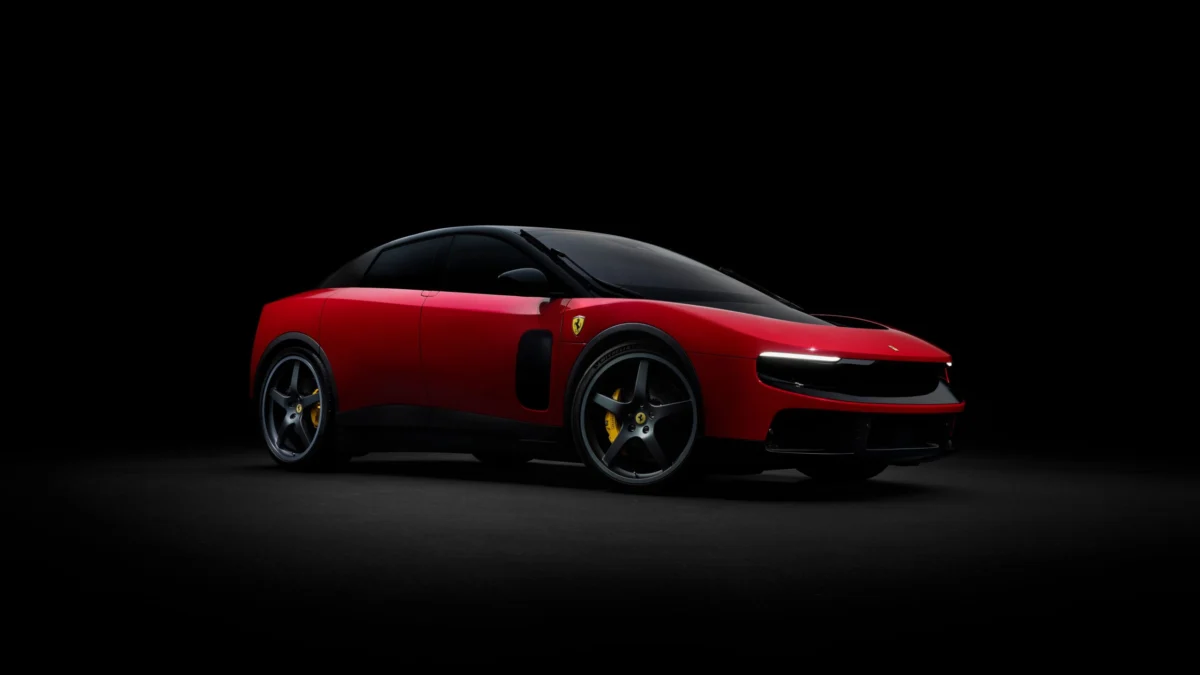
The unveiling of the Ferrari Luce in Rome marks the culmination of an eight-year developmental journey, signaling a transformative era for the storied Italian automaker. Originally hinted at in January 2018 by the late Ferrari chairman and CEO Sergio Marchionne during the North American International Auto Show in Detroit, the project represents Maranello’s definitive response to the rise of high-performance electric vehicles. While Ferrari was not the first to enter the electric supercar market—a title Marchionne once aspired to claim—the Luce arrives as perhaps the most scrutinized and anticipated vehicle in the company’s modern history.
Designed to bridge the gap between traditional mechanical artistry and the future of sustainable mobility, the Luce (Italian for "light") is far more than a technical exercise. It is a strategic pivot intended to maintain Ferrari’s exclusivity and performance leadership in an increasingly electrified landscape. The reveal in Rome effectively ends years of speculation, following a meticulously managed "drip-feed" marketing campaign that included the initial "Elettrica" nickname, the powertrain technical briefing in October, and the unveiling of its avant-garde interior in February.

Technical Specifications and Performance Benchmarks
The Ferrari Luce is engineered to deliver performance metrics that rival the most capable hypercars currently on the market. At the heart of its propulsion system are four independent electric motors—one dedicated to each wheel. This configuration allows for unprecedented levels of torque vectoring and traction control. In its "Boost" mode, the Luce generates a combined output exceeding 1,000 horsepower.
The distribution of power is heavily biased toward the rear to maintain Ferrari’s signature handling characteristics. The rear axle contributes 832 horsepower and an immense 7,750 Nm of torque to the wheels, while the front axle provides an additional 282 horsepower and 3,400 Nm. This allows the Luce to sprint from zero to 62 mph (100 km/h) in just 2.5 seconds. The vehicle reaches a top speed of 192 mph, a figure that places it at the upper echelon of the GT (Grand Tourer) segment.
To sustain this performance, Ferrari has equipped the Luce with a 122 kWh battery pack, one of the largest units found in any production electric vehicle. Utilizing an 800-volt architecture, the system supports DC fast charging at rates up to 350 kW, enabling rapid energy replenishment. Ferrari claims a range of more than 329 miles (approximately 530 kilometers) per charge under standard testing cycles. Despite the significant weight of the battery, Ferrari has managed the vehicle’s mass through extensive use of lightweight alloys and carbon fiber, resulting in a curb weight of 4,982 pounds (2,260 kg). This is remarkably only 200 pounds heavier than the internal combustion-powered Purosangue SUV, showcasing Maranello’s expertise in weight optimization.

Design Collaboration with LoveFrom
One of the most significant departures from Ferrari tradition is the decision to involve external design expertise for the Luce. While the Ferrari Design Studio, led by Flavio Manzoni, oversaw the project, the company collaborated extensively with LoveFrom, the creative collective founded by former Apple design chief Sir Jony Ive and renowned designer Marc Newson.
The influence of the LoveFrom team is most evident in the vehicle’s "glass house" aesthetic. The exterior is defined by a continuous, shell-like form where the windscreen extends deep into the nose of the car, eliminating traditional visual breaks. This design serves a dual purpose: it creates a futuristic silhouette and achieves the lowest drag coefficient of any road-going Ferrari in history. To maintain this aerodynamic purity, the team relocated the windscreen wipers from the base of the glass to the A-pillars, a radical engineering choice that preserves the uninterrupted flow of the front surface.
The Luce also features the largest staggered wheel diameters ever seen on a series-production Ferrari, with 23-inch wheels at the front and 24-inch wheels at the rear. Additional exterior highlights include "halo" tail lights that pay homage to the 360 Modena and 458 Italia, and the inclusion of rear-hinged "suicide" doors, facilitating easier access to the car’s five-seat interior—a first for the brand.

The Interior: A Fusion of Technology and Tactility
The interior of the Luce reflects a design philosophy that Jony Ive describes as a "manifestation of simplicity." Eschewing the trend toward purely digital, touch-sensitive cockpits, the Luce incorporates a sophisticated mix of physical switchgear and high-resolution OLED displays. The cabin utilizes premium materials such as brushed aluminum, high-grade leather, and Corning glass.
Notable interior features include:
- Dynamic Center Screen: A central display mounted on a ball-and-socket joint, allowing it to pivot toward either the driver or the front passenger.
- Artisanal Gear-Shift: A Corning glass shift knob featuring 13,000 laser-etched holes, blending industrial precision with jewelry-like quality.
- Circular OLEDs: Secondary displays that provide critical vehicle data while maintaining a classic aesthetic.
- The Key Fob: A device designed to resemble a miniature smartphone, serving as a tactile extension of the vehicle’s technological interface.
The five-seat layout positions the Luce as a versatile grand tourer, capable of high-performance driving while offering the utility expected by modern luxury buyers.

Engineering the "Ferrari Sound"
A primary challenge for any electric Ferrari is the absence of the evocative V12 or V8 engine note. Rather than utilizing synthesized, artificial sounds played through speakers—a common practice among EV manufacturers—Ferrari’s sound quality manager, Antonio Palermo, developed a hardware-based solution.
The Luce is equipped with an accelerometer mounted directly to the rear axle. This device functions similarly to a guitar pickup, capturing the natural vibrations and frequencies produced by the electric motors and drivetrain. The system filters out high-pitched "whines" and amplifies the mechanical resonance, feeding it into the cabin to provide the driver with a genuine acoustic connection to the vehicle’s performance. Palermo has described the system as a "new instrument" for the electric age, ensuring that the Luce retains the emotional engagement central to the Ferrari brand.
Chronology of Development
The path to the Luce has been marked by several key milestones:

- January 2018: Sergio Marchionne announces Ferrari’s intent to build an electric supercar at the Detroit Auto Show.
- 2019: Ferrari enters a multi-year partnership with LoveFrom (Jony Ive and Marc Newson).
- October 2023: Ferrari reveals the technical details of the electric powertrain to investors and media.
- February 2024: The interior design is unveiled at a private event in San Francisco, showcasing the Apple-inspired aesthetic.
- October 2024: The full exterior and official name, "Luce," are revealed in Rome.
- Late 2026: Scheduled commencement of series production at the new "e-building" in Maranello.
- Early 2027: First customer deliveries expected.
Market Context and Strategic Implications
The launch of the Luce comes at a volatile time for the luxury electric vehicle market. Several of Ferrari’s primary competitors have recently recalibrated their electrification strategies due to fluctuating demand. Lamborghini has delayed its first full EV, the Lanzador, until at least 2029. Bentley has pushed its all-electric transition from 2030 to 2035, and Porsche has increased its focus on hybrid and combustion models following a cooling of EV sales in key markets.
Ferrari, however, has chosen to press forward, partly due to the advanced stage of the Luce’s development and the significant capital already invested in its dedicated "e-building" production facility. Nevertheless, Ferrari CEO Benedetto Vigna has clarified that the Luce is an expansion of the portfolio, not a replacement for internal combustion engines.
The company’s "2030 Strategic Roadmap" outlines a diversified approach to propulsion:

- 20% Fully Electric: Driven by the Luce and a second EV model currently delayed until 2028.
- 40% Hybrid: Building on the success of the SF90 Stradale and 296 GTB.
- 40% Internal Combustion: Reserved for limited-edition models and specific series production vehicles to satisfy traditionalists.
The financial stakes are high. In October 2023, Ferrari’s share price saw a notable dip of 16% as investors questioned the long-term margins of electric vehicles compared to their high-margin combustion counterparts. With a starting price of approximately $640,000, the Luce is positioned at a premium that exceeds many of its internal combustion siblings, reflecting the high costs of its 122 kWh battery and the exclusivity of its LoveFrom design.
Conclusion
The Ferrari Luce represents a bold gamble by Maranello. By partnering with external designers and developing bespoke acoustic technology, Ferrari is attempting to redefine what an electric supercar can be. While the broader automotive industry faces "EV fatigue" in the luxury segment, Ferrari is banking on its brand equity and the unique allure of the Luce to attract a new generation of collectors without alienating its core "Tifosi" base. The success of the Luce will likely determine the pace of electrification for the remainder of the exotic car industry, as rivals watch closely to see if Maranello can truly translate its "Prancing Horse" soul into a silent, electric future.