Michael Sholeh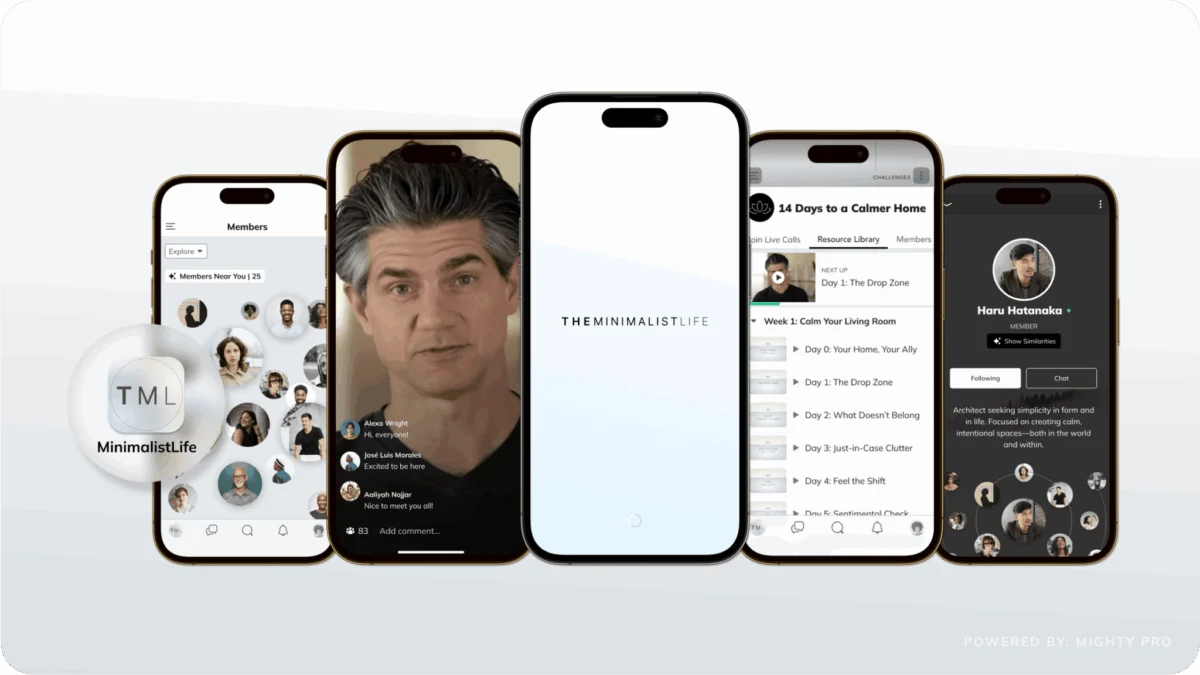
Joshua Becker, a pioneering figure in the global minimalist movement and the founder of Becoming Minimalist, has officially announced the launch of a new subscription-based community platform titled The Minimalist Life. This move represents a significant strategic pivot for the author and educator, who has spent nearly two decades disseminating free and premium content focused on the principles of intentional living. The new initiative is designed to transition his audience from passive content consumption to active, sustained lifestyle application through a structured, community-oriented framework.
Since the inception of his blog 17 years ago, Becker has become one of the most influential voices in the simplicity movement. His body of work includes over 1,700 articles, several best-selling books, 400 YouTube videos, and the "Uncluttered" course, which has seen enrollment from over 90,000 individuals worldwide. Despite these successes, Becker identified a persistent trend among his followers: the "maintenance gap." Many individuals successfully initiate a decluttering process but struggle to maintain the minimalist philosophy as a permanent lifestyle. The Minimalist Life aims to solve this by providing ongoing support, human interaction, and a monthly focus on various life sectors.
A Seventeen-Year Chronology: From Blog to Movement
The launch of The Minimalist Life is the culmination of a journey that began in 2008. To understand the significance of this new offering, one must examine the evolution of Becker’s platform within the broader context of the minimalist movement.
In the late 2000s, as the global financial crisis prompted many to reevaluate their relationship with consumerism, Becker began documenting his family’s journey toward owning fewer possessions. What started as a personal blog, Becoming Minimalist, quickly resonated with a demographic overwhelmed by the "more is better" ethos of the 20th century. By 2012, the movement had gained significant traction, coinciding with the rise of other simplicity advocates and the release of Becker’s early digital guides.
The 2010s saw a massive expansion of the brand. Becker published several influential books, including The More of Less and The Minimalist Home, which provided the philosophical and practical foundations for his audience. During this period, the "Uncluttered" course was launched, specifically targeting the physical aspect of decluttering. As the platform grew, the data collected from nearly 100,000 students revealed a recurring theme: while physical decluttering was a successful entry point, the long-term psychological and habitual shifts required more than a one-time course could provide.
By 2024, the digital landscape had shifted. With the rise of artificial intelligence and the saturation of "how-to" content, the demand for authentic human connection and accountability-based communities increased. This historical trajectory led directly to the development of The Minimalist Life, a platform designed not for education alone, but for long-term integration.
Addressing the Maintenance Gap: Supporting Data and Psychology
The decision to move toward a community model is supported by significant psychological and sociological data regarding habit formation and lifestyle maintenance. According to research published in the European Journal of Social Psychology, it takes an average of 66 days for a new behavior to become automatic. However, for complex lifestyle changes—such as adopting minimalism—the timeframe can be much longer, often requiring a total shift in one’s social environment and value system.
Furthermore, statistics regarding household clutter in the United States highlight the scale of the issue Becker seeks to address. Reports indicate that the average American home contains approximately 300,000 items, and one out of every ten Americans rents an off-site storage unit. Despite a multi-billion dollar professional organizing industry, recidivism rates in clutter habits remain high.
Becker’s new platform addresses these statistics by focusing on the "intentional choice" framework rather than the "one-time project" framework. By structuring the community around monthly themes, the platform leverages the psychological principle of "chunking," breaking down a massive lifestyle overhaul into manageable, focused segments. This method is intended to prevent the decision fatigue that often leads individuals to abandon minimalist practices after the initial excitement wanes.
Structural Overview of The Minimalist Life
The Minimalist Life is positioned as a private, membership-based ecosystem. Unlike previous offerings that were product-based (books or specific courses), this is a service-based model. The community focuses on bringing minimalist principles into diverse areas of life beyond physical possessions, including:

- Financial Management: Applying intentionality to spending and debt reduction.
- Scheduling and Time Mastery: Reducing "calendar clutter" to focus on high-value activities.
- Digital Wellness: Managing the impact of technology, social media, and digital accumulation.
- Habit Formation: Building the daily rhythms necessary to sustain a simplified life.
- Relational Intentionality: Focusing on deep, meaningful connections rather than superficial social obligations.
The platform emphasizes human interaction over automated content. In an era where AI-generated lifestyle advice is becoming ubiquitous, Becker’s insistence on direct engagement and a "human-to-human" community is a strategic differentiator. The community is offered at a "founding member" rate of $18 per month or $180 per year, a pricing strategy designed to encourage long-term commitment while remaining accessible to a broad demographic.
Market Analysis and the Creator Economy
The launch of The Minimalist Life reflects a broader trend in the creator economy: the shift from "audience" to "community." Industry analysts have noted that top-tier content creators are increasingly moving away from ad-reliant models and toward subscription-based memberships that offer deeper value and exclusivity.
For Becker, this transition allows for a more sustainable business model that aligns with his core message. While traditional blogging relies on high-volume traffic and frequent clicks, a membership community relies on the success and retention of its members. This aligns the financial incentives of the creator with the actual life-improvement goals of the participants.
The timing of the launch—coming at the end of the second quarter of the year—is also notable. Historically, the "New Year, New You" surge in January provides a spike in interest for minimalism, but interest often dips by early summer. By launching in June, Becker is targeting those who have perhaps failed at their initial resolutions and are seeking a more robust, communal structure to get back on track.
Projected Impact and Implications
The implications of this new community extend beyond the individuals who join. If successful, The Minimalist Life could serve as a blueprint for how lifestyle influencers can move beyond the "influencer" label to become "facilitators" of long-term change.
From a societal perspective, the continued growth of the minimalist movement suggests a deepening fatigue with consumer culture. As economic pressures such as inflation and housing costs continue to impact the middle class, the "less is more" philosophy transitions from a trendy aesthetic choice to a practical survival and thriving strategy.
Critics of the minimalist movement often point to its perceived elitism or its focus on those who have "too much" to begin with. However, by expanding the scope of the community to include finances and time management, Becker’s new platform may address these criticisms, offering tools that are applicable regardless of socioeconomic status.
Conclusion and Future Outlook
As the doors open for The Minimalist Life, the minimalist movement enters a new phase of maturity. Joshua Becker’s 17-year journey from a suburban father decluttering his garage to the leader of a global private community reflects the changing ways in which people seek personal development.
The success of the platform will likely be measured not just by the number of members, but by the longevity of their participation. By moving away from the "quick fix" of a decluttering spree and toward the "slow build" of a community-supported life, Becker is betting on the idea that the future of minimalism is not found in the things we get rid of, but in the support systems we build to keep them from coming back.
With the founding member rate available through June 30th, the initial intake of members will provide the first data points on whether this community-centric model can truly bridge the gap between minimalist theory and minimalist practice. As Becker himself notes, the goal is a "lifetime of intentional choices," and with this new offering, he has created the infrastructure to facilitate that lifetime journey for his followers.