Ali Ikhwan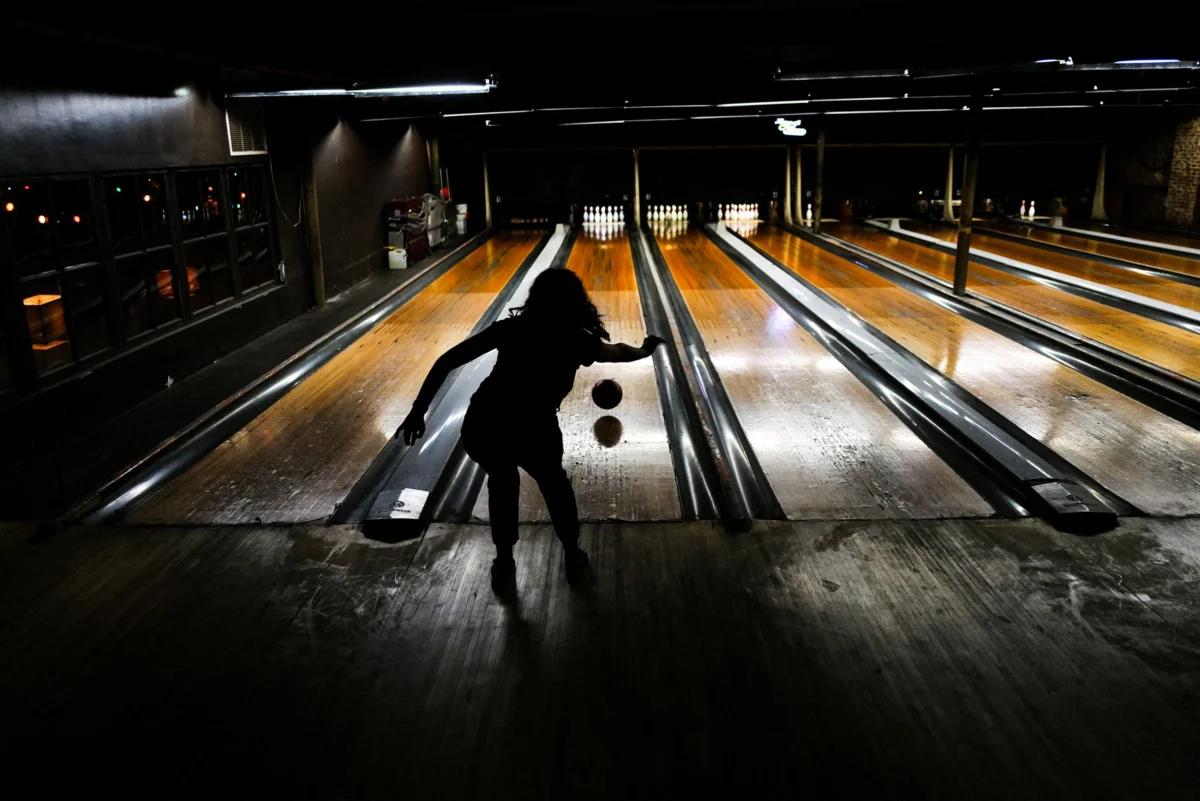
Each time EJ Tackett steps to his lane to deliver a shot in the upcoming Professional Bowlers Association (PBA) World Championships, his focus extends far beyond the biomechanics of his release or the rotation of the ball. As the three-time defending world champion and a primary contender for the title of the world’s most dominant bowler, Tackett represents a modern era of the sport where success is as much about fluid dynamics and surface friction as it is about physical repetition. While the casual observer sees a polished wooden or synthetic surface, Tackett and his peers see a complex, shifting landscape of lane oil—a microscopic topography that dictates the trajectory of every throw.
At the highest levels of the PBA Tour, lane oil has evolved from a simple protective coating into a sophisticated tactical variable. The oil is applied in specific, invisible patterns that reduce friction on certain parts of the lane, allowing the ball to slide through the initial 30 to 40 feet before catching the "dry" portion of the lane to hook toward the pins. For professionals, the ability to read these patterns, and more importantly, to anticipate how they change during a match, has become the defining skill of the 21st-century bowler.
The Evolution of Lane Maintenance Technology
The history of bowling lane maintenance is a story of transition from rudimentary preservation to high-tech precision. In the mid-20th century, when lanes were constructed from natural maple and pine, oil served a singular, utilitarian purpose: protection. The heavy impact of 16-pound spheres would eventually damage the wood fibers, and a layer of oil acted as a lubricating barrier to extend the life of the playing surface.
However, during the 1970s and early 1980s, the application of this oil was notoriously inconsistent. Maintenance was often performed manually or with primitive machines that left "puddles" or dry spots, creating a "blind" environment for bowlers. Professional athletes of that era frequently expressed frustration over the lack of standardized conditions, which often turned prestigious tournaments into tests of luck rather than skill.
The turning point occurred in the early 1980s through the work of John Davis, a mechanic in Arizona who sought to professionalize lane conditions. Davis founded Kegel, a company that would eventually revolutionize the sport. By the early 1990s, Kegel introduced Sanction technology, a system that functions similarly to an industrial inkjet printer. Rather than simply mopping oil onto the lane, Sanction technology utilizes a traveling spray head that applies precise amounts of oil to specific "boards" (the 39 individual strips of wood or synthetic material that comprise a lane).
Today, companies like Kegel and Brunswick dominate the market with fully automated, battery-powered machines. These devices, such as the Brunswick Max or Kegel’s latest Walk-Behind models, clean the old oil and apply a fresh, programmed pattern in a single pass without human intervention. This level of precision has allowed the PBA to move away from generic "house shots" toward highly complex "sport patterns."
The Mathematical Divide: House Shots vs. Sport Patterns
To understand the challenge facing EJ Tackett at the PBA World Series of Bowling XVII, one must distinguish between the environment of a local bowling center and the professional circuit. The primary difference lies in the "oil ratio"—the comparison of oil volume in the center of the lane versus the edges.
In a standard "house shot" used for amateur league play, the oil ratio is typically between 8:1 and 10:1. This means there is ten times more oil in the middle of the lane than on the outside. This creates a "funnel" effect: if an amateur misses their target to the outside, the ball hits the dry wood, gains friction, and hooks back toward the center. Conversely, if they throw too far toward the middle, the heavy oil allows the ball to slide longer, preventing it from over-hooking. This "autocorrect" feature makes it significantly easier to hit "the pocket"—the space between the 1 and 3 pins for right-handers.
In professional PBA competition, these ratios are drastically reduced to 3:1 or even 1:1 (known as a "flat" pattern). On a 1:1 pattern, there is no margin for error. If a ball drifts a fraction of an inch off the intended path, the lane provides no assistance in guiding it back.
"You have to be a lot more precise, not only with where you’re placing the ball on the lane, but with your speed that you’re throwing it and the revolutions that you’re applying to the ball," Tackett noted regarding the upcoming 2026 season. The PBA’s current library includes 20 distinct patterns, such as the "Don Johnson 40," which covers 40 feet of the 60-foot lane with a specific volume of oil.
The Dynamic Challenge of Transition
If the oil patterns remained static, the sport might become a solved equation for elite athletes. However, the most grueling aspect of professional bowling is "transition"—the physical movement and depletion of oil as the game progresses.
Modern bowling balls are constructed from porous reactive resin or urethane. Each time a ball rolls down the lane, it absorbs a small amount of oil and pushes another portion further down the lane. This phenomenon, known as "carry-down," changes the friction profile of the lane with every single frame.
Tackett describes this process as a "guessing game." A player might start the first game by aiming at the second arrow from the right gutter. By the sixth game, because the oil in that area has been "burned up" or depleted, they may find themselves standing far to the left and throwing the ball across the middle of the lane to find the same entry angle into the pins.
The advantage Tackett has maintained over the last three world championships is his speed of adjustment. "I’ve been able to make a move or make a ball change just one or two shots faster than most everyone else," he explained. In a tournament spanning 40 or more games, identifying a transition two shots before the competition can result in a cumulative advantage of dozens of pins—often the difference between a podium finish and elimination.
Official Oversight and the Strategy of Difficulty
The PBA, under the leadership of Commissioner Tom Clark, has leaned into this technological complexity to differentiate the professional product from recreational bowling. By intentionally varying patterns across different events, the PBA forces athletes to be "lane managers" as much as they are "shot makers."
"It forces players to think, adapt, and create, which is how we test greatness," Clark stated. The organization views the oil pattern as the bowling equivalent of a golf course’s topography. Just as a golfer must contend with bunkers, wind, and green speeds, a bowler must navigate the invisible "water and trees" created by the oil.
For the 2026 season, the PBA will utilize a sophisticated array of Kegel patterns that vary not only in length (from 32-foot "short" patterns to 48-foot "long" patterns) but also in the chemical composition of the oil itself. Some oils are designed to be "slicker" or more durable, further complicating the players’ decisions regarding which ball to use from their arsenal, which often includes up to 10-15 different balls with varying coverstock textures.
The Future: Data, Lidar, and Intuition
As technology continues to permeate the sport, the tools for analyzing lane conditions are becoming more advanced. The Specto system, which utilizes lidar (Light Detection and Ranging) technology, can track a ball’s path with sub-millimeter accuracy. It provides real-time data on launch angle, break point, and entry angle.
However, the PBA maintains strict regulations on the use of this technology. While Specto data is frequently used for television broadcasts to help viewers visualize the "invisible" oil patterns, players are prohibited from accessing this data during active competition. They must rely on their eyes and the "read" of the ball as it interacts with the pins.
This reliance on intuition has changed how the next generation of bowlers is trained. Tackett observes that while he began studying oil patterns in his mid-teens, today’s elite youth bowlers are receiving instruction on oil ratios and transition as early as age seven or eight. The modern pro is no longer just an athlete; they are a technician who must account for the age of the lane surface, the humidity in the building, and the "micro-scratches" on the synthetic boards that can alter friction.
Broader Implications for the Sport
The emphasis on lane oil technology has successfully elevated the prestige of the PBA Tour, framing it as a high-stakes discipline of precision. As EJ Tackett prepares for the 2026 World Series of Bowling, the stakes are not merely about his physical performance, but his ability to solve a mathematical puzzle that is constantly rewriting itself.
The enrichment of the sport through these technical variables ensures that professional bowling remains a unique spectacle where the playing field is never the same twice. For Tackett, the quest for a fourth consecutive title will depend on his ability to see what others cannot: the shifting, invisible landscape of the oil, and the precise moment when the environment demands a change in strategy. In the modern PBA, the man who masters the friction is the man who masters the game.