
 Ali Ikhwan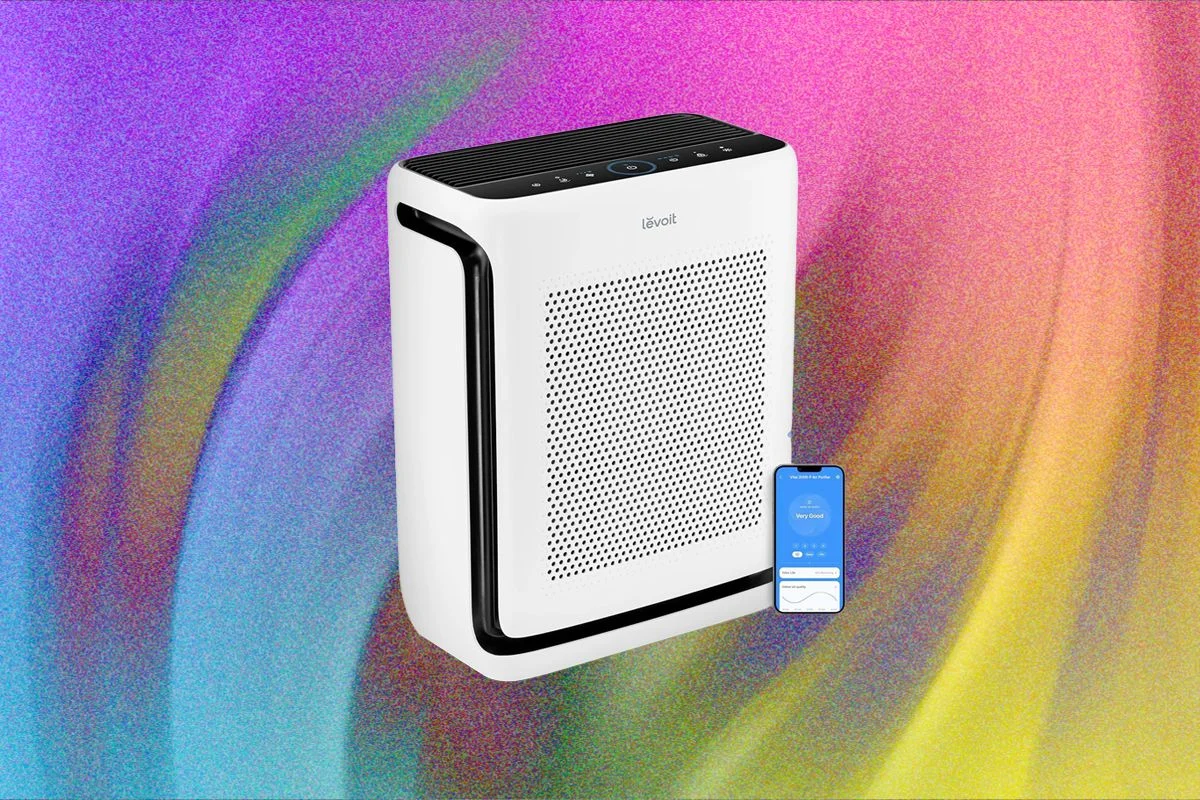
The global market for indoor air purification has undergone a radical transformation over the last five years, transitioning from a niche health requirement to a standard household necessity. Driven by increasing awareness of urban pollution, seasonal wildfire smoke, and the lingering public health focus on respiratory pathogens, consumers now demand higher performance, smarter integration, and greater transparency from manufacturers. Recent evaluations of the current market landscape reveal a diverse array of hardware, ranging from industrial-grade "monoliths" designed for high-ceilinged lofts to minimalist, furniture-esque units for urban apartments. In a series of rigorous performance tests conducted in high-density urban environments and rural settings, several leading models from brands like Coway, Levoit, and Airthings have demonstrated the ability to return air quality to healthy levels in under five minutes, while others have faced scrutiny for failing to meet basic filtration standards.
The Science of Filtration and Regulatory Standards
To understand the current state of air purification technology, it is necessary to examine the metrics of success: Clean Air Delivery Rate (CADR) and Air Changes per Hour (ACH). The Centers for Disease Control and Prevention (CDC) currently recommends a target of five air exchanges per hour to maintain optimal indoor environments. This standard ensures that particulate matter (PM), including the health-compromising PM 2.5—particles smaller than 2.5 microns that can enter the bloodstream—is consistently filtered out.
%20top%20art%20052026%20SOURCE%20Amazon.jpg)
Most high-performing units utilize High-Efficiency Particulate Air (HEPA) filters, which are certified to capture 99.97% of particles as small as 0.3 microns. However, as air quality concerns evolve to include Volatile Organic Compounds (VOCs) and odors, the inclusion of activated carbon has become equally critical. Furthermore, the California Air Resources Board (CARB) has established itself as the primary regulatory gatekeeper in the United States; units lacking CARB certification are increasingly viewed as high-risk by industry experts due to potential ozone emissions or unverified mechanical claims.
Performance Chronology: Rapid Response and Efficiency Testing
In recent laboratory and real-world simulations, the speed of filtration was identified as a primary differentiator between premium and entry-level models. During a controlled smoke clearance test, the Levoit Vital 200S-P Air Purifier demonstrated remarkable efficiency, restoring a room to healthy air quality levels in exactly four minutes and fifteen seconds. It was narrowly outperformed by the Coway Airmega Mighty2, which achieved the same result in four minutes and ten seconds.
These results highlight a trend toward high-velocity airflow in consumer-grade machines. However, speed is often a trade-off with noise pollution. Testing data shows that while some units can achieve rapid clearance, they do so at decibel levels that exceed workplace safety recommendations. For instance, the Air Doctor AD4000 registered 100 decibels at its highest setting—a volume comparable to a hair dryer and one that the CDC suggests should not be sustained for more than 15 minutes of exposure.

Analysis of Leading Large-Scale Purifiers
For consumers managing large footprints or homes with architectural challenges like double-height ceilings and A-frame lofts, the market offers heavy-duty solutions. The Coway Airmega ProX, weighing approximately 50 pounds, represents the "monolith" category of purifiers. Despite its industrial weight, it is noted for its aesthetic "mocha beige" design and its ability to cycle air four times per hour in a 1,000-square-foot space. Crucially, it maintains a relatively quiet profile of 50 decibels even at high capacity, making it a viable option for large residential living areas.
In the mid-to-large range, the Coway Airmega 400S and 250 models continue to set benchmarks for "set-and-forget" technology. These units utilize internal sensors to detect air quality fluctuations in real-time, automatically adjusting fan speeds without user intervention. The Airmega 250, specifically, is rated to clean 930 square feet twice per hour, making it a favorite for open-concept kitchens where cooking fumes and drywall dust frequently compromise air quality.
Innovation in Compact and Minimalist Design
The shift toward "furniture-esque" design is perhaps most evident in the Windmill Air Purifier and the Airthings Renew. The Windmill utilizes a Scandinavian-inspired bamboo finish, aiming to blend into home decor rather than appearing as a piece of medical equipment. Similarly, the Airthings Renew offers a gray, minimalist box design with versatile placement options, allowing it to stand upright or lie flat on the floor.

While these models prioritize aesthetics, they have not entirely sacrificed performance. The Airthings Renew features an integrated app that functions as a remote and data logger, a feature that is becoming standard for high-end units. However, compact designs often face limitations regarding prefilter maintenance. Testers noted that the exterior prefilter on the Renew was difficult to clean even with high-suction vacuums, suggesting that while the internal HEPA filtration remains strong, the outward-facing components may require more frequent replacement than larger models.
Specialty Filtration: Odor Removal and Washable Components
Two unique entries in the 2024 lineup address specific consumer pain points: maintenance costs and extreme odors. The Airdog X5 utilizes patented TPA technology, an electronic filtration system that is CARB-certified but distinct from traditional mechanical HEPA filters. Its primary appeal is its washable filter, which eliminates the recurring cost of replacement cartridges. In testing, the unit’s sensors were highly responsive, though the electronic charging of particles can occasionally produce audible "zapping" sounds when the filter becomes heavily saturated.
Conversely, the Oransi AirMend True Carbon focuses almost exclusively on VOCs and odors. Eschewing a HEPA filter entirely, the unit contains a massive three-pound activated carbon filter. In practical tests, the True Carbon eliminated significant litter box odors within 30 minutes. While it is ineffective against fine particulates (PM 2.5), it serves a critical niche for smoker households and pet owners who prioritize gas and odor removal over dust and allergen filtration.

Critical Evaluations and Manufacturer Discrepancies
Not all tested models met the rigorous standards required for a professional recommendation. The Ikea Starkvind, while stylish and affordable, has faced criticism for its lack of a true HEPA filter, despite marketing materials that have occasionally been ambiguous on the matter. When questioned, manufacturers often point to secondary certifications, but the industry consensus remains that for respiratory health, HEPA is the non-negotiable gold standard.
Further issues were identified with the Dreame Air Pursue PM20, which featured an "innovative" human-tracking system designed to direct clean air toward moving occupants. In testing, the tracking mechanism failed early in the evaluation period and could not be reset via remote or app. Additionally, the Morento Air Purifier demonstrated a lack of sensor sensitivity; even when incense was burned to raise PM 2.5 levels to 500 (well above hazardous limits), the unit’s auto-mode failed to increase fan speed. Such failures highlight the risk of relying on budget models with unproven smart features.
Supporting Data: Decibel Levels and Air Quality Metrics
To provide a factual basis for these reviews, the following data points were captured during the testing cycle:
-Reviewer-Photo-SOURCE-Lisa-Wood-Shapiro.jpg)
- Noise Levels: The quietest units, such as the Coway Airmega ProX, hovered around 50 dB at max speed. The loudest, the Air Doctor AD4000, reached 100 dB.
- Air Quality Thresholds: The World Health Organization (WHO) recommends a PM 2.5 limit of 5 micrograms per cubic meter. Several budget models, including the Morento, incorrectly signaled "Good" air quality at levels as high as 75 PM 2.5.
- Filtration Speed: High-efficiency units averaged a "healthy air return" time of 4 to 6 minutes in a standard 200-square-foot testing room.
Official Responses and Market Implications
Manufacturers have increasingly moved toward "smart" ecosystems, with brands like Dyson and Coway offering integrated apps. However, a significant disconnect remains between hardware capability and software utility. Dyson’s Purifier Cool Gen 1, for example, was notably incompatible with the brand’s own app, forcing users to rely on a physical remote—a regression in a market moving toward total automation.
Industry analysts suggest that the next phase of air purification will focus on "Filter Transparency." As seen with the Airmega 50, consumers are becoming frustrated with non-standardized color coding for air quality indicators. While the US Air Quality Index (AQI) uses a specific six-color scale, Coway and other brands often use proprietary colors (e.g., blue for "Good" and green for "Moderate"), which can lead to user confusion.
Broader Impact and Future Outlook
The implications of these findings extend beyond simple consumer choice. As climate change increases the frequency of wildfire events across North America and Europe, the air purifier is transitioning from a seasonal luxury to a critical component of residential infrastructure. The CDC’s emphasis on "Aim for Five" air exchanges suggests that building codes and HVAC standards may soon incorporate more rigorous portable filtration requirements.
In conclusion, the 2024 air purifier market is defined by a sharp divide between high-performance, sensor-driven machines and aesthetic-focused units that may lack technical depth. For the average consumer, the data suggests that "going big" is often the only way to achieve "going quiet." Larger units running on lower settings consistently provide the best balance of air exchange and acoustic comfort. As technology matures, the industry must move toward standardized sensors and more durable, cleanable prefiltration systems to meet the growing demands of a health-conscious global population.







