
 Indra Kusuma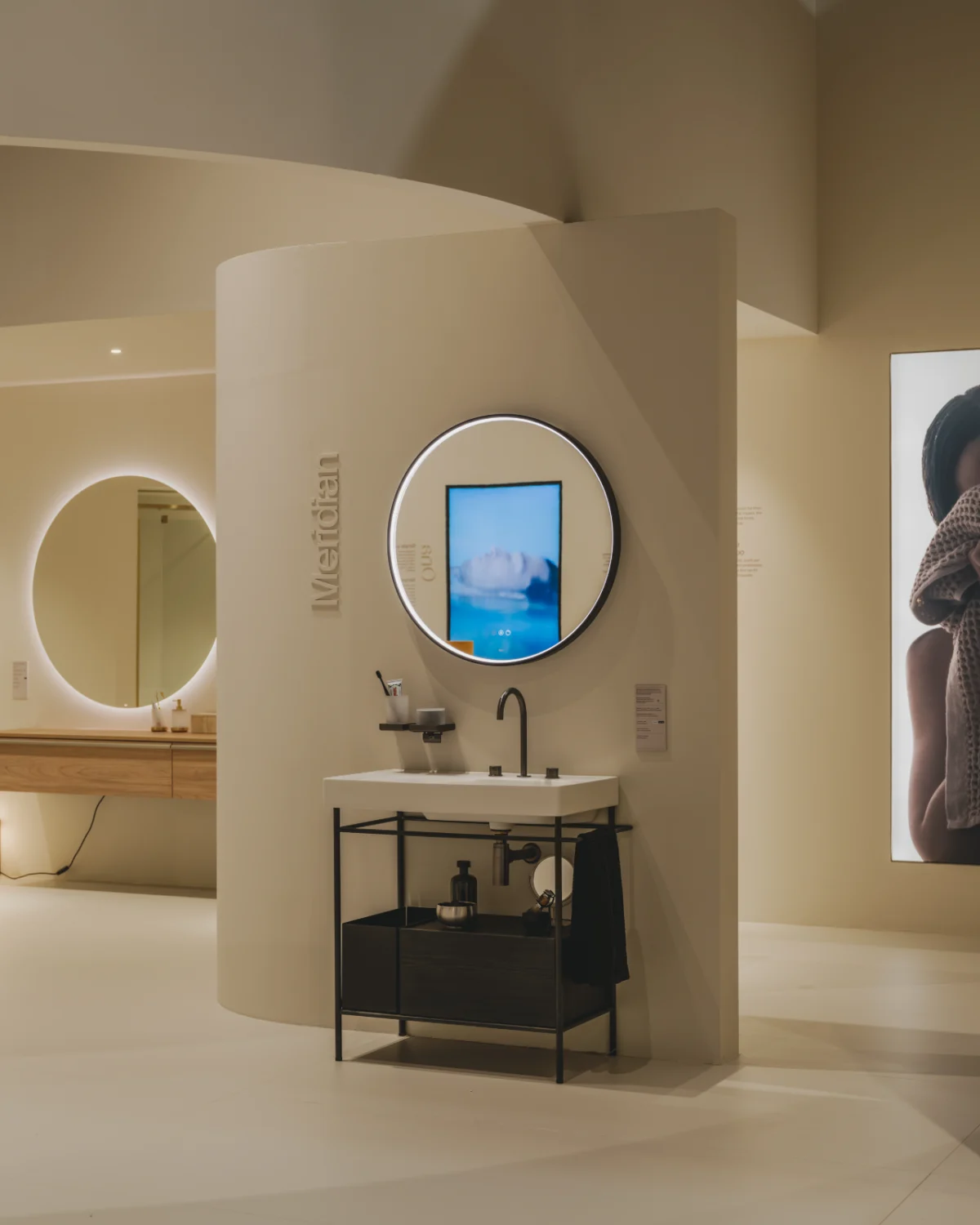
Milan Design Week 2026, encompassing the venerable Salone del Mobile and the sprawling Fuorisalone, recently concluded, reaffirming its status as the global epicenter for design innovation and discourse. Despite the customary sensory overload that permeated Milan’s historic palazzos, industrial spaces, and chic showrooms, a distinct philosophical throughline emerged. This year, the focus palpably shifted from mere novelty to a profound exploration of how design can enhance the fundamental conditions for contemporary living. Designers, brands, and cultural institutions showcased an acute interest in the evolution of typologies, daily rituals, and human interaction, demonstrating that true innovation often lies in thoughtful refinement and contextual adaptation rather than fleeting trends. The event, which reportedly attracted an estimated 380,000 visitors over its six-day duration, contributed significantly to Italy’s creative economy and offered a comprehensive forecast of design’s trajectory for the coming years.
The Enduring Power of Experience: Immersive Installations and Sensory Journeys
A significant trend observed at MDW 2026 was the increasing emphasis on immersive, multi-sensory installations that transformed static spaces into dynamic encounters. These projects sought to engage visitors beyond visual appreciation, integrating elements of movement, sound, and even scent to create memorable experiences that resonated deeply.

Kriskadecor, the century-old brand renowned for its innovative use of aluminum chains, opted to celebrate its centennial not with a traditional product display but with an expansive, fluid environment. Designed by Odosdesign, this installation reimagined architectural boundaries, using cascades of multi-chromatic chains to veil, reveal, and reframe space. Freed from rigid linearity, the material created a permeable architecture that shifted with visitor movement and ambient light. Color gradients rippled across the metallic surfaces, dissolving conventional boundaries and inviting introspection. Pockets of intimate seating and carefully curated vignettes emerged like deliberate pauses within the motion, encouraging visitors to slow down and absorb the environment. A spokesperson for Kriskadecor emphasized the brand’s commitment to transforming utilitarian materials into an artistic medium, stating, "We aimed to celebrate a century of material innovation by creating an environment that engages all senses and challenges traditional spatial perception, highlighting the unexpected versatility of our chains." This experiential approach underscored the growing demand for immersive design in public and commercial spaces, where sensory engagement is paramount.
Similarly, at Palazzo Litta, architect Lina Ghotmeh’s "Metamorphosis in Motion" for MoscaPartners Variations 2026 challenged predictable spatial behavior. Ghotmeh expertly reworked the historic courtyard into a labyrinthine structure that subtly bent perception and guided visitor movement. Here, geometry was fluid, pathways unfolded unexpectedly, and architecture dissolved into an enveloping atmosphere. The experience extended beyond the visual, incorporating carefully placed seating, evocative scents, and ambient soundscapes to complete the encounter. It was less an installation to be observed and more an environment to be encountered, prompting reflection on how built spaces influence our psychological and physical journeys. The installation implicitly suggested that future architectural and design endeavors will increasingly prioritize dynamic interaction and a holistic sensory engagement.

Further enriching this focus on experience and heritage was "Guatemala Diseña Con Las Manos," a project that provided a compelling counterpoint to the week’s obsession with the new. This installation, rather than a mere display, felt like an active conversation between tradition and contemporary interpretation. A stepped structure, evocative of ancient Mayan architecture like Tikal, anchored the space, its surfaces activated by intricate layers of textile and beadwork. Up close, the material narratives shifted, revealing a quality that felt almost digital in its precision yet unmistakably human in its craftsmanship. Movement, light, and the accumulated artistry of diverse crafts converged into an immersive experience. A curator involved in the project commented on the initiative, "This exhibit fosters a vital dialogue between ancestral techniques and contemporary interpretation, highlighting the enduring value of human touch and traditional knowledge in an increasingly digital world." This emphasis on craft, heritage, and the subtle integration of digital lenses offered a powerful implication: innovation need not be a replacement for tradition but rather a continuation and reinterpretation.
Shaping Domestic Rituals: The Evolved Bathroom and Kitchen

Milan Design Week 2026 also offered a clear vision for the evolution of domestic spaces, particularly the bathroom and kitchen, transforming them from purely functional areas into refined zones for personal ritual and social connection.
Roca carved out a rare moment of tranquility amidst the churn of Salone del Mobile. Its booth, masterfully designed by Mesura, drew on the serene language of Catalan architecture—an all-white stair-line motif and evocative roofline silhouettes—to channel a distinctly Mediterranean sensibility. Within this quiet envelope, visitors explored collections like Avant, Ohtake, and the vibrant Nu. However, the unequivocal focal point was the Meridian collection: a poised reworking of one of Roca’s most iconic lines. Led by Altherr Désile Park, the redesign navigated a delicate balance between evolutionary update and preservation of lineage. The brief was nuanced: to adapt the collection of sinks, toilets, and bidets for contemporary living, incorporating integrated storage, softened geometries, and a sense of lightness, while honoring its historical roots. Jeanette Altherr, partner at Altherr Désile Park, articulated this challenge, stating, "On one hand, we had the possibility to truly delve deep into redesigning; on the other, we needed to maintain a tangible connection to the existing collection." The result retained the Meridian name, reframing it through a Mediterranean lens where its defining arc motif traced both the movement of the sun and the invisible longitudinal line it referenced. This subtle yet confident gesture permeated the collection, lending a simple, architectural elegance. Available in white, matte white, and matte black, the new Meridian collection subtly transformed the bathroom into a warmer, more intimate private interior suffused with light, reflecting a broader trend towards the bathroom as a personal sanctuary.

Complementing this, Bathco presented bathroom fixtures as subversive material experiences, capable of commanding focus in any space. The Wood collection centered on the inherent beauty of timber grain, with each sink carved from specially treated wood that resists humidity while retaining its natural texture, tone, and even subtle scent. The unique character of each piece, with no two identical, amplified these organic nuances, turning every washbasin into a quiet study of growth rings and natural imperfection. In contrast, Bathco’s Novel Pedestals asserted a more architectural presence. Cast in porcelain, these pedestals grounded the assortment with a sculptural quality that felt solid, balanced, and monumental. Together, they articulated a duality for the modern bathroom: one rooted in nature’s tactile qualities, the other in architectural structure. The choice presented to the consumer became less about style and more about sensation, hinting at a design philosophy that encourages a deeper material engagement in everyday spaces.
The kitchen, too, saw a significant evolution, particularly in the realm of countertop appliances. SMEG, a brand long celebrated for elevating everyday tools into design statements, brought this philosophy into sharper focus at EuroCucina 2026. Amidst larger appliances, it was the smaller pieces that garnered considerable attention. New multiuse grills, combination microwaves, and the brand’s inaugural air fryer reframed cooking as both a ritual and a rhythm. The SMEG Multiuse Grill, with its soft, retro-inflected, and quietly sculptural lines, read as a design object first, boasting the brand’s iconic visual language. Its adaptability, featuring interchangeable plates and multiple cooking modes, highlighted a move towards versatile, compact solutions. The new microwave range pushed beyond simple reheating, offering expansive multi-step cooking, air frying capabilities, and automatic programs, effectively compressing the logic of a full kitchen into a single, considered form. Perhaps most notably, the air fryer, typically relegated to purely functional aesthetics, was reimagined as an object worthy of display: simple, compact, and even playful in color. A SMEG spokesperson underscored this design ethos, stating, "Our goal is to ensure that even the most utilitarian kitchen appliances are celebrated as design objects, enhancing daily rituals through intuitive functionality and iconic aesthetics." SMEG’s latest releases demonstrated how everyday countertop products are becoming a design gesture where technology, aesthetics, and habit align into something both practical and expressive.

Reimagining Social Spaces: Seating and Gathering
The redefinition of social spaces, particularly through innovative seating solutions, was another prominent theme, reflecting a broader societal shift towards more informal, flexible, and emotionally resonant environments.

The reissued Free System Sofa by Claudio Salocchi for Acerbis signaled a return of conversation pits, not as mere nostalgia, but as a response to evolving ways we gather. Originally conceived in the 1970s, Salocchi’s modular landscape felt remarkably contemporary. Low, quilted volumes connected to form soft topographies that invited sprawl, conversation, and effortless reconfiguration. This design implicitly acknowledged a modern need for flexible seating arrangements that encourage open interaction. A representative from Acerbis noted, "The reintroduction of the Free System Sofa reflects a contemporary desire for informal, reconfigurable gathering spaces that encourage genuine connection and comfortable sprawl, moving away from rigid, formal seating arrangements." The rigor beneath its softness ensured durability, yet what lingered was a sense of openness: seating designed to encourage natural posture rather than rigid conformity. This speaks to a broader trend in residential and commercial design towards adaptable, user-centric furniture systems.
Elena Salmistraro’s Loop Sofa for Ethimo proposed a radical new typology: a sofa that behaves like an organism. Rejecting conventional notions of front and back, Salmistraro’s design featured a continuous, self-supporting form that curved and looped into itself. Its construction felt futuristic, yet its volumes gathered and held space with a deeply organic sensibility. While color grounded the piece, its form was the primary driver, guiding movement, prompting pause, and encouraging varied interactions. A design critic observed, "The Loop Sofa embodies a biomorphic design philosophy, presenting furniture that adapts to human behavior rather than dictating it." The Loop Sofa resisted easy categorization, operating instead as a soft, spatial system, symbolizing furniture’s evolution into more fluid, sculptural elements.

Sancal’s "Twins" by Júlia Esquè took a playful approach to seating, treating the armchair less like a fixed object and more like a character capable of changing its outfit, attitude, and mood. Built on a cinema-seat-inspired structure, the two iterations—Formal Twin and Drama Twin—played against each other. Formal Twin maintained a restrained presence with crisp geometry, sharp piping, and a composed, almost architectural demeanor. Drama Twin, in stark contrast, embraced an unruly theatricality. Fabric draped, folded, and exaggerated, creating a piece that swished, performed, and refused to sit quietly. This tension captivated attendees throughout Salone. By shifting nothing but the "wardrobe," Esquè subverted the typology itself. The Designer’s Editions pushed this concept further, with contrast piping heightening Formal’s clarity and structured skirts giving Drama a sharper edge. Irreverent and self-aware, Twins demonstrated that furniture could embody both form and fantasy, celebrating the act of costume change in domestic environments.
Illuminating Futures: The Art of Light and Play

Lighting and leisure furniture also reflected this focus on refined integration and elevated experience. Axia, a suspension light by Vittorio Venezia and Carolina Martinelli for LODES, demonstrated a commitment to essentialism. Born from a process of material experimentation, Axia resolved into a continuous, almost seamless system where structure, energy, and material quietly aligned, conspiring to delight. With no visible wiring or excess, the design focused purely on balance. While undeniably sophisticated, the designers’ work rethought how lighting could affect spatial perception without overtly calling attention to itself. With its poised geometry and subtle presence, Axia hung like a small constellation of order and freedom, held in perfect equilibrium, signaling a future where lighting seamlessly integrates into architectural narratives.
In the realm of leisure, the Borgonuovo Game Table by Armani/Casa elevated the act of play into a composed, almost cinematic ritual. Games, after all, have always transcended mere competition, carrying elements of ritual, posture, and presence. This table leaned into that truth with exquisite craftsmanship. Ebony wood, taupe leather, and satin brass edges formed a restrained Art Deco silhouette. Its central feature—a rotating top that revealed a checkered surface—allowed the table to shift roles in real-time. Concealed drawers held game pieces, discreet cup holders slid out, and monogrammed details echoed a sense of balance and precision. The Borgonuovo table became a quietly indulgent arena where strategy met atmosphere, and every move felt intentional, emphasizing the enduring value of analog leisure in a digital age.

Foundations and Fabric: Ege Carpets’ Common Ground
Even foundational elements like carpets were reimagined with a focus on subtle elegance and performance. Gabriella Khalil’s "Common Ground" for Ege Carpets offered an answer to what "common ground" might look like in material form: one built through nuanced line, tone, and rhythm. The collection, featuring designs like Ribbon, Imprint, Swell, and Maze, read as quiet studies in movement. Creams and chocolates deepened with black accents, while linear gestures guided the eye across space. Beneath this calm aesthetic, robust performance emerged: modularity, acoustic backing, and custom formats positioned the rugs as versatile tools as much as decorative surfaces. The result landed somewhere between softness and structure—shared, but never generic—highlighting the evolving role of textiles in defining and enhancing commercial and residential spaces with both beauty and function.

Conclusion
Milan Design Week 2026 collectively underscored design’s evolving role beyond mere aesthetics, emphasizing its capacity to shape conditions for holistic living. The curated selections from Salone del Mobile and the diverse offerings of Fuorisalone revealed a collective introspection within the industry, prioritizing meaningful engagement, material integrity, and adaptive solutions for future lifestyles. From immersive installations that blurred architectural boundaries to functional appliances reimagined as sculptural objects, and from fluid seating forms to meticulously crafted game tables, the event demonstrated that design, at its most impactful, is not merely about creating beautiful objects. Instead, it is about shaping the environments and experiences that foster a more connected, reflective, and ultimately, a more enriched human existence. The trends of MDW 2026 point towards a future where design is less about transient fads and more about thoughtful, enduring evolution.







