
 Ali Ikhwan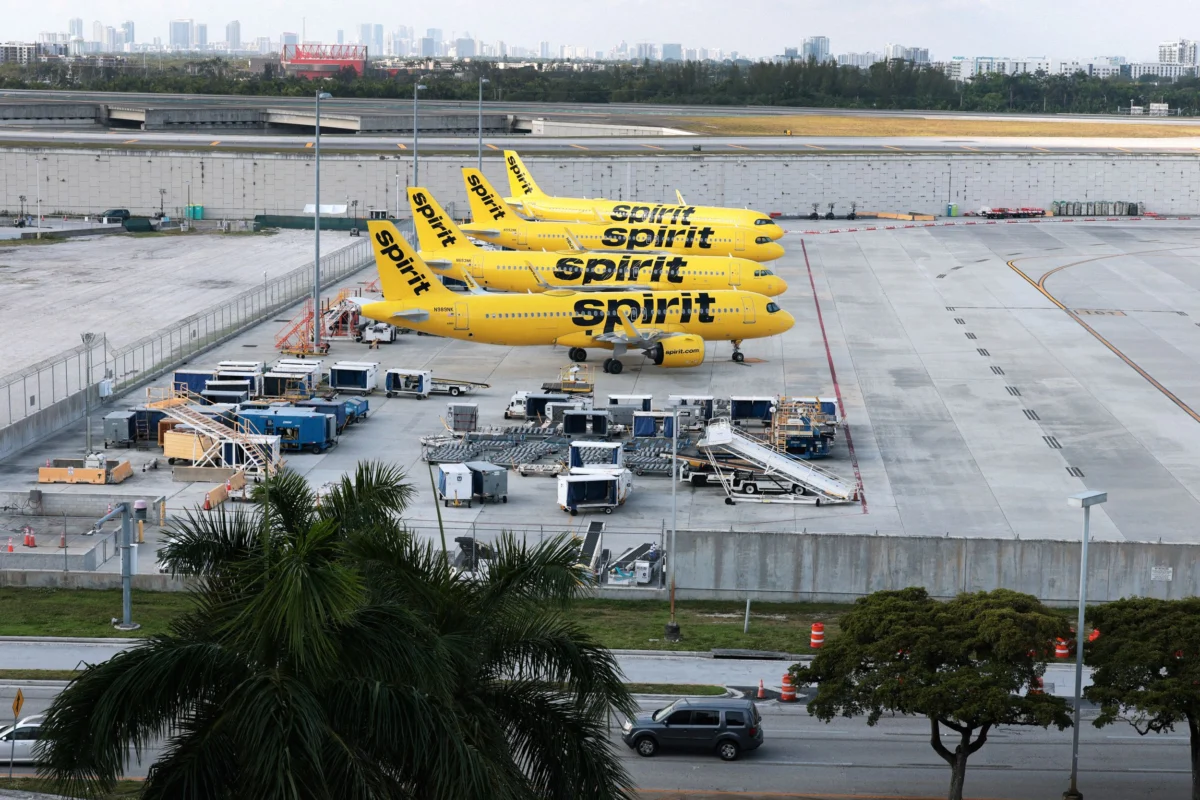
The sudden cessation of operations by Spirit Airlines on Saturday marked the conclusion of a turbulent multi-year struggle for survival, leaving 17,000 employees without work and thousands of passengers stranded across the Western Hemisphere. The Florida-based carrier, long the standard-bearer for the ultra-low-cost carrier (ULCC) model in the United States, announced it would shutter its customer service lines, cancel all remaining flight schedules, and begin a permanent liquidation process. This final collapse follows a pair of Chapter 11 bankruptcy filings—one in early 2024 and a subsequent filing in the summer of 2025—which ultimately failed to stabilize the company’s precarious balance sheet.
In a court filing submitted on Monday, legal representatives for Spirit Airlines described a "perfect storm" of economic and geopolitical factors that rendered further operations impossible. The filing noted that recent escalations in the Iran War and the resulting crisis in the Strait of Hormuz led to a "massive and sustained increase in fuel prices," which effectively eliminated any remaining path toward a successful restructuring. For an airline that had not recorded a net profit since 2019, the surge in energy costs proved to be the final blow to an already fragile business model.
A Chronology of Decline: From Market Disruptor to Liquidation
The demise of Spirit Airlines was not an overnight occurrence but rather the result of a protracted erosion of its competitive advantages. For over a decade, Spirit disrupted the aviation industry by "unbundling" fares, offering a base ticket price that covered only the seat and the flight, while charging extra for everything from carry-on bags to onboard water. This model forced legacy carriers to adapt, eventually leading to the creation of "Basic Economy" tiers by Delta, United, and American Airlines.
However, the very success of the model became Spirit’s undoing. By 2021, the competitive gap had narrowed. Legacy carriers, bolstered by superior loyalty programs and larger networks, began aggressively targeting Spirit’s price-sensitive demographic. This "invasion of the low-cost turf" meant that Spirit could no longer rely on being the sole provider of budget travel.
In 2022, Spirit attempted a strategic pivot by agreeing to a $3.8 billion merger with JetBlue Airways. The deal was intended to create the fifth-largest airline in the U.S., giving Spirit the scale needed to compete with the "Big Four." However, the U.S. Department of Justice (DOJ) filed a lawsuit to block the merger, arguing that the elimination of Spirit would lead to higher fares for budget-conscious travelers. In early 2024, a federal judge ruled in favor of the DOJ, effectively trapping Spirit in a cycle of mounting debt and declining revenue.
By the time Spirit filed its first bankruptcy in early 2024, the company was grappling with hundreds of millions of dollars in losses. A second filing in the summer of 2025 saw the airline cutting dozens of routes and laying off staff in a desperate attempt to stay airborne. These efforts were ultimately insufficient to counter the rising operational costs associated with global instability.
The Fuel Crisis and Geopolitical Instability
The primary catalyst for the final shutdown was the volatility of the global energy market. Jet fuel typically accounts for 25 to 30 percent of an airline’s operating expenses. Following the escalation of conflict in the Middle East and the temporary closure of the Strait of Hormuz—a critical artery for global oil shipments—kerosene prices spiked to historic highs.
Unlike larger legacy carriers that often use sophisticated fuel-hedging strategies to lock in lower prices, Spirit’s financial distress left it with little liquidity to hedge effectively. As fuel prices rose, the airline’s "bare-bones" pricing could no longer cover the cost of the fuel required to fly the planes. The Monday court filing stated succinctly: "There are no longer any viable paths to a restructuring or continued operations."
Immediate Impact on Passengers and the "Rescue Fare" Response
The Saturday shutdown triggered an immediate crisis for travelers. Spirit has stated that it is initiating automatic refunds for passengers who booked directly through its website, while those who used third-party booking platforms are being directed to contact those businesses. However, travel experts warn that refunds are only the first step in a complex rebooking process.
Katy Nastro, a travel expert at the flight deals website Going, noted that the timing of the collapse is particularly difficult for consumers. "US tickets are already up nearly 15 percent year over year," Nastro said, citing data from NerdWallet. Certain high-demand routes, particularly on the West Coast and transatlantic flights, have seen even steeper increases.
In response to the shutdown, the U.S. Department of Transportation (DOT) coordinated with other carriers to provide relief. Transportation Secretary Sean P. Duffy announced that several airlines would offer "rescue fares" to assist displaced Spirit passengers:
- American Airlines and Delta Air Lines: Offering reduced, capped fares on high-volume routes previously served by Spirit.
- United, JetBlue, and Southwest: Implementing capped ticket prices for a set window to prevent price gouging.
- Allegiant Air: Freezing fares on overlapping routes to maintain affordability.
- Frontier Airlines: Offering discounts of up to 50 percent on base fares for former Spirit customers for a limited time.
Despite these measures, the loss of Spirit’s capacity is expected to drive up mid-term ticket prices by 15 to 20 percent on routes where Spirit was the primary low-cost competitor.
The Labor Force: 17,000 Workers in Limbo
The human cost of Spirit’s collapse is significant. The airline employed roughly 17,000 people, including pilots, flight attendants, mechanics, and administrative staff. In its bankruptcy filing, Spirit proposed retaining only 40 employees for a three-month wind-down period, leaving the vast majority of its workforce immediately unemployed.
The aviation industry has shown some solidarity in the wake of the news. Over the weekend, several airlines offered stranded Spirit crew members travel passes and "jump seats" to help them return to their home bases. Furthermore, the DOT confirmed that many carriers are offering "preferential employment interviews" to former Spirit staff.
Ahmed Abdelghany, a professor of airline operations at Embry-Riddle Aeronautical University, suggested that the long-term outlook for these workers is relatively stable. "The capacity that’s lost by Spirit will be replaced by other airlines," Abdelghany explained. As competitors like Frontier and JetBlue move to acquire Spirit’s former flight slots and gate assignments, they will require additional personnel to manage the increased volume. However, Abdelghany cautioned that many workers may face the necessity of relocation or transitioning to different roles within the industry.
Fate of the Fleet: The Airbus A320 Market
Spirit’s fleet consisted of 131 Airbus A320-family aircraft, known for their fuel efficiency and popularity in the narrow-body market. The disposition of these assets will be a key component of the liquidation process. Of the 131 planes, 82 were leased and are being returned to their respective lessors, who are expected to find eager new tenants among expanding domestic and international carriers.
The remaining 49 planes owned by Spirit will be sold to satisfy creditors. Given the current global shortage of narrow-body aircraft—driven by manufacturing delays at both Boeing and Airbus—industry analysts expect these planes to be sold quickly, likely to other budget carriers or aircraft leasing firms.
Broader Economic Implications: The Death of the "Spirit Effect"
The disappearance of Spirit Airlines signals a major shift in the American aviation landscape. Economists have long referred to the "Spirit Effect," a phenomenon where the entry of a budget carrier into a specific market forces all other airlines to lower their prices to remain competitive. With Spirit gone, the incentive for legacy carriers to maintain ultra-low "Basic Economy" fares may diminish.
"If airlines are filling their planes, there’s no incentive to lower prices," said Katy Nastro. The reduction in competition is expected to hit low-income travelers the hardest, as Spirit was one of the few remaining options for one-way fares under $100.
The failure of Spirit also raises questions about the long-term viability of the ULCC model in an era of high energy costs and labor demands. If budget airlines cannot maintain a significant cost advantage over legacy carriers, their ability to attract passengers through price alone becomes unsustainable. For now, the "yellow bird" of the American skies has been grounded, leaving a void in the market that may take years to fill, and a travel public that must brace for a more expensive future in the air.







