
 Ali Ikhwan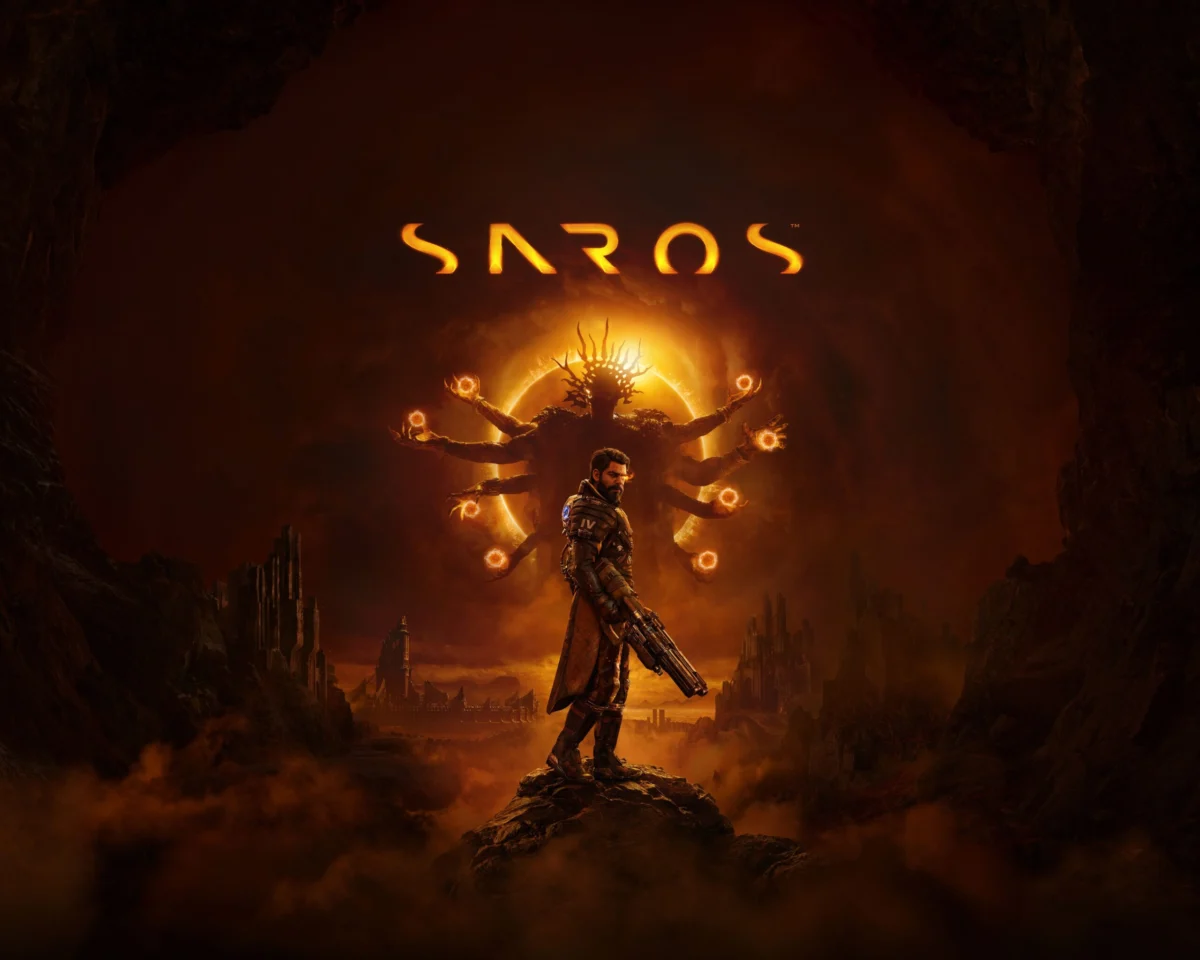
The opening moments of Saros, the highly anticipated science fiction title from Housemarque, do not begin with a cinematic explosion or a sweeping orchestral score. Instead, the player is greeted by a silent procession of text. As letters appear one by one on the screen to establish the game’s complex world-building and narrative stakes, the experience is defined not by sight or sound, but by touch. Each character typed onto the display is accompanied by a sharp, rhythmic haptic buzz delivered through the PlayStation 5 DualSense controller. This "clicky-clacky" sensation serves as an immediate manifesto for the game’s design philosophy: Saros is an experience intended to be felt as much as it is seen or heard.
Scheduled for release on April 30, Saros represents the latest effort by Housemarque—the Helsinki-based studio now under the Sony Interactive Entertainment umbrella—to push the boundaries of modern gaming hardware. Following the critical success of their 2021 hit Returnal, the studio has doubled down on the proprietary features of the PlayStation 5, specifically the DualSense controller’s haptic feedback and adaptive triggers. These technologies allow developers to simulate a vast spectrum of physical sensations, from the delicate pitter-patter of rain to the violent recoil of high-caliber weaponry. In Saros, this tactile layer is not merely an aesthetic addition but a fundamental component of the gameplay loop, designed to deepen the emotional and physical connection between the player and the digital environment.
The Housemarque Pedigree and the Legacy of Returnal
Housemarque’s journey to the forefront of sensory-driven game design is rooted in its long history of arcade-inspired shooters. Founded in 1995, the studio built a reputation for high-octane gameplay with titles like Resogun and Alienation. However, it was the 2021 release of Returnal that transformed the studio’s trajectory. As one of the first true exclusives for the PlayStation 5, Returnal was tasked with demonstrating the "next-generation" capabilities of the console.
Gregory Louden, the creative director at Housemarque who steered both Returnal and Saros, notes that the pressure to innovate remains a driving force for the team. During the development of Returnal, the studio felt a profound responsibility to set a benchmark for what the DualSense hardware could achieve. With Saros, the goal has shifted from discovery to refinement. The studio aims to prove that these features are not fleeting gimmicks but essential tools for storytelling and player immersion. By utilizing the controller’s actuators and the console’s Tempest 3D AudioTech, Housemarque seeks to create a "synesthetic" experience where the lines between visual, auditory, and tactile stimuli become blurred.
Technical Architecture of the DualSense Experience
To understand the significance of the work being done on Saros, it is necessary to examine the technical capabilities of the DualSense hardware. Unlike previous generations of "rumble" technology, which relied on eccentric rotating mass (ERM) motors to create generalized vibrations, the DualSense utilizes dual actuators. These components function more like high-fidelity speakers, capable of producing precise, localized vibrations that can vary in frequency and intensity with extreme speed.

In Saros, this precision is utilized to communicate nuanced information to the player. When a character moves through different environments, the texture of the ground is reflected in the palms of the player’s hands. During combat, the adaptive triggers provide varying levels of resistance. This means that a light energy pistol may require a soft pull, while a heavy railgun might feature a "break point" in the trigger’s travel distance, simulating the mechanical tension of a real trigger assembly.
Furthermore, Housemarque has moved beyond the standard practice of "audio-to-haptics" conversion. While many developers use software to automatically generate vibrations based on the game’s sound effects, the design team for Saros, led by associate design director Matti Häkli, has opted for a custom-authored approach. This involves manually programming specific haptic patterns for key moments, such as the subtle pulse of a character’s heartbeat during a high-tension cinematic sequence. This bespoke design ensures that the feedback is meaningful rather than repetitive, providing the player with vital cues about the state of the game world.
A Chronology of Innovation and Integration
The development and release of Saros sit within a broader timeline of Sony’s strategy to differentiate its hardware through proprietary sensory features:
- November 2020: The PlayStation 5 launches alongside Astro’s Playroom, a pack-in title designed specifically to showcase the DualSense’s haptic feedback and adaptive triggers.
- April 2021: Housemarque releases Returnal, which receives widespread acclaim for its use of 3D audio and tactile feedback, proving these features could enhance a high-stakes, AAA "roguelike" experience.
- June 2021: Sony Interactive Entertainment officially acquires Housemarque, bringing the studio into the PlayStation Studios family to focus on high-end hardware integration.
- 2022-2023: Titles such as Horizon Forbidden West and Ratchet & Clank: Rift Apart further refine the use of haptics, though many third-party developers continue to treat the features as secondary due to the demands of multi-platform development.
- April 30, 2024: The launch of Saros marks the next evolution in this lineage, representing three years of iterative learning since the release of Returnal.
The Economic and Development Challenges of Haptic Adoption
Despite the technical prowess displayed in Saros, the broader adoption of advanced haptic features across the gaming industry remains a point of contention. The primary hurdle is the reality of multi-platform development. Most major game releases are designed to run on the PlayStation 5, Xbox Series X/S, and PC. Because the Xbox controller and the majority of third-party PC controllers lack the sophisticated linear resonant actuators found in the DualSense, developers often prioritize features that can be easily replicated across all systems.
Anshel Sag, a principal analyst at Moor Insights and Strategy, suggests that while these features incentivize the purchase of Sony hardware, they have not yet reached a "critical mass" where they are considered essential by the wider industry. "The added capabilities are better, but in how many instances, or how many games? The number is not high, and that is the challenge," Sag notes. This creates a feedback loop where developers are hesitant to invest resources into features that only a portion of their audience will experience, which in turn prevents those features from becoming a standard expectation for players.
Furthermore, Sony has remained guarded regarding the specific data on how many players utilize these features. While the DualSense is the standard controller for the PS5, many players opt for third-party "pro" controllers or accessibility-focused peripherals that may not support the full suite of haptic and adaptive functions. Without clear data on player engagement, the financial justification for bespoke haptic programming remains difficult for many studios.

Analytical Outlook: The Future of Sensory Gaming
For Housemarque, the commitment to these technologies is a gamble on the future of the medium. The studio’s leadership believes that as visual fidelity reaches a point of diminishing returns, the next frontier of innovation lies in the other senses. By creating a "tactile language" in Saros, they are attempting to move beyond the traditional boundaries of the screen.
The implications of this approach extend beyond mere immersion. Precise haptic feedback can serve as a vital tool for accessibility, providing non-visual and non-auditory cues to players with sensory impairments. In a fast-paced roguelike like Saros, where survival depends on reacting to enemy projectiles and environmental hazards, the ability to "feel" an incoming attack from a specific direction can be a transformative gameplay advantage.
As the industry moves toward the mid-point of the current console generation, Saros stands as a litmus test for the longevity of Sony’s hardware innovations. If the game succeeds in creating a uniquely compelling experience that cannot be replicated on other platforms, it may encourage other developers to move away from the "lowest common denominator" approach to controller feedback.
Conclusion
The release of Saros on April 30 will be a significant moment for both Housemarque and the PlayStation ecosystem. By prioritizing the "feel" of the game through sophisticated haptic integration and 3D audio, the studio is challenging the traditional hierarchy of game design, where visuals and sound have long reigned supreme.
While the challenges of industry-wide adoption and the economics of multi-platform development persist, Housemarque remains optimistic. As Matti Häkli emphasizes, the failure to utilize these hardware capabilities could lead to their eventual disappearance from the market. For the team in Helsinki, the goal is clear: to ensure that the sensory innovations of the PlayStation 5 are not remembered as a historical curiosity, but as the beginning of a new era in interactive entertainment. Whether Saros will be the title that finally tips the scales for haptic feedback remains to be seen, but its commitment to a tactile, visceral future is undeniable.







