rifanmuazin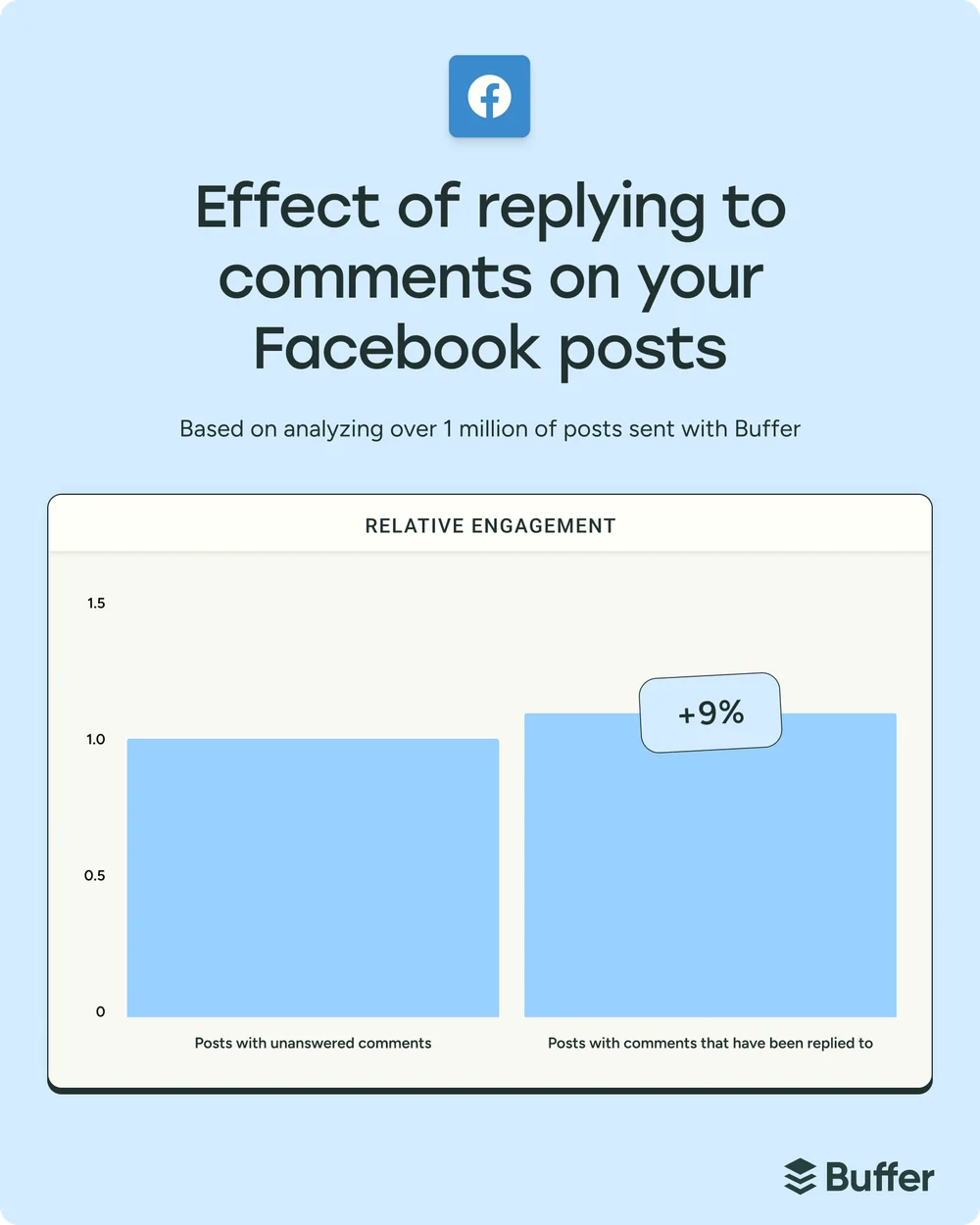
A groundbreaking study conducted by Buffer, a prominent social media management platform, has unveiled compelling evidence that actively responding to comments on Facebook posts can significantly boost engagement. The research, which analyzed over one million Facebook posts, found that posts where creators engaged with comments received approximately 9.5% more reactions compared to those where no replies were made. This finding offers a crucial insight for content creators, small businesses, and marketers striving to enhance their reach and interaction on the platform, which boasts over three billion monthly active users.
The study, led by Julian Winternheimer, Buffer’s senior data scientist, forms part of a broader cross-platform comment engagement analysis. While the 9.5% lift might appear modest when compared to the 42% increase observed on Threads or the 30% on LinkedIn in the same study, its significance on a platform as mature and expansive as Facebook cannot be understated. Given Facebook’s immense scale, even a single-digit percentage increase in reactions translates into a substantial rise in overall visibility and user interaction, making it a valuable, low-cost strategy for digital presence enhancement.
Unpacking the Methodology: A Deep Dive into the Data
The robustness of Buffer’s findings stems from its sophisticated analytical approach. Winternheimer’s team meticulously examined approximately one million Facebook posts that had received at least one comment, encompassing a diverse range of accounts varying in size and niche. Crucially, the methodology moved beyond simple comparisons between large and small Facebook Pages, which can often yield misleading results due to inherent differences in audience size and resources.
Instead, the study employed a fixed-effects regression model. This advanced statistical technique allowed researchers to compare each individual account’s performance against its own historical data. By holding constant variables such as audience size, niche, geographical location, and posting frequency, the model effectively isolated the impact of replying to comments. The central question shifted from "Do Facebook Pages that reply get more engagement than pages that don’t?" to a more precise: "Does this specific Facebook Page perform better when it replies versus when it doesn’t?" This intra-account comparison neutralizes many confounding factors, providing a clearer picture of the direct influence of creator engagement.
To further validate these findings, a Z-score analysis was conducted as a secondary check. This method measured how far above or below an account’s "normal" performance level each post performed. Both the fixed-effects model and the Z-score analysis consistently pointed in the same direction, bolstering confidence in the study’s conclusions. The statistical significance of the effect (p < 0.001) further underscores that these results are unlikely to be due to random chance.
It is important to acknowledge, as the researchers themselves note, that while the data strongly indicates a correlation, proving absolute causation remains a complex challenge in social media analytics. It’s plausible that posts that are inherently performing well and generating buzz might also be more likely to receive replies from creators. However, the consistent pattern observed across all six platforms analyzed in Buffer’s broader study, with lifts ranging from 5% to 42%, lends considerable weight to the argument that creator replies are indeed a driving factor in engagement. The deliberate choice to measure "reactions" (likes, loves, hahas, etc.) rather than total engagement (which would circularly include comments) further ensures the integrity of the findings, directly assessing the impact on broader audience response.
The fixed-effects model, which covered over 1 million posts across 97,427 Facebook profiles, definitively showed that posts with replied-to comments garnered an average of 9.5% more reactions. The Z-score analysis reinforced this, revealing that roughly 53.8% of Facebook Pages performed better when they actively engaged with comments. This indicates that posts featuring creator replies tended to perform slightly above an account’s usual engagement baseline, whereas posts without replies hovered at or below it. While this 53.8% majority is less pronounced than the 63% found on Instagram or the striking 83% on LinkedIn, it remains a statistically significant indicator of positive impact on Facebook, aligning with the platform’s more mature and diverse engagement patterns.
Interestingly, a superficial glance at raw median numbers initially suggested the opposite, with posts without replied-to comments showing slightly higher median reactions (22) than those with replies (16). However, this misleading comparison failed to account for the vast differences in Facebook Page sizes and activity levels. Once Julian Winternheimer’s analysis controlled for these critical variables and compared each account to its own performance, the true effect of active commenting became clear.
The "Meaningful Interactions" Imperative: Why Engagement Matters on Facebook
Facebook’s algorithmic evolution over the past decade provides crucial context for these findings. In 2018, Facebook famously announced a significant shift in its News Feed algorithm, prioritizing "meaningful interactions" from friends and family over public content from Pages. This change dramatically impacted organic reach for businesses and creators, forcing them to rethink their engagement strategies. The Buffer study’s results directly align with Facebook’s stated algorithmic goals: comments, especially back-and-forth exchanges, are a powerful signal to the algorithm that content is sparking genuine discussion and interaction.
When a creator replies to a comment, they are not just acknowledging a user; they are actively fostering a conversation thread. This action sends a strong signal to the Facebook algorithm that the post is generating real dialogue, moving beyond passive consumption. Several key mechanisms likely contribute to how this translates into higher reactions:
- Extended Visibility: Each reply revitalizes the comment thread, effectively extending the post’s lifespan in the News Feed. The algorithm may interpret ongoing conversation as a reason to resurface the post, not just for the commenter’s connections but also for others who have previously interacted with the Page. This prolonged visibility increases the window of opportunity for more users to see and react to the content.
- Relationship Signals and Algorithmic Favoritism: Facebook’s intricate algorithms track interaction history between users and Pages. Consistent replies from a Page to an individual user build a recognized connection. Over time, these repeated micro-interactions train the algorithm to prioritize showing future content from that Page to that specific user, fostering a loyal audience base and creating a compounding effect on engagement.
- Social Proof and Authenticity: An active comment section, particularly one where the creator or brand is visibly participating, signals authenticity and responsiveness. In an increasingly saturated digital landscape, users are more likely to pause their scroll and engage with content when they perceive a real human connection and a responsive presence behind a Page. This human element can significantly influence user trust and willingness to interact.
While the 9.5% lift may not be as dramatic as those seen on newer, more conversation-centric platforms like Threads, its impact on Facebook is amplified by the platform’s sheer user base. A small percentage increase on three billion monthly active users can translate into millions more impressions and reactions. Furthermore, unlike strategies requiring substantial investment in tools, advertising, or complex content overhauls, replying to comments is a fundamental, accessible tactic that any Page administrator can implement immediately.
Practical Strategies for Enhancing Facebook Engagement Through Replies
For creators and businesses juggling multiple social media platforms, managing comments can indeed feel like a full-time job. However, the Buffer study underscores that this effort is not just good practice but a data-backed strategy for growth. Social media strategists and marketing experts emphasize that integrating comment management into a routine is key. Here are actionable approaches to maximize the impact of replies on Facebook:
- Time Blocking for Replies: Instead of attempting to respond to every comment as it arrives, which can be disruptive and unsustainable, dedicating specific time blocks for engagement can significantly improve efficiency. Two 10-to-15-minute windows daily—perhaps mid-morning and early evening—can capture comments from various time zones and user activity peaks, ensuring timely responses without constant distraction.
- Prioritizing Conversational Engagement: A simple "thanks!" is polite, but it rarely sparks further interaction. To truly leverage the engagement flywheel, replies should aim to extend the conversation. Asking follow-up questions ("That’s a great point, have you considered X?"), adding further details ("You’re right, we actually found Y when we tested that…"), or offering personalized insights can encourage users to continue the dialogue, further signaling "meaningful interaction" to the algorithm.
- Timeliness of Early Engagement: Facebook’s algorithm, like most platform algorithms, heavily weights early engagement. Responding to comments within the first few hours after a post goes live can be particularly impactful. This initial burst of interaction signals to the algorithm that the content is resonating, potentially boosting its initial distribution and increasing the likelihood of additional reactions while the post is still fresh in the feed. This strategic advantage highlights the importance of aligning posting times with available engagement windows.
- Leveraging Integrated Management Tools: For Pages active across multiple platforms, consolidating comment management is crucial. Tools like Buffer’s Community tab, which pulls all comments from various social accounts into a single dashboard, can streamline the process. This allows creators to reply directly without navigating away from the dashboard and getting sidetracked by the main feed, improving focus and efficiency. Features like a "Comment Score" can also help creators track their reply consistency, transforming sporadic engagement into a consistent habit.
Broader Implications and the Future of Social Media Engagement
The Buffer study provides a compelling reinforcement of a foundational principle in social media: genuine interaction fosters engagement. While Facebook’s 9.5% reaction lift might sit at the lower end of the spectrum compared to other platforms analyzed, its context within a vast, mature network makes it profoundly significant. The findings resonate with the broader industry trend emphasizing community building and authentic relationships as cornerstones of successful digital strategies.
In an era where organic reach on major platforms is increasingly challenging, and content creation demands significant resources, the simplicity and effectiveness of replying to comments offer a refreshing and accessible strategy. It requires no additional budget, no complex technological implementation, but rather a commitment to showing up for the audience that has shown up for the content.
While the 9.5% lift is not an absolute guarantee for every single Facebook Page—the study noted that approximately 54% of profiles observed positive effects—the odds are clearly tilted in favor of those willing to invest time in consistent, thoughtful engagement. On a platform with Facebook’s unparalleled reach, even a modest yet consistent boost in reactions can yield substantial long-term benefits, translating into increased brand awareness, stronger community ties, and potentially higher conversions for businesses.
This study serves as a critical reminder that despite the complexities of algorithms and the constant evolution of social media features, the core human desire for connection and recognition remains a powerful driver of engagement. For a comprehensive understanding of Julian Winternheimer’s findings across all six platforms, the full cross-platform engagement study by Buffer offers invaluable insights for anyone navigating the intricate world of social media marketing.