Cintya Tara Annisa
The annual Milan Design Week has officially commenced, transforming the Italian metropolis into a global epicenter for architectural innovation, industrial design, and cultural exchange. Among the prominent participants in this year’s festivities is La Marzocco, the venerable Florentine manufacturer of high-end espresso machines. In a strategic partnership with the influential digital design platform Designboom, La Marzocco has launched a comprehensive series of events and product reveals centered at the ME Milan Il Duca hotel. The collaboration, titled Room for Dreams, serves as an immersive platform where installations, intellectual discourse, and cinematic elements converge to examine the role of design in driving social and cultural transformation.
The presence of La Marzocco at Milan Design Week 2026 underscores the deepening relationship between the specialty coffee industry and the broader world of luxury lifestyle and interior design. As coffee equipment transitions from utilitarian commercial tools to centerpiece home appliances, the brand’s participation reflects a broader market trend where aesthetic value is increasingly weighted alongside technical performance.
A Symposium on Immersive Realities and Temporary Dreamscapes
The week’s programming opened with a high-level panel discussion titled "Temporary Dreamscapes: Immersive Realities as Prototypes for Alternate Futures." This symposium brought together a diverse group of thought leaders to discuss the ephemeral nature of major design events. The panel featured Paul Kelly of La Marzocco, Samir Bantal of the renowned architectural research studio AMO/OMA, David Mahyari of the natural stone specialist SolidNature, Christopher Dessus of the experimental design firm Paf atelier, and Sofia Lekka Angelopoulou representing Designboom.
The discourse focused on the paradoxical nature of Milan Design Week, where elaborate, "entire worlds" are constructed with immense resources, only to be dismantled within days. The panelists posited that these temporary installations should not be viewed merely as marketing exercises but as "experimental theaters." In these spaces, emotional, symbolic, and sensory futures are tested in a controlled environment before they are translated into permanent architectural or industrial forms.
For La Marzocco, this intellectual engagement signifies a shift in brand positioning. By contributing to discussions on urbanism and immersive reality, the company aligns its engineering heritage with contemporary architectural theory. This is particularly relevant as the "third wave" coffee movement continues to influence the design of public spaces, from boutique hotels to corporate environments, where the espresso machine often serves as a focal point of social interaction.
Coffee Portraits: A Sensory Journey Through Roasting Excellence
Following the theoretical foundations laid during the opening symposium, the focus at ME Milan Il Duca shifted toward a sensory exploration of coffee through the "Coffee Portraits" series. Curated by the Accademia del Caffè Espresso—La Marzocco’s cultural and educational hub located in the hills above Florence—this initiative highlights the diversity of the Italian specialty coffee scene.
Throughout the week, the La Marzocco coffee cart at the hotel will feature a rotating residency of five distinct roasters. Each participant has been tasked with presenting a coffee that exemplifies a specific "aromatic family," providing attendees with an educational experience that bridges the gap between the science of roasting and the art of flavor perception. The participating roasters include:
- La Sosta Specialty Coffee: Known for their meticulous sourcing and focus on transparency in the supply chain.
- Cafezal: A Milan-based roastery that has become a staple of the city’s burgeoning specialty scene, blending Brazilian heritage with Italian roasting traditions.
- Il Manovale: A roaster that emphasizes the craftsmanship of the trade, focusing on the technical precision required to highlight a coffee’s inherent terroir.
- Oltre: A brand that pushes the boundaries of traditional espresso profiles, catering to a modern palate.
- Garage Coffee Bros: A contemporary outfit recognized for its bold branding and commitment to innovation in the specialty sector.
This collaborative approach serves to humanize the technical side of coffee preparation. By framing coffee as a "portrait," the installation invites visitors to view the beverage as a designed product, shaped by the decisions of the farmer, the roaster, and finally, the barista operating the machine.
Expansion of the Home Line: New Aesthetic Frontiers
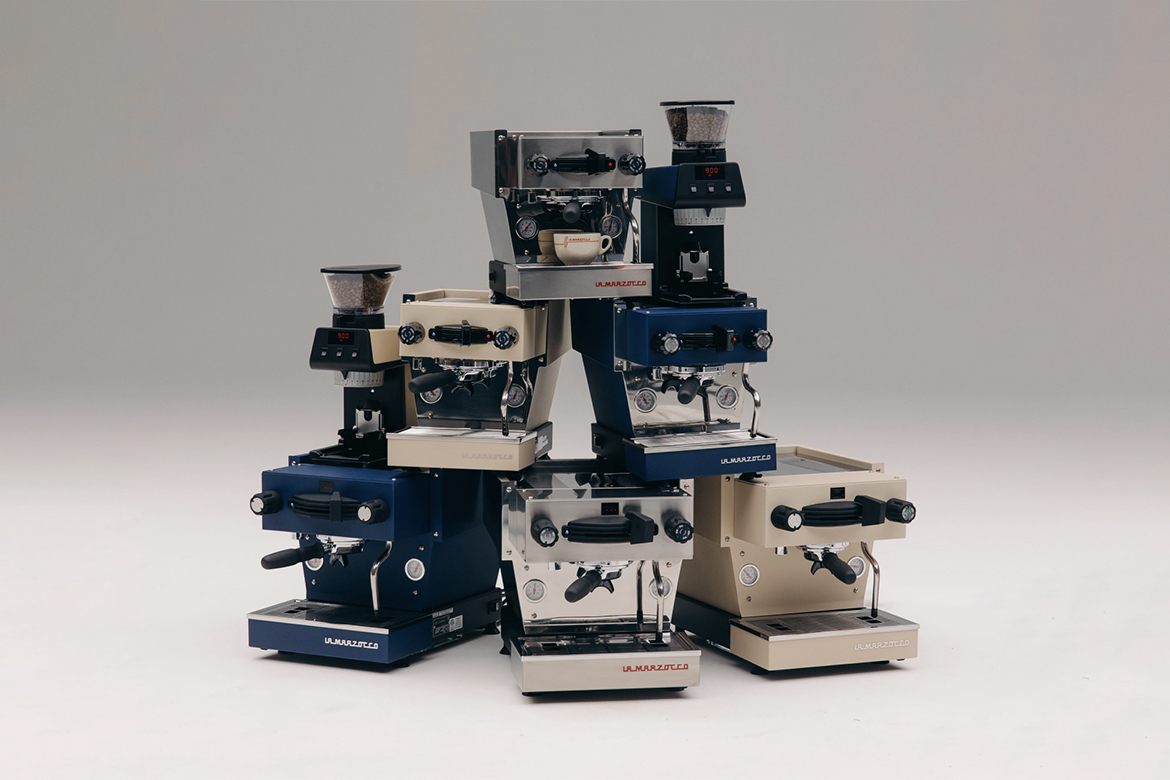
While the installations and talks cater to the design community in attendance, the most significant announcement for the global consumer market is the expansion of La Marzocco’s "Home" line. The company has unveiled three new colorways for its most popular residential models: the Linea Mini, the Linea Micra, and the Pico grinder.
The new options include:
- Crème: A neutral, sophisticated tone designed to integrate seamlessly into modern minimalist kitchen environments.
- Deep Blue: A saturated, bold hue that reflects the growing trend of using appliances as "statement pieces" in interior design.
- Brushed Steel: A direct homage to the original La Marzocco Linea, which became an icon of the 1990s coffee boom. This finish will be available for the Linea Mini and Linea Micra, though notably not for the Pico grinder.
The introduction of these colors is a calculated response to the "prosumer" market’s evolution. According to industry data, the global home espresso machine market has seen a Compound Annual Growth Rate (CAGR) of approximately 7% over the last five years, driven by a consumer desire for professional-grade coffee at home. By offering more diverse aesthetic choices, La Marzocco is positioning its products not just as machines, but as furniture-grade investments.
The "Brushed Steel" variant, in particular, appeals to heritage-conscious consumers. It evokes the industrial reliability of the commercial Linea Classic—a machine that is credited with standardizing high-quality espresso extraction in specialty cafes worldwide.
Market Context and the Rise of the "Kitchen Lifestyle"
The timing of these releases coincides with a significant shift in how luxury consumers view their living spaces. In the post-pandemic era, the "kitchen as a lifestyle space" has become a dominant theme in interior architecture. High-end appliances are no longer hidden behind cabinetry; they are displayed as symbols of culinary expertise and design literacy.
La Marzocco’s decision to debut these products at Milan Design Week rather than a traditional coffee trade show like HostMilano or World of Coffee highlights this shift. The brand is competing for the attention of the same demographic that invests in Vitra furniture or Flos lighting. By placing the Linea Micra—their most compact professional-grade machine—in the context of "Room for Dreams," they are selling the dream of a café-quality experience within the domestic sanctuary.
Supporting data from market research firms suggests that the specialty coffee segment is the fastest-growing portion of the coffee industry. Consumers who are willing to pay a premium for ethically sourced, light-roast beans are equally willing to invest in equipment that can accurately replicate the temperature and pressure profiles found in a professional setting.
Implications for the Future of Brand Collaborations
The partnership between La Marzocco, Designboom, and ME Milan Il Duca provides a blueprint for how legacy manufacturing brands can maintain relevance in a rapidly changing cultural landscape. By hosting "Room for Dreams," La Marzocco is not just selling a product; it is curating an environment.
The inclusion of the Accademia del Caffè Espresso in the event also emphasizes the importance of education. As the coffee industry becomes more complex, brands that can provide both the tools (the machines) and the knowledge (the "Portraits" and talks) are likely to secure greater brand loyalty. The Accademia serves as a bridge between the company’s factory in Scarperia and the global design community, ensuring that the brand’s technical innovations are grounded in cultural research.
Furthermore, the "Temporary Dreamscapes" panel highlights a growing awareness of sustainability and the environmental impact of large-scale events. While the talk focused on the symbolic nature of these "disappearing worlds," the broader industry is under increasing pressure to ensure that these temporary installations do not lead to excessive waste. La Marzocco’s focus on durable, repairable, and long-lasting machinery stands in contrast to the "disposable" culture often criticized in the design world.
Conclusion: A Visionary Approach to Specialty Coffee
As Milan Design Week 2026 continues, the installations at ME Milan Il Duca remain a focal point for those interested in the intersection of hospitality, design, and technology. The "Room for Dreams" platform successfully frames La Marzocco as a visionary participant in the design world, rather than a mere equipment supplier.
Through the combination of intellectual symposiums, sensory experiences with local roasters, and the launch of aesthetically driven products, La Marzocco has addressed multiple facets of the modern consumer experience. The new colorways for the Linea Mini, Micra, and Pico are expected to drive significant interest in the residential sector, while the "Coffee Portraits" series reinforces the brand’s deep ties to the specialty coffee community.
For those unable to attend the events in Milan, the new products represent an opportunity to bring a piece of Italian design heritage into their homes. As the boundaries between professional and domestic spaces continue to blur, La Marzocco’s performance in Milan suggests that the future of coffee is as much about the beauty of the machine as it is about the quality of the cup. All events at the ME Milan Il Duca are free to the public with prior registration, inviting a broad audience to participate in this unique dialogue between espresso and architecture.